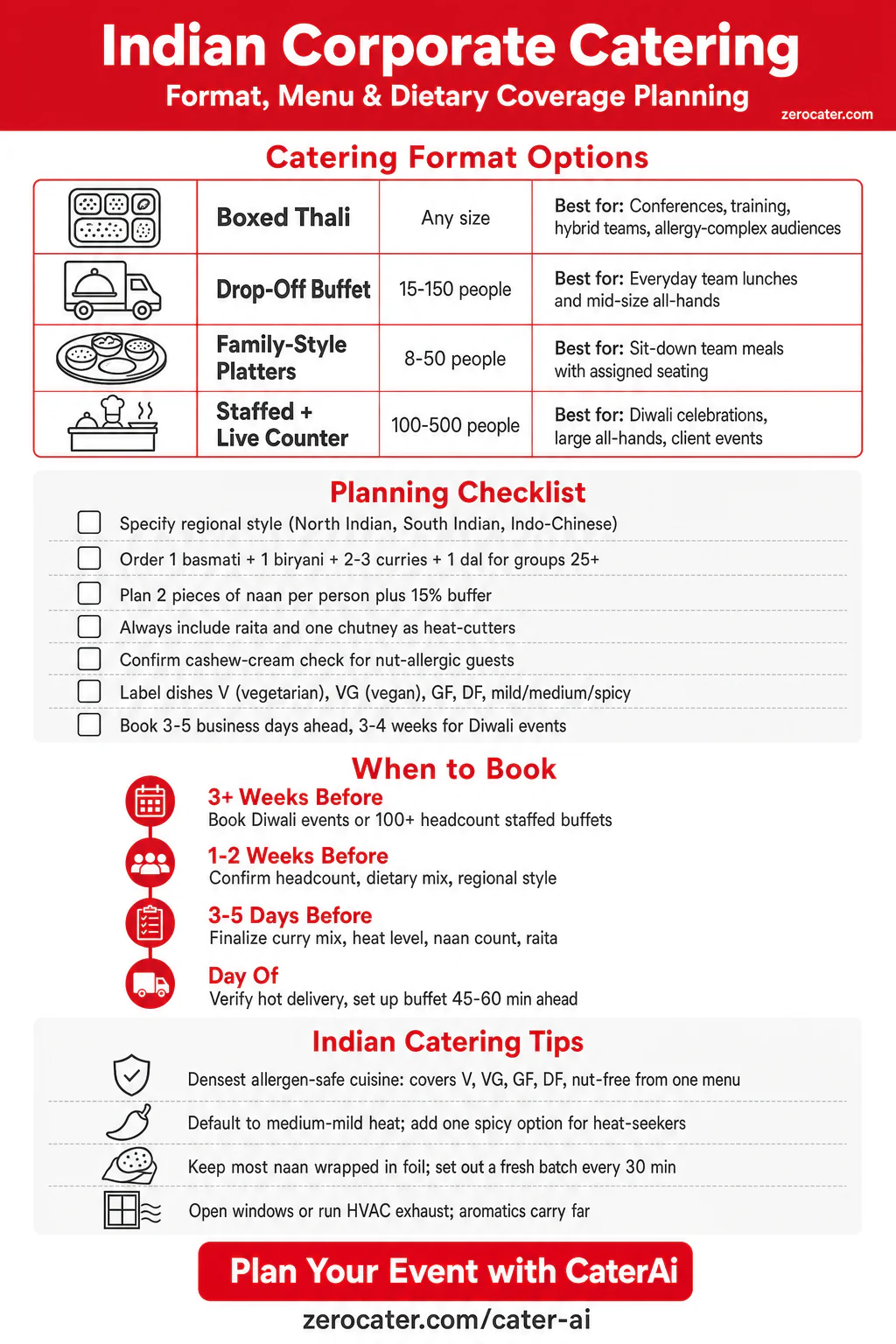
Indian catering is the cuisine that most corporate planners under-order, then suddenly discover when they get a request for an inclusive meal that covers vegetarians, vegans, gluten-free guests, dairy-free guests, and nut-allergic guests from a single menu. Indian is the densest allergen-safe corporate cuisine in common rotation, and the thali format flexes across more office event types than almost any other catering style. Boxed lunch, drop-off buffet, family-style platters, staffed event, conference rotation: it does all of them well. This is the office-focused playbook. When Indian catering fits a corporate setting, the four service formats, the menu playbook, the dietary coverage that no other cuisine matches, regional considerations, and how to order so the spread reads thoughtful instead of generic.
In This Guide
- When Indian Catering Fits Your Office
- The 4 Service Formats: Boxed Thali, Buffet, Family-Style, Staffed
- The Core Indian Menu Playbook
- North Indian vs. South Indian vs. Indo-Chinese
- Serving Sizes for 10, 25, 50, 100, 200+ People
- Dietary Coverage: Why Indian Wins for Mixed Groups
- Managing the Spice Level for a Corporate Audience
- Office Logistics: Setup, Aromatics, and Holding Time
- How to Order Indian Catering Well
- Common Mistakes to Avoid
- How CaterAi Handles Indian Orders
- FAQ
When Indian Catering Fits Your Office
Indian catering is one of the highest-utility cuisines in corporate ordering, and the events where it shines have a few things in common: a dietary-mixed audience, an appetite for something more interesting than a sandwich tray, and a planner willing to spend two extra minutes specifying the order.
Indian catering works best for:
- All-hands lunches and team meals. The dietary breadth (a single menu covers vegetarians, vegans, gluten-free, dairy-free, nut-free) makes Indian the lowest-friction cuisine for a 50-plus mixed-team gathering.
- Diwali, Holi, and cultural-celebration events. The natural home for Indian catering. Festival platters, sweets, and decorated buffets land especially well when paired with broader celebration planning. See our holiday party catering planning guide for the full event framework.
- Conference and all-day training catering. Boxed thali trays hold temperature, label clearly by dietary need, and travel between session rooms cleanly. The full case for boxed-format conference catering is in our conference and all-day training boxed lunch guide.
- Hybrid and distributed-team meals. Individual thali boxes ship to satellite offices and remote workers without quality loss. Our hybrid teams boxed lunch playbook covers the logistics.
- Tech offices and engineering teams. The cuisine has deep cultural resonance with engineering teams in the Bay Area, Seattle, and the I-95 corridor. For more on what works for tech-heavy offices, see our corporate catering for tech companies guide.
- Recurring office meal programs. Indian catering is one of the cuisines that holds up well in rotation. Variety within the cuisine (regional styles, weekly menu changes) keeps the program interesting without exhausting it.
- Allergy-safe and dietary-complex events. If your audience profile includes multiple food allergies or strict dietary needs, Indian catering covers more profiles from a single menu than any alternative. Companion reading in our allergy-safe boxed lunches guide and mixed dietary needs guide.
- Board meetings and executive lunches. Indian thali boxes present cleanly, label by dietary need, and work as plated portions that do not require buffet logistics. For the wider board-meeting catering framework, see our board meeting catering guide.
Indian catering is usually the wrong pick for:
- Client meetings with unknown palate tolerance. If you are unsure whether your guests like Indian food, default to a safer cuisine for the first meal. Save the Indian order for the team or for repeat clients you know.
- Very small teams of under 8 people. Order minimums and the multi-dish format create waste at small headcounts. A team of 6 ordering Indian leaves a lot of curry on the table. For small-team alternatives, check our boxed lunch for meetings guide.
- Outdoor summer picnics. Indian food does fine outdoors but loses some of its visual appeal in an outdoor buffet line. The aromatics also carry far in open air. BBQ tends to outperform Indian in the outdoor-event slot. The full outdoor-event playbook is in our company picnic catering guide; for BBQ specifically, our BBQ corporate catering guide covers the alternative.
- Quick grab-and-go breakfasts. Indian breakfast traditions (idli, dosa, upma, poha) exist and are excellent, but few corporate caterers in non-Indian-heritage markets offer them at scale. For office breakfast catering across cuisines, see our boxed breakfast catering guide.
The 4 Service Formats: Boxed Thali, Buffet, Family-Style, Staffed
Indian catering flexes across more service formats than almost any other office cuisine, and the format you pick changes the whole experience. Here is how to think about each.
1. Boxed Thali (the office default)
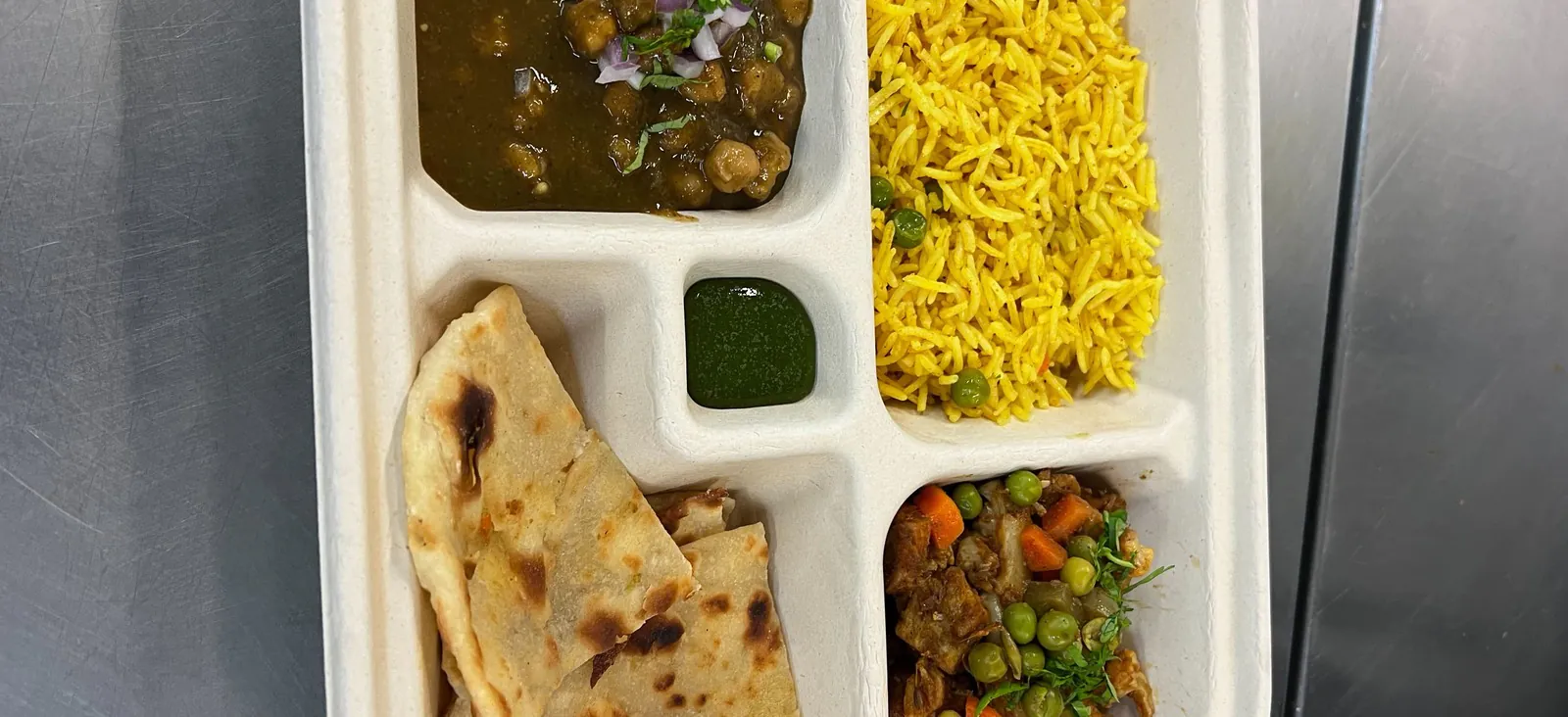
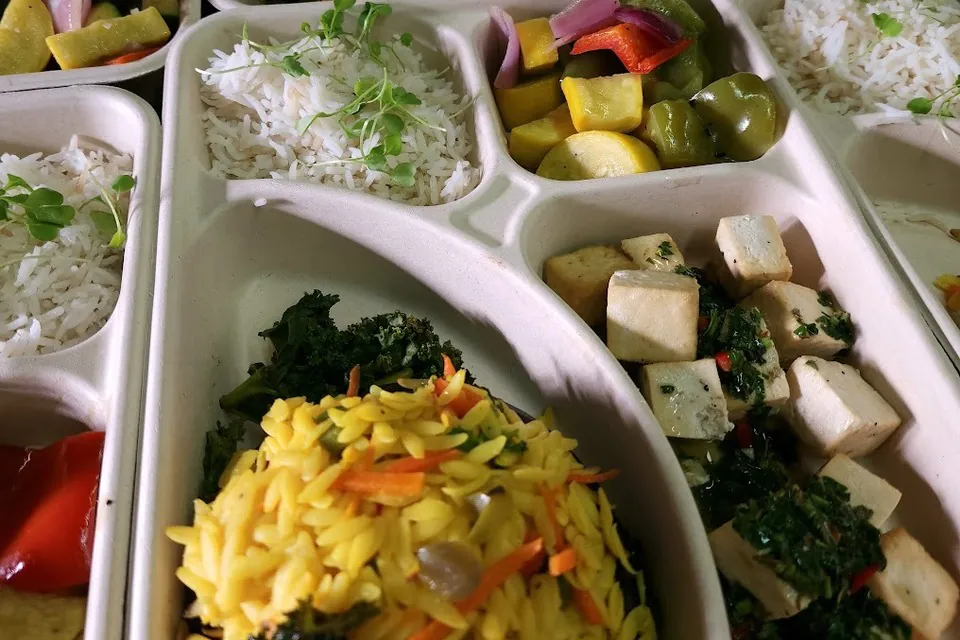
Individual compartmentalized trays with rice, two or three curries, a lentil dish, a vegetable, flatbread, and chutney in separate sections. The cleanest Indian format for offices: each attendee gets a complete meal with no buffet line, no cross-contact, and clear dietary labeling. Travels to satellite floors, ships to remote workers, holds temperature in heating cabinets, and presents better than standard meal-prep boxes. The decision framework for boxed versus other formats is covered in boxed lunch catering vs. buffet and the three-format decision guide.
Best for: Conferences and training sessions with staggered breaks, multi-floor offices, hybrid teams, allergy-complex audiences, executive boxed lunches, recurring boxed programs. What to specify: dietary markers on every box (V, VG, GF, DF, nut-free), recipient name labels for pre-ordered meals, sauces and chutneys in side cups rather than poured over the rice.
2. Drop-Off Buffet
The caterer delivers chafing trays of rice, curries, sides, and flatbread set up on a serving table. Your team plates from the buffet line. Lowest cost per head and the classic office-Indian format for everyday team lunches and mid-size all-hands. Pair with disposable plates, utensils, and serving spoons.
Best for: Team lunches, weekly catering rotations, mid-size all-hands (15 to 150 people), any indoor office Indian order where dietary labeling at the buffet line is enough. Delivery window: Caterer typically hits a 15-minute arrival window; food holds hot in chafing pans for 90 to 120 minutes.
3. Family-Style Platters
The middle ground between buffet and plated. Large communal platters of rice, curries, breads, and sides placed on each table for guests to serve themselves family-style. Faster service than a buffet line (no one queueing), more sociable than individual boxed meals, and a natural fit for the Indian cuisine since traditional Indian dining is family-style by default.
Best for: Team lunches with assigned seating, sit-down all-hands with table-based seating, celebration dinners, smaller boardroom-style lunches (8 to 16 people per table). What to specify: dish quantities per table (typically 2 rice dishes, 3 curries, 2 sides, 1 chutney, 1 yogurt, 2 flatbreads), serving utensils per dish, and a clear dietary-labeling card per table.
4. Staffed Buffet and Live-Counter Service
Drop-off buffet plus dedicated staff who plate, refresh pans, handle dietary requests live, and clean up after. The premium tier. Often paired with a live tandoor or chaat counter for added theater. Live-counter chaat (pani puri, bhel, papdi chaat assembled in front of the guest) is one of the most memorable office catering experiences available.
Best for: Diwali celebrations, large all-hands (100+ people), client-appreciation events, recruiting-team summits, anniversary celebrations, any event where the cuisine is part of the experience and not just the meal. What to specify: staffing duration (minimum 2 hours, typical 3 to 4), live-counter selection (tandoor, chaat, or dosa station), setup window (typically 60 to 90 minutes before service), and cleanup expectations.
The Core Indian Menu Playbook
A strong office Indian order covers a rice or biryani, two or three curries, a lentil or chickpea dish, a vegetable side, a yogurt-based item, a flatbread, and one or two chutneys. Less and the spread feels thin; more and the buffet becomes a maze. Here is how to think about each category.
Rice (always include)
- Basmati rice: the universal default. Plain or jeera (cumin) basmati. Pairs with every curry, eaten by every guest.
- Vegetable biryani: rice cooked with vegetables and aromatics. Substantial enough to be a meal on its own for vegetarians.
- Chicken or goat biryani: the showpiece rice dish. Long-grain basmati layered with marinated meat, saffron, and fried onions. Worth budgeting for at celebration events.
- Lemon rice or coconut rice: South Indian regional alternatives. Lighter, more aromatic, dietary-friendly.
Curries (pick 2 or 3)
- Butter chicken: the universally loved gateway curry. Mild, creamy, tomato-based. The single most ordered Indian catering dish in US corporate settings.
- Chicken tikka masala: close cousin to butter chicken, smokier from the tandoor-grilled chicken. Also a safe crowd-pleaser.
- Lamb or goat curry: richer, more traditional. Adds a regional accent to a standard menu.
- Palak paneer: spinach and Indian cottage cheese in a creamy sauce. Vegetarian, mildly spiced, beloved.
- Chana masala: chickpea curry. Vegan by default, calorie-dense, gluten-free. The single best vegan main dish in Indian cuisine.
- Dal makhani: creamy slow-cooked black lentils with butter and tomato. Rich and comforting; vegetarian (vegan if requested without butter or cream).
- Vegetable korma: mixed vegetables in a mild cashew-based gravy. Note: contains tree nuts. Specify nut-free if needed and the caterer can substitute.
- Bhindi masala or aloo gobi: drier vegetable preparations (okra masala, potato and cauliflower). Vegan, gluten-free, lighter than the cream-based curries.
Lentils and chickpeas (pick 1)
- Dal tadka: yellow lentils tempered with cumin, garlic, and chili. Vegan, gluten-free, the most universal Indian protein side.
- Chana masala: if not already on the menu as a curry, can serve as the legume side.
- Rajma: red kidney bean curry. North Indian comfort food, vegan, hearty.
Vegetables and sides (pick 1 or 2)
- Saag (mustard greens or spinach): with or without paneer.
- Baingan bharta: smoky mashed eggplant.
- Mixed vegetable curry: seasonal vegetables in a light tomato or coconut gravy.
- Aloo (potato) dishes: aloo gobi, jeera aloo, dum aloo. Universal and crowd-pleasing.
Flatbreads (pick 2)
- Naan: the leavened tandoor-baked bread. Plain, garlic, or butter. The default office order.
- Roti or chapati: unleavened whole wheat flatbread. Lighter than naan.
- Paratha: layered flaky flatbread, sometimes stuffed with potato or paneer.
- Gluten-free option: appam (rice-based, South Indian) or papadum (lentil flour wafers). Order these in addition for gluten-free guests.
Yogurt and chutneys
- Raita: yogurt with cucumber, mint, and cumin. The universal heat-cutter and dietary-safe side.
- Mint chutney: fresh, bright, vegan.
- Tamarind chutney: sweet-sour, vegan, pairs with samosas and chaat.
- Mango chutney: sweet, vegan, the safest accompaniment for guests new to Indian food.
Appetizers (optional)
- Samosas: deep-fried pastry stuffed with spiced potato and peas. Universal favorite, vegan.
- Pakora: battered and fried vegetables (onion, spinach, paneer, potato). Vegan and gluten-free if made with chickpea flour, which is traditional.
- Chaat: the savory Indian snack family (pani puri, bhel puri, papdi chaat, dahi puri). Live-counter chaat is one of the most memorable office catering experiences.
Desserts (optional but recommended)
- Gulab jamun: deep-fried milk dough soaked in cardamom-rose syrup. The universal Indian dessert.
- Kheer or rice pudding: creamy rice pudding with cardamom and pistachios.
- Mango lassi or shrikhand: yogurt-based desserts.
- Gajar halwa: carrot pudding with milk and ghee. Diwali staple.
- Mithai assortment: Indian sweets platter (barfi, ladoo, jalebi). Particularly fitting for festival events.
North Indian vs. South Indian vs. Indo-Chinese
Most office Indian catering in the US is North Indian by default, since the dishes and breads are most recognizable to corporate audiences. But the cuisine has three major regional styles worth distinguishing, and a serious caterer can serve any of them.
North Indian (the office default)
Tandoor-cooked breads (naan, roti, kulcha), creamy gravies (butter chicken, korma, paneer makhani), rich dals (dal makhani), and biryani. The style most familiar to US corporate audiences and the safest first order. Punjabi cuisine is the dominant North Indian style in US Indian catering.
South Indian (the dietary-flexible style)
Rice and lentil-forward with dosa (fermented rice and lentil crepes), idli (steamed rice cakes), sambar (lentil and vegetable stew), and coconut-based curries. Naturally vegan, naturally gluten-free for many dishes (dosa, idli, and sambar contain no wheat). Excellent for offices with strong Indian heritage in the workforce, dietary-restriction-heavy audiences, or breakfast catering. A live dosa counter is one of the highest-impact catering setups available.
Indo-Chinese (the crossover)
Indian-Chinese fusion cuisine that originated in Kolkata’s Chinese-Indian community. Dishes like chilli chicken, hakka noodles, gobi manchurian (cauliflower in a tangy-sweet sauce), and chicken Schezwan. Heavily spiced, soy-and-chili-forward, deeply beloved by younger corporate audiences and any office with significant Indian heritage. Pair Indo-Chinese with a North Indian menu for variety in a longer event.
Serving Sizes for 10, 25, 50, 100, 200+ People
Indian catering scales cleanly, but the multi-dish format means the math is different from a single-protein cuisine. These are battle-tested planning numbers for a mixed-appetite corporate crowd where Indian is the full meal.
| Headcount | Curries | Rice | Sides | Naan per person | Recommended Format |
|---|---|---|---|---|---|
| 10 people | 2 | 1 (basmati) | 2 | 1.5 pieces | Boxed thali or drop-off |
| 25 people | 2–3 | 1–2 (basmati + biryani) | 2–3 | 2 pieces | Drop-off buffet |
| 50 people | 3 | 2 (basmati + biryani) | 3 | 2 pieces | Drop-off or staffed buffet |
| 100 people | 3–4 | 2 | 3–4 | 2 pieces | Staffed buffet |
| 200+ people | 4–5 | 2 (basmati + biryani) | 4 | 2 pieces | Staffed buffet with live counter |
Planning notes: roughly one cup of cooked rice per person, half a cup of each curry per person, and one and a half to two pieces of naan per person across a buffet with three curries. For boxed thali, the caterer portions per box and you just give them the headcount. For audiences with heavier appetites (engineering teams, sales kickoffs) scale up by 15 to 20 percent. For lighter-lunch crowds drop by 10 percent.
Plan Indian catering with CaterAi
Dietary Coverage: Why Indian Wins for Mixed Groups
This is the section that matters most. Indian catering covers more dietary profiles from a single menu than any other cuisine commonly served at corporate offices. If your team includes one or more vegetarians, vegans, gluten-free guests, dairy-free guests, or nut-allergic guests, Indian is the default safe pick.
Vegetarian: Indian cuisine is roughly half vegetarian by default. A single Indian menu order typically includes one or two vegetarian curries (palak paneer, chana masala, dal makhani, vegetable korma), a vegetable side, and at least one vegetarian rice option, all without special-ordering anything. For more on the cuisine’s vegetarian strength see our vegan office catering guide.
Vegan: Indian cuisine has a deep vegan tradition. Chana masala, dal tadka, rajma, aloo gobi, bhindi masala, vegetable biryani, samosa, plain basmati rice, and most chutneys are vegan by default. The only common adjustments: ask for vegan dal makhani (made without butter or cream) and confirm vegetable korma is made without cashew cream if there is a nut allergy. Roughly 30 to 40 percent of any Indian menu is vegan-by-default.
Gluten-free: Indian cuisine is naturally gluten-friendly. Rice, lentils, chickpeas, and almost every curry and vegetable dish contain no wheat. The main wheat sources are naan, roti, and paratha (the flatbreads), and very occasionally a wheat-based thickener in a curry sauce. Substitute appam, papadum, or steamed rice for the flatbreads and the menu becomes fully gluten-free. South Indian cuisine is even easier: dosa, idli, sambar, and rice-based dishes are gluten-free by default.
Dairy-free: the dairy-heavy dishes in Indian cuisine are the creamy gravies (butter chicken, korma, paneer makhani, dal makhani) and the yogurt sides (raita). Almost everything else is dairy-free: chana masala, dal tadka, rajma, vegetable curries, biryani, plain rice, naan (made without ghee or butter on request), samosa, chutneys. Specify “dairy-free” with the caterer and they can substitute coconut milk in the creamy dishes.
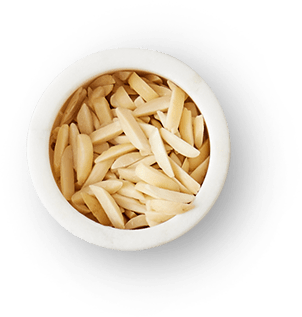
Nut-free: Indian cuisine is mostly nut-free. The exceptions are the cashew-based gravies (korma, paneer makhani in some recipes) and almonds or pistachios in some sweets. Specify nut-free at order time and ask for cashew-cream gravies to be substituted with coconut cream or tomato base.
Peanut-free: peanuts are uncommon in mainstream North Indian cuisine. Occasional appearances in chaat or specific South Indian dishes (peanut chutney). Easy to filter out by asking.
Sesame-free: sesame is rare in North Indian cooking and appears more in some breads (sesame naan) and some South Indian dishes. Specify sesame-free if needed.
Halal: the majority of Indian restaurants serving meat use halal-certified proteins by default, since the chicken and goat distribution chain in the US Indian-restaurant supply network is heavily halal. Confirm with the caterer if certification documentation is required.
Kosher: kosher Indian is its own sub-category with dedicated kosher caterers. A non-kosher Indian caterer cannot retrofit kosher certification. If kosher is required, source from a certified kosher caterer.
For the full ordering process across mixed-dietary groups see our mixed dietary needs guide, gluten-free office catering guide, and allergy-safe boxed lunches guide.
Managing the Spice Level for a Corporate Audience
One of the most common reservations corporate planners have about Indian catering is the spice level. Reputable Indian caterers handle this routinely.
Tell the caterer up front: “this is for a mixed-tolerance corporate audience, not a heat-seeking palate.” They will calibrate. Most Indian caterers offer three heat levels (mild, medium, spicy) and will default to medium-mild for office orders.
Mild-by-default dishes: butter chicken, korma, palak paneer, dal makhani, vegetable biryani, malai kofta, paneer makhani. Almost all the creamy gravies skew mild.
Naturally spicier dishes: vindaloo, phaal, chicken Chettinad, chilli chicken, Goan curry. Order these as one of the curries (not the only one) for the heat-seekers in your audience.
The universal heat-cutter: raita (yogurt with cucumber and cumin) on the side. Always order raita with an Indian buffet. It softens the spice for guests with lower heat tolerance and serves as the dietary-safe option for guests new to Indian food.
Label the spice level: on the buffet line, label each curry with a mild/medium/spicy tag. On boxed thali orders, label the spicy items distinctly. This costs nothing and prevents the awkward “I just got a bite of vindaloo I wasn’t expecting” moment.
Office Logistics: Setup, Aromatics, and Holding Time
Indian catering has a few specific logistics characteristics worth planning for.
Aromatic spread
Indian aromatics (cumin, coriander, garam masala, asafoetida) carry. The smell lingers in conference rooms and elevators for several hours after service and can persist in fabric upholstery. Plan accordingly: open windows or activate HVAC exhaust in the serving room, cover the buffet table with disposable linens that can be removed after, and avoid serving Indian directly adjacent to a quiet-work zone or recording studio. The aromatics are part of the experience; just contain them to the meal area.
Holding time
Indian food holds temperature better than almost any other catering cuisine. The curries are designed to be slow-simmered and reheated, naan and roti reheat well in foil, and basmati rice keeps texture in a chafing pan for two-plus hours. This is one of the cuisines that handles staggered service (multi-floor offices, conference breaks) most gracefully.
Plate and utensil requirements
Indian catering generates more plate-real-estate demand than most cuisines because the multi-dish format means guests are loading rice, two or three curries, a side, and a flatbread onto the same plate. Specify heavy-duty disposable plates (the cheap thin paper plates do not survive curry sauce) or compostable sugarcane bagasse plates. Forks are the default utensil; knives are unnecessary unless the menu includes whole pieces of meat. A dedicated serving spoon per curry is non-negotiable to prevent cross-contact with allergens.
Naan handling
Naan is best served warm. Caterers deliver it wrapped in foil or in insulated containers. Set out a portion at a time and re-warm the rest if the service window is over an hour. Naan placed on an exposed serving tray for two hours becomes inedible.
How to Order Indian Catering Well
The failure mode of Indian catering is that it reads as a generic “rice and three curries” dump. The fix is in the ordering, not the budget.
What to Specify With the Caterer
- Regional style: “North Indian Punjabi” by default for general office audiences; “South Indian” for an Indian-heritage office or a dietary-restriction-heavy event; “Indo-Chinese” for a fusion menu paired with North Indian.
- Heat level: “mixed corporate audience, default to medium-mild, one spicy option for heat-seekers, label the buffet.”
- Dietary profile: exact counts (“5 vegetarian, 3 vegan, 2 gluten-free, 1 nut-allergic, 1 dairy-free out of 40 total”). For boxed thali, ask for distinct labeled boxes for each dietary need.
- Curry mix: two crowd-pleasers (butter chicken, palak paneer) plus one regional accent (lamb curry, biryani) plus one universal vegan (chana masala, dal tadka).
- Naan supply: two pieces per person plus 15 percent buffer, delivered warm and wrapped, with garlic and plain options.
- Raita and chutneys: raita, mint chutney, and tamarind chutney as the default trio. Add mango chutney for guests new to Indian food.
- Serving format and timing: setup window (typically 45 to 60 minutes before service for buffet), serving duration, and cleanup expectations.
- Labeling: dietary markers on every dish (V, VG, GF, DF, nut-free, spicy), recipient name labels on boxed thali, allergen breakdown card visible at the buffet line.
- Utensils and plates: heavy-duty disposable plates, forks, serving spoons per dish, dedicated allergen-safe utensils for the allergen-restricted boxes.
Picking an Indian caterer for corporate orders. Every major metro has strong Indian caterers that handle office orders well. A few to browse on Zerocater:
Indian Caterers on Zerocater
- San Francisco Bay Area: Curry Up Now, Indian Bento, Raavi Indian Cuisine (SF); Koriander Indian Cuisine (Belmont); Great Indian Cuisine, Our Indian Tiffin (Santa Clara).
- New York Metro: Saar Indian Bistro (Manhattan), Nimbooda (Brooklyn), Empyrean Indian Kitchen (Hoboken).
- Chicago: Tandoor Char House, Urban Spice Art.
- Boston: Jo’s Indian Kitchen (Cambridge).
- Atlanta: Naanstop, The Spice Table, Curry Up Now (Decatur).
- Seattle: Mirch Masala.
- Austin: The Curry Cartel.
- Denver: The Monks Indian Cuisine.
Browse all Indian catering on Zerocater, or check our city-specific lists for the cities with the deepest Indian catering benches: San Francisco, New York City, Seattle, Atlanta, and Chicago. Cost guides for the same metros: SF, NYC, Chicago, LA, Boston, Atlanta.
Common Indian Catering Mistakes
- Ordering only one rice. A single basmati for a 50-person buffet runs out fast. Order one basmati plus one biryani for any headcount above 25.
- Forgetting the raita. The single most useful side on the buffet. It cuts the heat, hydrates the meal, and serves as a dietary-safe option for guests new to Indian food.
- Under-ordering naan. Two pieces per person plus a 15-percent buffer is the floor, not the ceiling. Naan is the universally beloved part of an Indian meal and the first thing to run out.
- Defaulting all curries to mild. A 50-person buffet of three mild creamy gravies reads as cautious. Include one regional or spicier option for variety, label it clearly, and the heat-seekers in your audience will be grateful.
- Pre-applying sauce to rice. Curries should be served in separate chafing pans next to the rice, not poured over it. Mixed sauce on rice limits the multi-curry experience and creates a one-note meal.
- Skipping the cashew-cream check for nut-allergic guests. Korma, paneer makhani, and some other creamy gravies use cashew cream as the thickener. Always confirm with the caterer if a nut allergy is present.
- Ignoring the aromatic spread. Indian food smells carry. Plan ventilation, serve away from quiet-work zones, and clean up the buffet promptly after service.
- Letting naan sit out. Naan placed on an exposed serving tray becomes leathery within an hour. Keep most of it wrapped in foil or in an insulated container, set out a fresh batch every 30 minutes.
- No vegetarian-vegan distinction on labels. Vegetarian (dairy-okay) and vegan (no dairy) are not the same. Mark dishes as V (vegetarian, contains dairy) versus VG (vegan, no dairy) so guests can self-select.
- Booking Indian for an outdoor summer event. Outdoor service amplifies the aromatic spread, the curry-on-paper-plate mechanics struggle with wind, and the cuisine loses some visual appeal in a sun-bleached buffet line. Indoor Indian catering is the default; outdoor Indian is the niche pick.
How CaterAi Handles Indian Catering Orders
CaterAi is Zerocater’s planning tool, and it is useful for Indian catering in a few specific ways.
Dietary layering at order time. Indian’s strength is dietary breadth, and CaterAi stores your team’s dietary profiles so the cuisine match accounts for vegetarian, vegan, gluten-free, and nut-allergic counts before you place the order. The vegetable-korma cashew-cream check happens automatically rather than at delivery.
Regional and heat-level matching. CaterAi filters Indian caterers by regional style (North Indian, South Indian, Indo-Chinese) and by heat-tolerance setting so you do not have to chase each caterer’s menu individually to find the right fit.
Headcount to dish math. Indian’s multi-dish format means portion math gets tricky. CaterAi translates your headcount into consistent dish-count planning so the rice-and-curry math does not shift by vendor.
Cuisine rotation. For office programs, Indian gets repetitive at more than once every two weeks. CaterAi tracks your order history and surfaces variety recommendations so the rotation stays interesting (and so the same butter chicken is not on the menu three weeks running).
For ongoing programs, Zerocater’s managed catering covers weekly Indian rotation as part of a broader cuisine mix. For one-off events, corporate event catering handles Diwali parties, summer all-hands with Indian buffets, and large client-appreciation events. See how the platform works.
Plan Indian catering with CaterAi
Frequently Asked Questions
Is Indian catering a good choice for office events?
Yes. Indian catering is one of the most office-friendly cuisines available because it scales cleanly across formats (boxed thali, drop-off buffet, family-style platters, staffed events), covers more dietary profiles by default than almost any other cuisine, holds temperature well in chafing dishes for staggered service, and works for groups from 10 to 500. Vegetarian, vegan, gluten-free, dairy-free, and nut-free guests can all be accommodated from a single Indian menu with no special-ordering required.
How many dishes should I order for an Indian office buffet?
Order one rice (basmati or biryani), two curries (one vegetarian, one meat or paneer), one chickpea or lentil dish (chana masala or dal), one vegetable side, one yogurt-based item (raita), one flatbread (naan, roti, or paratha), and one chutney. That is the eight-dish core for groups of 25 or more. Add one extra curry for headcounts above 75. For groups under 15, drop one curry and one side to keep waste manageable.
How does Indian catering handle allergies and dietary restrictions?
Indian catering is the densest allergen-safe cuisine commonly available for offices. Rice and lentils form the calorie base, so peanut-free and tree-nut-free menus are easy. Sesame is uncommon in traditional Indian cuisine. Vegetarian and vegan dishes account for roughly half of any serious Indian catering menu by default. Gluten-free options are plentiful since rice, lentils, chickpeas, and most vegetable curries contain no wheat. Dairy can be filtered out (vegan curries are widely available, ghee and cream are easily substituted). The main caution is the cashew-based gravies in dishes like korma or paneer makhani, which are nut allergens. Always confirm allergen handling with the caterer.
What is a thali and is it good for office catering?
A thali is a compartmentalized tray meal with rice, two or three curries, a lentil dish, a vegetable, flatbread, yogurt, and chutney in separate sections. For office catering, individual thali trays are the cleanest boxed Indian format: each attendee gets a complete labeled meal with no buffet line, no cross-contact between dishes, and clear dietary markers. Thalis travel well, hold temperature in heating cabinets, and present better than standard meal-prep boxes. They are especially useful for conferences, training sessions, hybrid teams, and any meeting where attendees eat at different times.
How spicy is Indian catering for an office audience?
Indian catering for offices is almost always served on a tiered-heat spectrum. Reputable caterers offer mild, medium, and spicy versions of most dishes and label them clearly. Tell the caterer up front that you are ordering for a mixed-tolerance corporate audience and they will calibrate. Many dishes (butter chicken, korma, palak paneer, dal makhani, vegetable biryani) are naturally mild. Spicy dishes (vindaloo, phaal, chilli chicken) can be ordered as a separate option for the heat-seekers. Provide raita and a cooling chutney on the side as the universal heat-cutter.
Does Indian catering work for boxed lunches and conferences?
Yes, especially well. Boxed Indian thali catering is one of the strongest options for conferences and all-day training events because the format combines complete-meal compartment trays with the dietary breadth that lets a single menu serve a mixed-restrictions audience. The food holds temperature better than most boxed-lunch formats since the curries and rice are designed to be held warm. Each thali can be individually labeled with dietary markers and recipient names. Lead time is similar to any boxed corporate format, typically two to five business days.
What is the difference between North Indian and South Indian catering?
North Indian cuisine is the style most familiar to corporate audiences in the US. It features tandoor-cooked breads (naan, roti), creamy gravies (butter chicken, korma, paneer makhani), rich dals, and biryani. South Indian cuisine is rice-and-lentil-forward with dosas (fermented rice and lentil crepes), idli (steamed rice cakes), sambar (lentil and vegetable stew), and coconut-based curries. For most office events, North Indian is the safer first order because it skews recognizable. South Indian is excellent for offices with an Indian-heritage population or for adventurous-eater audiences who appreciate the lighter, often gluten-free naturally vegan profile.
How far in advance should I book Indian catering?
Book Indian catering at least three to five business days in advance for drop-off and boxed orders, and one to two weeks ahead for staffed events with headcounts above 75 people. Festival-season demand (Diwali, Holi, Ramadan, Eid, Onam) spikes lead times significantly. For a Diwali office celebration, book three to four weeks ahead in October to lock in a slot. Recurring office Indian orders should be scheduled at least 30 days ahead to hold the preferred delivery window.