Gluten-free office catering is not a swap problem. For a teammate with celiac disease, even a few crumbs of bread settling on their salad can mean a week of GI distress and missed work. The difference between vegan catering and gluten-free catering comes down to one word: cross-contact. This guide covers the safe formats (boxed lunches over buffets), the cuisines that are gluten-free by default (Indian, Mexican, rice-based Mediterranean), the hidden-gluten landmines most caterers miss, mixed-team ordering, cost, and where to find vetted GF-friendly caterers.
In This Guide
- Quick Answer: GF Office Catering at a Glance
- Gluten-Free vs. Gluten-Friendly: The Language Matters
- Cross-Contact Is the Real Risk
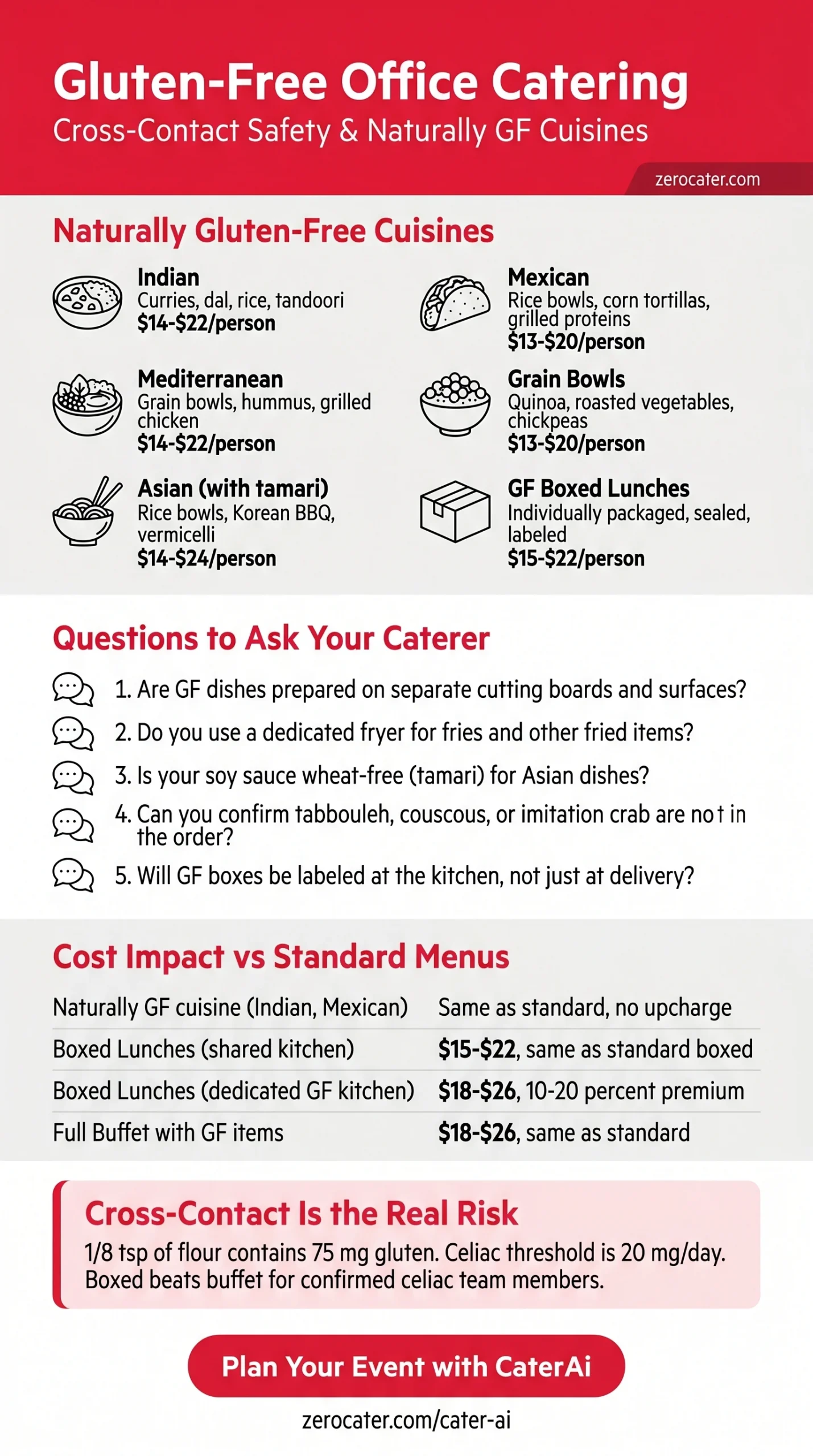
- Naturally Gluten-Free Cuisines for the Office
- Hidden Gluten: The Ingredient Landmines
- Boxed Lunches Beat Buffets for Celiac Safety
- How to Build a Mixed-Team Order with GF Eaters
- What to Look for in a Gluten-Free Caterer
- How Much Does Gluten-Free Catering Cost?
- Where to Order Gluten-Free Catering
- FAQ
Quick Answer: GF Office Catering at a Glance
Five things every catering buyer should know before placing a gluten-free order:
- Cost is roughly the same as standard catering. Naturally gluten-free cuisines (Indian, Mexican, rice-based Mediterranean) carry no upcharge. Expect a 10 to 20 percent premium only if you need a fully dedicated GF kitchen for severe celiac safety.
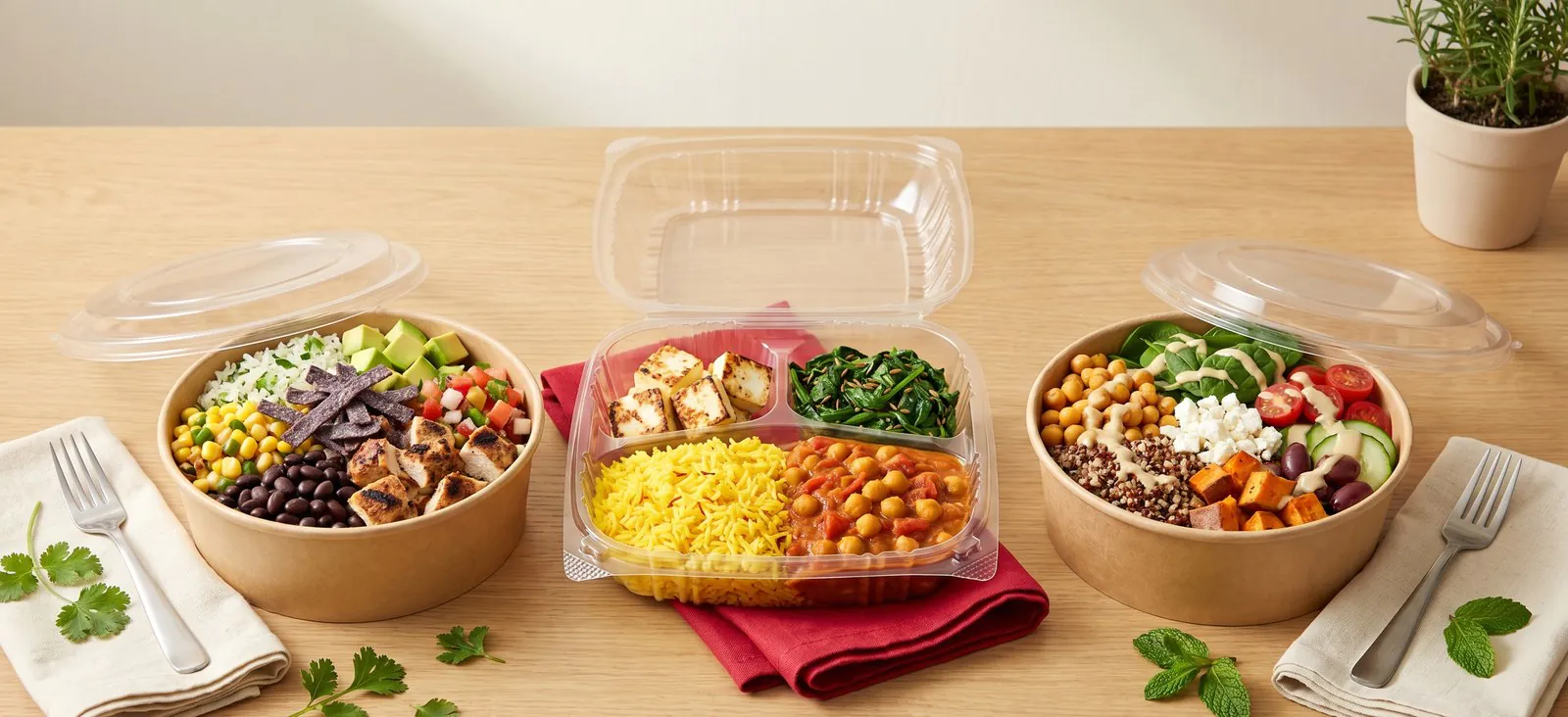
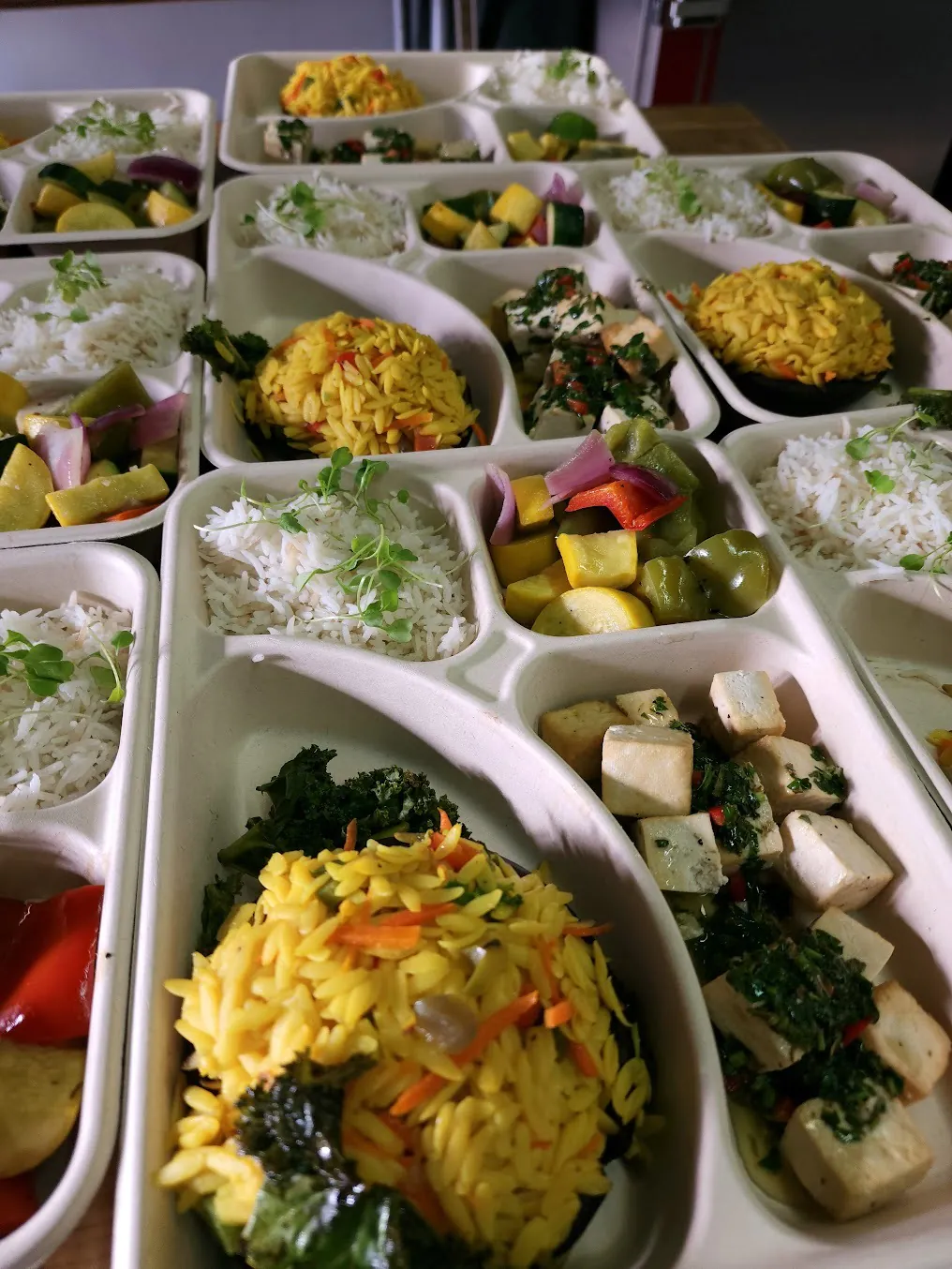
- Boxed lunches beat buffets for celiac team members. Individual packaging eliminates cross-contact from shared utensils, breadcrumbs drifting on the line, and dishes touching each other.
- “Gluten-friendly” is not the same as gluten-free. The first means “made without wheat ingredients in a shared kitchen.” The second means strict cross-contact protocols. For celiac, only the second is safe.
- Naturally GF cuisines are the smart default for mixed teams. Order Indian curry over rice or a Mexican burrito bowl with corn tortilla on the side, and you have a meal everyone (vegan, vegetarian, GF, omnivore) will eat. No separate “diet meal” in a sad clamshell.
- The hidden-gluten list is longer than you think. Soy sauce, oats, tabbouleh, fries, malt vinegar, beer-marinated meats, panko, and even some salad dressings contain wheat. Always ask your caterer to flag these specifically.
Gluten-Free vs. Gluten-Friendly: The Language Matters
The first thing to settle when you call a caterer is which version of “no gluten” they actually offer. Most restaurants and caterers fall into one of three buckets:
| Label | What It Means | Safe For |
|---|---|---|
| Certified gluten-free | Tested at less than 20 ppm gluten. Often a dedicated kitchen or strict separation protocols. Third-party certification. | Celiac, severe sensitivity |
| Gluten-free | Prepared without gluten ingredients, with documented cross-contact protocols (separate cutting boards, fresh gloves, dedicated fryer). | Celiac (with confirmation), gluten sensitivity, preference |
| Gluten-friendly | Made without wheat ingredients, but in a kitchen that also handles wheat. No cross-contact prevention guaranteed. | Preference and mild sensitivity only. Not safe for celiac. |
The phrase “gluten-friendly” exists for legal cover. It tells you the kitchen tried, but it cannot guarantee the meal is celiac-safe. Domino’s, Pizza Hut, and most large chains use this language deliberately. If anyone on your team has celiac disease, ask the caterer to confirm in writing whether their kitchen prepares wheat in the same space. If yes, that meal is not safe for them.
For a deeper dive on practical ordering tips, see our older companion post: 8 Tips for Ordering Gluten-Free at the Office.
Cross-Contact Is the Real Risk
Most office catering buyers think gluten-free is solved by removing wheat ingredients from the recipe. It is not. Cross-contact (gluten transfer from another food, surface, or utensil) is what actually makes celiac team members sick.
The math is unforgiving. A single 1/8 teaspoon of flour contains roughly 75 milligrams of gluten. The threshold for a celiac reaction is around 20 milligrams per day. That means crumbs you cannot see can still trigger a reaction.
The Most Common Cross-Contact Sources
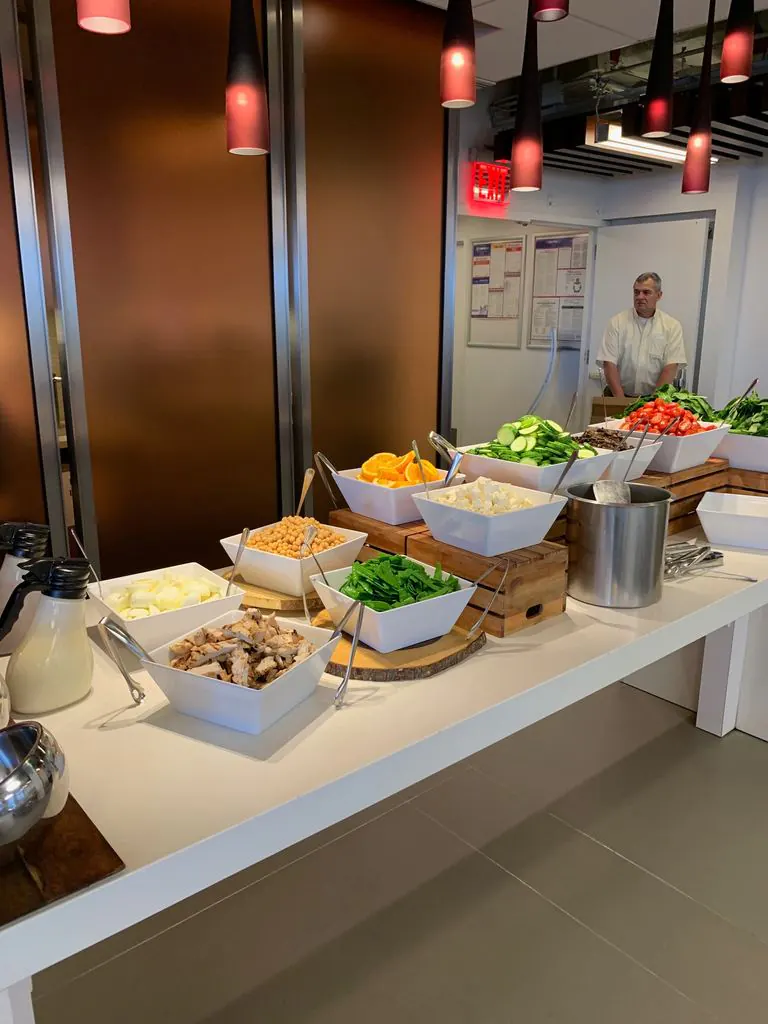
- Shared serving utensils on a buffet. The tongs that just grabbed pasta now grab the salad. Gluten transferred.
- Shared fryers. Fries cooked in the same oil as breaded chicken pick up gluten. This is the #1 hidden source at any restaurant or caterer.
- Cutting boards and prep surfaces. If the same board sliced bread before vegetables, the vegetables are contaminated.
- Pasta water and colanders. Even a “rinsed” colander often retains pasta starch.
- Toasters and grills. Crumbs from previous items transfer onto the next item placed on the surface.
- Airborne flour. A bakery or kitchen actively rolling out dough can spread flour in the air for hours, settling on every surface.
- Garnishes and croutons. A single crouton on top of an otherwise GF salad makes the salad unsafe. Removing it after the fact is not enough.
This is why buffets are the highest-risk catering format for celiac team members and why individually packaged boxed lunches are the gold standard. We get into format tradeoffs in detail below.
Naturally Gluten-Free Cuisines for the Office
The smartest approach to gluten-free office catering is not “subtract gluten from a wheat-based menu.” It is “pick a cuisine that is gluten-free by default.” Five cuisines do this exceptionally well, and most will be a hit with the entire team, not just the GF eaters.
Indian
- Chana masala (chickpea curry) and dal makhani (creamy lentils) over basmati rice
- Aloo gobi (potato and cauliflower) with cumin rice
- Tandoori chicken or paneer with sauteed greens
- Vegetable biryani with raita on the side
- Plain rice as the base, with rotating curry options
Per person: $14 – $22
Indian cuisine is the deepest naturally gluten-free option for office catering. Most curries, rice dishes, and lentil preparations contain no wheat at all. Browse Indian catering on Zerocater, including Tandoor Char House (Chicago) and Curry Up Now (SF Bay Area). Skip: naan, roti, samosa pastry (filo), and any dish thickened with wheat flour.
Mexican
- Burrito bowls with rice, beans, grilled protein, salsa, and corn tortilla on the side
- Build-your-own taco bar with corn tortillas (never flour) and protein options
- Mexican rice with pinto or black beans and grilled vegetables
- Carne asada or pollo asado with cilantro-lime rice
- Chips and guacamole, fresh salsa, elote-style corn salad
Per person: $13 – $20
Mexican is a strong default for any team with mixed dietary needs. The trick is sticking with corn tortillas, not flour, and confirming chips are fried in dedicated oil. Browse Mexican catering on Zerocater. For a brand-by-brand breakdown of national chains, see our Chipotle catering guide and Chipotle catering alternatives.
Mediterranean (Rice-Based)
- Grain bowls with quinoa or rice, grilled chicken or falafel, hummus, and roasted vegetables
- Greek-style platters with grilled chicken, tomato-cucumber salad, hummus, and olives (skip the pita)
- Lemon-herb rice pilaf with grilled lamb or chicken kebabs
- Stuffed grape leaves (most are rice-based and naturally GF)
- Hummus, baba ganoush, and tzatziki with vegetable crudites instead of pita
Per person: $14 – $22
Mediterranean cuisine is gluten-free if you stick to rice or quinoa as the base. The biggest landmine is tabbouleh. Most people assume tabbouleh is just parsley salad, but the traditional recipe is built on bulgur wheat. Always confirm with your caterer. Browse Mediterranean catering on Zerocater, including Hummus Mediterranean Kitchen (Bay Area) and Baal Cafe & Falafel (NYC).
Salad & Grain Bowls
- Build-your-own grain bowl bar with quinoa, brown rice, or wild rice base
- Power bowls with roasted sweet potato, chickpeas, and avocado
- Kale Caesar (vegan or traditional) with crispy chickpeas instead of croutons
- Sweet potato and black bean grain bowls with chipotle dressing
- Harvest bowls with seasonal roasted vegetables, lentils, and tahini drizzle
Per person: $13 – $20
Bowl bars are perfect for offices with mixed dietary needs. Everyone customizes their own meal, so vegan, vegetarian, GF, and omnivore eaters all walk away happy. Browse bowl options on Zerocater, including Saucy Greens (SF) and Ranch Hand Organic Bowls (Austin). Skip: croutons, soy-based dressings (most contain wheat), and any wheat-based grain like farro or barley.
Asian (with Tamari Swaps)
- Rice bowls with grilled chicken, salmon, or tofu and stir-fried vegetables (request tamari instead of soy sauce)
- Korean BBQ with rice and banchan (kimchi, pickled vegetables, sauteed greens)
- Vietnamese vermicelli (rice noodle) bowls with grilled meat and fresh herbs
- Sushi rolls (confirm imitation crab is not used; it contains wheat)
- Thai curry with jasmine rice (skip pad thai, which often uses wheat-based fish sauce)
Per person: $14 – $24
Watch for: almost all soy sauce contains wheat. The gluten-free swap is tamari. Hoisin, oyster sauce, and most teriyaki marinades also contain wheat. Tempura is breaded with wheat flour. Imitation crab in California rolls contains wheat. When ordering Asian catering, confirm every sauce and marinade with your caterer.
Hidden Gluten: The Ingredient Landmines
This is the section most “GF menu” lists skip. Wheat hides in dozens of ingredients people assume are safe. If you only memorize one part of this guide, memorize this table:
| Ingredient | Where It Hides | Gluten-Free Swap |
|---|---|---|
| Soy sauce | Stir-fries, marinades, sushi, dressings, glazed proteins | Tamari or coconut aminos |
| Tabbouleh | Mediterranean platters and mezze (made from bulgur wheat) | Quinoa tabbouleh, fattoush without pita |
| Couscous | Mediterranean and North African dishes (it is pasta, not a grain) | Rice, quinoa, or millet |
| Oats | Granola, overnight oats, breakfast bars (cross-contaminated unless certified GF) | Certified gluten-free oats only |
| French fries | Often dusted with wheat flour or fried in shared oil with breaded items | Roasted potatoes or fries from a dedicated GF fryer |
| Beer / malt vinegar | BBQ marinades, salad dressings, fish-and-chips batter, braised meats | Wine, apple cider vinegar, balsamic |
| Panko / breadcrumbs | Meatballs, crab cakes, fried chicken, schnitzel, stuffed mushrooms | Almond flour or certified GF panko |
| Croutons | Caesar salads and house salads (a single crouton contaminates the whole bowl) | Crispy chickpeas, toasted seeds, or nothing |
| Imitation crab | California rolls and crab salads (wheat is a binder) | Real crab, salmon, or shrimp |
| Soup thickeners | Cream soups, gravies, stews thickened with a wheat roux | Cornstarch, arrowroot, rice flour |
| Salad dressings | Many bottled and house dressings use wheat-based thickeners or malt vinegar | Olive oil + lemon, balsamic vinaigrette, tahini |
| Marinated proteins | Bulgogi, teriyaki chicken, soy-glazed salmon, beer-marinated steak | Plain grilled with tamari or olive oil + herbs |
The takeaway: when ordering for a celiac team member, ask the caterer to walk through every sauce, marinade, dressing, and topping. A reputable caterer expects this question and will answer it confidently. If they cannot, that is your signal to choose a different caterer.
Boxed Lunches Beat Buffets for Celiac Safety
This is the single biggest format decision in gluten-free office catering. Here is why boxed wins:
| Risk Factor | Buffet | Boxed Lunch |
|---|---|---|
| Shared serving utensils | High risk: tongs move between dishes | No risk: each box is sealed |
| Adjacent contamination | High risk: bread basket next to GF entree | No risk: physical separation |
| Coworker accidents | High risk: someone drops a sandwich onto the salad | No risk: nothing to drop |
| Ingredient labeling | Buffet card may not list every ingredient | Each box can carry an ingredient sticker |
| Identification at pickup | “Which one is the GF dish?” guessing game | “GF” sticker on the lid |
| Cost premium | Cheaper per person at scale | $2 to $4 more per person |
The rule of thumb: if anyone on the team has confirmed celiac disease, default to individually packaged boxed lunches for any catered meal. The premium is small, the safety upgrade is enormous, and your celiac team member never has to ask “is this safe?” again. For a full breakdown of the format tradeoff, see Boxed Lunch Catering vs. Buffet and How Much Do Boxed Lunches Cost.
Plan gluten-free catering with CaterAi
How to Build a Mixed-Team Order with GF Eaters
Most office catering orders are for mixed teams: most people eat anything, one or two are gluten-free, and a few may be vegan or vegetarian. The wrong move is to order the standard menu plus a “diet box” for the GF eaters. The right move is to make naturally GF dishes the centerpiece so everyone eats the same meal.
A Real-World 30-Person Order with 2 Celiac Eaters
- 28 Indian buffet portions (chicken tikka masala, dal, chana masala, basmati rice, raita, pickled vegetables) with naan kept on a separate tray at the far end of the table
- 2 individually packaged GF boxed lunches (the same Indian dishes, sealed, labeled “GF / Celiac”)
- Total per person: about $18, no premium for the GF accommodation
This works because the cuisine is naturally GF, the celiac team members are not stuck with a separate “diet meal,” and the boxed format eliminates buffet-line cross-contact for them specifically.
Label everything clearly. Use tent cards or stickers for each dish: GF, Vegan (V), Vegetarian (VG), Contains Nuts. The GF labeling matters most. If you have a non-celiac sensitivity in the room, they can self-screen a buffet line. A celiac eater needs you to do the screening for them.
Keep gluten-containing items physically separated. Bread, croutons, pasta, and naan should sit at the far end of the table, ideally on a separate small surface. This prevents the bread basket from migrating onto a salad or someone setting a sandwich down on the GF entree.
Ask the caterer to package one or two extras. A celiac team member who has had a contamination scare in the past will want a sealed backup option. Asking the caterer to pack one or two extra GF boxes costs almost nothing and makes the meal stress-free for them.
For a broader framework on dietary inclusion, see How to Order Catering for Mixed Dietary Needs and our Vegan Office Catering guide.
What to Look for in a Gluten-Free Caterer
Not every caterer handles gluten-free orders with the rigor a celiac team member needs. Here is the short list of qualifications that separate a safe caterer from a risky one:
- A dedicated gluten-free section on their menu, not “we can modify dishes.” Caterers who have built and tested GF recipes are more reliable than ones who scramble to adapt on the fly.
- Documented cross-contact protocols. Ask: “Do you use separate cutting boards, fresh gloves, and dedicated fryers for GF orders?” The right answer is yes, with specifics. The wrong answer is “we are careful.”
- Naturally gluten-free cuisine focus. Indian, Mexican, and rice-based Mediterranean caterers tend to handle GF more reliably than American deli or Italian caterers, simply because most of their menu was already wheat-free before you asked.
- Willingness to itemize ingredients. A good caterer will walk you through every sauce, dressing, marinade, and garnish. If you ask “is the salad dressing GF?” and they say “I think so” instead of “yes, here are the ingredients,” choose someone else.
- Boxed-meal capability. The safest format for celiac is individual packaging. A caterer who only does buffet trays is a poor fit if you have a confirmed celiac on the team.
- Allergen labeling on packaging. Ask whether GF boxes are labeled at the kitchen, not just at the buffet line. Kitchen-applied labels are harder to mix up.
How Much Does Gluten-Free Catering Cost?
For most formats, gluten-free catering costs the same as standard catering. The exception is when you need a fully dedicated GF kitchen for celiac safety, which carries a 10 to 20 percent premium because the caterer is allocating prep space, equipment, and staff time exclusively to your order.
| Format | GF Price/Person | Standard Price/Person |
|---|---|---|
| Boxed lunches (naturally GF cuisine) | $15 – $22 | $15 – $22 |
| Boxed lunches (dedicated GF kitchen) | $18 – $26 | $15 – $22 |
| Indian buffet | $14 – $22 | $14 – $22 |
| Mexican rice bowl bar | $13 – $20 | $13 – $20 |
| Mediterranean grain bowls | $14 – $22 | $14 – $22 |
| Continental breakfast (certified GF oats) | $12 – $18 | $10 – $16 |
| Full buffet spread | $18 – $26 | $18 – $26 |
These prices are food-only. Add 25 percent for the all-in cost (delivery, service charge, tax). For metro-specific cost guides, see our breakdowns for NYC, San Francisco, and Chicago.
The bottom line: gluten-free catering does not have to be a budget hit. If you build the order around naturally GF cuisines and only use boxed meals for confirmed celiac team members, the total premium is $0 to $4 per person.
Where to Order Gluten-Free Catering
The fastest way to find vetted gluten-free caterers in your city is through a platform that lets you filter by dietary preference. Zerocater connects offices with a wide network of caterers across every major US metro, and many of them have dedicated GF menus or naturally GF cuisine specialties.
Naturally gluten-free caterers on Zerocater by city
- San Francisco: Curry Up Now (Indian), Saucy Greens (salads and grain bowls), Hummus Mediterranean Kitchen (Bay Area Mediterranean)
- New York City: Baal Cafe & Falafel (Mediterranean rice bowls), bowl-bar specialists across Manhattan
- Chicago: Tandoor Char House (Indian)
- Austin: Ranch Hand Organic Bowls (organic grain bowls)
- Across cities: filter for Indian, Mexican, and Mediterranean cuisines on Zerocater for the deepest naturally gluten-free options
For a broader caterer rundown by city, see our city listicles: NYC, San Francisco, Chicago, Los Angeles, Washington D.C., Seattle, Denver, Dallas, Atlanta, and Boston.
With CaterAi, you can plan your gluten-free catering order in minutes. Share your headcount, dietary needs (including the count of celiac and non-celiac GF eaters), and preferred date. CaterAi builds menus from caterers who actually handle GF, you chat to swap dishes or add boxed individually packaged options, and Zerocater handles delivery and setup.
Plan gluten-free catering with CaterAi
Frequently Asked Questions
How much does gluten-free office catering cost per person?
Gluten-free office catering typically costs $14 to $26 per person, comparable to standard catering for most formats. Boxed GF lunches run $15 to $22, grain bowl bars cost $13 to $20, and full buffet spreads range from $18 to $26. Expect a 10 to 20 percent premium only when a caterer prepares food in a fully dedicated gluten-free kitchen for severe celiac safety. Naturally gluten-free cuisines like Indian, Mexican, and rice-based Mediterranean are usually no upcharge at all.
What is the difference between gluten-free and gluten-friendly?
Gluten-free means the dish meets the FDA threshold of less than 20 parts per million of gluten, prepared with strict cross-contact protocols. Gluten-friendly is industry slang for a dish made without gluten ingredients but prepared in a kitchen that also handles wheat, so trace contamination is possible. For an employee with celiac disease, gluten-friendly is not safe. For someone with a non-celiac sensitivity or preference, gluten-friendly often works. Always ask which one your caterer is providing.
Are boxed lunches safer than buffets for celiac employees?
Yes. Individually packaged boxed lunches are the safest catering format for celiac team members because each meal is prepared, sealed, and labeled separately. Buffets are higher risk because shared serving utensils, neighboring dishes with bread or pasta, and airborne flour can all cross-contaminate a technically gluten-free item on the line. If you have a confirmed celiac on the team, default to boxed lunches for any catered meal.
What cuisines are naturally gluten-free for office catering?
Indian cuisine is the deepest naturally gluten-free option: rice-based dishes, lentil dals, chickpea curries, and most vegetable preparations contain no wheat. Mexican is excellent if you stick to corn tortillas, rice, beans, and grilled proteins. Rice-based Mediterranean works well (grain bowls, grilled chicken, hummus, roasted vegetables) as long as you skip pita, couscous, and tabbouleh, all of which contain wheat. Korean BBQ with rice and vegetables is GF if soy sauce is swapped for tamari.
What hidden gluten ingredients should I watch for?
The most common hidden gluten sources in office catering are soy sauce (almost all soy sauce contains wheat, tamari is the gluten-free swap), tabbouleh (made from bulgur wheat, not just parsley), couscous (it is pasta), French fries (often dusted with flour or fried in shared oil with breaded items), oats (almost always cross-contaminated unless certified GF), beer used in marinades, malt vinegar in salad dressings, and panko or breadcrumbs in meatballs and crab cakes. Always ask your caterer to flag these specifically.
How do I order for a mixed team with one or two gluten-free eaters?
Order naturally gluten-free entrees that everyone will eat (Indian curry over rice, Mexican rice bowls, grain bowls) instead of treating gluten-free as a separate menu. This avoids the dynamic where the GF teammate gets a plain salad while everyone else has a hot meal. If you order boxed lunches for the celiac team members specifically, label those boxes clearly and place them at one end of the table to avoid mix-ups. See our guide to ordering for mixed dietary teams for more detail.