A board meets after everyone’s day job and eats while it works through the agenda. A volunteer crew packs boxes for four hours and needs a real meal, not a granola bar. And at the gala, the dinner in front of a donor is part of the ask, set against the quiet knowledge that every dollar spent on it is a dollar not spent on the mission. Nonprofit catering runs on a constraint no company faces: the spend is public, the workforce is largely unpaid, and the event is often the fundraiser itself. This guide covers the occasions nonprofits cater for, how to feed volunteers and a board on a tight budget, how to cater a gala that looks generous without looking wasteful, what grant rules and restricted funds mean for a food order, what it costs per person, and the logistics that sink an order.

In This Guide
- Why Nonprofit Catering Follows Different Rules
- The 7 Occasions Nonprofits Cater For
- Quick Comparison Table
- What to Order: Menu Ideas by Occasion
- Feeding Volunteers Without Blowing the Budget
- Spending Under a Donor’s Microscope
- Recurring Programs vs. On-Demand Orders
- The Logistics Nonprofits Get Wrong
- City Cost Guides
- How CaterAi Handles Nonprofit Catering
- FAQ
Why Nonprofit Catering Follows Different Rules
Every organization has to feed a room. A nonprofit has to do it under four constraints a company never deals with, and they stack.
- The spend is public and has to be defensible. A nonprofit’s finances end up in a Form 990, an annual report, and often a grant audit. Catering is a visible line, so every order has to read as either modest and practical or as an investment that raised more than it cost. Nobody has to justify the lunch budget at a law firm; a development director sometimes does.
- Volunteers are the workforce, and food is how you keep them. Companies feed employees they already pay. Nonprofits feed people who show up for free, which makes a volunteer shift meal and a volunteer appreciation spread core occasions rather than perks. Feed volunteers well and they come back, so the food is a retention tool with a real return.
- The event is often the fundraiser. At a gala, a donor dinner, or a fundraising breakfast, the meal is part of the ask rather than overhead sitting beside the real work. The food sets the tone a donor carries into the pledge, so it has to feel generous and cared-for without ever reading as lavish.
- Restricted funds and grant rules cap what you can spend. Many grants limit or forbid spending on food and hospitality, restricted gifts can only pay for what the donor named, and federal awards carry their own rules on allowable meals. The money for catering often has to come from unrestricted funds or an event sponsor, and the order has to respect that before it is placed.
Get those four right and the rest of the order looks like any other. Get them wrong and you have a gala that cost more than it raised, a volunteer crew that felt like an afterthought, or a grant-funded meal a funder will ask about.
The 7 Occasions Nonprofits Cater For
1. Board and Committee Meetings
The everyday case. Boards and committees often meet early, over lunch, or in the evening after work, and a working meal keeps the meeting on track. Keep it modest and practical, since board catering sits in the budget the board itself reviews. Boxed meals travel best when members join from several locations or over video.
2. Volunteer Shift Meals
A crew packing food boxes, building, cleaning up, or staffing a program is doing real work over a real stretch of hours, and it needs a real meal. This is the occasion companies do not have, and it wants hearty, filling, individually portioned food that holds while volunteers rotate through on staggered breaks.
3. Volunteer Appreciation
The thank-you event for the people who give their time. Appreciation meals lean generous and crowd-pleasing on a budget that has to stay reasonable, which is why a taco bar, a barbecue spread, or a pasta buffet does the job better than an expensive plated dinner. The message is that the organization noticed, not that it overspent.
4. Fundraising Galas and Donor Dinners
The signature event. A gala or a cultivation dinner puts food in front of donors as part of the pitch, so presentation and service carry real weight here, closer to how our financial services and law firm guides treat a client meal. The trick is generous without wasteful, ideally with the meal underwritten so the room knows the tickets funded the mission.
5. Fundraising Breakfasts and Luncheons
The daytime version of the ask: a breakfast or a luncheon built around a program and a pitch. These run tighter than a gala but the meal still sets the tone, and a clean, well-timed service keeps a packed program moving from the food to the fundraising moment without a lull.
6. Staff Meetings, All-Staff Days, and Retreats
Nonprofit teams run lean and stretched, so a catered all-staff day or a planning retreat is both a working session and a morale gesture. A lunch and learn format fits training and rollout sessions, and the food matters more than the budget line suggests to a team that rarely gets treated.
7. Program Launches, Open Houses, and Community Meals
Grand openings, ribbon cuttings, open houses, and community or client-facing meals put the organization in front of the people it serves and the people who fund it. Food that feeds a crowd and sets up fast, from a party tray spread to a light reception, keeps these welcoming without turning into a production.
Quick Comparison Table
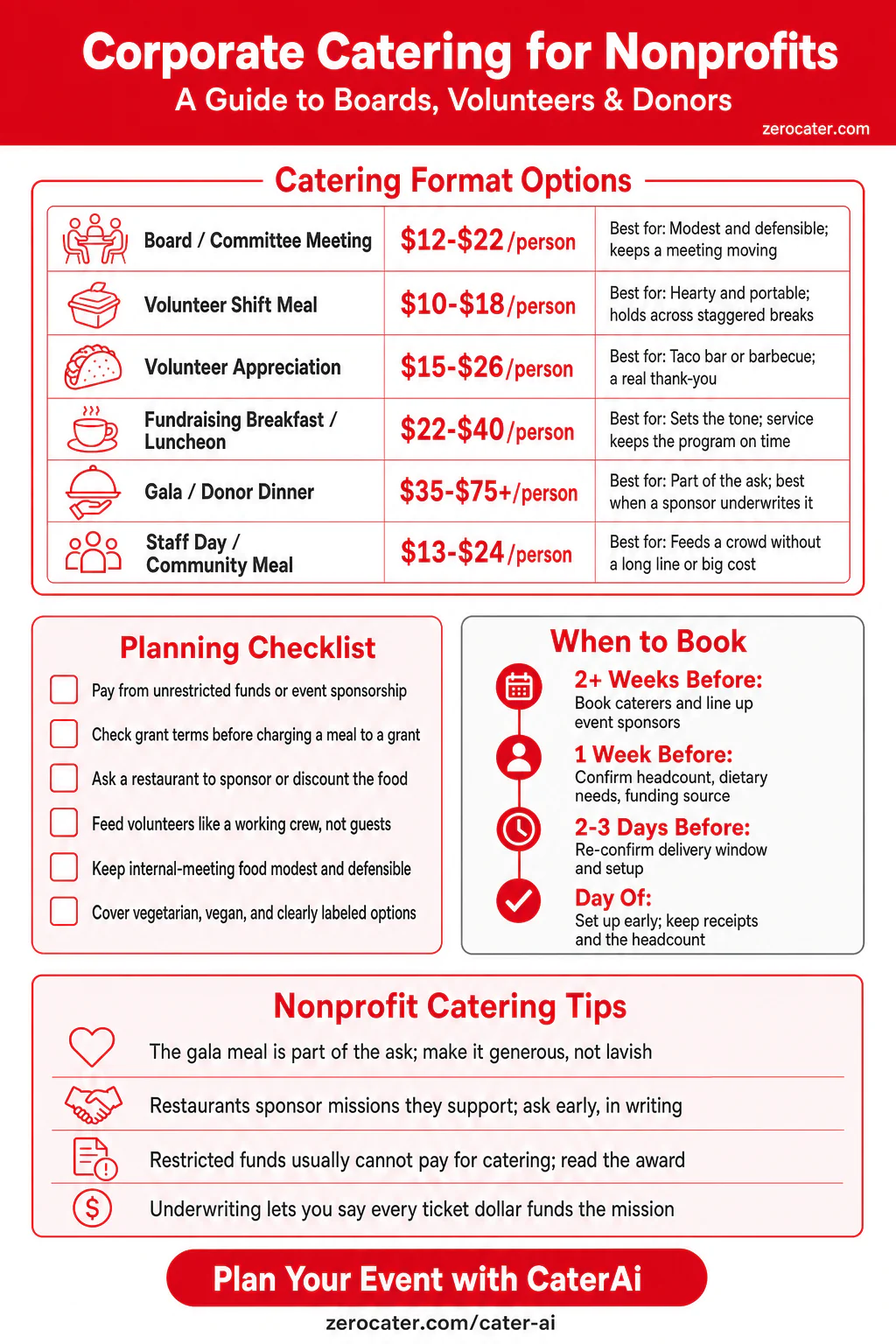
| Occasion | Best Format | Per Person | Why It Works |
|---|---|---|---|
| Board / Committee Meeting | Boxed meals, light buffet, breakfast | $12 – $22 | Modest and defensible; keeps a meeting moving |
| Volunteer Shift Meal | Sealed boxed meals, pizza, grab-and-go | $10 – $18 | Hearty and portable; holds across staggered breaks |
| Volunteer Appreciation | Taco bar, barbecue, pasta buffet | $15 – $26 | Generous on a budget; reads as a real thank-you |
| Fundraising Breakfast / Luncheon | Premium buffet or plated | $22 – $40 | Sets the tone; service keeps the program on time |
| Gala / Donor Dinner | Plated dinner or stationed reception | $35 – $75+ | Part of the ask; best when a sponsor underwrites it |
| Staff Day / Community Meal | Fast buffet or boxed for a crowd | $13 – $24 | Feeds a group without a long line or big cost |
Ranges assume major-metro pricing before delivery, tax, and gratuity, which typically add 20 to 25 percent. Gala pricing runs highest and is often offset by a corporate sponsor. For a full breakdown, see our boxed lunch catering cost guide.
What to Order: Menu Ideas by Occasion
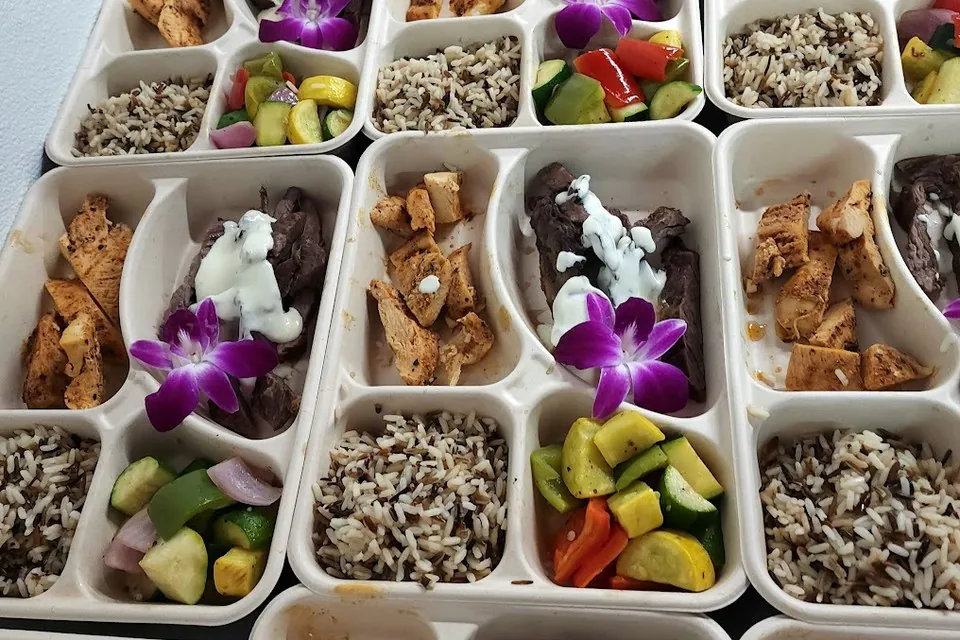
Board and staff meals. Boxed sandwiches and wraps, grain bowls, and composed salads with a real protein, each box labeled and self-contained. Our roundup of the best boxed lunch catering companies and the boxed lunch vs. buffet comparison both apply here, and boxed wins for an evening or multi-location board.
Volunteer shift meals. Hearty and portable: sealed boxed meals, hot pasta trays, rice bowls, or the reliable stack of pizzas for a big crew on a small budget. Food that holds and travels beats anything delicate, because volunteers eat when the work allows.
Volunteer appreciation and community meals. This is where a little spend goes a long way. A build-your-own taco bar, barbecue, or a pasta buffet feeds a crowd generously without a plated-dinner cost. Browse the directory for Mexican and barbecue caterers that do this well at volume.
Galas and donor dinners. Plated proteins with a grain and a vegetable, or a stationed reception with passed bites and a couple of food stations for a mingling crowd. Composed, well-presented food that signals the organization treats its supporters and its budget with equal care. A Mediterranean mezze reception works for a stand-and-mingle crowd.
Across all of these, keep at least one vegetarian and one vegan option in the mix and cover gluten-free where you can. Our vegetarian, vegan, and gluten-free guides go deeper, the mixed dietary needs guide covers juggling several at once, and our halal guide matters for the many organizations serving a religiously diverse community. Clear labeling on every dish removes the biggest source of confusion at a public event.
Feeding Volunteers Without Blowing the Budget
Volunteers are the part of nonprofit catering that has no corporate equivalent, and they split into two very different jobs.
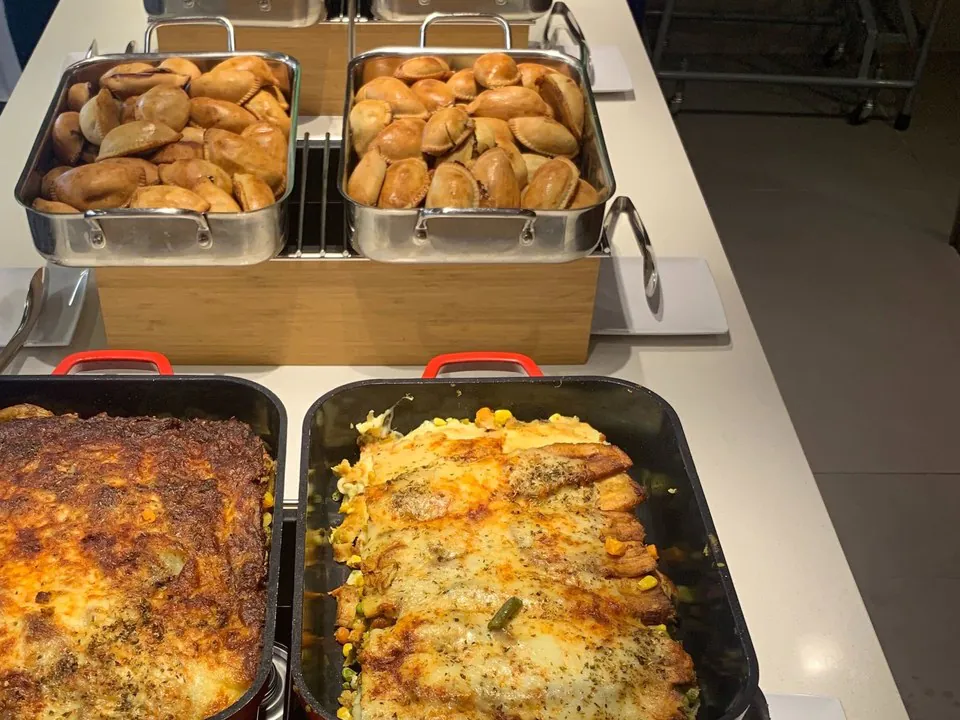
The working shift needs fuel. A crew at a food bank, a build site, a cleanup, or a packing shift is on its feet for hours, so feed it the way you would feed any working crew: hearty, filling, and individually portioned. Sealed boxed meals or a grab-and-go setup let people grab a portion the moment their wave rotates off, with no serving line to eat their short break. Our manufacturing guide covers the same staggered-break, feed-a-working-crew problem in more depth.
The appreciation event needs warmth. The thank-you meal is about the gesture. It has to feel generous, but the budget still has to stay reasonable, which is the whole art of it. Lean on the formats that scale: a taco or pasta bar, a barbecue, a build-your-own bowl spread. Spend the money on abundance and a warm setup rather than on an expensive plated meal nobody expects.
Ask for a sponsor. A local restaurant will often donate or discount the food for a mission it supports, in exchange for recognition on signage, in the program, and from the stage. Make the ask early with a firm headcount and date, offer the recognition in writing, and you move real budget back to the work. Even a donated dessert station or a partial discount counts, and it starts a relationship you can return to next year.
Spending Under a Donor’s Microscope
The hardest thing about nonprofit catering is not the food. It is spending money on food in full view of the people who gave it, and doing it in a way that reads as good stewardship.
- The spend is on the record. Catering shows up in the budget the board reviews, in the annual report, and in the public Form 990. Keep internal-meeting food modest and practical, and keep event food defensible as an investment that raised more than it cost. The question to answer for every order is whether a donor reading the books would nod or wince.
- Restricted funds and grants come with rules. A restricted gift can only pay for what the donor named, and many grants limit or forbid spending on food, hospitality, and entertainment. Federal awards carry their own rules on allowable meals. Pay for catering from unrestricted funds or event sponsorship, and confirm any grant-funded meal against the award terms before you order, not after.
- Generous is not the same as lavish. A donor event should feel abundant and cared-for, but an expensive spread that goes half-eaten sends the wrong message. Spend on quality, presentation, and getting the portions right, and cut the waste. Let the food carry the room without the price tag being the story.
- Underwriting changes the math. When a corporate sponsor underwrites the gala dinner, every ticket dollar goes to the mission and you can say so from the stage. Building a sponsor into the event budget is often the single biggest lever on how a fundraiser’s catering reads and performs.
The rule that trips people up
Grant and restricted funds usually cannot pay for catering, and the terms often say so in writing. Before you charge a meal to a grant, read the award. When in doubt, pay from unrestricted funds or line up an event sponsor, and keep the receipts and the headcount so the spend is easy to explain later.
Recurring Programs vs. On-Demand Orders
Most nonprofits need both, and the mistake is running everything through one.
A recurring program fits the predictable load: a standing board or staff meal, a weekly volunteer shift that always needs feeding, a monthly community meal. Recurring orders earn you consistent delivery, a caterer who learns your dietary needs and your space, and a rotation that keeps the food from repeating. Managed corporate catering exists for exactly this, and the consistency makes the spend easy to budget and report.
On-demand orders fit the spiky load: the gala, the grant announcement, the donor who wants to visit next week, the surprise volunteer surge. These need speed and flexibility more than optimization, and they are where event catering earns its keep.
The practical setup is a standing program for the base load plus a trusted fast path for the events, so nobody is sourcing a new caterer the week of the gala. Our office manager’s guide to ordering catering covers building that workflow, and the corporate event catering checklist covers the one-off fundraisers.
The Logistics Nonprofits Get Wrong
- A gala that costs more than it raises. The meal is part of the fundraiser, not separate from it. Build a sponsor into the budget and keep the per-head cost honest against what the event brings in.
- Charging catering to a restricted grant. The terms often forbid it. Confirm the funding source before the order, not when the auditor asks.
- Treating volunteers like guests instead of a working crew. A crew on a shift needs a real, filling meal that holds, not a light tray meant for a seated event.
- A serving line for a staggered volunteer shift. People rotate off in waves. Sealed individual portions beat a buffet that wilts by the third group.
- Forgetting the ask when you set the menu. A fundraising meal has to keep a packed program moving. Time the service so the room is fed before the pitch, not during it.
- The same meal every week. A standing program without rotation stops reading as care and starts reading as habit. Vary the cuisine.
City Cost Guides
Catering costs and lead times vary by market. For local pricing, see our cost guides for New York City, Chicago, Washington, D.C., and San Francisco, all major hubs for foundations and nonprofits.
For the other industry playbooks in this series, see corporate catering for tech companies, law firms, healthcare, financial services, and manufacturing.
How CaterAi Handles Nonprofit Catering
CaterAi is Zerocater’s catering planning tool, and it fits the way nonprofits order.
Describe the constraint, get a menu that respects it. Give CaterAi the plain-language brief (“60 volunteers on a packing shift, hearty and portable, sealed individual boxes, vegetarian and vegan covered, around $14 a head”) and it builds options from over 1,000 restaurants that fit the format, the timing, and the budget. Stay on budget without calling five caterers.
Dietary profiles that stick. Store the needs of a board, a staff, or a regular volunteer crew once, and every future order respects them, which matters when the same people gather on a schedule and nobody wants to re-collect restrictions each time.
Rotation and a spend you can report. CaterAi tracks what a recurring group has already had and varies the cuisine, and it keeps a clean record of what each order cost, which makes a public-facing budget easier to defend. For the base load, managed corporate catering runs the program; for galas, appreciation events, and community meals, event catering covers the one-offs with setup and staffing. See how it works.
Plan Your Nonprofit’s Catering with CaterAi
Related reading: company picnic catering, party tray catering, lunch and learn catering, healthy office catering, and holiday party planning for year-end staff and volunteer celebrations.
Frequently Asked Questions
How much does catering cost for a nonprofit event?
It tracks the occasion more than the headcount. A board meeting or staff lunch usually runs about $12 to $22 per person, a volunteer shift meal about $10 to $18, a volunteer appreciation spread about $15 to $26, a fundraising breakfast or luncheon about $22 to $40, and a gala or donor dinner about $35 to $75 and up. The higher end is common at fundraising events, and it is often underwritten by a corporate sponsor so ticket revenue goes to the mission rather than the meal. Ranges assume major-metro pricing before delivery, tax, and gratuity.
How do you cater a fundraiser without looking like you are wasting donor money?
Make the meal feel generous and cared-for without reading as lavish, and where you can, cover it with a sponsor. Donors judge stewardship, so a stationed reception, a smart plated dinner, or an abundant buffet lands better than an expensive spread nobody finishes. Line up a restaurant or corporate sponsor to underwrite the food so you can say every ticket dollar goes to the work. Keep the portions right, cut the waste, and let the quality rather than the price tag carry the room.
Can you use grant money to pay for catering?
Sometimes, but check the grant terms first because many restrict or forbid it. Foundation and government grants often limit spending on food, hospitality, and entertainment, and federal awards carry their own rules on what meals are allowable. Restricted funds can only pay for what the donor or grant specified. The safe path is to pay for catering from unrestricted funds or from event sponsorship, and to confirm any grant-funded meal against the award terms before you order rather than after.
What is the best food for a volunteer appreciation event on a tight budget?
Hearty, crowd-pleasing food that feeds a lot for a little and still feels like a real thank-you. A taco bar, a barbecue spread, a pasta buffet, or a build-your-own bowl bar all scale well and read as generous without the per-head cost of a plated dinner. Ask a local restaurant to sponsor or discount the meal in exchange for recognition. The point is that volunteers gave their time for free, so the food has to say the organization noticed, not that it spent a fortune.
How do you feed a volunteer crew that is working a shift?
Feed them the way you would feed any working crew: real, filling, individually portioned food that holds while people rotate through in waves. Volunteers at a food bank, a build site, a cleanup, or a packing shift are doing physical work, so lean hearty rather than light, and use sealed boxed meals or a grab-and-go setup so nobody loses their short break to a serving line. Cover a vegetarian and a vegan option, keep water and snacks stocked for a long shift, and deliver to where the crew actually is.
What should you serve at a nonprofit board meeting?
Modest, practical food that keeps a working meeting moving. Boxed lunches, a light sandwich and salad buffet, or a breakfast spread for a morning session all work, and boxed meals travel best when a board meets in the evening or over video from several locations. Keep it defensible on cost, since board catering shows up in the budget and sets the tone for how the organization spends. Cover the common dietary needs, since a small board almost always has a few.
Should a nonprofit ask a caterer or restaurant to donate or discount the food?
Yes, and many will, especially for a mission they already support. Restaurants sponsor nonprofit events with donated or discounted catering in exchange for recognition on signage, in the program, and from the stage, which is real marketing for them and a lower food cost for you. Make the ask early, be specific about the headcount and the date, and offer the recognition in writing. Even a partial discount or a donated dessert station moves budget back to the mission, and it starts a relationship you can return to.
What food works for a fundraising gala or donor dinner?
Food that matches the tone of the ask: composed, well presented, and generous without being wasteful. A plated dinner suits a seated program, while a stationed reception with passed bites and a few food stations suits a mingling crowd and a live auction. Cover dietary needs, since donors notice, and keep the service smooth so the program stays on schedule. The meal is part of the pitch, so it should feel like the organization treats its supporters and its budget with equal care.