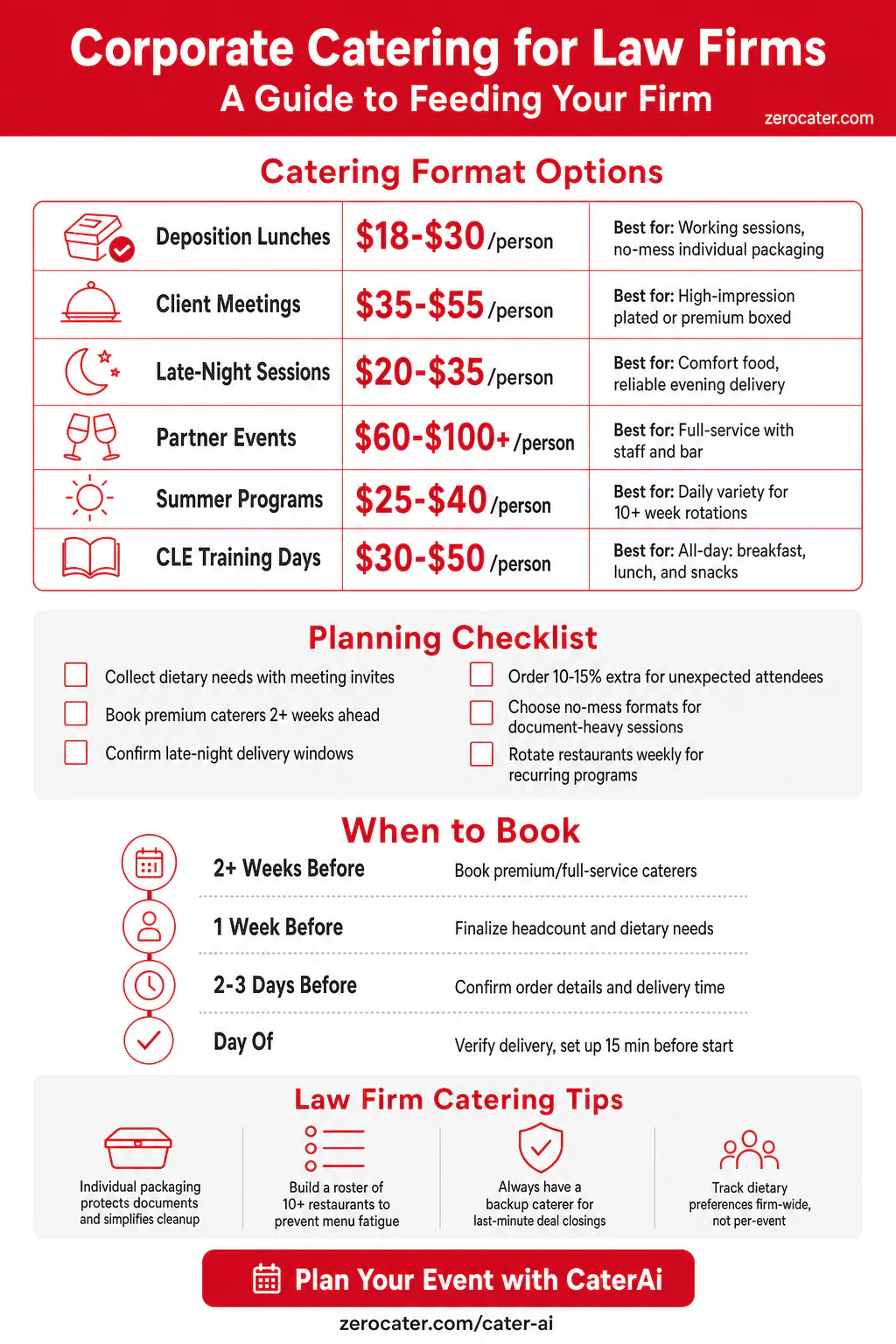
Few industries have a cleaner financial case for catering than law firms, and few get less attention for it. At Am Law 50 firms, partners now bill roughly $1,900 an hour on average, senior partners run $2,100 to $3,000, and third-year associates at top firms cross $1,000. When a four-person deal team walks out for a 75-minute lunch, the firm has spent several thousand dollars in unbillable time before anyone orders an entree. A catered lunch that keeps that team in the conference room costs $25 a head. The math is not close. Layer on the client-facing stakes (depositions, mediations, closings, and pitches where the meal is part of the firm’s brand), the famously lavish summer associate program, and the confidentiality and odd-hours demands of legal work, and law firm catering becomes its own discipline, distinct from what a tech company or a sales floor orders. This guide covers what to feed each kind of legal occasion, how to budget it, and the logistics that separate a catering program that protects billable hours from one that just feeds people.
In This Guide
- Why Law Firms Cater Differently Than Any Other Industry
- The 7 Occasions Law Firms Cater For
- Quick Comparison Table
- What to Order: Menu Ideas by Occasion
- The Billable-Hour Math
- Confidentiality, Staffing, and the Conference-Room Constraint
- Recurring Programs vs. On-Demand Orders
- The Logistics Law Firms Get Wrong
- Legal-Market City Guides
- How CaterAi Handles Law Firm Catering
- FAQ
Why Law Firms Cater Differently Than Any Other Industry
Law firm catering looks like any other corporate program on the surface (lunches, meetings, events), but four structural realities make the underlying brief distinct.
1. Billable hours change the ROI math entirely. In most offices, catering is a perk justified by morale and convenience. In a law firm, it is justified by arithmetic. Every minute an attorney spends not working is a minute that cannot be billed, and at legal billing rates the opportunity cost of a lunch outing is enormous. A meal brought into the conference room is not an indulgence; it is the cheapest way to protect the firm’s most valuable and most perishable asset, which is attorney time. The billable-hour math below makes this concrete.
2. The meal is often client-facing and part of the firm’s brand. Depositions put opposing counsel across the table. Mediations and arbitrations bring multiple parties into the building for a full day. Closings end in celebration dinners. Pitch meetings (the “beauty contests” where firms compete for a mandate) are judged partly on polish. In all of these, the food is a signal about how the firm operates, so the quality floor sits higher than it does for an internal team lunch, and white-tablecloth expectations appear far more often than in tech or startups.
3. The summer associate program is a catering occasion unto itself. No other industry runs anything like it. For 8 to 12 weeks each summer, firms host second-year law students and treat food and entertainment as a central recruiting tool, with daily lunches, frequent dinners, and marquee events designed to convince the cohort to return as full-time associates. The catering is daily, varied, and deliberately a notch above the everyday firm lunch.
4. Confidentiality and unpredictable hours shape the logistics. Privileged conversations mean firms often prefer drop-off catering over lingering service staff for sensitive matters. Trial prep, closings, and due-diligence pushes run nights and weekends on compressed, hard-to-forecast timelines, so the catering program has to flex to evening delivery and last-minute orders in a way a nine-to-five office program never does.
The 7 Occasions Law Firms Cater For
1. Depositions and Document Review
The workhorse legal catering occasion: an all-day session around a conference table covered in exhibits, transcripts, and laptops, where breaking to leave the building wastes billable time and breaks concentration. The meal has to arrive, get eaten, and disappear without interrupting the work.
Format: Individually packaged boxed lunches or sealed bowls with utensils included. Nothing that drips, crumbs heavily, or requires a shared serving line near the documents. Neat enough to eat with one hand while reading. Deliver at temperature so the session never stops for setup.
Budget: $18 to $30 per person. This is the highest-frequency line in most litigation-heavy firms, so unit cost and reliability matter more than flash.
2. Client Meetings, Pitches, and Beauty Contests
When a client comes in for a strategy session, or the firm is competing to win a mandate, the catering is part of the impression. The audience is external and the stakes are commercial, so this is where law firms spend up.
Format: Plated meals or premium boxed lunches with upscale cuisine. Mediterranean spreads, Japanese sushi assortments, or chef-composed entrees on real plates where the room allows. Collect the visiting group’s dietary preferences in advance rather than guessing.
Budget: $35 to $55 per person. The return on a single client renewal or a won mandate makes the catering a rounding error.
3. Closings and Deal Celebrations
The signing of a major transaction or the successful end of a matter is a ritual, and the closing dinner or celebration lunch marks it. These are higher-touch, often after hours, and frequently include clients.
Format: Full-service or premium plated, sometimes with staff and a bar. Grazing tables and reception-style spreads work well for larger deal teams. Our hors d’oeuvres and canapes guide and charcuterie catering guide cover the reception formats in detail.
Budget: $60 to $100 or more per person. Cadence is low (per closing), so the per-event spend is easy to justify.
4. The Summer Associate Program
The recruiting centerpiece. For 8 to 12 weeks, the firm feeds the summer cohort daily and hosts a stream of events, all designed to convert 2L students into full-time hires. The food is part of the pitch, so variety and quality are the point.
Format: A rotating cuisine calendar for the daily lunches (never the same restaurant twice in a month), with a higher tier reserved for the welcome lunch, mid-summer event, and closing dinner. Collect each summer associate’s dietary needs before day one so the first meal is already right.
Budget: $25 to $40 per person for the recurring lunches, more for the marquee events. The spend is real but tiny next to the cost of a failed recruiting class.
5. CLE Seminars and All-Day Training
Continuing Legal Education (mandatory in most states) and internal training days keep attorneys in the building from morning through afternoon. The catering brief spans breakfast, lunch, and an afternoon refresh, and it has to keep a room of professionals fed without a long midday break.
Format: Breakfast (pastries, parfaits, coffee), a working lunch (boxed or a quick buffet), and afternoon coffee and snacks. The pattern mirrors a conference; see our guide to boxed lunch catering for conferences and all-day training for the session-break logistics.
Budget: $30 to $50 per person across the full day.
6. Partner Meetings, Retreats, and Firm Events
Partnership meetings, practice-group retreats, and firm-wide celebrations are internal but carry a higher bar than a daily lunch because the audience is the firm’s leadership and the occasion is significant.
Format: Premium buffets, plated meals, or reception-style grazing depending on size and time of day. For board-style partnership meetings, the cadence and format overlap with our board meeting catering guide.
Budget: $40 to $80 or more per person.
7. Late-Night Trial Prep and Due-Diligence Pushes
The occasion that defines legal work: a team locked in past dinner, racing a filing deadline or a closing, needing food delivered into the evening on short notice. Reliability beats refinement here.
Format: Comfort food that holds well, from a caterer that reliably delivers in the evening. Individually portioned so people can grab and return to work. Keep a short list of vendors who take same-day and after-hours orders.
Budget: $20 to $35 per person.
Quick Comparison Table
| Occasion | Format | Budget/Person | Cadence | Client-Facing? |
|---|---|---|---|---|
| Deposition / document review | Individually boxed, no-mess | $18 – $30 | Frequent (litigation) | Sometimes (opposing counsel) |
| Client meeting / pitch | Plated or premium boxed | $35 – $55 | Ad hoc | Yes (high stakes) |
| Closing / deal celebration | Full-service or reception | $60 – $100+ | Per closing | Often (clients invited) |
| Summer associate program | Rotating cuisine, daily | $25 – $40 | Daily for 8–12 weeks | Recruiting-facing |
| CLE / all-day training | Breakfast + lunch + snacks | $30 – $50 | Periodic | No (internal) |
| Partner meeting / retreat | Premium buffet or plated | $40 – $80+ | Monthly / quarterly | No (leadership) |
| Late-night trial prep | Comfort food, evening delivery | $20 – $35 | Deadline-driven | No (internal) |
What to Order: Menu Ideas by Occasion
Depositions and Working Lunches: No-Mess Picks
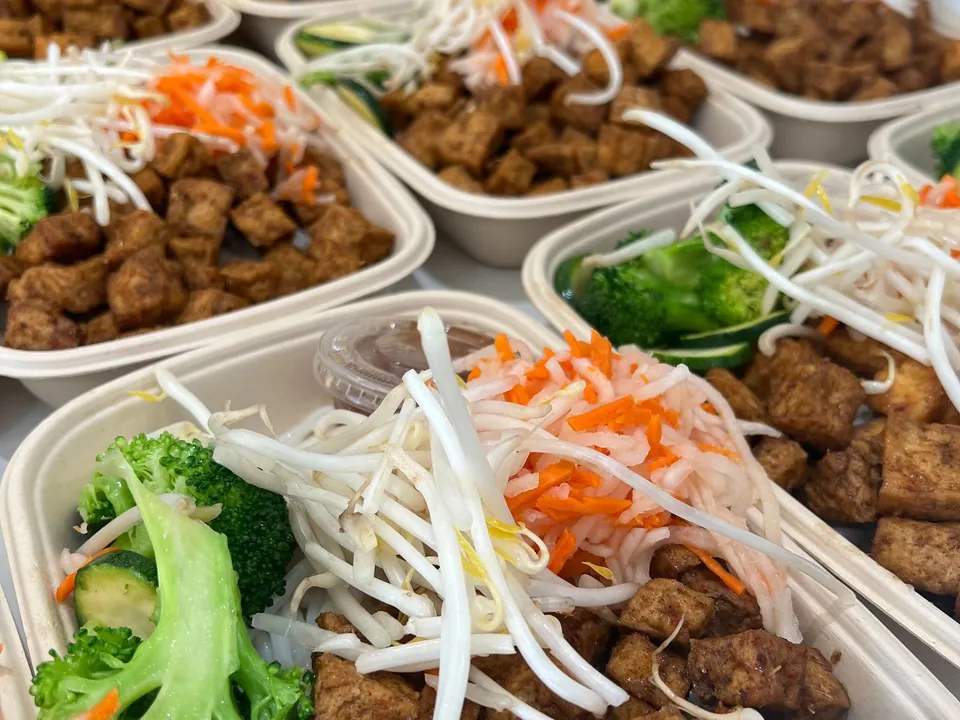
- Composed grain and protein bowls: chicken or tofu, grains, roasted vegetables, dressing on the side, sealed lid
- Premium boxed sandwiches or wraps: with a side salad and a cookie, labeled by filling and dietary marker
- Mediterranean boxes: grilled protein, hummus, tabbouleh, pita, easy to eat over documents
- Individual salads with protein: dressing packaged separately so nothing wilts before lunch is called
For the format trade-offs, see boxed lunch vs. buffet.
Summer Associate Program: 8-Week Cuisine Rotation
A representative rotation that keeps the cohort interested without repeating. Extend to 12 weeks as needed.
- Week 1: Mediterranean bowls and mezze (welcome week, make it generous)
- Week 2: Japanese sushi and poke assortment
- Week 3: Italian pasta bar with a gluten-free option
- Week 4: Indian thali (vegetarian-friendly by default)
- Week 5: elevated deli and sandwich spread with composed salads
- Week 6: taco or burrito bar with vegan and gluten-free proteins
- Week 7: build-your-own grain and salad bowl bar
- Week 8: closing-week upgrade, a marquee cuisine or a local favorite
Client Meetings and Pitches: Impression-Grade
- Plated Mediterranean: grilled protein, hummus, tabbouleh, warm pita, dessert plate
- Sushi chef’s selection: premium rolls, nigiri, edamame, miso soup
- Composed entrees on real plates: a meat, a fish, and a vegan option, dietary needs collected in advance
- Upscale boxed lunches: grilled salmon or steak, seasonal vegetables, artisan bread, proper flatware
Browse Japanese, Mediterranean, and Italian catering on Zerocater.
Closings and Partner Events: Reception Spreads
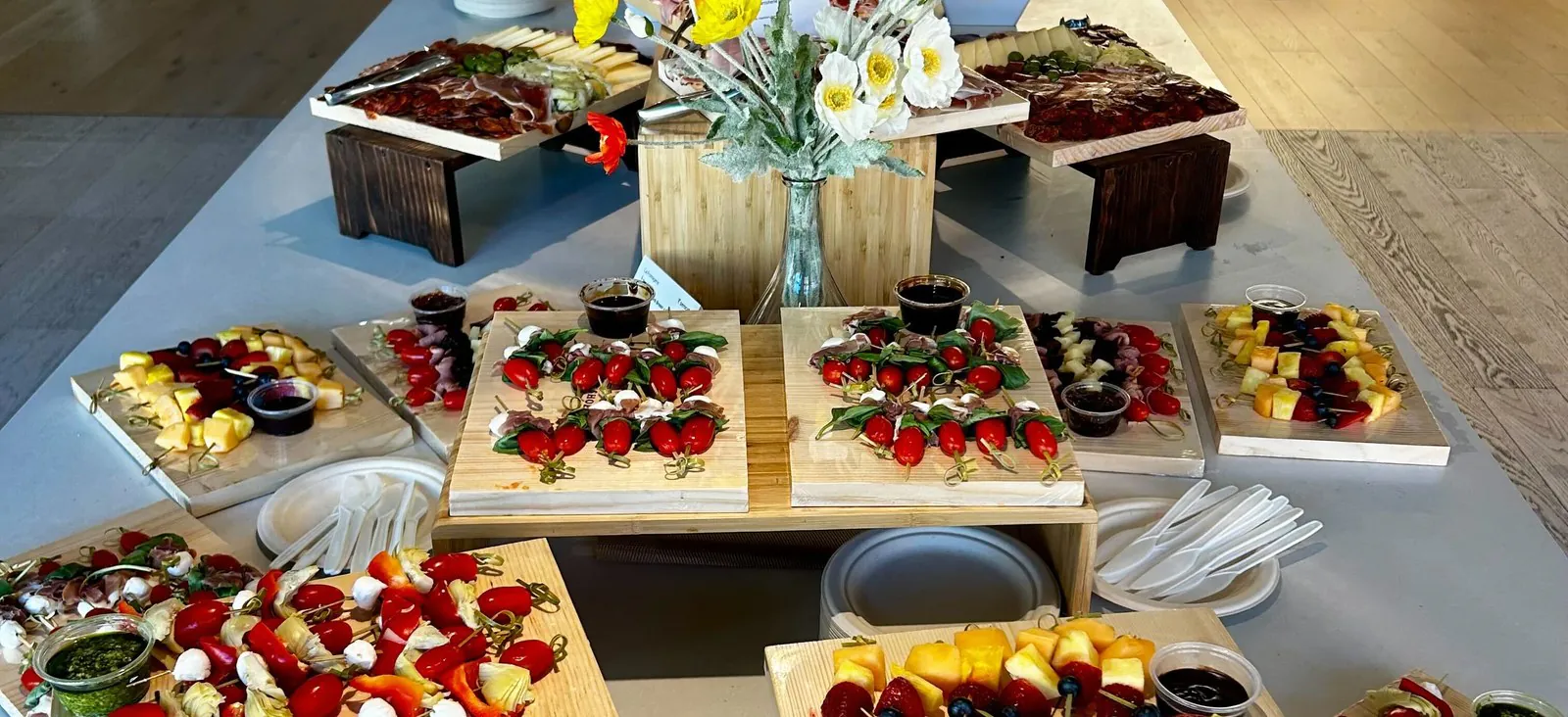
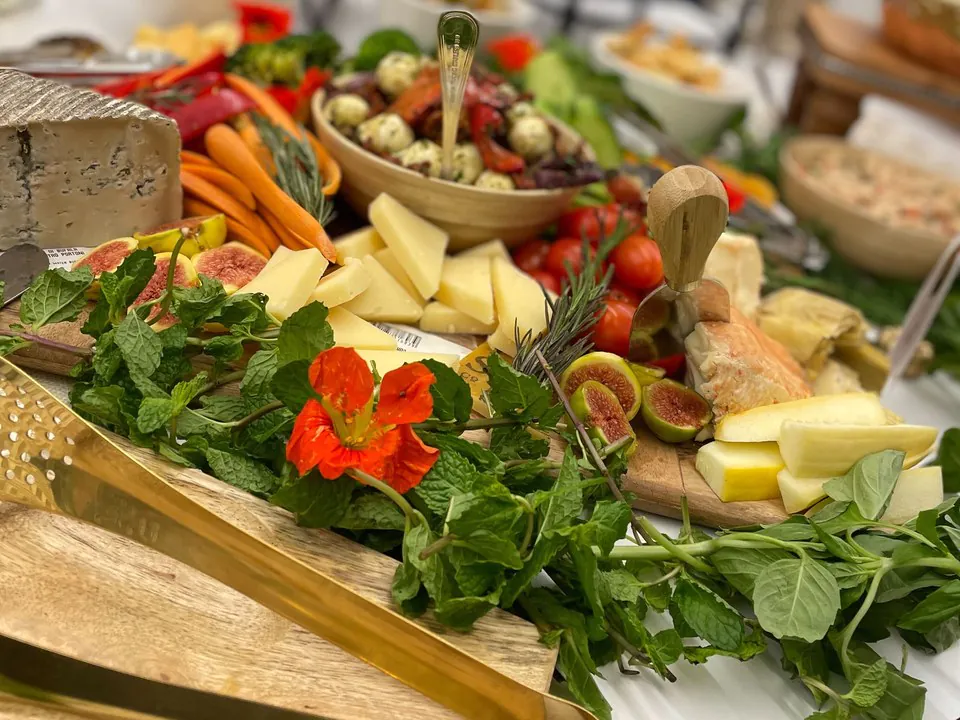
- Grazing and charcuterie tables: cured meats, cheeses, fruit, crudite, on tiered boards
- Passed or stationed hors d’oeuvres: caprese skewers, sliders, seasonal canapes
- Carving or chef stations for larger closing dinners with staff
- Dessert and coffee service to close a celebration meal
The Billable-Hour Math
The single most important thing to understand about law firm catering is that the spend is trivial next to the time it protects. The numbers make the case better than any morale argument.
A worked example
A four-person deal team (one partner, two associates, one senior associate) breaks for lunch and leaves the building. Round trip plus the meal: 75 minutes. Blend the team at a conservative $900 per hour effective billable rate. That is $900 times 4 people times 1.25 hours, or $4,500 in billable time gone. A catered lunch for the same four people, ordered in so they keep working through it, costs about $100 to $140 all in. The firm spends roughly $120 to save $4,500, and the team still eats. At senior-partner rates above $2,000 an hour, the gap is several times wider.
This is why the most effective law firm catering programs treat in-office meals as the default for any working session that runs through a meal, not as an occasional perk. The relevant comparison is never “catered lunch versus no lunch.” It is “catered lunch versus an hour of unbillable time per attorney,” and the catered lunch wins every time.
Two practical implications follow. First, reliability is worth paying for: a caterer who is 20 minutes late or sends the wrong order has cost the firm far more in disrupted billable time than any discount was worth. Second, the program should make ordering frictionless, because if booking lunch takes an associate 20 minutes, the process itself is burning the time it was meant to save. A managed platform that turns ordering into a two-minute task is part of the ROI, not an add-on.
Plan office lunch catering with CaterAi
Confidentiality, Staffing, and the Conference-Room Constraint
Legal work imposes constraints most office catering never has to think about, and they shape the right format more than cuisine does.
Drop-off over staffed for sensitive matters. When a meeting involves privileged discussion, an active deal, or confidential client information, having outside service staff in or near the room is a problem. The default for these sessions is drop-off catering, delivered and set up before the meeting starts or staged in an adjacent room, with replenishment handled during scheduled breaks rather than mid-session. Reserve staffed, full-service catering for partner events, firm celebrations, and large client receptions where confidentiality is not at issue.
The conference-room constraint. Depositions, document review, and due diligence happen on tables covered in exhibits, transcripts, and laptops. The catering cannot compete with the documents for space or create cleanup risk. Individually packaged meals with the dressing and sauces contained, utensils included, and minimal mess are not a preference here; they are a requirement. A buffet line that pulls people up and away from the table also defeats the purpose of bringing food in.
Multi-party events need parallel setups. Mediations and arbitrations often put opposing parties in separate caucus rooms for much of the day. Plan for separate, identical food setups in each room rather than a single shared buffet, so no party has to leave its room and the neutral keeps the process moving.
Dietary coverage floor for law firms
Restriction rates at law firms run lower than at tech companies but are rising with younger associates. At every order, include at minimum one clearly labeled vegan entree and one gluten-free entree, and cover the major allergens with labeling. For client-facing events where the guest list is unknown, add halal and kosher options. Our mixed dietary needs guide, vegan office catering guide, and gluten-free office catering guide cover the specifics, and allergy-safe boxed lunches are the right format for the conference room.
Recurring Programs vs. On-Demand Orders
The right operating model depends on cadence, and most firms run both.
Managed recurring programs fit firms that cater regularly: a litigation group with frequent depositions, a daily summer associate lunch, or a standing partner meeting. A platform like Zerocater’s managed catering program handles the vendor roster, dietary tracking, cuisine rotation, and scheduling, so an office manager or legal administrative assistant is not rebuilding the process every week.
On-demand ordering covers the deadline-driven long tail: a surprise closing, an extended trial-prep night, a last-minute client visit. CaterAi lets you describe the need (“12 people, vegan and gluten-free coverage, delivered to the 30th floor by 7pm tonight, $30 budget”) and builds a menu from over 1,000 restaurants, including vendors that deliver on short notice and into the evening. See how the platform works.
The hybrid approach is most common. A standing program for the predictable meals (depositions, summer lunches, partner meetings) plus on-demand ordering for everything unpredictable, with one platform consolidating billing and reporting so the firm’s accounting team has a single, clean view of catering spend by matter or practice group.
The Logistics Law Firms Get Wrong
The #1 mistake: optimizing for price instead of reliability
Because catering bills are visible and billable time is not, firms often shop on price and tolerate a caterer who is occasionally late or wrong. At legal billing rates this is exactly backward. A late or incorrect order during a deposition or a closing disrupts attorney time worth many multiples of any savings. Choose vendors on reliability first, price second.
- Using buffet formats in document-heavy rooms. A buffet near exhibits and transcripts is a spill risk and pulls the team away from the table. Individual packaging is the right call for any working session around documents.
- No after-hours or last-minute option. Legal deadlines do not respect business hours. A roster with no vendor that delivers in the evening or takes same-day orders leaves the team stranded on exactly the nights catering matters most.
- Letting staff linger during privileged meetings. Full service is the wrong default for confidential sessions. Drop-off, set up before the meeting, is safer and just as good.
- Treating the summer program like everyday lunch. Summer associates compare offers, and a repetitive or thoughtless food program sends the wrong signal during the firm’s most important recruiting window. Build a real rotation and reserve a higher tier for the marquee events.
- Forgetting dietary needs until the order is placed. Collect dietary preferences with the meeting invite or, for recurring groups, once and firm-wide. Scrambling the morning of leaves someone with nothing to eat in a room full of clients.
- No clean spend reporting by matter or group. Firms allocate costs to matters and practice groups. A program that cannot export spend cleanly creates billing and accounting friction every month. Choose a platform that produces the report finance needs.
Legal-Market City Guides
The major legal markets have different catering landscapes, vendor density, and price levels. Below are city-specific catering and cost guides plus starter vendor lists for the metros with the highest concentration of law firms:
By City
- New York City: A Saffron Thread (Indian), 251 Ginza Sushi (premium sushi for client meetings), Souvlaki GR (Greek) | NYC catering guide | NYC cost guide
- Washington, D.C.: Rasa (Indian bowls), Springbone Kitchen (clean, allergy-friendly), Banana Leaves (Asian) | D.C. catering guide | D.C. cost guide
- Chicago: Pastafi (Italian), Hala-in (halal Mediterranean) | Chicago catering guide | Chicago cost guide
- San Francisco: La Mediterranee (Mediterranean), Kitava (allergy-friendly) | SF catering guide | SF cost guide
- Los Angeles: Century City and Downtown anchor a deep legal market | LA catering guide | LA cost guide
- Boston: Financial District and Seaport firms with strong litigation and IP practices | Boston catering guide | Boston cost guide
Browse the Mediterranean, Japanese, Italian, and Indian catering directories to find the right vendors for your office.
How CaterAi Handles Law Firm Catering
CaterAi is Zerocater’s AI-powered planning tool, and it solves the specific problems law firms hit.
Last-minute and after-hours orders. Describe the need in plain language (“10 people, deliver to the 30th floor by 7pm tonight, comfort food, $30 a head”) and CaterAi builds a menu from vendors that actually deliver on that timeline. The surprise closing and the late trial-prep night are exactly where it earns its keep.
Dietary profiles at the group level. Store each attorney’s and each summer associate’s dietary needs once, and every subsequent order respects them automatically, so no one has to re-declare and no one ends up with nothing to eat in front of a client.
Variety enforcement for recurring programs. CaterAi tracks what the summer cohort or the litigation team has eaten recently and surfaces options they have not seen, so the rotation stays fresh through a 12-week program without manual tracking.
One platform for every occasion. A $20 deposition lunch and a $90 closing dinner run through the same system, with event catering and recurring programs in one place. The administrative team has a single dashboard and finance gets clean spend reporting.
Plan office lunch catering with CaterAi
For a related industry playbook, see our guide to corporate catering for tech companies, which covers the dense-dietary and hybrid-headcount challenges that engineering teams bring.
Frequently Asked Questions
How much does law firm catering cost per person?
Law firm catering ranges from about $18 to $100 or more per person depending on the occasion. Deposition and working lunches run $18 to $30, late-night trial-prep meals run $20 to $35, summer associate program lunches run $25 to $40, CLE and all-day training run $30 to $50, client meetings and pitches run $35 to $55, and partner events or closing dinners run $60 to $100 or more. Add 20 to 25 percent for delivery, tax, and gratuity.
Why does catering make financial sense for law firms specifically?
Because of billable hours. Am Law 50 partners average roughly $1,900 per hour in 2025, with senior partners between $2,100 and $3,000 and third-year associates above $1,000. When a four-person deal team leaves the building for a 75-minute lunch, the firm loses several thousand dollars in billable time. A $25-per-person catered lunch that keeps the team working pays for itself many times over. See the billable-hour math above.
What is the best catering format for a deposition or document review?
Individually packaged meals. Depositions and document review happen around a conference table covered in exhibits and laptops, so anything that drips, crumbs heavily, or requires a shared serving line creates risk and interruption. Order boxed lunches or sealed bowls with utensils included, label each with dietary markers, and have them delivered at temperature so the session never has to stop. See our allergy-safe boxed lunches guide for the format details.
How do law firms cater a summer associate program?
Summer associate programs run 8 to 12 weeks and treat food as a recruiting tool, so the catering is daily, varied, and a notch nicer than everyday firm lunches. Plan a rotating cuisine calendar so the cohort never sees the same restaurant twice in a month, budget $25 to $40 per person for the recurring lunches, and reserve a higher tier for the welcome lunch, mid-summer event, and closing dinner. Collect dietary needs before day one.
Should catering staff stay in the room during confidential legal meetings?
Usually no. For privileged discussions, mediations, and sensitive client matters, drop-off catering is preferable to staffed service so no outside person is present while confidential conversations happen. Have the food set up before the meeting starts or staged in an adjacent room, and handle replenishment during scheduled breaks. Save staffed service for partner events and large client receptions.
How far in advance should a law firm order catering?
Book premium and full-service caterers two or more weeks ahead for client events, closing dinners, and summer program kickoffs. Everyday deposition and working lunches can be ordered one to three days out. Because legal work is deadline-driven, the more important rule is to keep a roster of reliable caterers, including at least one that delivers on short notice and into the evening, so a surprise closing never leaves the team without food.
What dietary needs should law firm catering plan for?
Plan for vegetarian, vegan, gluten-free, and the major allergens at every order, and add halal and kosher options for client-facing events where the guest list is unknown. Restriction rates at law firms are lower than at tech companies but rising with younger associates, so the safe floor is one labeled vegan entree and one gluten-free entree at every meal. Our mixed dietary needs guide covers the full playbook.
Is law firm catering tax-deductible?
In the United States, business meals are generally 50 percent deductible. Meals provided for the convenience of the employer, such as food brought in so a team can work through a deposition or a late closing, qualify under IRS Section 274, as do client business meals with a clear business purpose. Client-entertainment costs are treated differently from working meals, so confirm specifics with the firm’s accounting team or a tax advisor.