A lunch and learn lives or dies on the food. It is a voluntary midday session, so the catered meal is not a nice-to-have on the side of the agenda, it is the main reason most people walk in the door. And unlike almost any other office meal, people eat it while they listen, take notes, and work on laptops, which means the wrong food, anything drippy, loud, strongly fragrant, or needing two hands and a serving line, quietly sabotages the session a buffet would handle fine. Get the meal right and a lunch and learn fills the room and stays full all year. Get it wrong and attendance bleeds out one skipped session at a time. This guide covers the food rules that actually keep a session running, the best menus by format and group size, what it all costs per person, how to feed remote attendees on a hybrid call, and the ordering logistics that separate a packed recurring series from an empty conference room.
In This Guide
- What a Lunch and Learn Is, and Why Food Decides Whether It Works
- The 6 Food Rules That Keep a Lunch and Learn Running
- The Best Foods for a Lunch and Learn
- What Not to Order
- What a Lunch and Learn Costs Per Person
- Menu Ideas by Group Size
- Catering a Virtual or Hybrid Lunch and Learn
- Ordering, Timing, and Setup
- The Mistakes That Empty the Room
- How CaterAi Handles Lunch and Learn Catering
- FAQ
What a Lunch and Learn Is, and Why Food Decides Whether It Works
A lunch and learn is an informal training or presentation held over the lunch hour, where the company provides the meal so people will give up their break to attend. The topic can be anything: a product deep-dive, a benefits-enrollment walkthrough, a guest speaker, a skills workshop, a team show-and-tell. The format is always the same. People come for the content, but they show up because of the food.
That makes lunch and learn catering different from feeding a mandatory all-hands or a client meeting, where attendance is a given. Here the meal is the turnout lever. A session billed as “lunch provided” with a vague sandwich tray draws a fraction of the room that the same session draws when the invite names a real meal people want. The food choice is an attendance decision before it is a taste one, and the budget you put against it is really a budget for how full the room gets.
The second thing that makes it distinct: people are eating and paying attention at the same time. They have a laptop open, a notebook out, or a screen to watch, and one hand on a fork. The meal has to disappear into the background of the session, not become the event. That single constraint, food you can eat quietly and one-handed while you listen, drives almost every good decision about what to order, which the rest of this guide unpacks.
The 6 Food Rules That Keep a Lunch and Learn Running
Before any specific menu, these are the rules that separate food that supports a session from food that hijacks it.
1. One-handed and no-mess. People are taking notes and watching a screen. The meal has to be eaten with one hand and a fork or no utensils at all, with nothing that drips, crumbles everywhere, or needs cutting. A wrap, a grain bowl, or a boxed meal works; a saucy plate of pasta that demands full attention does not.
2. Ready the moment the session starts. A lunch and learn has a hard start. Food that needs assembling, carving, or a serving line burns the first fifteen minutes and throws off the speaker. Individually portioned meals that people grab and sit down with keep the room on schedule.
3. Quiet and low-aroma. Crinkly packaging, crunchy chips as the whole meal, and strongly fragrant dishes compete with a speaker in a small room. Pick food that eats quietly and does not fill the space with a smell that lingers through the Q and A.
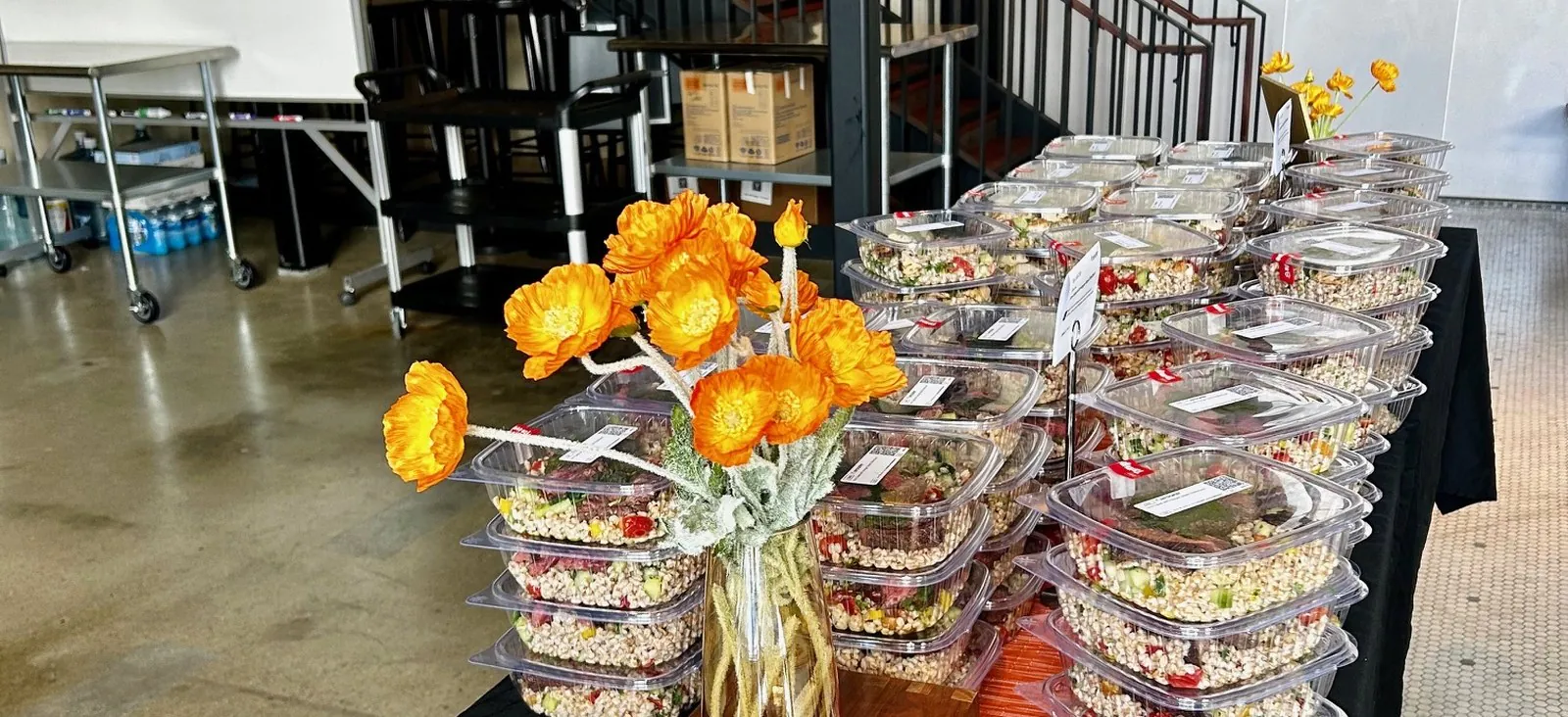
4. Individually portioned by default. Boxed meals and sealed bowls let people serve themselves instantly, keep dietary needs separated and labeled, and avoid the shared-buffet shuffle while someone is trying to present. For a focused session, individual portions beat a buffet almost every time. The full trade-off is in our boxed lunch vs. buffet guide.
5. Dietary-inclusive, or people stop coming. A lunch and learn is voluntary. Anyone who shows up twice and finds nothing they can eat will not show up a third time. Cover vegetarian, vegan, and gluten-free every single time and label everything clearly.
6. Enough food, with a buffer. Good food draws walk-ins. Order one meal per RSVP plus 5 to 10 percent, because running out at a voluntary session is the fastest way to shrink the next one.
The Best Foods for a Lunch and Learn
The formats below all pass the one-handed, no-mess, ready-on-time test, which is why they consistently rank as the most popular lunch and learn options.
1. Individually Boxed Meals and Bowls
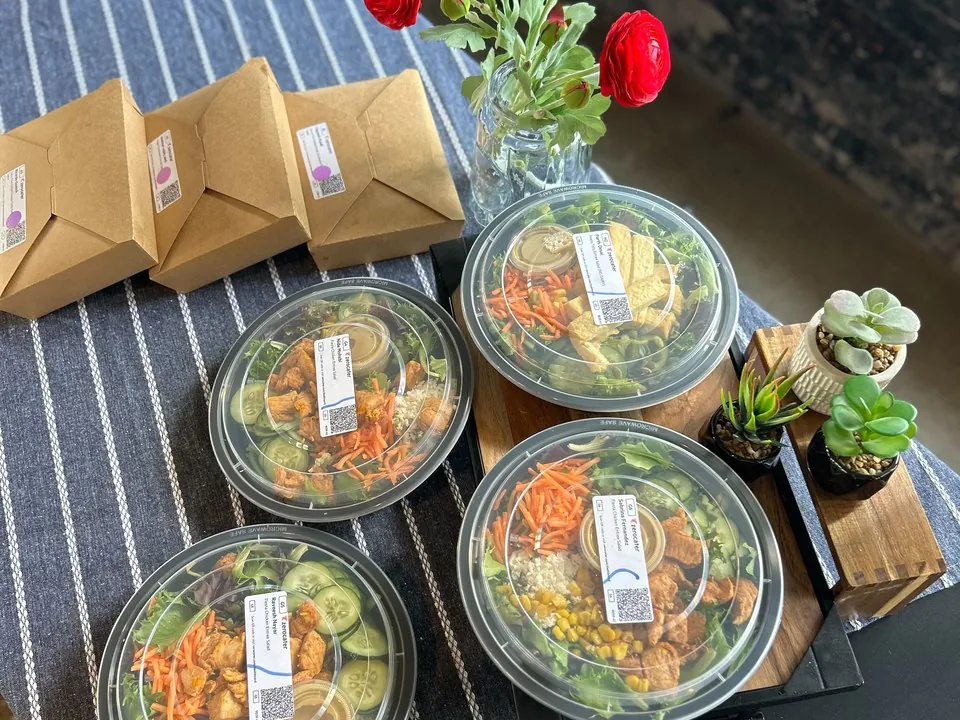
The default, and for good reason. Each person grabs a sealed box or bowl labeled with their dietary needs and sits straight down, no line, no serving, no mess. Grain bowls (a protein over rice or quinoa with roasted vegetables and a dressing on the side) are one of the most popular lunch and learn formats going because they are filling, healthy, quiet to eat, and cover vegetarian and vegan needs with a swap. See our best boxed lunch catering companies roundup and allergy-safe boxed lunches guide for the format details.
2. Sandwich and Wrap Platters
The classic working-lunch food because it is genuinely one-handed and needs no utensils. Wraps travel and hold better than open sandwiches and stay tidy on a laptop desk. Provide a clearly labeled mix of meat, vegetarian, and vegan fillings, a couple of sides, and fruit. For a session where people serve themselves quickly, a wrap platter is hard to beat.
3. Mediterranean Spreads and Mezze
Grilled proteins, hummus, tabbouleh, pita, and salads cover a lot of dietary ground in one order and eat cleanly as a bowl or a box. Mediterranean catering is a reliable crowd-pleaser that lands as naturally healthy without feeling like a punishment, which suits the keep-people-alert goal of a midday session.
4. Salads and Grain-Forward Bowls
Composed salads with a protein and the dressing on the side eat quietly and keep people from the post-lunch slump that a heavy meal brings on right when the speaker needs the room awake. Pair them with a bread or a small hot side so they feel like a full meal. Our healthy office catering guide is built around exactly this energy-on-a-long-afternoon problem.
5. Pizza and Handhelds (the Casual Option)
For a relaxed, high-turnout session, pizza is the cheapest way to fill a room and people eat it with their hands while they watch. It is louder and messier than a boxed meal, so it suits a casual all-hands-style lunch and learn more than a focused workshop, but as a low-cost attendance magnet it works. Add a big salad and a vegan pie so it is not a carb-only spread.
6. Build-Your-Own Bars (for Sessions With a Real Break)
If your lunch and learn has a genuine break before the content, a build-your-own salad bar, sandwich bar, or taco station lets people customize and adds some interactivity. The catch is that a bar needs time and a serving line, so it fits sessions where eating happens before the talk rather than during it. For a tight eat-while-you-listen format, stay with individual portions.
What Not to Order
The food that fights the session
A lunch and learn is the one office meal where some genuinely good catering is the wrong call. Skip the dishes that need two hands, a knife, or full attention, and skip anything that turns the room into a distraction while someone is presenting.
- Drippy, saucy plates: saucy tacos, wings, ribs, and anything that demands a stack of napkins pulls focus from the screen. Save them for a taco bar social, not a working session.
- Strong-smelling food: fish, heavy curries, and pungent dishes fill a small conference room and linger through the Q and A. Keep aromas mild.
- Loud food as the whole meal: a meal built on chips and crunchy items competes with the speaker. Crunchy sides are fine; a crunchy entree is not.
- Anything that needs carving or assembly on site: a build-it-yourself spread that runs into the session start throws off the schedule. If it cannot be eaten within a couple of minutes of grabbing it, it is the wrong format for a timed session.
- A single dish with no dietary alternatives: one cuisine with no vegetarian, vegan, or gluten-free option quietly excludes part of the room and shrinks your next turnout.
What a Lunch and Learn Costs Per Person
Lunch and learn catering generally runs about $10 to $25 per person before delivery and gratuity, and where you land depends on the format and how much the session matters. Because the food drives attendance, this is one line item where spending a few dollars more per head usually pays for itself in a fuller room.
| Tier | Per Person | What You Get | Best For |
|---|---|---|---|
| Budget | $10 – $15 | Pizza, sandwich or wrap platters, a simple build bar | Casual, high-turnout, recurring sessions |
| Standard | $14 – $20 | Individually boxed meals, grain bowls, Mediterranean | Most focused lunch and learns |
| Premium | $18 – $25+ | Protein-forward healthy boxes, premium bowls, sushi | Guest speakers, leadership, marquee sessions |
Add roughly 20 to 25 percent on top for delivery, tax, and gratuity. For a full breakdown of how office catering is priced, see our boxed lunch catering cost guide.
Plan lunch and learn catering with CaterAi
Menu Ideas by Group Size
Small Session (5 to 15 people)
- Individually boxed grain bowls: a protein over rice or quinoa with roasted vegetables, dressing on the side, one box per person with names on the dietary ones
- A wrap and salad combo: labeled wraps plus a couple of shared sides, easy and tidy for a small room
- Mediterranean boxes: grilled protein, hummus, tabbouleh, and pita, covering most dietary needs in one order
At this size, individual portions are effortless and there is no reason to run a buffet.
Medium Session (15 to 40 people)
- A boxed-meal variety order: three or four labeled options (a meat, a vegetarian, a vegan, a gluten-free) so everyone grabs and goes
- Sandwich and wrap platters with sides: a fast, budget-friendly self-serve that still eats one-handed
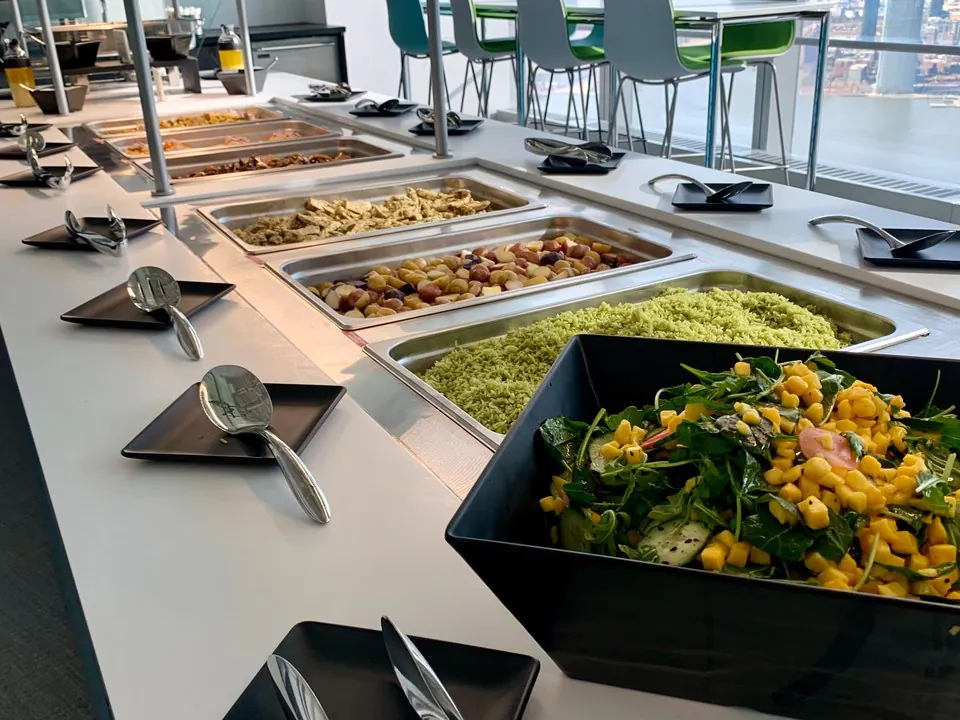
- A served buffet, if you have a real break: salads, a hot entree, and a vegetarian main, set up and ready before the content starts
Large Session (40+ people, or a guest speaker)
- Pre-sorted individual meals: stack boxes by dietary type at clearly signed stations so a big group clears the table fast
- Two or three cuisine choices: a Mediterranean, an Italian, and a Japanese option keep a big, varied room happy
- Premium touches for a marquee session: a sushi selection, a nicer dessert, real coffee service, the food matching the importance of the speaker
Browse Thai, Indian, and Mexican catering for more variety. Name-dropping a vendor people recognize in the invite, like Kitava (fully gluten-free) or Power Bowls (build-your-own grain bowls), is itself an attendance boost.
Catering a Virtual or Hybrid Lunch and Learn
The lunch and learn went remote and never fully came back. A modern series often has people in a conference room and people on a call, and the food has to reach both so everyone is genuinely sharing a meal rather than watching a few colleagues eat on camera.
For fully remote attendees, the two options are an individual meal delivered to each person’s home or a meal stipend they redeem from a set of options. Both put a real lunch in front of the remote team at the same time as the in-office crew. Schedule the home deliveries to land just before the session and collect addresses and dietary needs a few days out. Our guide to boxed lunches for hybrid and distributed teams covers the distributed-delivery playbook in full.
For the in-office half of a hybrid session, use the same individually boxed format you would send a remote person, so the two groups are eating the same meal and the experience feels shared rather than two-tier. Avoid a big in-room buffet that the remote attendees cannot touch; it visibly splits the group.
The logistics that make hybrid easy come down to one platform that can ship individual meals to a list of home addresses, feed the office, and bill it all together. CaterAi handles the multi-address piece so a hybrid lunch and learn is about as much work to order as an in-room one.
Ordering, Timing, and Setup
Order one to three days ahead for a standard in-office session, and a week or more for a large group, a hybrid event with home deliveries, or a premium menu. The two things that need lead time are an accurate headcount and everyone’s dietary needs, so send the RSVP and a dietary question out early.
Time the delivery to land before the start, not at it. A lunch and learn has a hard start time, and food that arrives as the speaker is beginning derails the room. Aim for the food to be set and ready 10 to 15 minutes ahead so people grab a box, settle, and are eating by the time the content begins. Build the first 5 to 10 minutes of the agenda as grab-and-settle time.
Set up for grab-and-go, not a served line. Lay individual meals out by dietary type with clear signs, stack napkins and utensils at the end, and keep the path short so a room clears in a couple of minutes. The less the meal behaves like a buffet, the less it eats into the session.
Dietary coverage floor for a lunch and learn
Because attendance is voluntary, the dietary bar is higher than a normal office lunch: one excluded person is one fewer attendee next time. Cover vegetarian, vegan, and gluten-free at every session and label everything. Our mixed dietary needs guide, vegan office catering guide, gluten-free office catering guide, and vegetarian office catering guide cover the specifics.
For the broader ordering workflow, our office manager’s guide to ordering catering walks through the end-to-end process, and the boxed lunch catering for conferences and training guide covers session-break logistics that overlap with a recurring lunch and learn series.
The Mistakes That Empty the Room
The #1 mistake: treating the food as an afterthought
At a voluntary session, the meal is the invitation. A vague “lunch provided” with a tired tray draws a half-empty room; a named, genuinely good meal fills it. Spend on the food and describe it in the invite, because the food budget is really an attendance budget.
- Ordering food that needs two hands. People are taking notes and watching a screen. A meal that needs a knife or full attention competes with the session instead of supporting it.
- Food that arrives late. A hard-start session with food that lands at the start time loses its first fifteen minutes. Time the delivery early and build in grab-and-settle minutes.
- Forgetting the remote half. On a hybrid call, an in-room-only buffet visibly splits the group. Send remote attendees the same individual meal.
- Skimping on dietary options. One cuisine with no vegetarian, vegan, or gluten-free option quietly excludes part of the team and shrinks the next turnout.
- Running out. Good food brings walk-ins. Order a 5 to 10 percent buffer over the RSVP so the table is not bare when latecomers arrive.
- Serving the same thing every time. A recurring series with an unchanging menu stops being a draw. Rotate cuisines so the lunch stays a reason to show up.
How CaterAi Handles Lunch and Learn Catering
CaterAi is Zerocater’s catering planning tool, and it fits the specific demands of a lunch and learn.
Describe the session, get a menu. Tell CaterAi the plain-language brief (“25 people, individually boxed, vegetarian and vegan and gluten-free covered, delivered to the 3rd-floor conference room by 11:45 for a noon session, $18 a head”) and it builds a menu from over 1,000 restaurants that fits the format and the budget.
Hybrid and multi-address in one order. Feed the conference room and ship individual meals to remote attendees’ homes in the same order, billed together, so the distributed lunch and learn is no harder to run than the in-room one.
Dietary profiles that stick. Store the team’s dietary needs once and every session respects them, so no one on a voluntary lunch and learn ever ends up with nothing to eat.
Variety for a recurring series. CaterAi tracks what the group has had recently and surfaces options they have not seen, so a weekly or monthly series never repeats itself into low attendance. For an ongoing program, Zerocater’s managed corporate catering handles the standing order, and event catering covers the larger marquee sessions. See how it works.
Plan lunch and learn catering with CaterAi
For related playbooks, see our guides to board meeting catering, boxed breakfast for morning meetings, and industry-specific catering for tech companies, law firms, and healthcare.
Frequently Asked Questions
How much does lunch and learn catering cost per person?
Most lunch and learn catering runs about $10 to $25 per person. A budget session with pizza, sandwich platters, or a simple build-your-own bar lands around $10 to $15 a head, individually boxed meals and grain bowls run $14 to $20, and a healthier, protein-forward or premium spread runs $18 to $25 or more. Add roughly 20 to 25 percent for delivery, tax, and gratuity, and remember the meal is what gets people in the room, so under-spending on food usually costs you attendance.
What is the best food for a lunch and learn?
Individually boxed meals, grain bowls, and sandwich or wrap platters are the best lunch and learn foods because people eat them with one hand while listening and taking notes. The food needs to be quiet, no-mess, not strongly fragrant, and ready to eat the moment the session starts. Mediterranean spreads and salads also work well and cover most dietary needs. Save the drippy, loud, or strong-smelling options for occasions where eating is the main event, not the session.
Should you order individual meals or a buffet for a lunch and learn?
For most lunch and learns, individually portioned meals win. People grab a labeled box and sit down without a serving line eating into the session, dietary needs are handled per person, and there is no shared-buffet shuffle while the speaker is starting. A served buffet works for larger or more casual sessions with a long enough break, but for a focused 30 to 60 minute session, boxed meals or sealed bowls keep the room moving. See our boxed lunch vs. buffet guide.
How do you cater a virtual or hybrid lunch and learn?
Give remote attendees an individual meal delivered to their home or a meal stipend they can redeem, so everyone is eating on the same call. Send in-office staff the same kind of individually boxed meal, schedule both deliveries to arrive before the session starts, and collect dietary needs and addresses a few days ahead. A platform that ships individual meals to distributed addresses and bills it together makes the hybrid version about as easy as the in-room one. Our hybrid and distributed teams guide covers the details.
How far in advance should you order lunch and learn catering?
Order one to three days ahead for a standard in-office lunch and learn, and a week or more for a large session, a hybrid event with home deliveries, or a premium menu. The two things that take lead time are an accurate headcount and everyone’s dietary needs, so send the RSVP and dietary form out early. For a recurring series, set up a standing order and rotate the cuisine so the food does not get repetitive.
How much food do you order for a lunch and learn?
Order one individual meal per confirmed attendee plus about 5 to 10 percent extra, because lunch and learns draw walk-ins when the food is good. If you are doing platters or a buffet, plan for one full lunch portion per person and add a vegetarian and a vegan option even if no one flagged the need. Running out at a voluntary session is the fastest way to shrink attendance next time, so round up rather than down.
What dietary options should a lunch and learn include?
Always include vegetarian, vegan, and gluten-free options, and clearly label every item with allergen and dietary markers. A lunch and learn is voluntary, so anyone who cannot find something to eat will not come back. Individually boxed meals make this easy because each person gets a meal that matches their needs, and you can pre-assign dietary boxes by name. For larger or more diverse teams, add halal and kosher options. See our mixed dietary needs guide.
How do you boost attendance at a lunch and learn?
Good food is the single biggest lever. Pick a meal people actually want, name the specific cuisine or vendor in the invite rather than just saying lunch provided, cover every dietary need so no one is excluded, and have the food set up and ready before the session starts so nobody waits. Send a reminder the morning of, keep the session to a tight 30 to 60 minutes, and rotate the menu across a recurring series so the lunch stays a reason to show up.
How long should a lunch and learn be?
Most lunch and learns run 30 to 60 minutes. Give people the first 5 to 10 minutes to grab food and settle, which is why food that is ready to eat immediately matters so much, then run the content while everyone eats. Keep it tight: a voluntary midday session that runs long competes with the rest of someone’s workday. For a denser topic, a 60-minute slot with a short Q and A at the end beats stretching to 90.