A production line eats when the schedule lets it, one crew at a time, without ever fully stopping. A warehouse crew during peak season eats between trucks. And when a customer or an auditor walks the plant floor, the meal set out for them is part of the impression the site is making. Manufacturing runs on a clock and a rulebook that an office never deals with, and catering that ignores either one lands cold, in the wrong spot, or against a food-safety rule nobody flagged. This guide covers the occasions plants cater for, what to order for crews that cannot leave the line, how to feed staggered breaks and the night shift, the food-safety and dock rules the floor adds, what it costs per person, and the logistics that sink an order across a big footprint.
In This Guide
- Why Manufacturing Caters Differently Than Any Other Industry
- The 7 Occasions Manufacturers Cater For
- Quick Comparison Table
- What to Order: Menu Ideas by Occasion
- The Line, the Shifts, and the Staggered Break
- The Plant-Floor Rules an Office Never Deals With
- Recurring Programs vs. On-Demand Orders
- The Logistics Manufacturers Get Wrong
- City Cost Guides
- How CaterAi Handles Manufacturing Catering
- FAQ
Why Manufacturing Caters Differently Than Any Other Industry
Every industry thinks its catering is a special case. Manufacturing actually has four constraints that stack in a way no other sector’s do.
- The line sets the clock, not the calendar. An office schedules lunch at noon. A plant staggers breaks so the line never stops, which means crews rotate through the break room in waves across a two or three hour window. Food has to hold that long and still be good for the last group.
- The work runs around the clock. First, second, and third shift each need feeding, and the overnight crew is the one that always gets left out. A catered lunch that only ever lands during day shift tells two-thirds of the plant they do not count.
- Physical labor needs real fuel. Lifting, standing, and moving product for eight or ten hours burns through a light salad by mid-shift. The food has to be hearty, high-protein, and filling, closer to a cookout than a canapé tray.
- The floor has rules an office does not. Food and pharmaceutical plants run allergen and hygiene zones that keep outside food out of production entirely, eating is confined to the break room, reaching the dock can require PPE, and a big site has several break rooms that each need their own drop.
Get those four right and the rest looks like any other large order. Get them wrong and you have cold food arriving for a shift that already went home, in a spot the crew cannot reach on a ten-minute break, against a food-safety rule the plant manager will hear about.
The 7 Occasions Manufacturers Cater For
1. Shift Meals and Shift-Change Overlaps
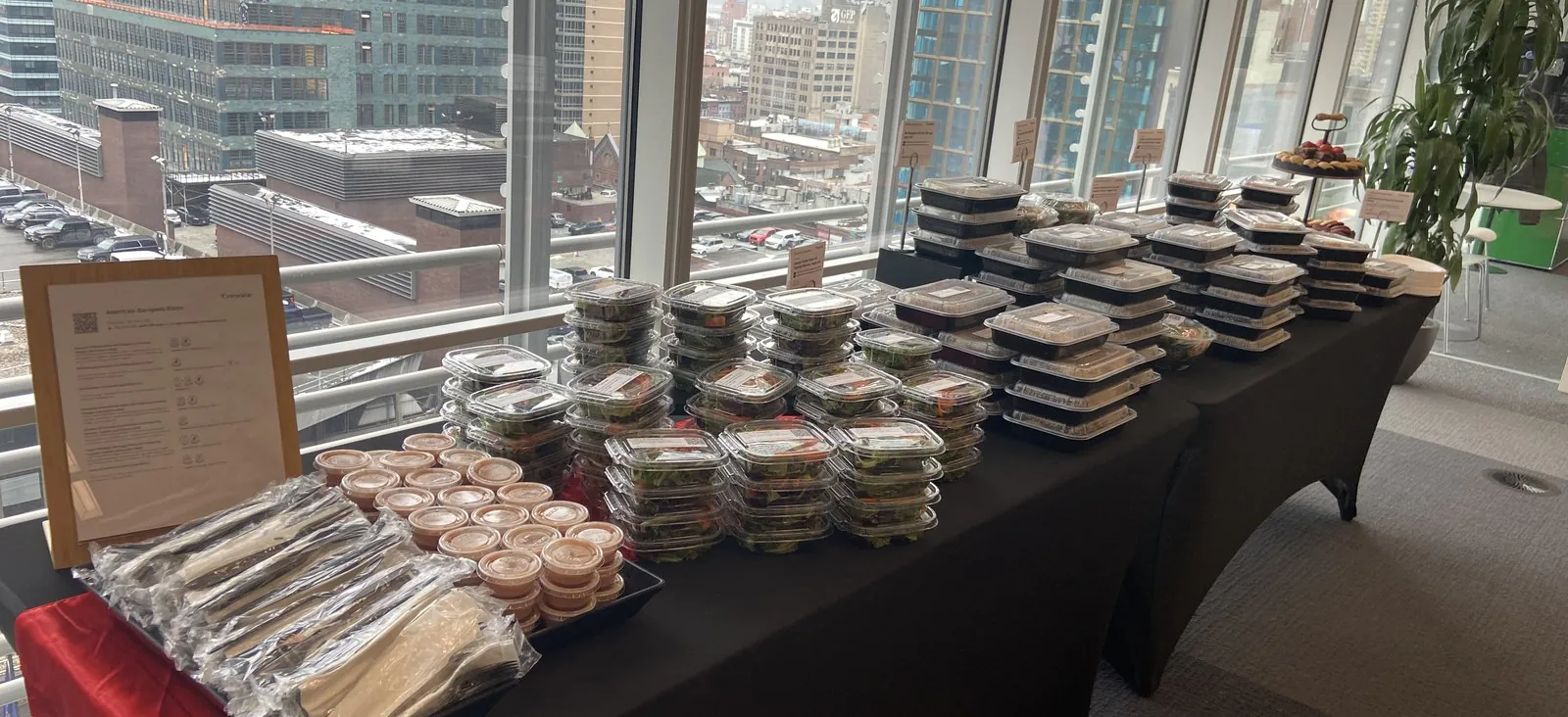
The everyday case. A standing shift meal feeds a crew mid-shift, and the handful of minutes when one shift overlaps the next is the natural window to feed both at once. The format has to survive staggered breaks, so individually portioned and sealed beats a communal serving line.
2. Safety-Milestone Celebrations
A stretch of days without a recordable incident is worth marking, and food is how plants mark it. These are morale rewards, so they lean hearty and generous: a barbecue, a taco bar, something that reads as a genuine thank-you rather than a boxed obligation.
3. Peak Season and Mandatory Overtime
Holiday warehouse peaks, product launches, and end-of-quarter pushes put crews on long hours and mandatory overtime. Feeding them is fuel and goodwill at once, and because the calendar is known in advance, it is the easiest surge to pre-book rather than scramble through.
4. Plant-Wide Employee Appreciation
Employee appreciation days, summer cookouts, and end-of-year meals feed the whole site, often several hundred people across every shift. These need real logistics and real dietary coverage, and they only land if the night and weekend crews get the same meal as day shift.
5. All-Hands, Town Halls, and Open Enrollment
Plant-wide meetings, safety stand-downs, and benefits sessions pull crews off the floor into a cafeteria or a tent. Food that sets up fast and feeds a big group without a long line keeps the meeting on schedule. A lunch and learn format works well for training and rollout sessions.
6. Service Anniversaries and Retirements
Manufacturing keeps people for decades, so milestone anniversaries and retirements matter more here than in high-churn industries. A catered meal for a crew that has worked together for years is a small budget line with an outsized return on morale.
7. Customer Visits, Audits, and Plant Tours
When a customer, a prospect, or a quality auditor tours the site, the meal is client-facing and needs to look sharp. This is the one manufacturing occasion where presentation carries real weight, closer to how our financial services and law firm guides treat a client lunch.
Quick Comparison Table
| Occasion | Best Format | Per Person | Why It Works |
|---|---|---|---|
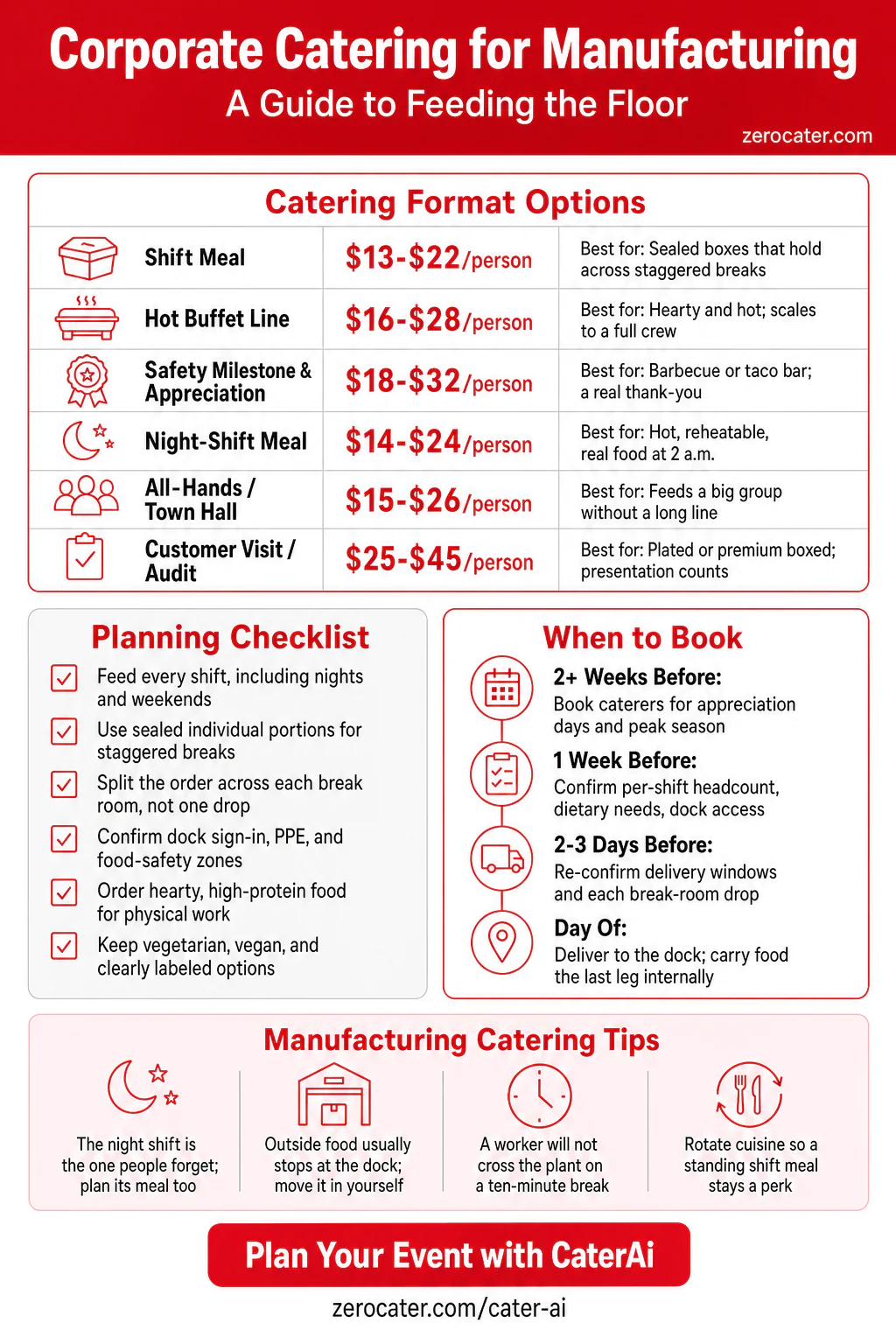
| Shift Meal | Sealed boxed meals, wraps, hot-hold boxes | $13 – $22 | Holds across staggered breaks; grab-and-go |
| Hot Buffet Line | Chafing-tray line, family-style | $16 – $28 | Hearty and hot; scales to a full crew |
| Safety Milestone & Appreciation | Barbecue, taco bar, cookout spread | $18 – $32 | Reads as a real thank-you, not an obligation |
| Night-Shift Meal | Hot, reheatable, individual portions | $14 – $24 | Real food at 2 a.m.; overnight delivery |
| All-Hands / Town Hall | Boxed for speed, or a fast buffet | $15 – $26 | Feeds a big group without a long line |
| Customer Visit / Audit | Plated or premium boxed, small buffet | $25 – $45 | Client-facing; presentation carries weight |
Ranges assume major-metro pricing before delivery, tax, and gratuity, which typically add 20 to 25 percent. Feeding several hundred at once lowers the per-head figure; splitting one order across three shifts and multiple break rooms raises delivery and setup costs. For a full breakdown, see our boxed lunch catering cost guide.
What to Order: Menu Ideas by Occasion
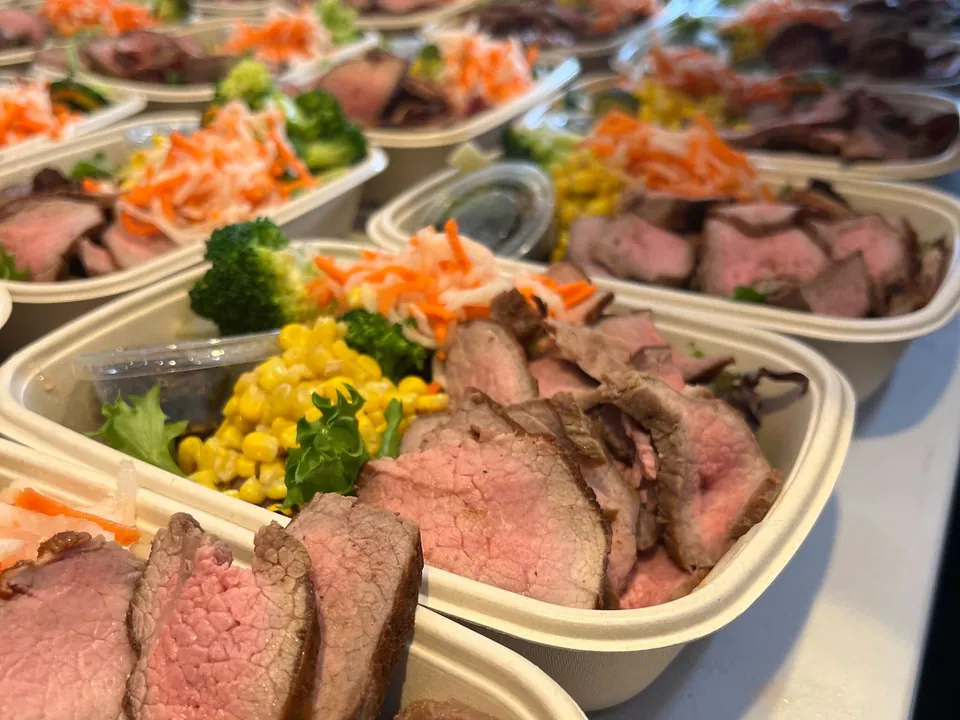
Shift meals. Boxed sandwiches and wraps, grain bowls, and composed salads with a real protein and dressing on the side. Each box labeled, each one self-contained, so a crew rotating off the line grabs one and eats. Our roundup of the best boxed lunch catering companies and the boxed lunch vs. buffet comparison both apply directly here.
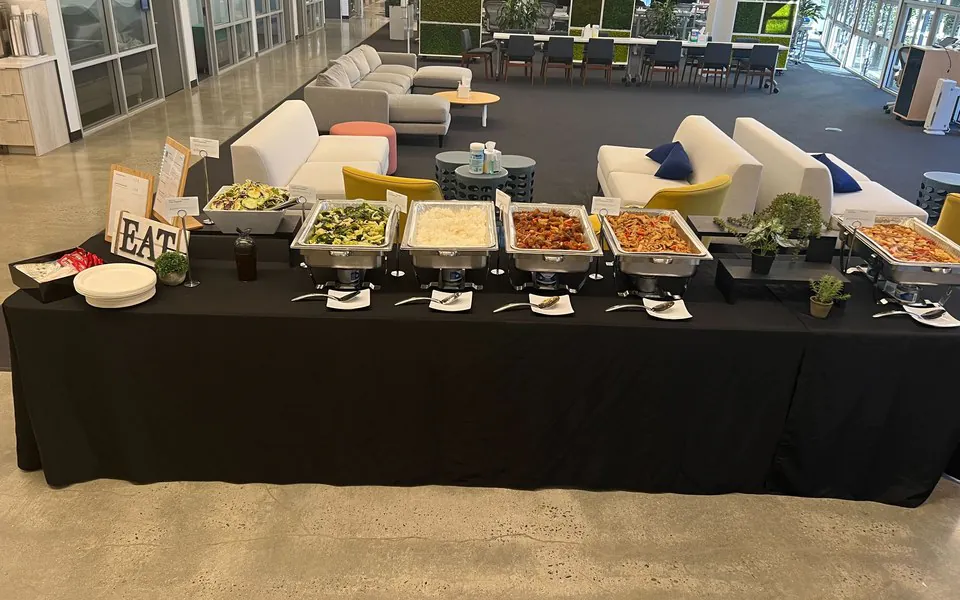
Hot buffet lines. Roasted or grilled proteins with rice and vegetables, pasta trays, and hearty sides in chafing dishes. This is the format for a crew that can break together and wants a hot plate. Keep it moving with two mains and a couple of sides rather than a sprawling spread.
Safety milestones and appreciation. This is where you spend the extra few dollars a head. Barbecue, a build-your-own taco bar, or a full cookout says thank-you in a way a boxed lunch cannot. Browse the directory for barbecue, Southern comfort, and Mexican caterers that do this well at volume.
Night-shift meals. Hot, hearty, and forgiving: pasta, roasted proteins with sides, rice bowls, curries. Food that reheats and holds beats anything that has to be eaten the minute it lands, because an overnight crew eats when the run allows, not on a bell.
Customer visits and audits. Plated proteins with a grain and a vegetable, premium boxed meals with real cutlery, or a tight buffet on a side table. Quiet, composed food that looks like the site takes itself seriously. A party tray spread works for a smaller visiting group.
Across all of these, keep at least one vegetarian and one vegan option in the mix, and cover gluten-free where you can. Our vegetarian, vegan, and gluten-free guides go deeper, the mixed dietary needs guide covers juggling several at once, and our halal guide matters for the many plants with a religiously diverse workforce. Clear, multi-language labeling on every dish removes the biggest source of confusion on a diverse floor.
The Line, the Shifts, and the Staggered Break
The first thing manufacturing does not share with an office is the shape of its day.
The line does not stop, so breaks stagger. To keep production running, crews take breaks in waves rather than all at once, which spreads a single meal across a two or three hour window. Order food that is as good for the last wave as the first, which in practice means sealed individual portions or proper hot-holding, not a buffet that wilts by the third rotation.
The break is short and the break room is the only place to use it. Manufacturing breaks tend to be shorter and less flexible than an office lunch hour, so nobody has time to hunt. Set the food where the crew already is, label it clearly, and keep the line short. A satellite pickup point near the floor beats a spread in a distant cafeteria.
Three shifts, not one. A plant that runs around the clock has a day, an evening, and an overnight crew, and the overnight crew is the one that gets forgotten. If you cater lunch, plan the equivalent meal for second and third shift, or the gesture reads as day-shift-only. Our healthcare guide covers the same around-the-clock challenge from the clinical side.
The work is physical, so the food is fuel. A crew on its feet all shift needs substance. Lean hearty and high-protein, keep portions generous, and save the delicate plates for the front office. Our healthy office catering guide shows how to keep it nourishing without making it light.
Plan office lunch catering with CaterAi
The Plant-Floor Rules an Office Never Deals With
This is the part manufacturing has that no other industry guide needs, and the part most people placing the order have never been walked through. A plant floor is a controlled environment, and catering has to respect it.
- Food-safety and allergen zones. Food, beverage, and pharmaceutical plants run good-manufacturing-practice and allergen-control programs that keep outside food out of production areas entirely. Eating is confined to designated break rooms for a reason, and an order that ignores that line creates a real compliance problem, not just a mess.
- PPE and site access. Reaching parts of the building can require hairnets, hi-vis vests, safety shoes, or hearing protection. The caterer usually will not have any of it, which is one more reason the food stops at the dock.
- The loading dock is the delivery point. Unlike a downtown tower, a plant has a real dock built for receiving, but it comes with a site-safety sign-in, a visitor policy, and often a rule that outside vehicles go no further. Give the caterer the dock address, a gate contact and mobile number, and a delivery window, and name an internal person to carry the food the last leg to the break room.
- Multiple break rooms across a big footprint. A large campus can have several break areas serving different departments and shifts. Split the order by location rather than making a worker cross the plant on a ten-minute break, and give the caterer a map or an escort to each drop.
The rule that trips people up
In a food or pharma plant, the break room is often the only place outside food is allowed, and getting there can require PPE the caterer does not carry. Assume the delivery stops at the dock and that someone on your team moves it the rest of the way. Confirm your plant’s specific food-safety and access rules before you order, because they override anything general.
Recurring Programs vs. On-Demand Orders
Most plants need both, and the mistake is running everything through one of them.
A recurring program fits the predictable load: the standing shift meal, the weekly team lunch, the peak season you can see coming a quarter out. Recurring orders earn you consistent delivery windows, a caterer who learns your dock and your break rooms, stored dietary profiles, and a rotation that keeps the food from repeating. Managed corporate catering exists for exactly this.
On-demand orders fit the spiky load: the surprise overtime call, the customer visit added on Tuesday, the safety milestone the plant just hit. These need speed and a short lead time more than they need optimization.
The practical setup is a standing program for the base load plus a trusted fast path for the surges, so nobody is sourcing a new caterer at the last minute for a crew that is already staying late. Our office manager’s guide to ordering catering covers building that workflow, and the corporate event catering checklist covers the one-off events.
The Logistics Manufacturers Get Wrong
- Feeding only day shift. The overnight and weekend crews do the same work and notice when they are skipped. Plan the equivalent meal for every shift.
- Buffets for staggered breaks. A communal serving line wilts by the third wave. Sealed individual portions or proper hot-holding match the way crews rotate off the line.
- One drop for a multi-building site. A worker will not cross the plant on a short break. Split the order by break room and deliver to each.
- Treating dock and PPE rules as the caterer’s problem. Sign-in, escort, hairnets, hi-vis. Sort it before the order, or the food sits at the gate.
- Light food for heavy work. A crew on its feet all shift burns through a salad. Order the hearty, high-protein version.
- The same meal every week. A standing program without rotation stops reading as a perk and starts reading as furniture. Vary the cuisine.
City Cost Guides
Catering costs and lead times vary by market. For local pricing near your plants, see our cost guides for Chicago, Dallas, and Atlanta, all major manufacturing and distribution hubs.
For the other industry playbooks in this series, see corporate catering for tech companies, law firms, healthcare, and financial services. Healthcare in particular shares the around-the-clock shift pattern, so that guide is a useful companion.
How CaterAi Handles Manufacturing Catering
CaterAi is Zerocater’s catering planning tool, and it fits the way plants order.
Describe the constraint, get a menu that respects it. Give CaterAi the plain-language brief (“220 people across three shifts, hearty and hot, sealed individual portions, delivered to the east dock for the 2:30 shift change, vegetarian and halal covered, around $18 a head”) and it builds options from over 1,000 restaurants that fit the format, the timing, and the budget.
Dietary profiles that stick. Store the crew’s needs once and every future order respects them, which matters on a floor where the workforce is large and diverse and nobody wants to re-collect restrictions every week.
Rotation across a standing program. CaterAi tracks what each shift has already had and varies the cuisine, so a standing meal does not collapse into the same tray every week. For the base load, managed corporate catering runs the program; for appreciation days, milestones, and customer visits, event catering covers the one-offs with setup and staffing. See how it works.
Plan office lunch catering with CaterAi
Related reading: lunch and learn catering, party tray catering, BBQ corporate catering, healthy office catering, and holiday party planning for year-end crew celebrations.
Frequently Asked Questions
How much does corporate catering cost for a manufacturing plant?
It tracks the occasion more than the headcount. A hearty boxed shift meal usually runs about $13 to $22 per person, a hot buffet line about $16 to $28, a plant-wide appreciation cookout about $18 to $32, and a catered meal for a customer audit or plant tour about $25 to $45. Feeding several hundred people at once brings the per-head number down, while splitting the same order across three shifts and two break rooms pushes delivery and setup costs up. Ranges assume major-metro pricing before delivery, tax, and gratuity.
How do you cater for staggered breaks when the production line never stops?
Order food that holds for two or three hours and staff or stage it so crews can grab a portion the moment their wave rotates off the line. Individually boxed and sealed meals work best because each person takes one and goes, with no serving line to bottleneck. For hot food, chafing trays or hot-holding boxes keep the last wave as good as the first. Set the food in the break room, not on the floor, and label everything clearly so nobody wastes their short break hunting for what they can eat.
What should you order to feed the night shift?
Real, hot, substantial food, delivered by a caterer that runs at that hour. The graveyard shift is the one that gets forgotten, and a vending machine is not a meal for someone doing physical work at 2 a.m. Hearty options that reheat well, such as pasta, roasted proteins with sides, rice bowls, or a taco bar, hold up better than anything delicate. Confirm the caterer’s genuine overnight delivery window, name the person at the gate who will receive it, and keep coffee and grab-and-go backups stocked for the hours when nothing outside is open.
What food works best for physically demanding warehouse and factory work?
Hearty, high-protein, filling food that fuels hours of labor. Barbecue, roasted or grilled proteins with rice and vegetables, hot pasta trays, loaded grain bowls, and build-your-own taco or sandwich bars all give crews the substance a light salad cannot. Keep portions generous, include a vegetarian and a vegan option so nobody is left out, and lean toward food that holds temperature and travels well. Save the delicate, fussy plates for the office; the plant floor wants a real meal it can eat fast.
Are there food-safety rules for catering inside a manufacturing plant?
Often, yes, especially in food, beverage, and pharmaceutical plants. Many facilities enforce allergen-control and good-manufacturing-practice zones that keep outside food out of production areas entirely, restrict eating to designated break rooms, and require anyone entering the floor to wear PPE such as hairnets, hi-vis, and safety shoes. Caterers usually deliver to the loading dock and go no further, so plan for an internal person to carry food the last leg to the break room. Confirm your plant’s rules before you order, because they override any general catering advice.
How do you feed multiple break rooms across a large facility?
Treat each break room as its own delivery with its own headcount, not one big drop that people walk across the plant to reach. A large campus can have several break areas serving different departments and shifts, and a worker on a short break will not cross the building for lunch. Split the order by location, give the caterer a map or an escort to each point, and stagger delivery so the food for a later break is not sitting out for hours. A satellite pickup point or a stocked micro market covers the gaps between catered meals.
What are good occasions to cater at a manufacturing plant?
Safety milestones such as a stretch of days without a recordable incident, peak-season and mandatory-overtime pushes, plant-wide employee appreciation meals, all-hands or town-hall meetings, service anniversaries and retirements for a long-tenured crew, and customer or auditor plant visits. Each has a different feel: a safety-milestone lunch is a morale reward, an overtime meal is fuel for a hard week, and an audit meal is client-facing and needs to look sharp. Matching the food and format to the occasion is most of the job.
Should a manufacturer use a recurring catering program or order on demand?
Most plants need both. A recurring program fits the predictable load, such as a standing shift meal, a weekly team lunch, or a known peak season, and it earns you consistent delivery windows, stored dietary needs, and a rotation that keeps the food from repeating. On-demand orders fit the spiky load, such as a surprise overtime call or a customer visit added on short notice. Run a standing program for the base and keep a fast path for the surges so nobody is sourcing a caterer at the last minute for a crew that is already staying late.