Healthcare runs on a clock that never stops, and its catering has to keep pace with it. A hospital floor is staffed at 3 a.m. as well as 3 p.m., clinical teams cannot leave a unit to go find lunch, and the single largest recurring catering occasion in the entire industry, the pharmaceutical and medical-device rep lunch, is a federally reportable record before it is a meal. None of that looks like the nine-to-five office program a tech company or a law firm runs. Add the appreciation calendar that healthcare leans on to retain exhausted staff, from National Nurses Week to Doctors’ Day, and the elevated food-safety bar of a clinical environment, and healthcare catering becomes its own discipline with its own rules. This guide covers what to feed each kind of healthcare occasion, how to budget it across shifts, how the Sunshine Act shapes the rep lunch, and the logistics that separate a catering program that actually reaches a busy floor from one that just gets dropped at a lobby desk.
In This Guide
- Why Healthcare Caters Differently Than Any Other Industry
- The 7 Occasions Healthcare Caters For
- Quick Comparison Table
- What to Order: Menu Ideas by Occasion
- The Sunshine Act and the Pharma-Rep Lunch
- Shifts, Food Safety, and the Loading-Dock Reality
- Recurring Programs vs. On-Demand Orders
- The Logistics Healthcare Gets Wrong
- Hospital-Market City Guides
- How CaterAi Handles Healthcare Catering
- FAQ
Why Healthcare Caters Differently Than Any Other Industry
Healthcare catering looks like any other corporate program on the surface (staff meals, meetings, events), but four structural realities make the underlying brief distinct.
1. The clock never stops, so a single noon lunch misses most of the team. Hospitals, emergency departments, labs, and many clinics run around the clock. A catering order that arrives at 12 p.m. feeds the day shift and ignores the people who were on the floor at 4 a.m. and the crew coming in at 7 p.m. Healthcare catering has to think in breakfast, lunch, dinner, and overnight, and the food gets eaten in staggered fifteen- and twenty-minute breaks at the nurses’ station rather than all at once in a conference room.
2. Clinical staff cannot leave the floor, and the cleanliness bar is higher. Nurses, techs, and physicians cannot step out for a sit-down meal, and they often cannot predict when their break will come. That makes individually sealed, single-serving, grab-and-go food the default format, not a buffet that has to be served and held. A clinical environment also carries the highest food-safety and cleanliness expectations of any place catering goes, so packaging, temperature control, and labeling matter more here than anywhere else.
3. The rep lunch is a compliance record, not just a meal. No other industry has anything like it. Pharmaceutical and medical-device representatives routinely buy lunch for a physician practice to earn face time, and under the federal Sunshine Act that meal is a reportable transfer of value. The way the order is structured (an accurate headcount, a modest per-person value, a clean itemization) is what makes it reportable cleanly. The Sunshine Act section below covers the math.
4. Appreciation is a retention lever in a staffing crisis. Healthcare runs a full calendar of recognition events (National Nurses Week, National Hospital Week, National Doctors’ Day, and EMS, CNA, and lab weeks) and leans on them harder than other industries because burnout and turnover are acute. Catered appreciation that reaches every shift is a genuine retention tool, and because patient-experience scores track with staff morale, the food is part of how a facility keeps the people who keep it running.
The 7 Occasions Healthcare Caters For
1. Daily Staff Meals and Break-Room Drop-Offs
The workhorse occasion: feeding a unit, a department, or an entire facility on an ordinary working day. The food has to reach a busy floor and survive until each person gets a break, which can be any time across a long shift.
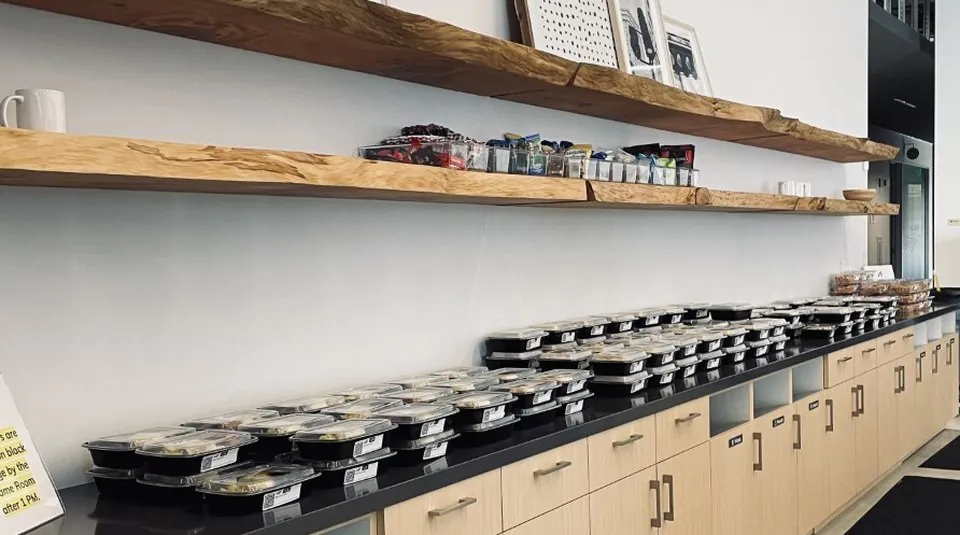
Format: Individually packaged boxed meals, sealed bowls, or wrapped sandwiches delivered to the break room, labeled with dietary and allergen markers. Nothing that requires a serving line or a staff member to plate it.
Budget: $14 to $22 per person. This is the highest-frequency line in most facilities, so unit cost, reliability, and clean packaging matter more than flash.
2. Pharma and Medical-Device Rep Lunches
A representative brings lunch to a practice or department to earn time with the clinicians. It is a recurring occasion in physician offices, specialty clinics, and hospital departments alike, and it comes with reporting obligations no other catered meal carries.
Format: A modest, easily itemized spread for a known headcount, often boxed or a simple buffet. Keep the per-person value reasonable and the count accurate so the meal reports cleanly under the Sunshine Act.
Budget: $18 to $30 per person, with an eye on the reportable per-head value rather than just the total.
3. Staff Appreciation Events
Nurses Week, Hospital Week, Doctors’ Day, and department-level thank-yous. The point is to make the team feel valued, which in a high-burnout field is a retention investment, so the food should feel like a real treat and it has to reach every shift.
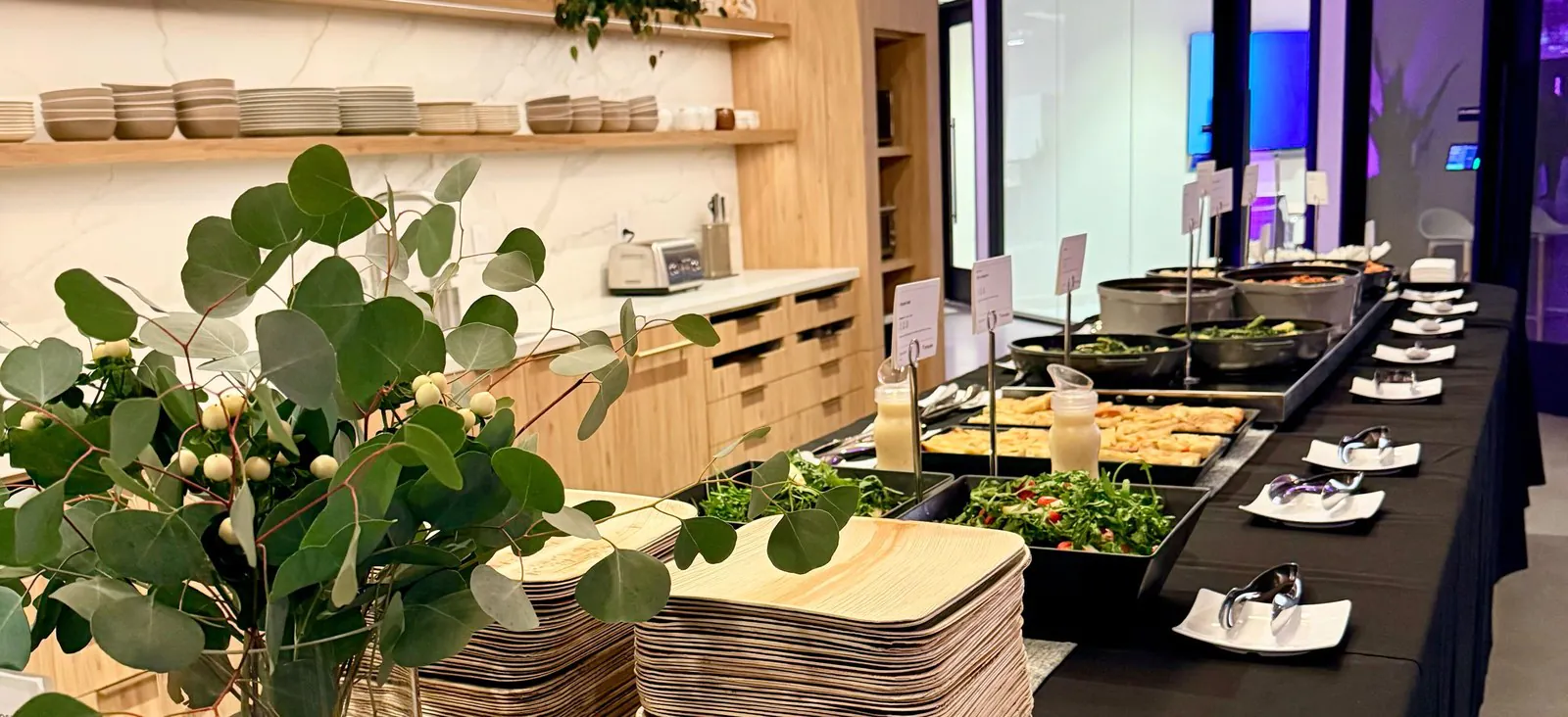
Format: A nicer-than-usual spread, run across the week and across shifts. Reception-style grazing and dessert tables for on-site gatherings, plus individually portioned versions for staff who cannot leave the floor. Our grazing table guide and party tray guide cover the celebratory formats.
Budget: $20 to $35 per person, more for a marquee event.
4. Grand Rounds, CME, and Morning Conferences
Teaching hospitals and academic departments run grand rounds, morning report, and continuing medical education sessions that keep clinicians in a room before or during a clinical day. The catering brief is typically breakfast or an early working lunch that lets a busy group eat without a long break.
Format: Breakfast (pastries, parfaits, fresh fruit, coffee) or a quick working lunch (boxed or a fast buffet). The pattern mirrors a conference; see our guide to boxed lunch catering for conferences and training for the session-break logistics.
Budget: $25 to $45 per person across breakfast and lunch.
5. Night-Shift and Weekend Coverage Meals
The occasion that defines healthcare and that most catering programs forget: the crew working at 2 a.m. or all weekend. These staff are routinely underfed by programs built around a weekday lunch, and feeding them well is a visible signal that the facility values off-hours work.
Format: Comfort food and warm options that hold well, individually portioned, from a caterer that reliably delivers in the evening and overnight. Keep the night and weekend menus as good as the day-shift menu.
Budget: $15 to $25 per person.
6. New-Resident Orientation and Onboarding
Teaching hospitals onboard new resident classes each summer, and clinics and systems run their own orientations. Like any onboarding, food is part of the welcome, and it sets the tone for a demanding training year.
Format: A generous welcome spread, then a rotating program for the orientation days. Collect dietary needs before day one so the first meal is already correct.
Budget: $20 to $35 per person.
7. Leadership, Board, and Donor or Community Events
Administration meetings, board sessions, foundation and donor events, and community-facing gatherings. The audience is external or executive, so this is where a healthcare organization spends up and the presentation matters.
Format: Premium buffets, plated meals, or reception-style grazing depending on size and time of day. For board-style sessions, the cadence and format overlap with our board meeting catering guide.
Budget: $40 to $90 or more per person.
Quick Comparison Table
| Occasion | Format | Budget/Person | Cadence | Shift Coverage |
|---|---|---|---|---|
| Daily staff meals | Individually boxed, grab-and-go | $14 – $22 | Frequent | All shifts |
| Pharma / device rep lunch | Modest, itemizable buffet or boxed | $18 – $30 | Recurring | Day (clinic hours) |
| Staff appreciation | Reception spread + portioned | $20 – $35 | Annual weeks | All shifts |
| Grand rounds / CME | Breakfast + working lunch | $25 – $45 | Periodic | Day (early) |
| Night-shift / weekend | Comfort food, evening delivery | $15 – $25 | Ongoing | Night / weekend |
| Resident orientation | Welcome spread + rotation | $20 – $35 | Seasonal | Day |
| Leadership / donor event | Premium buffet or plated | $40 – $90+ | Periodic | Scheduled |
What to Order: Menu Ideas by Occasion
Daily Staff Meals: Floor-Friendly, Grab-and-Go
- Composed grain and protein bowls: chicken, salmon, or tofu with grains and roasted vegetables, sealed lid, dressing on the side
- Wrapped sandwiches or wraps: with a side and a piece of fruit, labeled by filling and dietary marker
- Mediterranean boxes: grilled protein, hummus, tabbouleh, and pita, easy to eat one-handed in a short break
- Individual salads with protein: dressing packaged separately so nothing wilts before a nurse gets a moment
For the format trade-offs, see boxed lunch vs. buffet and our allergy-safe boxed lunches guide.
Night-Shift and Morning Fuel: Energy That Holds
- Breakfast spreads: egg sandwiches, parfaits, fresh fruit, and good coffee for early grand rounds and the day-shift start
- Warm comfort bowls: rice and noodle bowls or hearty soups that hold well for the overnight crew
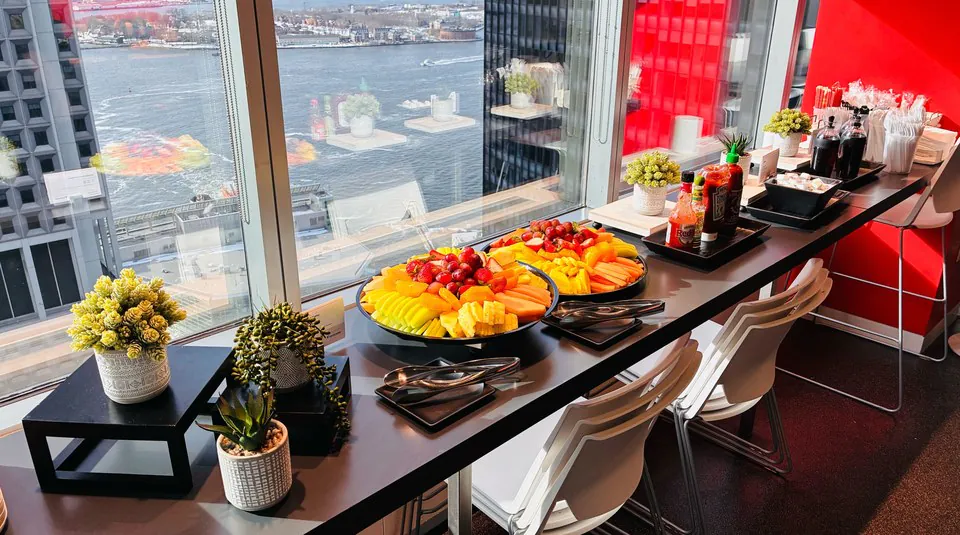
- Fresh fruit and snack platters: a clean, energy-sustaining option for long shifts, easy to graze between patients
- Hydration and caffeine: coffee, tea, and water service that lasts a full overnight, not just the lunch hour
Appreciation Week: 5-Day Cross-Shift Rotation
A representative Nurses Week or Hospital Week rotation that keeps every shift covered without repeating a cuisine.
- Day 1: Mediterranean bowls and mezze (kickoff, make it generous)
- Day 2: taco or burrito bar with vegan and gluten-free proteins
- Day 3: Italian pasta with a gluten-free option and salads
- Day 4: Thai or Indian bowls (vegetarian-friendly by default)
- Day 5: dessert and coffee bar plus a build-your-own sandwich spread to close the week
Run each day across shifts, with individually portioned versions for staff who cannot leave the floor.
Leadership and Donor Events: Impression-Grade
- Plated Mediterranean: grilled protein, hummus, tabbouleh, warm pita, dessert plate
- Sushi chef’s selection: premium rolls, nigiri, edamame, miso soup
- Grazing and charcuterie tables: cured meats, cheeses, fruit, and crudite on tiered boards for receptions
- Composed entrees on real plates: a meat, a fish, and a vegan option, dietary needs collected in advance
Browse Japanese, Mediterranean, and Italian catering on Zerocater.
The Sunshine Act and the Pharma-Rep Lunch
The thing that makes healthcare catering genuinely unique is that one of its most common occasions is also a federal reporting event. When a pharmaceutical or medical-device manufacturer provides a meal to a physician or a teaching hospital, the federal Open Payments program (commonly called the Sunshine Act) treats that meal as a reportable transfer of value. The catering order is, in effect, a compliance record.
The mechanics matter because they shape how the meal should be ordered. The reportable per-person value is the total food and beverage cost divided by everyone who actually ate, including office staff who are not covered recipients. For 2025, any individual covered recipient’s per-head portion at or above the de-minimis threshold of $13.46 is reportable, and the obligation to track and report falls on the manufacturer, not on the physician who ate the sandwich.
A worked example
A device rep brings lunch to a practice of 10 people: 4 physicians and 6 office staff. The order totals $180, so the per-head value is $180 divided by 10, or $18 a person. Each physician’s $18 portion is above the $13.46 de-minimis threshold, so the manufacturer reports an $18 transfer of value for each of the 4 physicians. The takeaway for whoever places the order: get the headcount right, keep the per-person value modest, and choose a format the rep can itemize cleanly, because an inflated or sloppily counted order creates a reporting headache, not goodwill.
This is why the best rep-lunch catering is unfussy and precise rather than lavish. A clearly itemized, accurately counted, reasonably priced lunch protects everyone: the practice gets fed, the rep gets clean numbers to report, and nobody is surprised when the data shows up in the public Open Payments database. None of this is tax or legal advice, and the specifics of reporting belong to the manufacturer’s compliance team, but the ordering side is simple: modest, counted, and easy to itemize.
Plan office lunch catering with CaterAi
Shifts, Food Safety, and the Loading-Dock Reality
Healthcare imposes constraints most office catering never has to think about, and they shape the right format and the right vendor more than cuisine does.
Cater the shift, not the clock. The single most common healthcare catering mistake is ordering one midday delivery and calling the facility fed. Treat each shift as its own order: a morning drop-off for the day crew, a lunch window, and an evening or overnight delivery for the night staff. The food has to be individually portioned and safe to hold, because clinical staff eat in short, staggered breaks whenever the floor allows, not all together.
Food safety is non-negotiable. A clinical setting carries the highest cleanliness expectations of any environment catering enters, and meals may sit until a staff member gets a moment. Use caterers that hold food at safe temperatures, seal single servings, and label allergens clearly, since staff grab food fast and cannot stop to ask what is in it. Individually packaged formats are safer than shared buffets on a busy floor for exactly this reason.
The loading-dock reality. A hospital is not an office lobby. Deliveries route through a service entrance or loading dock, drivers may need badge access or an escort, and the food usually has to reach a specific unit or floor rather than a front desk. For every order, confirm the delivery contact, the exact drop point, the security or access steps, and the time window in advance. A great meal that gets stuck at the wrong entrance is a failed order.
Dietary coverage floor for healthcare
Healthcare employs one of the most diverse workforces of any industry, so plan for vegetarian, vegan, gluten-free, and the major allergens at every order, plus halal and kosher options. Clinical staff on long shifts also lean toward genuinely healthy, energy-sustaining food, so balance comfort orders with lean proteins, grains, vegetables, and fresh fruit. Our mixed dietary needs guide, vegan office catering guide, and gluten-free office catering guide cover the specifics, and our healthy office catering guide is built for exactly the energy-on-a-long-shift problem.
Recurring Programs vs. On-Demand Orders
The right operating model depends on cadence, and most healthcare organizations run both.
Managed recurring programs fit facilities that cater regularly: a unit with standing staff meals, a weekly grand rounds breakfast, or a department that feeds its night shift every weekend. A platform like Zerocater’s managed catering program handles the vendor roster, dietary tracking, cuisine rotation, and multi-shift scheduling, so an office manager or department coordinator is not rebuilding the process every week.
On-demand ordering covers the unpredictable long tail: a surge that keeps a team late, a thank-you for a unit that pulled through a hard night, a last-minute rep lunch. CaterAi lets you describe the need (“20 people, vegan and gluten-free coverage, individually boxed, delivered to the 4th-floor ICU break room by 7 p.m. tonight, $20 a head”) and builds a menu from over 1,000 restaurants, including vendors that deliver on short notice and into the evening. See how the platform works.
The hybrid approach is most common. A standing program for the predictable meals (daily staff lunches, recurring grand rounds, weekend night-shift coverage) plus on-demand ordering for everything unpredictable, with one platform consolidating billing and reporting so administration has a single, clean view of catering spend by department or cost center.
The Logistics Healthcare Gets Wrong
The #1 mistake: feeding the day shift and forgetting everyone else
A noon delivery feeds the people who happen to be on at lunch and quietly tells the night and weekend crews they do not count. In a field fighting burnout and turnover, that is exactly the wrong message. Cater every shift, even if it means three smaller deliveries instead of one big one, and keep the off-hours menus as good as the midday menu.
- Using buffet formats on a clinical floor. A buffet that has to be served and held does not work when staff eat in staggered breaks. Individually sealed, single-serving meals are the right call for any unit.
- Treating the rep lunch as just a meal. The pharma and device lunch is a reportable transfer of value. Order it modest, counted, and itemizable so it reports cleanly under the Sunshine Act.
- Ignoring delivery access. Sending a driver to the front lobby of a hospital with no badge, no contact, and no floor number strands the food. Confirm the dock, the access steps, and the drop point every time.
- Skimping on appreciation weeks. Nurses Week and Hospital Week are the moments staff notice most. A thoughtless spread sends the wrong signal during the windows that matter for retention.
- Underplanning dietary and allergen labeling. A diverse workforce grabbing food fast needs every item clearly marked. Unlabeled food on a busy floor is a real risk, not a nicety.
- No clean spend reporting by department. Healthcare allocates costs to units and cost centers. A program that cannot export spend cleanly creates monthly accounting friction. Choose a platform that produces the report finance needs.
Hospital-Market City Guides
The major healthcare markets have different catering landscapes, vendor density, and price levels. Below are city-specific catering and cost guides plus starter vendor lists for metros with a heavy concentration of hospitals and clinics:
By City
- Boston: a dense Longwood and teaching-hospital market — browse Boston caterers | Boston catering guide | Boston cost guide
- New York City: Power Bowls (build-your-own grain bowls), A Saffron Thread (Indian), 251 Ginza Sushi (premium sushi for leadership events) | NYC catering guide | NYC cost guide
- Washington, D.C.: Springbone Kitchen (clean, allergy-friendly), Rasa (Indian bowls), Banana Leaves (Asian) | D.C. catering guide | D.C. cost guide
- San Francisco: Kitava (allergy-friendly, fully gluten-free), La Mediterranee (Mediterranean) | SF catering guide | SF cost guide
- Chicago: Pastafi (Italian) and a deep medical-district market | Chicago catering guide | Chicago cost guide
- Los Angeles: a large hospital and outpatient market across the metro | LA catering guide | LA cost guide
Browse the Mediterranean, Japanese, Italian, Thai, and Indian catering directories to find the right vendors for your facility.
How CaterAi Handles Healthcare Catering
CaterAi is Zerocater’s AI-powered planning tool, and it solves the specific problems healthcare facilities hit.
Multi-shift and after-hours orders. Describe the need in plain language (“12 people, individually boxed, deliver to the 4th-floor break room by 9 p.m. tonight, $18 a head”) and CaterAi builds a menu from vendors that actually deliver on that timeline. The late surge and the overnight crew are exactly where it earns its keep.
Dietary profiles at the team level. Store each unit’s and each resident class’s dietary needs once, and every subsequent order respects them automatically, so no one has to re-declare and no one on a busy floor ends up with nothing safe to eat.
Variety enforcement for recurring programs. CaterAi tracks what a unit or a resident cohort has eaten recently and surfaces options they have not seen, so a standing program stays fresh week after week without manual tracking.
One platform for every occasion. A $16 night-shift drop-off and an $80 donor reception run through the same system, with event catering and recurring programs in one place. The administrative team has a single dashboard and finance gets clean spend reporting by department.
Plan office lunch catering with CaterAi
For related industry playbooks, see our guides to corporate catering for tech companies and corporate catering for law firms, and our office manager’s guide to ordering catering for the day-to-day workflow.
Frequently Asked Questions
How much does healthcare catering cost per person?
Healthcare catering ranges from about $14 to $90 or more per person depending on the occasion. Daily staff meals run $14 to $22, night-shift and weekend coverage runs $15 to $25, pharma and device rep lunches run $18 to $30, staff appreciation events run $20 to $35, resident orientation runs $20 to $35, grand rounds and CME days run $25 to $45, and leadership, board, or donor events run $40 to $90 or more. Add 20 to 25 percent for delivery, tax, and gratuity, and budget for separate deliveries to each shift.
How do you cater across all three shifts in a hospital?
Treat each shift as its own order rather than one big midday delivery. Schedule a morning drop-off for the day shift, a lunch window, and a dinner or overnight delivery for the night crew, all in individually packaged portions that hold safely because staff eat in staggered breaks. Use a caterer or platform that reliably delivers in the evening and overnight, and keep the off-hours menus as good as the day-shift menu.
Are pharma rep lunches at a medical practice reportable under the Sunshine Act?
Usually yes. Under the federal Open Payments program, a meal a drug or device manufacturer provides to a physician or teaching hospital is a reportable transfer of value. The per-person value is the total food and beverage cost divided by everyone who ate, and for 2025 any covered recipient’s per-head portion at or above the $13.46 de-minimis is reportable by the manufacturer, not the physician. See the Sunshine Act section above for a worked example.
What is the best catering format for clinical staff who can’t leave the floor?
Individually sealed, single-serving meals delivered to the unit break room. Nurses, techs, and surgeons eat in short, unpredictable breaks, so order boxed meals, sealed bowls, or wrapped sandwiches that one person can grab and eat in fifteen minutes, labeled with dietary and allergen markers and delivered at safe temperature. See our allergy-safe boxed lunches guide for the format details.
How do hospitals handle catering for Nurses Week and staff appreciation?
Plan around the calendar (National Nurses Week is May 6 to 12, National Hospital Week is mid-May, and National Doctors’ Day is March 30) and cater every shift, not just the one on at noon. Run a rotating menu across the week, budget $20 to $35 per person, and use individually portioned formats so the food works on a busy floor. In a high-burnout field, a well-run appreciation week is a retention tool, so make the food feel like a genuine thank-you.
What dietary needs should healthcare catering plan for?
Plan for vegetarian, vegan, gluten-free, and the major allergens at every order, plus halal and kosher for the diverse workforce most facilities employ. Clinical staff on long shifts also want genuinely healthy, energy-sustaining food, so balance comfort orders with lean proteins, grains, vegetables, and fresh fruit. Label every item clearly, which matters even more where staff grab food fast. Our mixed dietary needs guide covers the full playbook.
How far in advance should a healthcare facility order catering?
Book appreciation weeks, grand rounds, resident orientation, and leadership or donor events two or more weeks ahead. Daily staff meals and rep lunches can be ordered one to three days out. Because clinical demand is unpredictable, the more important rule is to keep a roster of caterers that includes at least one reliable evening and overnight delivery option, so a surge or a short-staffed night never leaves the team without food.
How do you handle food safety and delivery logistics in a hospital?
Use caterers that hold food at safe temperatures and seal single servings, since clinical settings have the highest cleanliness expectations of any catering environment and meals may sit until a break. On logistics, plan for the access realities of a hospital: deliveries route through a loading dock or service entrance, drivers may need badge access or an escort, and the food often has to reach a specific unit rather than a lobby. Confirm the delivery contact, the exact drop point, and the time window in advance for every order.