Halal is not a niche request to squeeze in at the end of the order. It is a sourcing and preparation standard that a growing share of the workforce observes, and getting it right is one of the clearest signals an employer can send that it actually planned for everyone at the table. It is also one of the most commonly botched, because most people assume halal just means leaving the pork off. It means a good deal more than that. The good news: once you understand what halal actually requires, it becomes one of the easiest dietary needs to cover beautifully, because entire cuisines are already built around it. This guide explains what halal really means, the difference between halal and zabiha, the certification questions worth asking, the naturally halal cuisines that make office ordering simple, what it costs, and the Ramadan and Eid etiquette that turns a compliant order into a genuinely welcoming one.
In This Guide
- What Halal Actually Means (and Why “No Pork” Is Not Enough)
- Halal vs. Zabiha vs. Halal-Certified: What to Ask a Caterer
- The Naturally Halal Cuisines That Make Ordering Easy
- Halal Menu Ideas by Format
- What Halal Office Catering Costs Per Person
- Cross-Contamination: The Details That Trip Up Standard Caterers
- Ramadan, Eid, and Everyday Etiquette
- Covering Halal and Everything Else in One Order
- Mistakes to Avoid
- How CaterAi Handles Halal Catering
- FAQ
What Halal Actually Means (and Why “No Pork” Is Not Enough)
Halal is an Arabic word that means permissible. Applied to food, it describes what observant Muslims are allowed to eat under Islamic law, and its opposite, haram, describes what is forbidden. Pork is the most famous prohibition, which is why so many people stop there, but it is only one item on a longer list. Treating halal as “the no-pork option” is the single most common way a well-meaning office order quietly excludes the very people it was trying to include.
Here is what halal actually rules out:
- Pork and all pork by-products. Not just bacon and ham, but lard, certain gelatins, and pork-derived enzymes that hide in desserts, marshmallows, and some sauces.
- Meat that was not slaughtered properly. Permissible animals (beef, lamb, chicken, goat) must be slaughtered according to Islamic guidelines. A halal-eligible animal processed the conventional way is not halal.
- Alcohol, including in the cooking. This is the one standard caterers miss most. Cooking wine in a sauce, beer in a batter, rum in a dessert, and even some flavor extracts count. The dish does not have to be served with a drink to be disqualified.
- Blood and improperly handled meat. The slaughter method is designed to drain the blood fully, which is part of why zabiha matters to many people.
- Cross-contamination. A chicken breast is not halal if it was seared on the same flat-top as bacon, or fried in oil shared with non-halal items. Keeping halal food separate through prep and service is part of the standard, not an extra.
Read that list and the takeaway is clear: you cannot reliably make a standard menu halal by deleting two dishes. The dependable approach is to start from food that is halal by design, which is exactly what the naturally halal cuisines below give you.
Halal vs. Zabiha vs. Halal-Certified: What to Ask a Caterer
Three words come up when you order halal, and they are not interchangeable. Knowing the difference lets you ask the right question instead of taking a vague “yes, it’s halal” at face value.
Halal is the broad category of what is permissible. Zabiha (sometimes spelled dhabiha) is the specific Islamic method of slaughter: a healthy animal, the name of God recited, and the throat cut so the blood drains. All zabiha meat is halal, but people use the umbrella word “halal” with different levels of strictness, so two caterers can both say halal and mean slightly different things.
Halal-certified means a third-party body has audited and verified the sourcing and handling. In the United States the certifiers you will hear named include the Halal Food Standards Alliance of America (HFSAA), Halal Monitoring Services (HMS), and the Islamic Food and Nutrition Council of America (IFANCA). They differ in approach. HFSAA and HMS require hand slaughter and tight oversight, while IFANCA is one of the largest certifiers and permits some mechanical processing under Muslim supervision. The practical point for an office is not to memorize the standards but to know that a certificate is a real thing a serious halal caterer can show you.
Five questions to ask a caterer
- Is your meat halal, and specifically is it zabiha?
- Are you certified, and by which body (HFSAA, HMS, IFANCA)?
- Are halal items prepared on separate surfaces and in separate fryers?
- Does any dish use alcohol in cooking, or pork-derived gelatin?
- Is the whole kitchen halal, or only some menu items?
If your team observes strictly, the safest answer to the last question is a fully halal kitchen, where the entire operation is halal and the cross-contamination question disappears. For a mixed team that simply wants good halal options included respectfully, a reputable caterer who sources halal meat and prepares it separately is usually enough. Either way, asking these questions out loud is what separates a real halal order from a hopeful one.
The Naturally Halal Cuisines That Make Ordering Easy
This is the part that turns halal from a worry into an advantage. Several of the world’s most popular catering cuisines are built around halal practice, so the whole menu is compliant out of the box and you are not auditing dishes one by one. Order from one of these and you also tend to get a more interesting, shareable spread than a single adapted entree.
Mediterranean and Middle Eastern
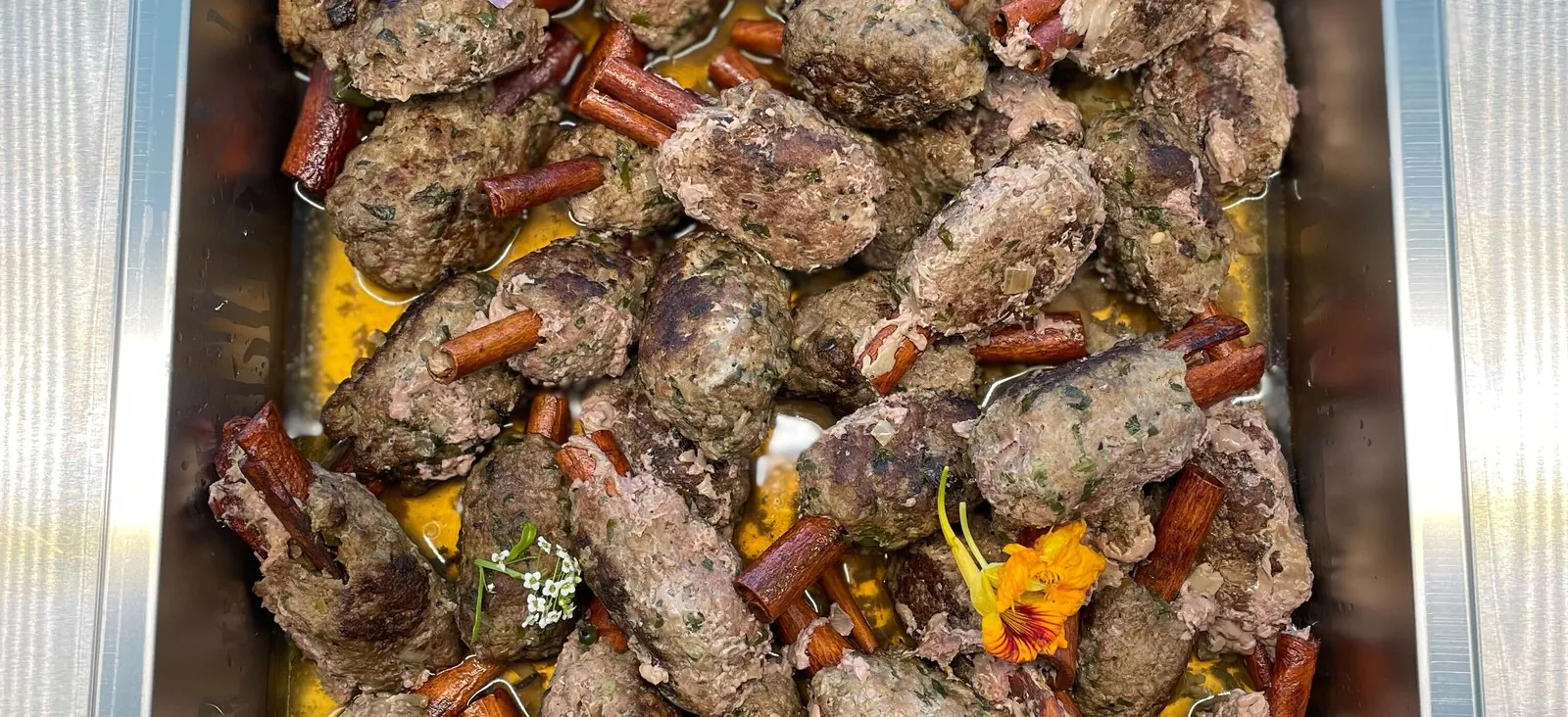
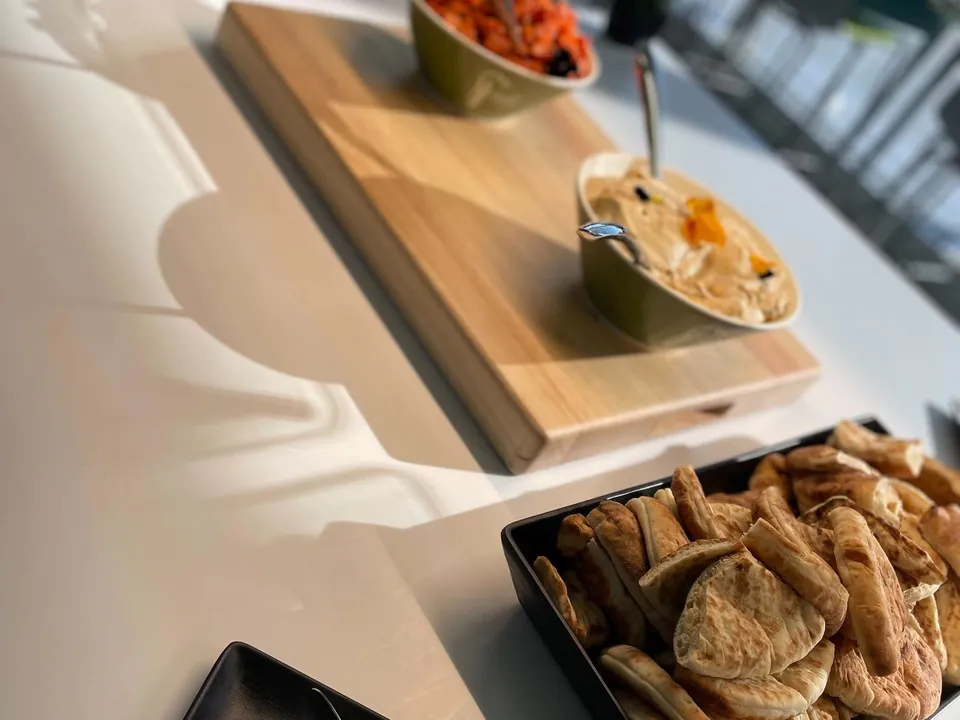
The default for a reason. Shawarma, chicken and beef kebabs, kofta, hummus, baba ganoush, falafel, tabbouleh, rice, and warm pita cover meat eaters and plant-based eaters in one order, and most Mediterranean caterers source halal or zabiha meat. It travels well, holds at room temperature, and looks generous on a table. Browse Mediterranean catering and Greek catering, and name-drop a vendor your team recognizes: Zaatar Mediterranean in San Francisco, Zazu Mediterranean in New York, Olive Mediterranean Grill in Chicago, Boston Shawarma, Koz Mediterranean in Atlanta, and Taboon Mediterranean Grill in Dallas.
Indian and Pakistani
Biryani, chicken tikka, seekh kebab, dal, chana masala, paneer dishes, and naan make a halal spread that is rich, vegetarian-friendly, and easy to scale. Many Indian and Pakistani caterers serve halal meat as a matter of course. See Indian catering and our dedicated Indian corporate catering guide, and consider vendors like Tandoor Char House in Chicago, Naanstop in Atlanta, and Mirch Masala in Seattle.
Persian, Turkish, and Afghan
Persian kebabs with saffron rice, Turkish doner and mezze, and Afghan kabuli pulao with kebabs are all grounded in halal practice and bring variety when you want to rotate beyond the usual. Explore Turkish catering, and look at Sima’s Persian Delights in Oakland, Ghazni Afghan Kabobs in the Bay Area, and Sultan’s Kebab in Pleasanton.
The American Halal Specialists
A whole category of caterers now does halal as their entire identity, from halal cart classics to dedicated halal kitchens. Options like The Halal Guys in Denver, The Gyro Project and Pita and Beyond in New York, Boston Kebab House, Pita Central in Denver, House of Falafel in San Jose, and Lazeez Mediterranean in Austin are built halal from the ground up, which means no cross-contamination questions at all.
Halal Menu Ideas by Format
Once you have a halal-sourced caterer, the format question is the same as any office order: how do you want it to land on the table. The strong options:
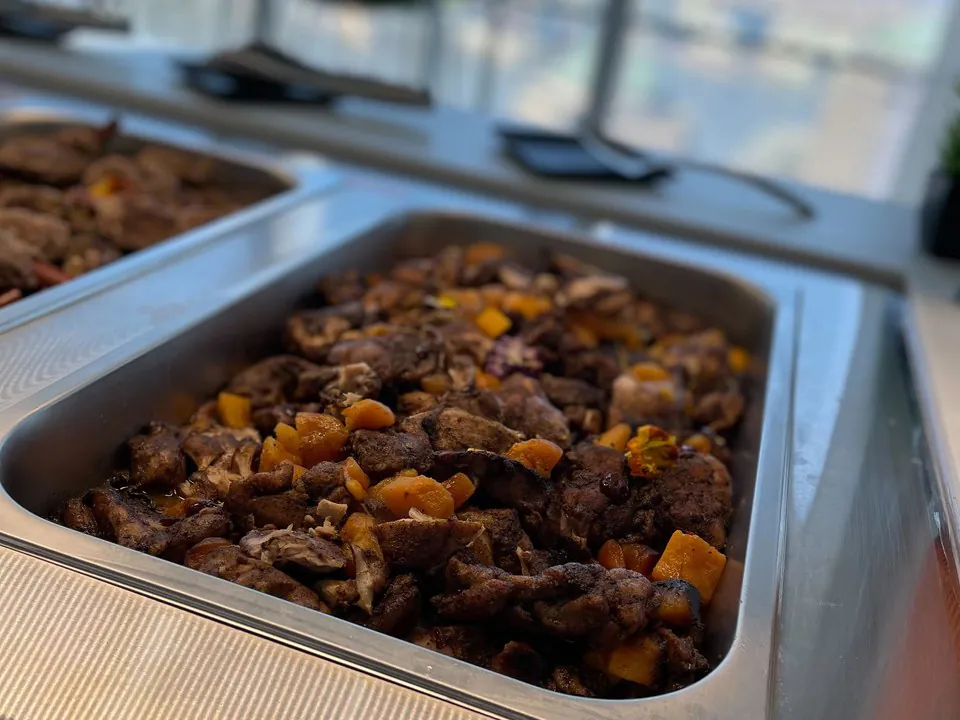
- Mezze and grazing spreads: hummus, baba ganoush, falafel, salads, olives, and pita laid out to share. Naturally halal, mostly vegetarian, and it covers a lot of the room before you even add a protein.
- Kebab and shawarma platters: grilled chicken, beef, or lamb kebabs and carved shawarma with rice and sauces. The crowd-pleasing hot center of a halal spread.
- Individually boxed halal meals: a protein over rice with a salad and pita, each box labeled halal. The cleanest format for a meeting, a hybrid team, or anyone who wants a no-line grab-and-go. See our best boxed lunch catering companies roundup and the boxed lunch vs. buffet breakdown.
- Build-your-own bowl or wrap bars: a base of rice or greens, halal proteins, and toppings so people assemble their own. Interactive and easy to scale for a big room.
- Indian buffet: biryani, a couple of curries, a paneer or vegetable dish, dal, and naan. Rich, vegetarian-friendly, and built for a crowd.
What Halal Office Catering Costs Per Person
Halal catering generally costs about the same as comparable non-halal catering. Certified halal meat adds roughly $2 to $5 per person, and because many naturally halal cuisines are vegetable-forward, you can often keep the overall per-head cost reasonable while still feeding a mixed room well.
| Tier | Per Person | What You Get | Best For |
|---|---|---|---|
| Budget | $12 – $16 | Mezze platters, falafel and salad spreads, boxed wraps | Everyday team lunches, casual sessions |
| Standard | $16 – $22 | Kebab and shawarma platters, Indian buffet, boxed halal meals | Most office orders and team events |
| Premium | $22 – $30+ | Full hot buffet, multiple proteins, dedicated halal kitchen, setup | Eid celebrations, client events, large gatherings |
Add roughly 20 to 25 percent on top for delivery, tax, and gratuity. For how office catering is priced in general, see our boxed lunch catering cost guide.
Plan halal catering with CaterAi
Cross-Contamination: The Details That Trip Up Standard Caterers
If you order from a caterer whose whole menu is halal, you can skip this section, because the question is already answered. If you are asking a conventional caterer to provide halal options alongside their regular menu, this is where good intentions go wrong, so it is worth being specific.
- Shared cooking surfaces. Halal chicken seared on the same flat-top that just cooked bacon is no longer halal. Ask for separate grills, pans, and prep areas.
- Shared fryers. Falafel fried in oil that also fries non-halal items fails the standard. A separate fryer or fresh oil matters.
- Hidden alcohol and pork. Cooking wine, beer batter, and pork-derived gelatin in desserts disqualify a dish even when nothing looks like pork or a drink. Ask about sauces, marinades, and desserts specifically.
- Serving utensils. One spoon moving between a halal tray and a non-halal one undoes the separation. Each halal dish needs its own utensil.
- Clear labeling. Every item should be labeled so observant colleagues are not left guessing. Unlabeled food is effectively unavailable to someone who keeps halal.
None of this is exotic for a caterer who handles halal regularly. The reason to choose a dedicated halal kitchen for a strictly observant team is simply that it removes every one of these failure points at once.
Ramadan, Eid, and Everyday Etiquette
Catering halal food well is the table stakes. What turns a compliant order into a genuinely welcoming one is understanding the calendar and the practice around it. A little awareness here goes a long way with Muslim colleagues.
Ramadan. For about a month each year, observant Muslims fast from dawn to sunset, taking no food or drink during daylight. A noon team lunch during Ramadan is not a treat for a fasting colleague, it is an awkward exclusion. The considerate moves are to avoid food-centered meetings during the day that month, and, if you want to mark the occasion, to host an iftar, the meal that breaks the fast, timed to be ready just before sunset. Include dates, which are traditional for breaking a fast, keep the whole menu halal, and give people a moment to pray before eating. Check the local sunset time for the specific date, because it shifts daily.
Eid. The two Eid holidays, Eid al-Fitr at the end of Ramadan and Eid al-Adha later in the year, are celebrations, and they are a natural moment to cater something generous. A premium halal buffet, sweets, and a festive setup signal that the company sees and values the occasion the same way it would a holiday party.
Everyday practice. Some colleagues step away for daily prayers, including a longer Friday midday prayer, so build a little flexibility into timing around meals. And keep in mind that many observant Muslims prefer events where alcohol is not the centerpiece, so an alcohol-free or alcohol-optional gathering is more inclusive than a bar-forward one. For more on accommodating a range of needs at once, our mixed dietary needs guide is a useful companion.
Covering Halal and Everything Else in One Order
The best part of catering halal from a naturally halal cuisine is how much else it covers for free. A Mediterranean or Indian spread is simultaneously halal and a strong vegetarian, vegan, and often gluten-free order, because so many of its anchor dishes (hummus, falafel, salads, rice, lentils, grilled vegetables, naan) fit several diets at once.
To build one menu that feeds the whole room:
- Start from a halal-sourced caterer so the meat question is settled for everyone.
- Label the proteins clearly as halal, and keep at least one vegan and one gluten-free option in the mix.
- Use a shareable spread or a labeled boxed format so no one is hunting for what they can eat.
- Ask, do not assume. A quick dietary question with the invite beats guessing who needs what.
For the specifics on overlapping diets, our vegan, vegetarian, gluten-free, and allergy-safe boxed lunch guides go deeper, and the office manager’s guide to ordering catering covers the end-to-end workflow.
Mistakes to Avoid
The #1 mistake: treating halal as “just remove the pork”
It ignores slaughter sourcing, alcohol in cooking, and cross-contamination, and it leaves observant colleagues with food they cannot actually eat. Start from halal-sourced food instead of subtracting from a standard menu.
- Asking a non-halal kitchen to “make a few things halal.” Without separate surfaces, fryers, and utensils, the items are halal in name only. Use a halal-sourced caterer.
- Forgetting the cooking alcohol. A sauce with cooking wine or a dessert with a liqueur is not halal even though no one is drinking. Ask about marinades, sauces, and desserts.
- Leaving food unlabeled. If a colleague cannot tell which dish is halal, it might as well not be there. Label everything.
- Scheduling a daytime lunch during Ramadan. It excludes the people fasting. Shift food events to an after-sunset iftar that month.
- Assuming who needs halal. Do not single anyone out and do not guess. Offer halal as a standard option and ask the room privately with the invite.
How CaterAi Handles Halal Catering
CaterAi is Zerocater’s catering planning tool, and it makes ordering halal for a mixed team straightforward.
Describe the need, get a halal menu. Tell CaterAi the plain-language brief (“25 people, halal, with vegetarian and gluten-free covered, delivered to the 4th-floor kitchen by noon, around $18 a head”) and it builds a menu from over 1,000 restaurants, including dedicated halal and naturally halal kitchens, that fits the requirement and the budget.
Dietary profiles that stick. Store the team’s needs once, including who keeps halal, and every future order respects them, so no one is repeatedly left without a real option.
Variety across a recurring program. CaterAi tracks what the group has had recently and rotates among Mediterranean, Indian, Persian, and more, so a standing halal-inclusive program never gets repetitive. For an ongoing meal program, Zerocater’s managed corporate catering handles the standing order, and event catering covers Eid celebrations and larger gatherings. See how it works.
Plan halal catering with CaterAi
For related playbooks, see our guides to board meeting catering, healthy office catering, the corporate event catering checklist, and industry-specific catering for tech companies, law firms, and healthcare.

Frequently Asked Questions
What does halal mean for catering?
Halal means permissible under Islamic law, and for catering it covers more than skipping pork. Meat must come from animals slaughtered according to Islamic guidelines (zabiha), there can be no pork or pork by-products like gelatin or lard, no alcohol including wine or extracts used in cooking, and no cross-contamination from shared fryers, grills, or surfaces. The simplest way to order halal for an office is to choose a caterer whose whole menu is already halal rather than asking a standard caterer to adapt a few dishes.
Is halal catering just food without pork?
No, and assuming so is the most common mistake. Removing pork is necessary but not sufficient. Halal also requires that any meat is from a permissible animal slaughtered the right way, that there is no alcohol in the cooking (cooking wine, beer batter, and some extracts all count), and that halal items are kept separate from non-halal ones during prep and service. A chicken dish cooked next to bacon on the same flat-top, or a dessert set with gelatin, is not halal even though there is no pork on the plate.
What is the difference between halal and zabiha?
Halal is the broad category of what is permissible. Zabiha refers specifically to the Islamic method of slaughter: a healthy animal, a prayer recited, and the throat cut so the blood drains fully. All zabiha meat is halal, but not everyone uses the words the same way. If zabiha matters to your team, ask the caterer directly whether their meat is zabiha and which certifier they use, such as HFSAA, HMS, or IFANCA.
How much does halal office catering cost per person?
Halal catering generally runs about the same as comparable non-halal catering, with certified halal meat adding roughly $2 to $5 per person. Most halal office spreads land around $14 to $25 per person depending on cuisine and format. Because many naturally halal cuisines like Mediterranean and Indian are vegetable-forward, you can often keep the per-head cost down while still feeding a mixed room well. Add roughly 20 to 25 percent for delivery, tax, and gratuity.
What cuisines are naturally halal?
Many cuisines are built around halal practice, which makes them the easiest way to cater halal well. Mediterranean and Middle Eastern (shawarma, kebabs, hummus, falafel, rice), Indian and Pakistani (biryani, tikka, dal, naan), Persian (kebabs and saffron rice), Turkish (doner, mezze), and Afghan (kabuli pulao, kebabs) caterers very commonly source halal or zabiha meat. Ordering from a caterer whose entire menu is already halal removes the need to audit individual dishes.
How do you cater for Muslim employees during Ramadan?
During Ramadan, observant Muslim colleagues fast from dawn to sunset, so a noon team lunch excludes them. The respectful move is to avoid scheduling food-centered meetings during the day, and if you want to mark the month, host an iftar, the meal that breaks the fast, timed to arrive just before sunset. Keep the menu halal, include dates which are traditional for breaking a fast, and let people pray before eating. Confirm the local sunset time for the date.
How do you order one catering spread that covers halal and other dietary needs?
Lean on a naturally halal cuisine, because it does double and triple duty. A Mediterranean or Indian spread is halal and also covers vegetarian, vegan, and often gluten-free needs through items like hummus, falafel, salads, rice, lentils, and grilled vegetables. Order the proteins as clearly labeled halal, keep at least one vegan and one gluten-free option, and label every dish. A single coherent menu then feeds your Muslim colleagues, your plant-based eaters, and everyone else without separate special meals.
How do you know if a caterer is really halal?
Ask direct questions rather than assuming. Find out whether their meat is halal or specifically zabiha, which certifying body they use, whether halal items are prepared on separate surfaces and in separate fryers, and whether any dish uses alcohol or pork-derived ingredients like gelatin. A caterer who handles halal seriously will answer these easily and can often show a certificate. A dedicated halal kitchen, where the whole operation is halal, removes the cross-contamination question entirely.