Healthy office catering is not about diet food, calorie counting, or making anyone give up the lunch they like. It is about composition: lean protein, vegetables, and whole grains as the default, instead of fried trays and refined carbs that put the room to sleep by 2 PM. Built right, a healthy catered lunch is just as filling, costs about the same, and keeps the team productive through the afternoon instead of fighting a blood-sugar crash.
This guide covers what “healthy” actually means for office catering, why lunch composition decides your team’s afternoon energy, the plate formula to order by, the five cuisines that cater healthy best, the lean proteins that actually fill people up, smart swaps that upgrade any order, the hidden sugar and sodium traps to flag, what it costs, and where to order.
In This Guide
- What “Healthy Office Catering” Actually Means
- The Afternoon Slump: Why Lunch Composition Decides 2 PM
- The Healthy Office Plate Formula
- Five Cuisines That Cater Healthy Best
- Lean Protein Anchors That Actually Fill People Up
- Smart Swaps: Make Any Catering Order Healthier
- Healthy Formats: Build-Your-Own and Portion Control
- Hidden Sugar, Sodium, and Calorie Traps to Flag
- How Much Does Healthy Office Catering Cost?
- Healthy Catering for Recurring Meal Programs
- Where to Order Healthy Office Catering
- FAQ
What “Healthy Office Catering” Actually Means
“Healthy” is a loaded word on a catering order. To some people it means low-calorie, to others it means vegan or gluten-free, and to a few it means joyless. For office catering, the useful definition is narrower and more practical: a balanced plate that keeps people satisfied and energized, built from whole ingredients rather than fried and processed ones.
That is different from a dietary-restriction order. Vegan, vegetarian, gluten-free, and allergy-safe catering are about excluding specific ingredients for specific people. Healthy catering is about how the whole menu is composed for the whole team. The two overlap (a lot of healthy food is naturally vegetarian or gluten-free) but they are not the same goal. If your need is a specific restriction, see our guides to vegan, vegetarian, gluten-free, and mixed dietary needs.
Three principles separate a healthy catered lunch from a heavy one:
- Protein and fiber anchor the meal. Lean protein and vegetables slow digestion and keep blood sugar steady. They are the difference between satisfied and sluggish.
- Whole beats refined. Brown rice, quinoa, whole-grain wraps, and greens beat white rice and white bread on fiber and on the energy curve they produce.
- Fat is an accent, not the base. Olive oil, avocado, nuts, and tahini belong in a healthy meal. Deep-frying and heavy cream sauces are where catering goes off the rails.
The Afternoon Slump: Why Lunch Composition Decides 2 PM
The single best reason to cater healthy is not virtue. It is the 2 PM slump. A lunch heavy on refined carbs and fried fat spikes blood sugar and then drops it, and that drop is the foggy, sleepy feeling people get in the early afternoon. For a team that has a meeting, a deadline, or customer calls after lunch, the composition of the catered meal is a productivity decision, not just a wellness one.
The same calories, two different afternoons
A fried-chicken-and-white-rice lunch and a grilled-chicken-and-quinoa-bowl lunch can carry nearly identical calories. The first spikes blood sugar fast and crashes it an hour later. The second, anchored in protein and fiber, releases energy slowly and keeps people level. Composition, not calorie count, is what decides whether the room is alert at 2 PM.
This is why “lighter” catering for an all-day meeting is worth the small effort: a grilled-protein bowl bar will out-perform a pizza-and-fried-sides spread on afternoon focus every time.
The practical takeaway: match the menu to what happens after lunch. For a half-day workshop, an all-hands, or a training that runs into the afternoon, lean hard into balanced bowls and grilled proteins. Save the indulgent fried-and-cheesy spreads for a Friday celebration or an end-of-day happy hour, when nobody needs to focus afterward.
The Healthy Office Plate Formula
You do not need a nutritionist to order healthy catering. You need one simple ratio that any caterer can build to. Picture the plate (or the bowl) in four parts:
| Plate Component | Share of the Plate | Office Catering Examples |
|---|---|---|
| Vegetables & fruit | Half | Salads, roasted vegetables, crudite, mezze, slaws, fruit platters |
| Lean protein | One quarter | Grilled chicken, salmon or tuna, tofu, chickpeas and beans, eggs |
| Whole grains / complex carbs | One quarter | Brown rice, quinoa, farro, sweet potato, whole-grain wrap or pita |
| Healthy fats | Accent | Olive oil, avocado, nuts and seeds, tahini, hummus, a little cheese |
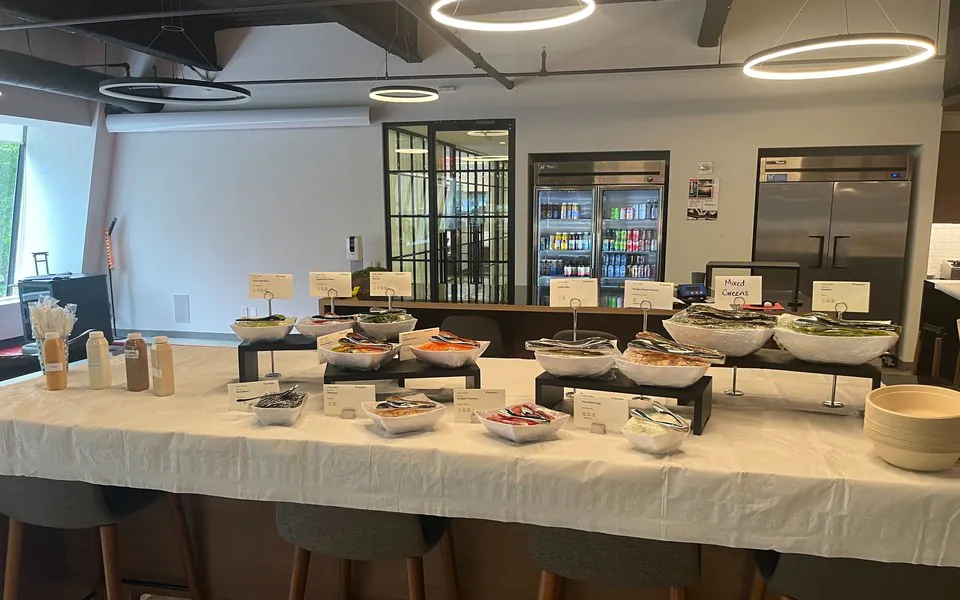
When you brief a caterer or build a menu in CaterAi, this ratio is the whole instruction: half the spread vegetables and fruit, a strong lean-protein option, a whole-grain base, and good fats as accents rather than the main event. A build-your-own bowl bar makes the formula automatic, because each guest assembles their own plate to roughly these proportions.
Five Cuisines That Cater Healthy Best
Almost any cuisine can be ordered healthy, but five make it easy because balance is built into how they cook. These are the cuisines to reach for when the brief is “keep it light but filling.”
Mediterranean
Why it caters healthy
- Grilled chicken and lamb skewers, grilled fish, and falafel as protein anchors
- Hummus, baba ganoush, and tabbouleh built on chickpeas, eggplant, and herbs
- Greek salad, fattoush, and big vegetable mezze that fill half the spread by default
- Olive oil and tahini instead of cream sauces; whole-grain pita and rice pilaf
Per person: $14 – $23
Mediterranean is the single strongest healthy bet for a mixed office: grilled proteins and a vegetable-heavy mezze keep it balanced, and the flavors are familiar to everyone. Browse Mediterranean catering on Zerocater, including Hummus Mediterranean Kitchen (SF Bay Area), Baal Cafe & Falafel (NYC), and Olive Mediterranean Grill (Chicago).
Bowl Shops and Salad Bars
Why it caters healthy
- Build-your-own grain and salad bowls let every guest hit the plate formula themselves
- Whole-grain bases (quinoa, farro, brown rice) and a deep bench of vegetable toppings
- Grilled chicken, tofu, and chickpeas as protein options; dressings always on the side
- Naturally covers vegetarian, vegan, and gluten-free from the same setup
Per person: $11 – $20 (salad bar), $13 – $19 (grain bowl bar)
Bowl and salad shops are the easiest healthy catering to run for a mixed team. Browse on Zerocater: Saucy Greens (SF) and Saucy Greens LA, Just Salad (NYC, also Chicago and Philadelphia), Green Station (NYC, plant-forward), Ranch Hand Organic Bowls (Austin), and Vitality Bowls (Seattle, also Boston). For the full build-your-own playbook, see our salad bar catering guide, plus the Sweetgreen and CAVA guides.
Japanese and Poke
Why it caters healthy
- Lean fish (salmon, tuna) and tofu deliver protein and omega-3 with almost no frying
- Poke bowls over brown rice or greens, with edamame, seaweed, cucumber, and avocado
- Sashimi, seaweed salad, and miso are light and protein-forward
- Build-your-own poke bars let guests control rice, sauce, and portion
Per person: $15 – $22
A poke or rice bowl bar is one of the freshest healthy formats and a nice break from salads. Watch the sauces (spicy mayo and eel sauce add sugar and fat; ponzu and a light soy are leaner) and ask for sauce on the side. Browse Japanese catering on Zerocater, including Pokeworks (Mountain View and San Jose), Poke Life (SF), and Hokey Poke (NYC).
Mexican, Done Right
Why it caters healthy
- Burrito bowls over rice and greens instead of an oversized flour tortilla
- Grilled chicken, carne asada, or grilled fish; black beans and pinto beans for fiber
- Fajita vegetables, pico de gallo, salsa, and guacamole carry the flavor
- Skip the fried hard shells, chimichangas, and queso-drowned options
Per person: $12 – $18
A build-your-own taco or burrito bowl bar is one of the most crowd-pleasing healthy formats, because guests choose their own protein and skip what they do not want. Order it as a bowl-and-bar setup rather than pre-built burritos to keep it light. Browse Mexican catering on Zerocater, and see our build-your-own taco bar guide for the full setup.
Indian, the Lighter Side
Why it caters healthy
- Tandoori grilled chicken and fish, and chicken or paneer tikka, are grilled not fried
- Dal, chana masala, and chickpea and lentil dishes are protein-and-fiber powerhouses
- Raita, kachumber salad, and vegetable curries add vegetables and yogurt
- Ask for less ghee and cream, and order brown basmati where available
Per person: $14 – $22
Indian caters healthy well if you steer toward tandoori grilled proteins and lentil dishes and away from the cream-and-butter curries. See our Indian corporate catering guide for format and headcount math. Browse Indian catering on Zerocater, including Curry Up Now (SF and Atlanta), Indian Bento (SF), and Naanstop (Atlanta).
Lean Protein Anchors That Actually Fill People Up
The most common complaint about healthy catering is that people leave hungry. The fix is always the same: a real protein anchor. A salad with no protein is a side dish, and people graze it and go find a snack at 3 PM. Five lean proteins do the work across nearly every healthy format:
| Protein | Best Formats | Protein per Serving | Notes |
|---|---|---|---|
| Grilled chicken | Bowls, salads, Mediterranean, Mexican | 26–30 g | The leanest mainstream protein; grilled, not fried or breaded |
| Salmon & tuna | Poke, Japanese, Mediterranean, bowls | 22–25 g | Adds omega-3 fats; the premium protein tier on a healthy menu |
| Tofu & edamame | Poke, bowls, Asian, salads | 15–20 g | The best vegetarian and vegan crossover protein; baked or grilled |
| Chickpeas, beans & lentils | Mediterranean, Indian, Mexican, salads | 12–18 g | Protein plus fiber; the cheapest anchor and works across cuisines |
| Eggs & Greek yogurt | Breakfast, brunch, bowls, parfaits | 12–18 g | The healthy-breakfast anchors; pick these over pastries and bagels |
The rule of thumb: every healthy entree or bowl should be built around at least one of these five. If it is, it eats like a full meal. If it is just greens and grains, expect leftovers and a mid-afternoon snack run.
Plan healthy lunch catering with CaterAi
Smart Swaps: Make Any Catering Order Healthier
You do not have to switch caterers to cater healthier. Most of the gain comes from a handful of swaps you can request on almost any order, from almost any cuisine:
| Instead of | Order | Why it helps |
|---|---|---|
| Fried or breaded protein | Grilled, roasted, or baked | Cuts the fat and the grease that drives the afternoon crash |
| Creamy dressing poured on | Vinaigrette, dressing on the side | Lets each guest control 200 to 400 hidden calories per serving |
| White rice or white-bread base | Brown rice, quinoa, or a greens base | More fiber and a steadier blood-sugar curve |
| Soda and sweet tea | Sparkling water, unsweetened iced tea, infused water | Removes the biggest source of liquid added sugar at lunch |
| Pastry-and-bagel breakfast | Greek yogurt, fruit, eggs, overnight oats | A protein-forward morning instead of a sugar spike |
| Heavy cheese-and-meat trays | Vegetable-forward mezze plus a lean protein | Lighter, more colorful, and broader appeal across the team |
| Dessert platter | Fruit, yogurt parfaits, a little dark chocolate | Satisfies the sweet note without the post-lunch crash |
None of these makes the food worse. Most of them make it fresher and more colorful, which is exactly what a buffet table needs to look appetizing. The dressing-on-the-side swap alone is the highest-leverage change you can make on any order.
Healthy Formats: Build-Your-Own and Portion Control
Format matters as much as the food. The healthiest catering setups share one trait: they let people self-portion and self-select, so the health-conscious build a lean plate and everyone else builds what they want, all from one order. Nobody is forced to eat diet food, and nobody overshoots on a giant pre-built portion.
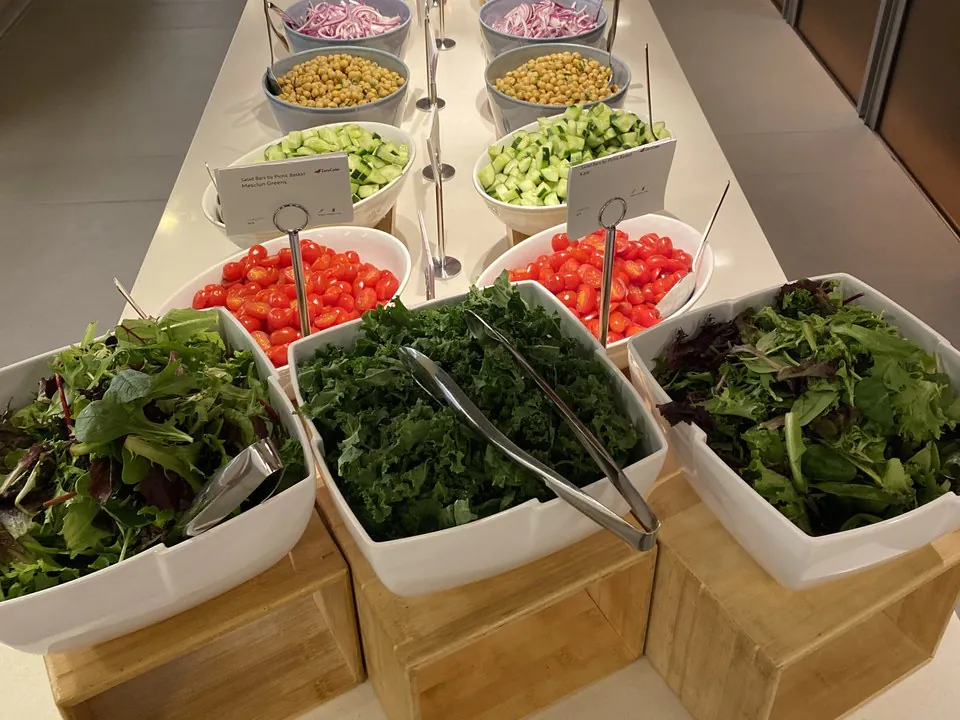
- Build-your-own bowl, salad, and poke bars are the gold standard. Offer a greens base, a whole-grain base, two or three lean proteins, a deep set of vegetable toppings, healthy-fat accents (avocado, nuts, seeds), and dressings on the side. The plate formula happens automatically.
- Individually boxed grain bowls and salads are best for working lunches, conferences, and distributed teams. They are portioned, mess-free, and easy to label by dietary need. See boxed lunch vs. buffet for when to use each.
- Mezze and crudite spreads are naturally vegetable-heavy and let people graze light. Pair with a grilled-protein platter so it eats like a meal.
- Family-style with a protein-and-vegetable focus works when you want a shared-table feel; just keep the fried sides and cream sauces off the order.
The format to avoid for a working day is the oversized, pre-plated indulgent spread (think giant burritos, deli combos with chips and a cookie, or a fried-and-cheesy buffet). It is hard to eat in moderation and it is engineered for the afternoon crash.
Hidden Sugar, Sodium, and Calorie Traps to Flag
A lot of catering that looks healthy is not. These are the most common traps, and the move that fixes each one:
| Trap | Where it hides | The fix |
|---|---|---|
| Hidden sugar | Dressings, teriyaki and eel sauce, glazes, smoothies, dried-fruit granola | Sauce on the side; pick vinaigrette, ponzu, or a light soy |
| Sodium bombs | Soy sauce, deli meats, canned soups, bottled dressings, cured items | Fresh grilled proteins, low-sodium soy, dressings on the side |
| The “salad” that isn’t | Fried toppings, candied nuts, heavy cheese, bacon, creamy dressing | Build around a grilled protein and a vinaigrette |
| Refined-carb overload | White-bread sandwiches, pasta salad, fried rice, big tortillas | Whole-grain or greens base; bowls over wraps |
| Oversized portions | Giant burritos, deli combos, double-stacked sandwiches | Boxed or build-your-own formats that portion naturally |
| Liquid calories | Soda, bottled juice, sweetened coffee drinks, sweet tea | Water, sparkling water, unsweetened tea, infused-water dispensers |
The pragmatic rule is the same as it is for dietary restrictions: when in doubt, ask. A two-minute note to the caterer (“grilled not fried, dressings on the side, whole-grain base where you can, and sparkling water instead of soda”) fixes most of these in one message.
How Much Does Healthy Office Catering Cost?
Healthy catering is not a premium. For the same format, it costs about the same as standard catering, and sometimes a little less, because lean proteins, beans, and vegetables do not cost more than fried and processed equivalents. The real cost drivers are the same as for any catering: format, protein tier, and whether the order is staffed.
| Format | Healthy / Person | Standard / Person | Lead Time |
|---|---|---|---|
| Salad bar | $11 – $20 | $11 – $20 | 4–24 hours |
| Grain bowl bar | $13 – $19 | $13 – $19 | 4–24 hours |
| Build-your-own taco / burrito bowl bar | $12 – $18 | $12 – $18 | 24–48 hours |
| Mediterranean mezze + grilled protein | $14 – $23 | $15 – $24 | 24–48 hours |
| Poke / rice bowl bar | $15 – $22 | $15 – $22 | 24–48 hours |
| Boxed grain-bowl / salad lunch | $13 – $20 | $14 – $22 | 2–5 days |
| Lighter continental breakfast (yogurt, fruit, eggs) | $10 – $16 | $11 – $17 | 1–3 days |
| Full staffed healthy buffet | $18 – $26 | $20 – $30 | 1–3 weeks |
Add roughly 20 to 25 percent to per-person totals for delivery, service charge, and gratuity for the all-in number. For metro-specific benchmarks, see our cost guides for New York City, San Francisco, Chicago, Los Angeles, Boston, Atlanta, and Austin.
Healthy Catering for Recurring Meal Programs
If you cater the same office every week, healthy is where a recurring program pays off most. A team that eats a balanced lunch on company-catered days has steadier afternoon energy, and a rotating healthy menu is an easy, visible perk that supports a wellness program without a separate budget line.
A few things make a recurring healthy program work:
- Rotate cuisines, keep the formula. Mediterranean on Monday, a poke bar on Wednesday, a build-your-own salad bar on Friday. Different food, same balanced composition, so it never gets boring.
- Always include a lean protein and a vegetarian protein. That single rule keeps the meal filling and covers most of the team from one order.
- Watch what gets eaten and adjust. Over the first few orders you will see which proteins and bases empty first. Lean into those.
- Set the defaults once. Grilled not fried, dressings on the side, whole-grain bases, sparkling water. Bake it into the standing order so you do not re-specify every week.
For the operational side of running a recurring program (vendor selection, dietary capture on the RSVP, and the rating rubric), see the office manager’s guide to ordering catering. For ongoing meal programs specifically, Zerocater corporate catering handles the scheduling and vendor rotation.
Where to Order Healthy Office Catering
Zerocater connects offices with vetted caterers that do healthy formats well across 12 US metros. The fastest path is CaterAi: share your headcount, budget, the date, and any dietary requirements, and the assistant builds a balanced menu in a few minutes from local caterers that match, with no quote requests and no back-and-forth.
Plan healthy lunch catering with CaterAi
Healthy-leaning caterers on Zerocater by metro
- San Francisco: Hummus Mediterranean Kitchen (Mediterranean), Saucy Greens (bowls and salads), Poke Life (poke), Curry Up Now (Indian), Pokeworks (Mountain View and San Jose)
- New York City: Just Salad (salad bar), Green Station (plant-forward bowls), Baal Cafe & Falafel (Mediterranean), Hokey Poke (poke)
- Los Angeles: Saucy Greens LA (bowls and salads)
- Chicago: Just Salad (salad bar), Olive Mediterranean Grill (Mediterranean)
- Atlanta: Naanstop (Indian), Curry Up Now (also Decatur, GA)
- Austin: Ranch Hand Organic Bowls (bowls)
- Seattle & Boston: Vitality Bowls (Seattle), Vitality Bowls Watertown (Boston area)
- Philadelphia: Just Salad (salad bar)
For dietary-specific guides, see vegan, vegetarian, gluten-free, and mixed dietary needs office catering. For occasion and format playbooks, see the salad bar and taco bar guides, corporate catering for tech companies, and the corporate event catering checklist. And when the occasion calls for indulgence instead, our BBQ corporate catering guide is the happy counterpoint.
Frequently Asked Questions
What makes office catering healthy?
Healthy office catering is about composition, not restriction. The working rule is the plate formula: about half vegetables and fruit, a quarter lean protein (grilled chicken, salmon, tofu, beans, eggs), and a quarter whole grains or complex carbs, with healthy fats like olive oil, avocado, and tahini as accents. It does not mean diet food, and it does not require anyone to give up the foods they like.
How do I avoid the afternoon energy crash after a catered lunch?
The 2 PM slump is mostly a blood-sugar story. A lunch heavy on refined carbs and fried fat spikes blood sugar and then drops it. Anchor the meal in lean protein and fiber instead: grilled not fried, a whole-grain or greens base instead of white rice or bread, vegetables on half the plate, dressings on the side, and water or sparkling water instead of soda.
How much does healthy office catering cost per person?
Healthy office catering runs $10 to $26 per person depending on format. Salad bars cost $11 to $20, grain bowl bars cost $13 to $19, Mediterranean mezze with grilled protein runs $14 to $23, poke and rice bowl bars run $15 to $22, and boxed grain-bowl or salad lunches cost $13 to $20. Prices are within a dollar or two of standard catering for the same format.
What are the healthiest cuisines for office catering?
Five cater healthy by default: Mediterranean (grilled proteins, hummus, big mezze), bowl shops and salad bars (self-portioned), Japanese and poke (lean fish, edamame, seaweed), Mexican done right (burrito bowls with grilled protein and beans), and Indian on its lighter side (tandoori grilled proteins, dal, vegetable curries).
How do I order healthy catering for a team with mixed preferences?
Use a build-your-own format. A salad bar, grain bowl bar, poke bar, or build-your-own taco bar lets each person assemble their own plate, so the health-conscious build a lean bowl and everyone else builds what they want, all from one order. Offer a lean protein, a whole-grain base, a greens base, several vegetable toppings, and dressings on the side.
Is healthy catering more expensive than regular catering?
No. Healthy catering costs about the same as standard catering for the same format, and sometimes slightly less. Lean proteins like grilled chicken, beans, lentils, and tofu do not cost more than fried chicken or processed deli meat, and vegetables and whole grains are inexpensive. The cost driver is format and protein tier, not whether the menu is healthy.
What are the best healthy options for a working lunch or meeting?
Individually boxed grain bowls or salads with a grilled protein are the strongest pick for a working lunch: portioned, mess-free, and built to avoid the afternoon crash. Mediterranean mezze and poke bowls also travel cleanly. Skip the heavy fried trays and pastry spreads for any meeting that runs into the afternoon. See boxed lunch vs. buffet for when to use each.
Where can I order healthy office catering near me?
Zerocater matches your office with vetted caterers that do healthy formats well across 12 major US metros. CaterAi builds a balanced menu from your headcount, budget, and any dietary requirements in minutes.