The build-your-own taco bar is the office crowd-pleaser that does the hardest job in catering, which is feeding a roomful of different appetites and diets from one spread. A caterer drops off warm tortillas, a few hot proteins, and a long row of toppings and salsas, and your whole team lines up and builds exactly the lunch it wants. A taco bar is a self-serve station you set out, not a plate you hand over, and that one shift is what makes it the most flexible format in office catering.
This guide is the build playbook. You get the five stations and what goes in each, exactly how much protein, tortillas, and toppings to order per person, a how-much-by-headcount chart for 10, 25, 50, or 100 guests, why a taco bar quietly feeds every diet in the room, the hot-holding and setup logistics that keep the line moving, what it all costs, and where to order. For the styled, centerpiece version of a spread, our grazing table guide is the companion piece; for the whole drinks-forward event a taco bar can anchor, see the happy hour menu guide, which pairs a taco bar with margaritas as one of its themed menus.
In This Guide
What Is a Build-Your-Own Taco Bar (and Why It Works)
A build-your-own taco bar is a self-serve catering setup: the caterer delivers the components in separate stations, and each person assembles their own tacos down the line. Nobody plates anything for anyone. That self-serve structure is the whole advantage, because it turns one spread into a custom lunch for every person who walks up to it.
It helps to see where the taco bar sits next to the other self-serve formats, because they solve different problems:
| Format | Best For | Trade-Off |
|---|---|---|
| Build-your-own taco bar | Mixed diets, interactive team lunches, celebrations | Hot proteins need chafers and a little setup |
| Party trays / platters | Everyday lunches, tight budgets, fully cold spreads | Less interactive; no hot food |
| Boxed / individual | Hybrid teams, grab-and-go, strict portion control | Higher per-person cost, less variety per person |
If you want a cold, drop-and-go spread, our party tray guide covers that route; if you need per-person portions for a distributed team, the boxed lunch vs. buffet guide runs that fork in detail. For an interactive, hot, everyone-gets-what-they-want lunch, the taco bar is hard to beat, and the rest of this guide is about building one well.
The 5 Stations of a Taco Bar
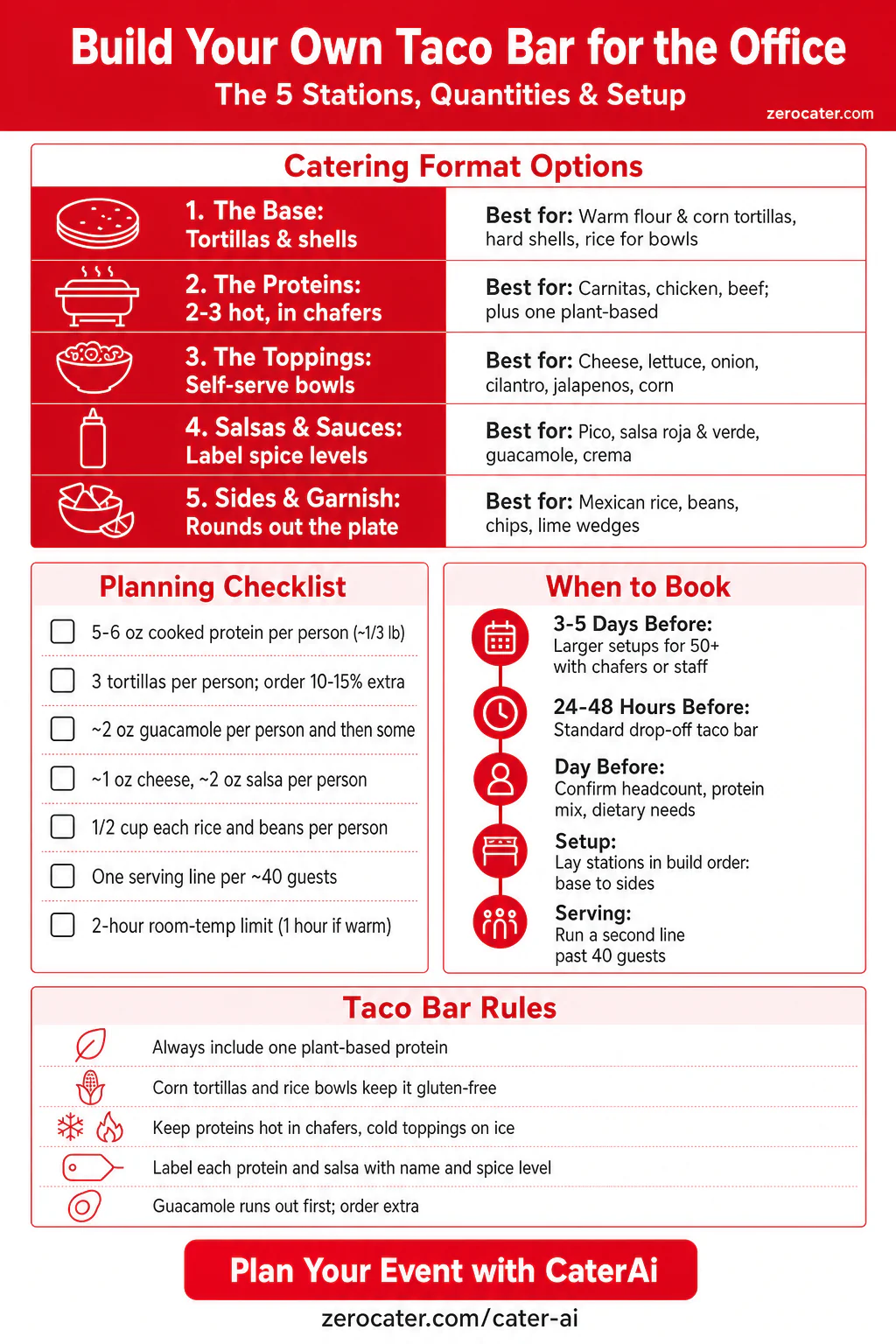
Every good taco bar is built from the same five stations, set out in build order so the line flows in one direction. Lay them out left to right exactly like this and a crowd serves itself without a single bottleneck. The order matters as much as the food: base, then protein, then toppings, then salsas, then sides.
| Station | What Goes On It | Why It Matters |
|---|---|---|
| 1. The Base | Warm flour & corn tortillas, hard shells, optional rice for bowls and chips for nachos | Corn tortillas and rice bowls keep the whole bar gluten-free |
| 2. The Proteins | Two or three hot proteins in chafing dishes; include one plant-based option | The anchor and most of the budget; must stay hot |
| 3. The Toppings | Shredded cheese, lettuce, diced onion, cilantro, jalapenos, corn, pickled veg | Where guests personalize; keep cold ones on ice |
| 4. Salsas & Sauces | Pico de gallo, salsa roja, salsa verde, guacamole, sour cream or crema, hot sauce | Label spice levels; guacamole always runs out first |
| 5. Sides & Garnish | Mexican rice, black or pinto beans, tortilla chips, lime wedges | Stretches the proteins and rounds out the plate |
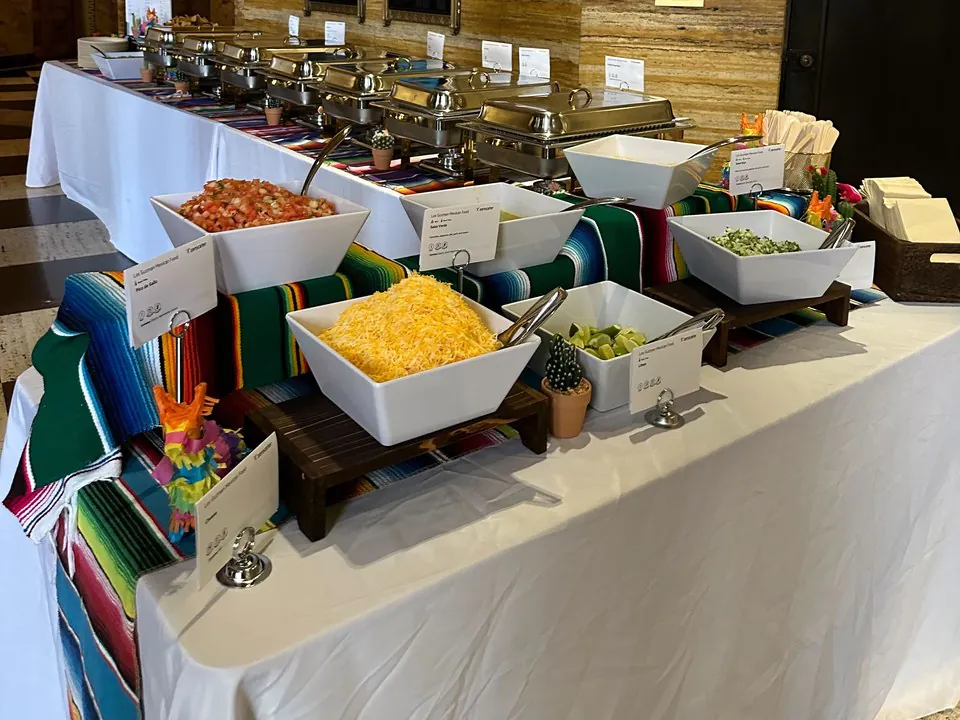
You do not need all five maxed out for a small team. A simple bar is two proteins, tortillas, four or five toppings, two salsas plus guac, and rice and beans. For a celebration, add a third protein, more salsas, and a margarita or agua fresca station; the happy hour menu guide covers the drinks side. If you would rather serve passed bites than a station, the finger food guide has 30-plus no-fork ideas.
The Taco Bar Menu: Your Build List
Within those stations, here is the working menu most office taco bars pull from. Pick two or three proteins, a handful of toppings, and a few salsas, and you have a complete bar. The one rule: always include one plant-based protein, because it does double duty for vegetarians and vegans and costs you nothing in flexibility.
- Proteins: carnitas (braised pork), chicken tinga or grilled chicken, seasoned ground beef or carne asada, and a plant-based option like sofritas, seasoned black beans, or grilled vegetables.
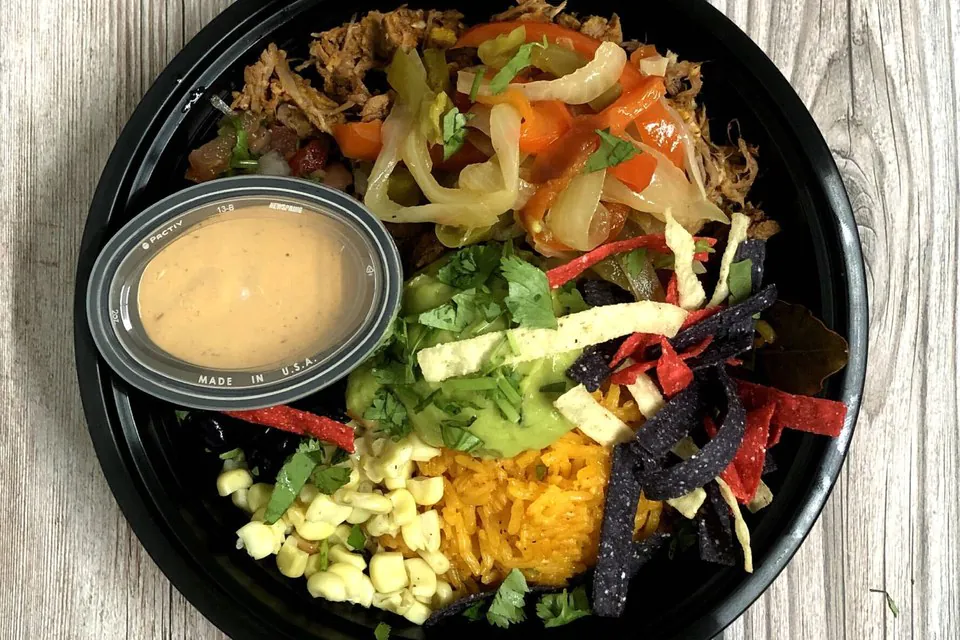
- Bases: warm flour tortillas, corn tortillas (the gluten-free pick), crunchy hard shells, and cilantro-lime rice for anyone building a bowl instead of a taco.
- Toppings: shredded cheese, crumbled cotija, shredded lettuce or cabbage, diced white onion, cilantro, pickled jalapenos, pickled red onion, and roasted corn.
- Salsas & sauces: pico de gallo, mild salsa roja, a hotter salsa verde, guacamole, sour cream or crema, and a bottle or two of hot sauce.
- Sides: Mexican rice, black or pinto beans, tortilla chips, and lime wedges.
That lineup themes easily without changing the structure: a Baja bar leans on fish and slaw, a fajita bar swaps in sizzling peppers and onions, and a nacho or burrito-bowl bar reuses the exact same toppings over chips or rice instead of tortillas. For the cold, platter version of a Mexican spread, our party tray guide is the companion.
How Much to Order Per Person
This is where most taco bars go wrong: people order enough protein and forget that the guacamole, the tortillas, and the cheese have their own math. Here is the per-person build for a taco bar that is the full meal. The headline numbers: about 5 to 6 ounces of cooked protein, three tortillas, and a little more guacamole than you think you need.
| Item | Per Person | Notes |
|---|---|---|
| Cooked protein | 5 – 6 oz | Split across 2 – 3 proteins; about a third of a pound |
| Tortillas / shells | 3 | = 3 tacos for a meal; order 10 – 15% extra for tears |
| Cheese | ~1 oz | Shredded; cotija on the side is a nice extra |
| Salsa | ~2 oz | Spread across pico, roja, and verde |
| Guacamole | ~2 oz | Always the first thing gone; order extra |
| Rice & beans | ~1/2 cup each | Stretches the proteins; skip for a lighter spread |
Quick math for a 30-person team taco lunch
- Protein: 30 guests × ~5.5 oz = ~10 lb cooked, split as ~4 lb chicken, ~4 lb beef or pork, ~2 lb plant-based
- Tortillas: 30 × 3 = 90, plus ~10 spares, in a mix of flour and corn
- Toppings & salsa: ~2 lb cheese, big bowls of pico, salsa verde, and a generous batch of guac
- Sides: ~1 large pan each of rice and beans, plus chips and lime
Round protein and guacamole up about 15% for a midday meal; a hungry team builds a second taco.
For a lighter, snack-style spread alongside other food, drop to two tortillas per person and lean on the chips, salsa, and a couple of proteins. The piece-by-piece math behind appetizer-style spreads lives in our happy hour appetizers guide.
How Much to Order by Headcount
Here is the chart every office orderer actually wants and almost no caterer menu prints: how much of everything to order, scaled to your headcount, assuming the taco bar is the meal. The ratios behind it: about a third of a pound of cooked protein and three tortillas per guest, scaling the topping bowls and the number of serving lines as the group grows.
| Guests | Cooked Protein | Tortillas | Toppings & Salsa | Serving Lines |
|---|---|---|---|---|
| 10 | ~3.5 lb (2 proteins) | ~35 | 1 small set of each | 1 |
| 25 | ~8 lb (2 – 3 proteins) | ~85 | 1 full set of each | 1 |
| 50 | ~16 lb (3 proteins) | ~170 | 2 sets, doubled bowls | 2 |
| 100 | ~32 lb (3 – 4 proteins) | ~340 | 3 – 4 sets, refilled | 2 – 4 |
The number that catches people out is the serving lines. One line handles up to about 40 guests comfortably; past that, a single line means a queue out the door, so run a second identical line or set the bar up double-sided. Split the protein across two or three options so there is always something for everyone, and keep one of them plant-based. For the full event-day workflow, our corporate event catering checklist and office manager’s guide to ordering catering have the timeline and staging details.
Plan taco bar catering with CaterAi
Why a Taco Bar Feeds Every Diet
This is the quiet superpower of the format, and the reason a taco bar so often wins the planning debate. Because every guest builds their own plate, one spread covers meat-eaters, vegetarians, vegans, and gluten-free diners with no special individual orders.
The mechanics are simple once you set the bar up for it:
- Gluten-free: put out corn tortillas and a rice-bowl option, and keep them at the front of the base station with their own tongs.
- Vegan and vegetarian: a plant-based protein like sofritas or seasoned beans, plus the vegetable toppings, salsa, and guac, makes a full plate. Place it away from the meat to avoid cross-contact.
- Dairy-free: skipping the cheese and crema is all it takes; everything else on the bar is already dairy-free.
- Label everything. A small card on each protein and salsa with its name and spice level lets people self-select without asking.
For deeper planning on any one of these, see our guides to vegetarian office catering, vegan office catering, gluten-free office catering, and how to order catering for mixed dietary needs.
Setup, Hot-Holding, and Keeping the Line Moving
A taco bar has one more moving part than a cold platter spread: heat. The proteins have to stay hot and the cold toppings cold, and the line has to flow. None of it is hard, but a few things are worth locking in:
- Keep proteins hot. Ask for chafing dishes or electric warmers for each protein. Most caterers include them on a taco-bar order; confirm it, because lukewarm carnitas is the fastest way to ruin a good bar.
- Keep cold toppings cold. Set cheese, sour cream, pico, and guac in bowls nested in ice, especially in a warm room.
- Lay it out in build order. Plates and tortillas, then proteins, then toppings, then salsas, then sides. People build front to back without backtracking.
- Run two lines past 40 guests. A second identical line or a double-sided setup keeps a big group from queuing out the door.
- Label spice levels. Mark each salsa mild, medium, or hot so nobody guesses.
- Mind the 2-hour rule. Proteins, cheese, and crema should not sit out more than two hours, dropping to one in a warm room. Put out half and refill from the back.
For an outdoor or warm-weather setup, our summer office catering guide and company picnic guide cover keeping food safe in the heat, and the holiday party guide handles the bigger, dressier end of the calendar.
What a Taco Bar Costs
A catered build-your-own taco bar is one of the better values in office catering, because the proteins and tortillas do most of the work and the toppings are cheap. Here is what to expect, with the per-person math landing most orders around $12 to $22 for the food.
| Component | Share of Budget | Notes |
|---|---|---|
| Proteins (2 – 3) | The bulk | Carne asada and carnitas run higher than chicken or beans |
| Tortillas, shells & rice | Low | Cheap to over-order; do it |
| Toppings & salsas | Moderate | Guacamole is the priciest topping; budget extra |
| Sides (rice, beans, chips) | Low | Stretches the proteins for little money |
| Chafers & setup | Varies | Often included; confirm rental and staffing fees |
Add about 20 to 25 percent for delivery, service, and gratuity to reach the true all-in number, and check whether chafers, serving utensils, plates, and napkins are included. For how catering prices vary city by city, see our cost guides for New York City, San Francisco, Chicago, Los Angeles, Boston, Seattle, and Austin.
Where to Order a Taco Bar
Zerocater connects offices with vetted Mexican and Latin caterers that do build-your-own taco bars, burrito bowls, and fajita spreads across 12 US metros. The fastest path is CaterAi: share your headcount, budget, and dietary mix, and the assistant builds a taco-bar order from local caterers that match, sizing the proteins, tortillas, and toppings for you, with no quote requests.
Plan taco bar catering with CaterAi
Taqueria-style caterers that do taco bars on Zerocater, by metro
- San Francisco Bay Area: El Pipila and Underdogs Cantina
- New York City: Tacos Para Ti and UpTaco
- Chicago: Tio Luis Tacos · Los Angeles: Matty’s Mexican Kitchen
- Austin: El Xolo Tacos · Boston: El Jefe’s Taqueria · Seattle: La Costeñita Cuisine
- Browse all Mexican catering for a taqueria near your office.
The build-your-own taco bar is the most flexible play in the office-catering playbook: hotter and more interactive than a party tray, more of a full meal than a grazing table or charcuterie spread, and the rare format that feeds every diet from one line. It anchors everything from a regular Friday team lunch to a board meeting or a happy hour, and the same build-your-own thinking carries straight into the rest of the bar format.
Frequently Asked Questions
What is a build-your-own taco bar?
A build-your-own taco bar is a self-serve catering setup where the caterer drops off the components in stations and each person assembles their own tacos. A complete bar has five stations: a base of warm corn and flour tortillas and hard shells, two or three hot proteins in chafing dishes, a row of toppings like cheese, lettuce, onion, and jalapenos, a lineup of salsas and sauces including guacamole and sour cream, and sides such as rice, beans, and chips. Because everyone builds their own plate, one spread covers meat-eaters, vegetarians, vegans, and gluten-free guests at once.
How much food do I need for a taco bar per person?
Plan on about 5 to 6 ounces of cooked protein per person, three tortillas or shells, about 1 ounce of cheese, and roughly 2 ounces each of salsa and guacamole, plus a half cup each of rice and beans if you serve them. That works out to two to three built tacos per guest for a full meal. Guacamole is always the first thing to run out, so order extra, offer both corn and flour tortillas so gluten-free guests are covered, and round everything up about 15 percent for a midday meal.
How many tacos should I plan per person?
For a lunch where the taco bar is the meal, plan on three tacos per person and order tortillas to match, plus a few spares because shells tear and people overfill. As a lighter spread alongside other food, two per person is enough. Three tortillas at roughly 5 to 6 ounces of total protein per guest is the standard office taco-bar build, and ordering 10 to 15 percent extra tortillas costs almost nothing and prevents a run-out at noon.
How do I set up a taco bar for the office?
Lay the stations out in build order so the line flows: plates and tortillas first, then hot proteins in chafing dishes, then toppings, then salsas and sauces, with rice, beans, and chips at the end. Keep proteins hot in chafers and cold toppings on ice, label each protein and salsa with its name and spice level, and give every bowl its own spoon. For groups over about 40, run a second identical line or set the bar up double-sided so two lines move at once. Put out half of each topping and refill from the back to keep the spread looking full.
Is a taco bar good for dietary restrictions?
A taco bar is one of the best formats for mixed dietary needs because each guest assembles their own plate. Corn tortillas and rice bowls keep it gluten-free, a plant-based protein like sofritas or seasoned beans plus vegetable toppings makes it vegan, and skipping the cheese and crema makes any build dairy-free. Keep proteins and toppings in separate bowls with separate utensils, label everything clearly, and place the plant-based protein away from the meat to avoid cross-contact.
How much does a taco bar cost per person for an office?
A catered build-your-own taco bar typically runs about $12 to $22 per person for the food, depending on the proteins and how many sides you add. Two or three proteins, tortillas, a full topping and salsa lineup, and rice and beans land most office orders in that range, with premium proteins like carne asada or carnitas pushing toward the top. Add roughly 20 to 25 percent for delivery, service, and gratuity to reach the true all-in number.
How far in advance should I order a taco bar?
Most caterers need 24 to 48 hours for a drop-off taco bar, and 3 to 5 days for a larger setup for 50 or more, especially if it includes chafers, warmers, or staff. Confirm the headcount, the protein mix, and any dietary needs the day before, and ask whether the order comes hot and ready to serve or needs reheating on site. Order earlier for Mondays, Fridays, and December, when caterer calendars fill up fastest.
Where can I order a build-your-own taco bar for my office?
Zerocater matches your office with vetted Mexican and Latin caterers that do build-your-own taco bars, burrito bowls, and fajita spreads across 12 major US metros. CaterAi builds a taco-bar order from your headcount, budget, and dietary mix in minutes, with no quote requests, and sizes the proteins, tortillas, and toppings for you.