A trading desk eats when the market lets it. A deal team eats when the data room closes. And when a managing director walks a client into the conference room, the spread on the credenza is quietly doing work on the firm’s behalf. Financial services runs on a clock and a rulebook that no other industry shares, and catering that ignores either one lands badly. This guide covers the occasions finance teams actually cater for, what to order for each, where the compliance line sits on client meals, what it costs per person, and the tower logistics that sink an order before it reaches the floor.
In This Guide
- Why Financial Services Caters Differently Than Any Other Industry
- The 7 Occasions Finance Teams Cater For
- Quick Comparison Table
- What to Order: Menu Ideas by Occasion
- The Compliance Line: Why a Client Meal Is Not a “Gift”
- Market Hours, Deal Cycles, and the Desk That Cannot Leave
- Recurring Programs vs. On-Demand Orders
- The Logistics Finance Firms Get Wrong
- Financial-Center City Guides
- How CaterAi Handles Financial Services Catering
- FAQ
Why Financial Services Caters Differently Than Any Other Industry
Every industry thinks its catering is a special case. Finance actually has four constraints that stack in a way no other sector’s do.
- The market sets the clock, not the calendar. A tech company schedules lunch at noon. A trading desk eats around the tape. Breakfast has to be set before the open, lunch gets grabbed between prints, and nobody is walking to a serving line at 3:45 p.m. with fifteen minutes left in the session.
- The food is client-facing at high stakes. Pitches, due-diligence sessions, investor meetings, and closings all put a spread in front of people who are evaluating the firm. A sagging sandwich tray in a room where you are asking for a mandate is a small, avoidable own goal.
- Client meals sit inside a compliance regime. Securities rules and firm entertainment policy govern what you can spend on a client, how often, and what has to be documented. The order generates a paper trail whether you planned for it or not.
- Deal cycles make demand spiky and late. M&A processes, IPO prep, earnings season, and quarter-end produce nights and weekends where a team is in the building long after the neighborhood has closed, in a tower that has locked its lobby.
Get those four right and the rest of the playbook looks like any other office. Get them wrong and you have cold food arriving during the close, in a building the caterer cannot enter, on an expense line nobody can substantiate.
The 7 Occasions Finance Teams Cater For
1. Pre-Market Breakfast
The desk is in early, and the window to eat closes when the market opens. Breakfast has to be set and ready before people sit down, which usually means a delivery well ahead of the 9:30 a.m. Eastern open. Cold and room-temperature spreads hold better than hot food while the floor trickles in. Our breakfast catering guide covers the formats and serving math in depth.
2. Desk-Side Working Lunch
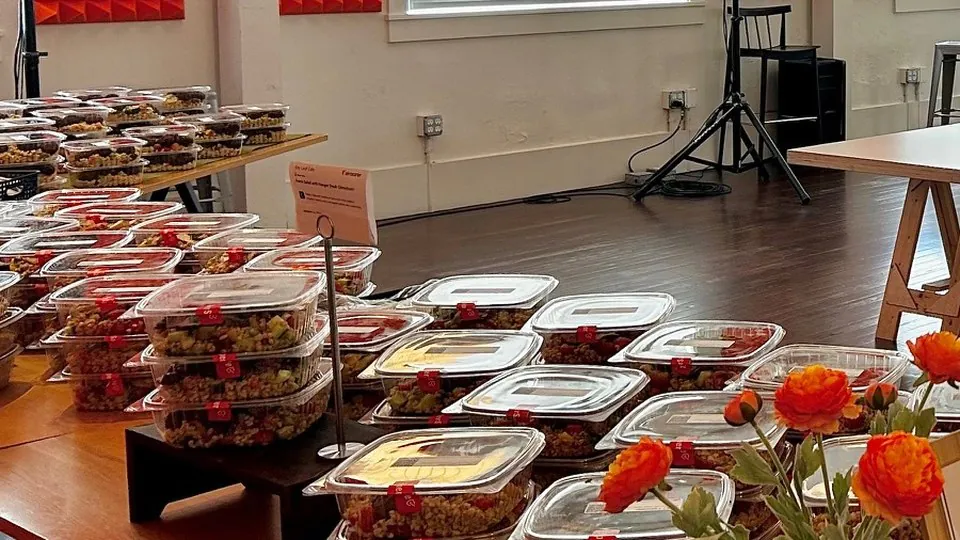
Traders, sales staff, and analysts covering live markets cannot step away for a buffet. The format that works is individually portioned and sealed, eaten at the desk with one hand while the other stays on the keyboard.
3. Client, Investor, and Pitch Meetings
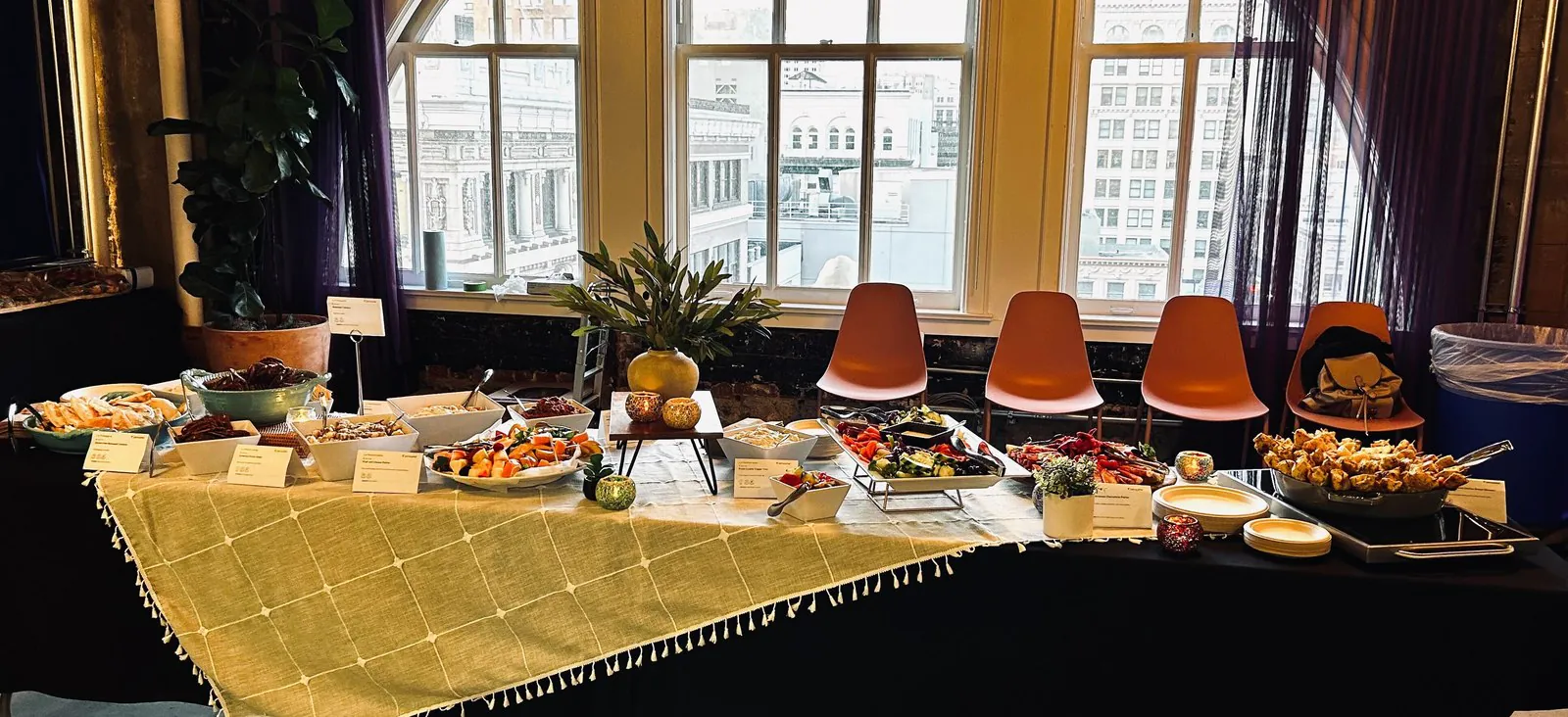
The highest-stakes catering a finance office does. Pitch meetings, due-diligence sessions, investor updates, and closing lunches all call for food that looks composed, eats quietly, and does not derail the conversation.
4. Deal-Team Late Nights and Weekend War Rooms
When a live deal takes over, associates and analysts are in the building past dinner and into the weekend. Food becomes infrastructure: a standing order after a set hour, delivery that works when the lobby is locked, and something that holds when the timeline slips again.
5. Board and Investment-Committee Meetings
Small headcount, high seniority, tight agenda. These meals lean plated or premium boxed, get set on a credenza rather than the table, and are timed around the agenda instead of interrupting it. See our board meeting catering playbook.
6. Earnings Season and Quarter-End Crunch
Predictable spikes you can plan for. Research, accounting, and reporting teams work long stretches on a known calendar, which makes this the easiest surge to pre-book rather than scramble through.
7. Analyst Onboarding, Training, and Recruiting
Summer analyst classes, training weeks, and campus recruiting events all run on catered food, often for a group large enough to need real logistics and varied enough to need real dietary coverage. A lunch and learn format works well for training sessions.
Quick Comparison Table
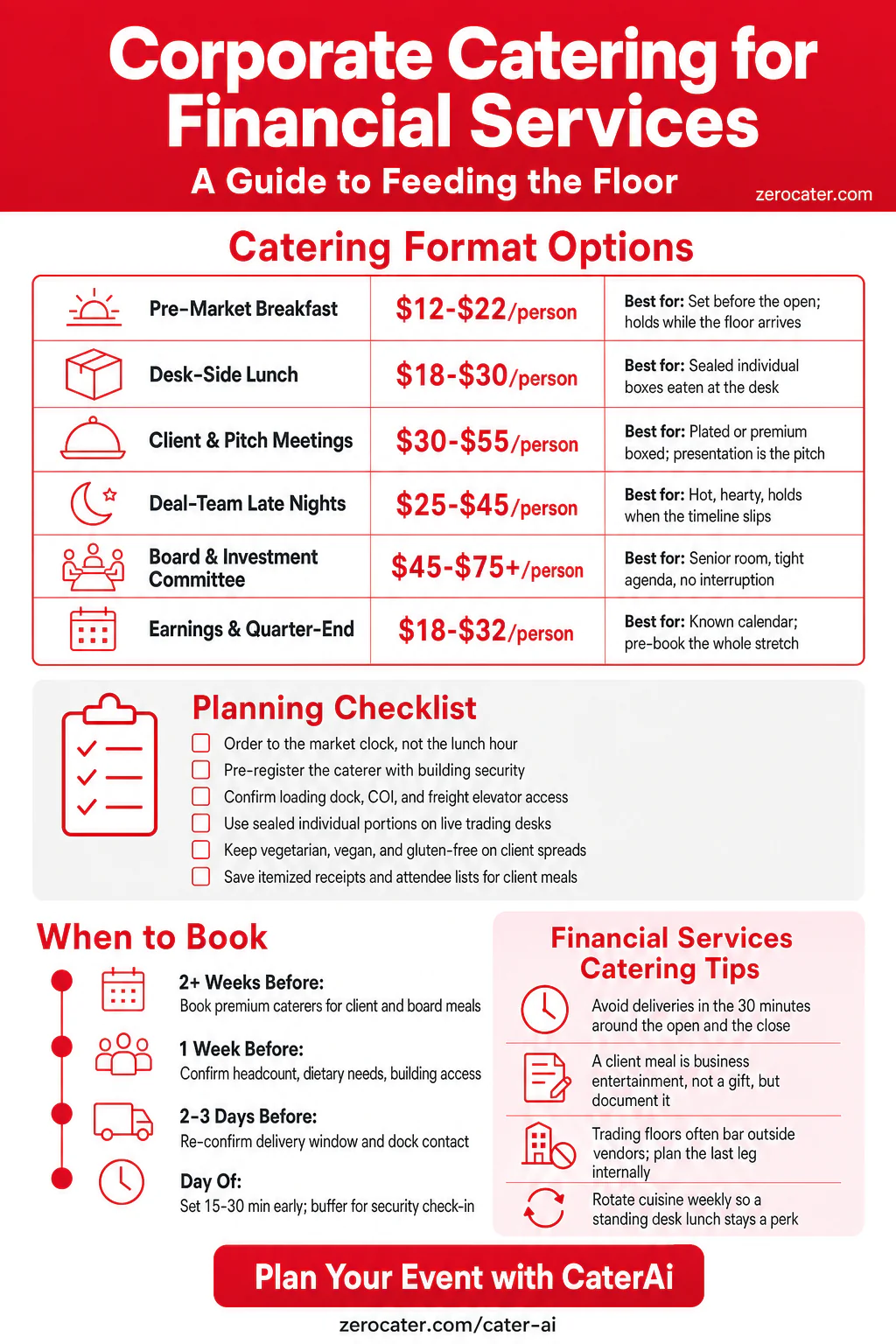
| Occasion | Best Format | Per Person | Why It Works |
|---|---|---|---|
| Pre-Market Breakfast | Cold spread, pastries, fruit, yogurt | $12 – $22 | Holds while the floor arrives; no line before the open |
| Desk-Side Lunch | Sealed boxed meals, wraps, grain bowls | $18 – $30 | Grab-and-go, one-handed, no serving line |
| Client & Pitch Meetings | Plated or premium boxed, small buffet | $30 – $55 | Presentation is part of the pitch |
| Deal-Team Late Nights | Hot family-style or individual dinners | $25 – $45 | Holds when the timeline slips; late delivery |
| Board & Investment Committee | Plated, staffed, or premium boxed | $45 – $75+ | Senior room, tight agenda, no interruption |
| Earnings / Quarter-End | Recurring buffet or boxed program | $18 – $32 | Known calendar; pre-book the whole stretch |
| Analyst Training & Recruiting | Buffet or boxed for larger groups | $18 – $30 | Scales cleanly; broad dietary coverage |
Ranges assume major metro pricing before delivery, tax, and gratuity, which typically add 20 to 25 percent. Manhattan, San Francisco, and Boston sit at the top of each band. For a full breakdown, see our boxed lunch catering cost guide.
What to Order: Menu Ideas by Occasion
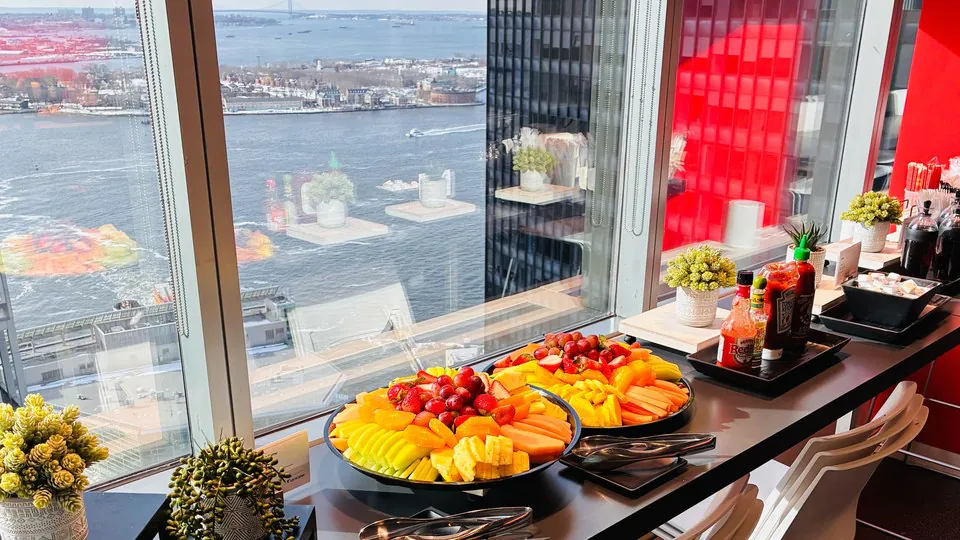
Pre-market breakfast. Pastries and bagels with spreads, whole and cut fruit, yogurt and granola, hard-boiled eggs, and good coffee. Everything holds at room temperature, nothing needs a chafing dish, and people can eat standing.
Desk-side lunch. Boxed sandwiches and wraps, grain bowls, composed salads with dressing on the side, and a piece of fruit or a cookie. Each box labeled, each one self-contained. Our roundup of the best boxed lunch catering companies and the boxed lunch vs. buffet comparison both apply directly here.
Client and pitch meetings. Plated proteins with a grain and a vegetable, premium boxed meals with real cutlery, or a tight buffet of two mains and two sides. Quiet, low-mess food that people can eat mid-sentence. Avoid anything that requires sawing, slurping, or a bib.
Deal-team dinners. Hot, hearty, and forgiving: pasta trays, roasted proteins with sides, taco or bowl bars, curries and rice. Food that survives an hour on a counter because the call ran long, and that reheats without dying.
Board and investment committee. Restrained and well-presented. Plated salads, a single elegant main, a light dessert. Small enough to serve fast, good enough that nobody comments on it.
Recruiting and training. Broad-appeal buffets and interactive bars that feed a big mixed room: build-your-own salad bars, taco bars, Mediterranean spreads. Wide dietary coverage without separate special orders.
Across all of these, keep at least one vegetarian, vegan, and gluten-free option in the mix. Our vegetarian, vegan, and gluten-free guides go deeper, the mixed dietary needs guide covers juggling several at once, and our halal and kosher guides matter for client-facing meals where a guest’s religious dietary needs are unknown until they walk in.
The Compliance Line: Why a Client Meal Is Not a “Gift”
This is the part finance has that no other industry guide needs, and the part most people ordering the food have never been walked through.
Under FINRA Rule 3220, a member firm cannot give anything of value above a set annual limit to an employee of another firm in relation to that person’s business. That limit was raised from $100 to $300 per person per year, effective March 30, 2026, after the SEC approved FINRA’s amendments. On its face, that number sounds like it would rule out most client lunches.
It does not, because a meal is generally business entertainment, not a gift. FINRA guidance is explicit that the rule does not prohibit “ordinary and usual business entertainment,” meaning an occasional meal, sporting event, or comparable event, so long as the entertainment is “neither so frequent nor so extensive as to raise any question of propriety.” The cost of the entertainment event itself is not counted against the gift limit.
The distinction that trips people up
The catered lunch you serve a client in your conference room is entertainment. The bottle of wine, branded jacket, or gift basket you hand them on the way out is a gift, and it counts against the per-person annual cap even though the meal did not. Mixing the two into one order is how a compliant lunch quietly turns into a reportable problem.
Two practical consequences for whoever places the order:
- Frequency and lavishness are the test, not just the total. “Neither so frequent nor so extensive” is a judgment standard. A quarterly working lunch reads very differently from a standing weekly spread for the same client contact, at the same price point.
- The paper trail matters. Firms are required to maintain systems and procedures to report, review, and record these, so your order needs an itemized receipt, an attendee list, a business purpose, and a per-head value that someone in compliance can reconstruct later. Order in a way that produces that documentation by default rather than rebuilding it from memory at quarter-end.
This is general background, not legal or compliance advice. Firm policy is frequently stricter than the rule, per-head caps and pre-approval thresholds vary, and other regimes may apply depending on who is in the room, including government or pension-plan personnel. Run the specifics past your compliance team before you book.
Market Hours, Deal Cycles, and the Desk That Cannot Leave
The second thing finance does not share with anyone else is the shape of its day.
The open and the close are hard walls. US equity markets run from 9:30 a.m. to 4:00 p.m. Eastern, and the busiest stretches sit at both ends. Food that lands at 9:25 or 3:40 will sit untouched. Set breakfast before the open, put lunch down during the quieter middle of the session, and treat the last half hour as unavailable.
The desk does not go to the food. On a live desk, people eat where they sit. That rules out buffets, carving stations, and anything that needs assembly, and it rules in sealed individual portions that travel to the desk. It also rules out aggressively fragrant food on an open floor, which is a small courtesy that gets noticed.
Deal work runs past the building’s hours. Late nights and weekend war rooms mean ordering into a tower with a locked lobby and a skeleton security desk. Confirm who receives the delivery, whether the freight elevator is running, and whether your caterer genuinely delivers at that hour, not just whether their website says they do.
Security is part of the order. Financial-district buildings commonly require caterers to be pre-registered, to use a specific loading dock, to carry a certificate of insurance, and to be escorted onto badged floors. Trading floors often bar outside vendors entirely, so someone internal carries the food the last leg. Give the caterer the dock address, a contact name and mobile number, and a 15 to 30 minute check-in buffer.
Plan office lunch catering with CaterAi
Recurring Programs vs. On-Demand Orders
Most finance offices need both, and the mistake is running everything through one of them.
A recurring program fits the predictable load: the standing desk breakfast, the twice-weekly team lunch, the earnings-season stretch you can see coming a month out. Recurring orders get you consistent delivery windows, a caterer who learns your building, stored dietary profiles, and a rotation that keeps the food from repeating. Managed corporate catering exists for exactly this.
On-demand orders fit the spiky load: the pitch that materialized on Tuesday, the deal team that is suddenly staying until midnight, the client who added three people. These need speed and a short lead time more than they need optimization.
The practical setup is a standing program for the base load plus a trusted fast path for the surges, so nobody is sourcing a new caterer at 6 p.m. with a live deal in the room. Our office manager’s guide to ordering catering covers building that workflow, and the corporate event catering checklist covers the one-off events.
The Logistics Finance Firms Get Wrong
- Ordering to the calendar instead of the market clock. A noon delivery is wrong for a desk whose quiet window is 1:30. Ask the floor when they can actually eat.
- Treating building access as the caterer’s problem. Dock, COI, escort, freight elevator. Sort it before the order, or the food sits in a lobby.
- Hot buffets for people who cannot leave their seats. The format has to match the constraint. Sealed and individual beats beautiful and communal on a live desk.
- Under-documenting client meals. No attendee list, no itemized receipt, no stated business purpose. Easy to fix up front, painful to reconstruct later.
- Thin dietary coverage in front of clients. You rarely know a visiting guest’s restrictions in advance. Always carry a vegetarian, vegan, and gluten-free option.
- The same order every week. A standing program without rotation stops reading as a perk and starts reading as furniture.
Financial-Center City Guides
Catering costs and lead times vary sharply by market, and the financial centers sit at the expensive end. For local pricing, see our cost guides for New York City, Chicago, San Francisco, Boston, and Dallas.
For the other industry playbooks in this series, see corporate catering for tech companies, law firms, and healthcare. Law firms in particular share the client-facing and late-night patterns, so that guide is a useful companion.
How CaterAi Handles Financial Services Catering
CaterAi is Zerocater’s catering planning tool, and it fits the way finance actually orders.
Describe the constraint, get a menu that respects it. Give CaterAi the plain-language brief (“40 people on a trading floor, sealed individual boxes, delivered to the 31st floor by 11:30, vegetarian and gluten-free covered, around $26 a head”) and it builds options from over 1,000 restaurants that fit the format, the timing, and the budget.
Dietary profiles that stick. Store the team’s needs once and every future order respects them, which matters most on the client-facing meals where you cannot afford a guest with nothing to eat.
Rotation across a standing program. CaterAi tracks what the floor has had recently and varies the cuisine, so a recurring desk lunch does not collapse into the same platter every week. For the standing load, managed corporate catering runs the program; for pitches, closings, and recruiting events, event catering covers the one-offs with setup and staffing. See how it works.
Plan office lunch catering with CaterAi
Related reading: board meeting catering, lunch and learn catering, breakfast catering, healthy office catering, and holiday party planning for bonus-season celebrations.
Frequently Asked Questions
How much does corporate catering cost for a financial services office?
It varies more by occasion than by headcount. Pre-market breakfast typically runs about $12 to $22 per person, desk-side boxed lunches about $18 to $30, deal-team late-night dinners about $25 to $45, client and pitch meeting lunches about $30 to $55, and board or investment-committee meals about $45 to $75 and up. Financial-district markets like Manhattan, San Francisco, and Boston sit at the higher end of each band. Client-facing meals cost more because presentation, service, and plating are part of what you are buying.
Are catered client meals subject to FINRA gift limits?
Generally no, because a meal is usually treated as business entertainment rather than a gift. FINRA Rule 3220 caps gifts at $300 per person per year (raised from $100 effective March 30, 2026), but FINRA guidance says the rule does not prohibit ordinary and usual business entertainment, such as an occasional meal, provided it is neither so frequent nor so extensive as to raise a question of propriety. A gift handed out at the event, like a bottle of wine or a branded item, still counts toward the gift cap even though the meal itself does not. Firms must keep systems to report, review, and record these, so confirm the specifics with your compliance team, since firm policy is often stricter than the rule.
What should you order for a trading desk that cannot leave during market hours?
Individually portioned, sealed, one-handed food that holds. Boxed lunches, wraps, grain bowls, and salads with dressing on the side all work because each person can grab one and eat at the desk between prints. Skip anything that needs assembly, carving, or a serving line, skip soupy or messy dishes near keyboards, and go easy on strong-smelling food on an open trading floor. Label every box clearly, and set the delivery outside the busiest windows around the open and the close.
What is the best catering for a client pitch or due-diligence meeting?
Something that looks composed and does not interrupt the room. Individually plated or high-end boxed meals keep the meeting moving, while a small, well-presented buffet on a credenza works when the session runs long. Favor quiet, low-mess food that people can eat while talking, keep at least one vegetarian, vegan, and gluten-free option so nobody is left out in front of a client, and set food on a side surface rather than the conference table. For multi-day due diligence, rotate the cuisine.
How do you handle catering for deal teams working late nights and weekends?
Plan for a food supply that outlasts the building’s normal hours. Set a standing dinner order for teams working past a cutoff, choose caterers with genuine late-night and weekend delivery, and confirm who will be at the security desk to receive the order when the lobby is locked down. Food that reheats or holds well beats anything that must be eaten the minute it lands, since a deal timeline slips constantly. Keep a stocked backup of snacks and beverages for the hours when nothing is open.
What time should breakfast arrive for a pre-market meeting?
Early enough that people eat before the open, not during it. For a US equities desk, that means food set and ready well before the 9:30 a.m. Eastern open, which in practice means a delivery window in the 6:30 to 8:00 a.m. range depending on when your team arrives and how long building security takes. Build in a buffer for the loading dock and freight elevator, and pick a caterer that has delivered into your building before. Cold and room-temperature spreads are safer this early because they hold while people trickle in.
How do you handle building security and delivery access in a financial district tower?
Treat access as part of the order. Many towers require the caterer to be pre-registered, to enter through a specific loading dock, to carry a certificate of insurance, and to be escorted to badged floors, and trading floors often restrict outside vendors entirely. Give the caterer the dock address, the contact name and phone at the desk, and the delivery window, and name an internal person who will meet them. Add 15 to 30 minutes of buffer for check-in. Caterers who work your building regularly are worth more than a slightly cheaper unknown.
How do you keep a recurring finance catering program from getting repetitive?
Rotate cuisine on a set cadence and track what the floor has already had. A standing program should cycle through different cuisines and formats week to week rather than defaulting to the same sandwich platter, and it should flex up for earnings season and deal crunches and down during quiet stretches. Storing the team’s dietary needs once, so every order respects them automatically, removes the biggest recurring source of friction. A managed program handles the rotation, delivery, and billing so one person is not rebuilding the order every week.