The fastest way to get an office keto order wrong is to order a salad and call it done. A “healthy” salad with candied pecans, dried cranberries, corn, and a honey-mustard dressing can carry more carbs than a sandwich, which puts it out of bounds for anyone doing keto. That gap, between food that looks light and food that meets a strict carb ceiling, is what makes keto its own catering problem. Keto is a macro target: very low carb, high fat, moderate protein, low enough that the body burns fat for fuel. Portion size and a lighter plate have nothing to do with it. This guide covers what keto actually requires, the hidden carbs that hide in ordinary catering, the fat-forward part most people skip, how keto differs from low-carb and paleo, the build-your-own order that feeds keto eaters and the whole team at once, and what it costs.
In This Guide
- What Keto Actually Means (and the Fat Part People Skip)
- Keto vs. Low-Carb vs. Paleo
- The Hidden-Carb Traps in Office Catering
- The Keto Office Playbook: Build Your Own
- Keto Menu Ideas by Format
- What Keto Office Catering Costs Per Person
- Feeding Keto and Everyone Else in One Order
- Mistakes to Avoid
- How CaterAi Handles Keto Catering
- FAQ
What Keto Actually Means (and the Fat Part People Skip)
The ketogenic diet holds carbohydrates very low so the body shifts from running on sugar to running on fat, a state called ketosis. Most people aim for something like 20 to 50 grams of net carbs a day, where net carbs are total carbs minus fiber. That number is small. It is a single sandwich, or a cup of rice, or a sugary coffee drink. For a catered lunch, it means the starches and sugars that anchor a normal order have to come off the plate.
The replacement is the part offices get wrong. Keto is fat-forward, not just carb-poor. A plain grilled chicken breast on a bed of undressed greens is low in carbs, but it is a thin, unsatisfying keto meal that leaves people hungry by 2 p.m. A good keto plate adds real fat: olive oil, avocado, cheese, nuts and seeds, a full-fat dressing, fatty cuts of meat, salmon. The fat is what makes the meal filling and what makes keto sustainable across a workday. When you order, think proteins and non-starchy vegetables carrying plenty of fat, not a diet plate.
So the keto plate has a simple shape: a protein, a pile of non-starchy vegetables (leafy greens, broccoli, zucchini, peppers, cauliflower, mushrooms, asparagus), and a clear source of fat, with the bread, rice, pasta, potatoes, beans, corn, and sugar left off.
Keto vs. Low-Carb vs. Paleo
These three get used as if they mean the same thing. They do not, and ordering as if they do is how a keto colleague ends up with food they cannot eat.
Low-carb means fewer carbs than usual, with no fixed number. A low-carb menu might land at 80 grams a day, which is a real reduction and still far above a keto ceiling. Low-carb is a direction; keto is a limit.
Keto sets that strict limit, roughly 20 to 50 grams of net carbs, and adds fat to replace the lost energy. The macro ratio is the whole point.
Paleo runs on a different logic. It asks whether a food would have existed before agriculture, so it bans grains, legumes, and dairy, but it welcomes natural sugars like honey and maple syrup and starchy whole foods like sweet potato and fruit. That makes a paleo spread easy to confuse with keto and often wrong for it: the honey-glazed salmon and the sweet-potato hash are paleo and not keto. It cuts the other way too, since keto is happy with the cheese and cream that paleo refuses. Treat the two as separate requests.
The Hidden-Carb Traps in Office Catering
Catering is full of carbs that never show up as “carbs” on the table. These are the ones that wreck a keto order, and knowing them is most of the job.
- Sweet glazes and sauces. Barbecue, teriyaki, honey, sweet chili, orange, and even ketchup are built on sugar. A “grilled” chicken drenched in teriyaki can carry more sugar than dessert. Order proteins plain with sauces on the side.
- Breading and batter. Anything breaded, battered, crispy, or crusted is a carb dish wearing a protein costume. Grilled, roasted, seared, and braised are the words you want.
- Tortillas and wraps hiding as “bowls.” A burrito bowl still starts with rice and beans, and a “wrap platter” is bread. Ask for a lettuce or greens base and no tortilla.
- Default starchy bases. Rice, quinoa, farro, pasta, potatoes, and corn anchor most bowls and buffets. Swap the base for greens or extra vegetables.
- Salad toppings. Croutons, candied nuts, dried cranberries, corn, chickpeas, and mandarin oranges add up fast, and a sweet dressing finishes the job.
- Sugary marinades. Some proteins are marinated in sugar before they ever hit the grill, so ask how the meat is prepared, not just how it is cooked.
The one-line rule
If it is breaded, glazed, sweet, or served on a grain, it is probably not keto. Proteins and non-starchy vegetables with fat added, sauces and starches on the side, keeps you safe without reading a single nutrition label.
The Keto Office Playbook: Build Your Own
The cleanest way to order keto for a team is to unbundle the meal. Instead of pre-composed plates where the starch is baked in, order the components separately and let people assemble.
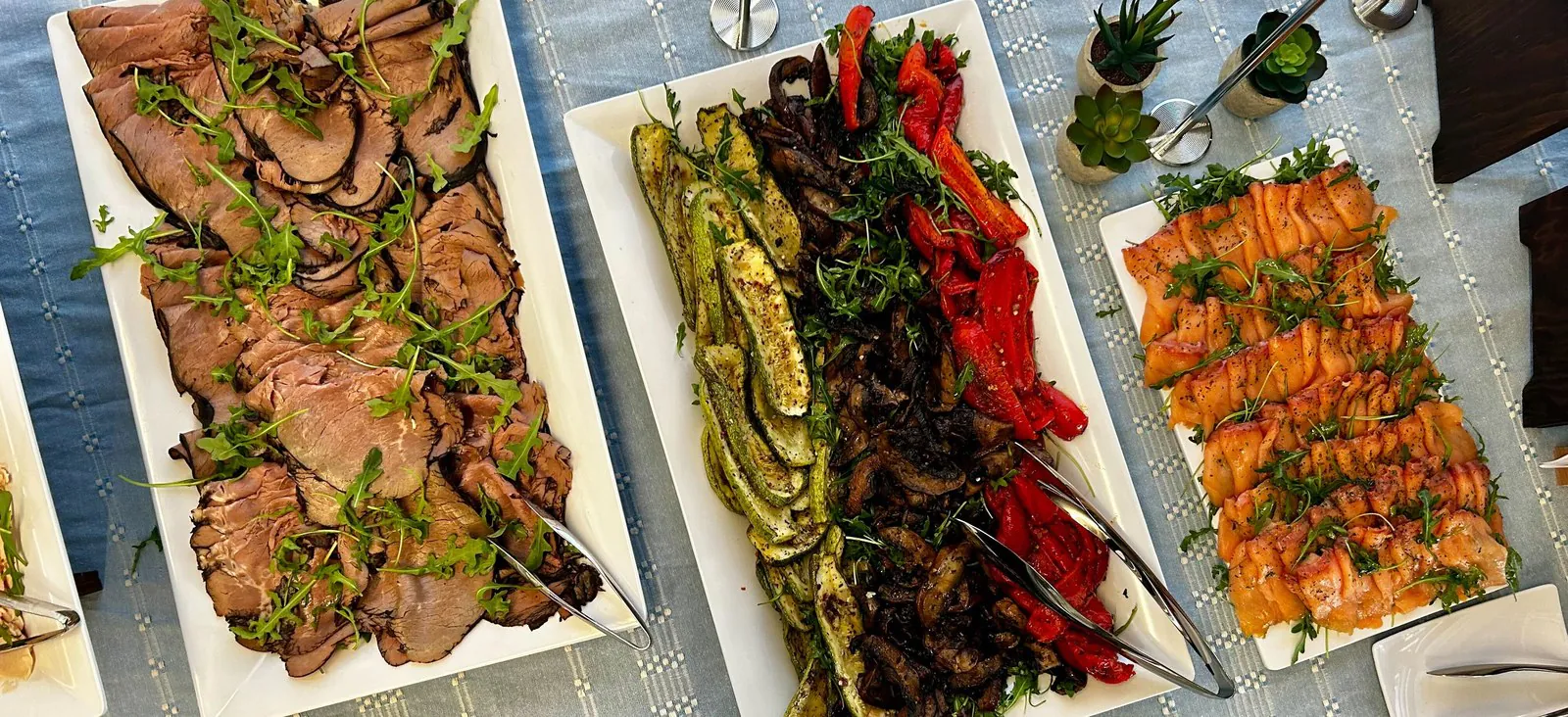
Order in three parts. A protein (grilled or roasted plain), a spread of non-starchy vegetables and leafy greens, and fats and toppings (cheese, avocado, olives, nuts, seeds, oil-based dressings). Then put the starches and the sweet toppings in their own bowls off to the side.
That one move does the whole job. Keto eaters build a plate and walk past the rice and the croutons. Everyone else adds them back. Nobody is handed a lesser version of lunch, and you placed one order, not two.
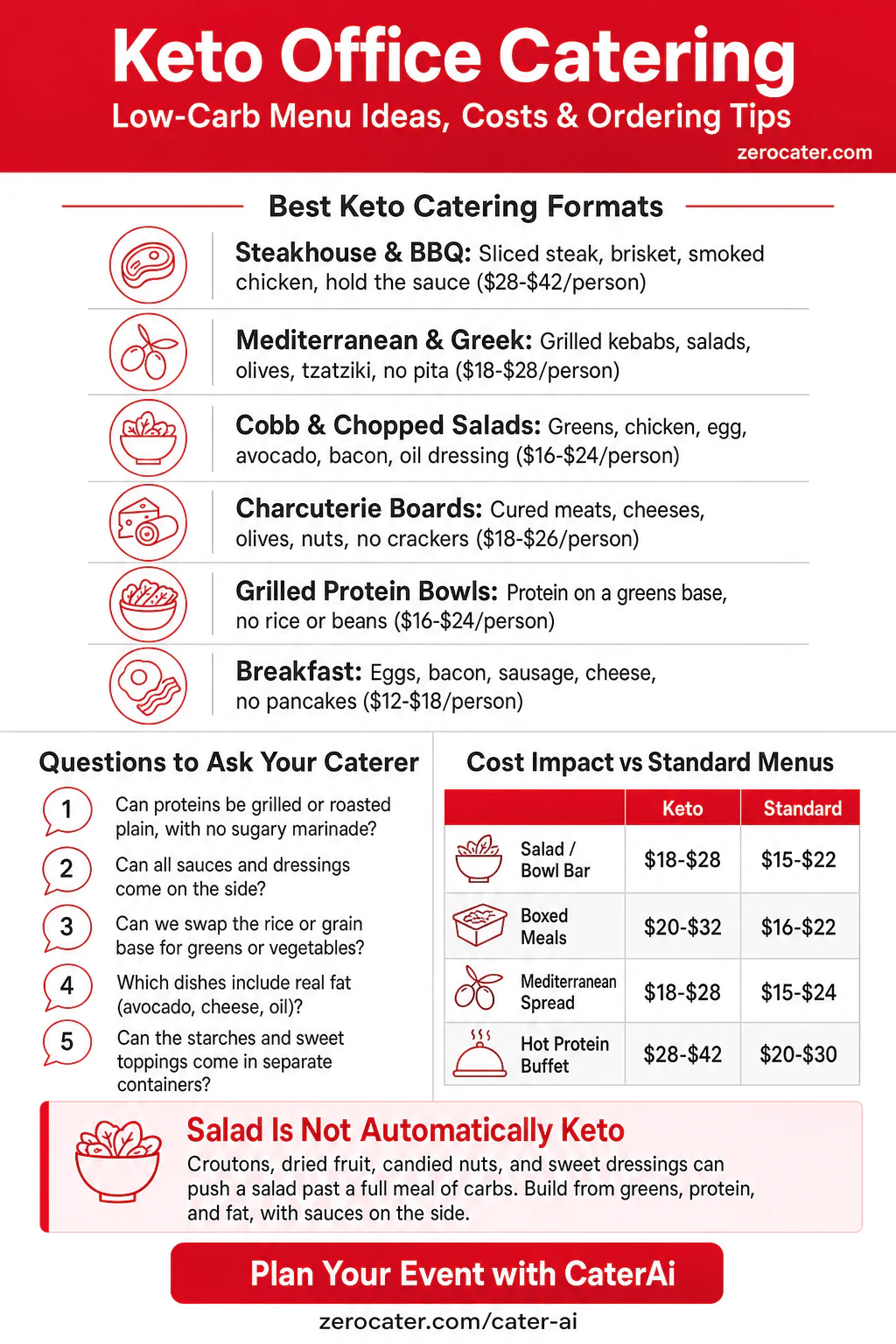
Five questions to ask a caterer
- Can the proteins be grilled or roasted plain, with no sugary marinade?
- Can we get all sauces and dressings on the side?
- Can we swap the rice or grain base for greens or extra vegetables?
- Which dishes have real fat in them, and can you add avocado, cheese, or oil?
- Can the starches and sweet toppings come in separate containers?
Keto Menu Ideas by Format
Some cuisines are protein-forward by nature, so they need almost no adjusting. These are the formats to reach for.
Steakhouse and Barbecue Platters
Meat-first menus are the easiest keto win: hold the bread, the beans, and the sweet sauce, and most of the spread already qualifies. Sliced steak, brisket, pulled pork, smoked chicken, and sausage with a side of non-starchy vegetables make a filling hot buffet. Look at barbecue caterers like Roaming Buffalo BBQ in Denver and Pampa BBQ in Redwood City, or a Brazilian steakhouse such as Oasis Brazilian Steakhouse near Boston, and keep the barbecue sauce on the side rather than mixed in. Browse barbecue catering for options near you.
Cobb and Chopped Salads, Done Right
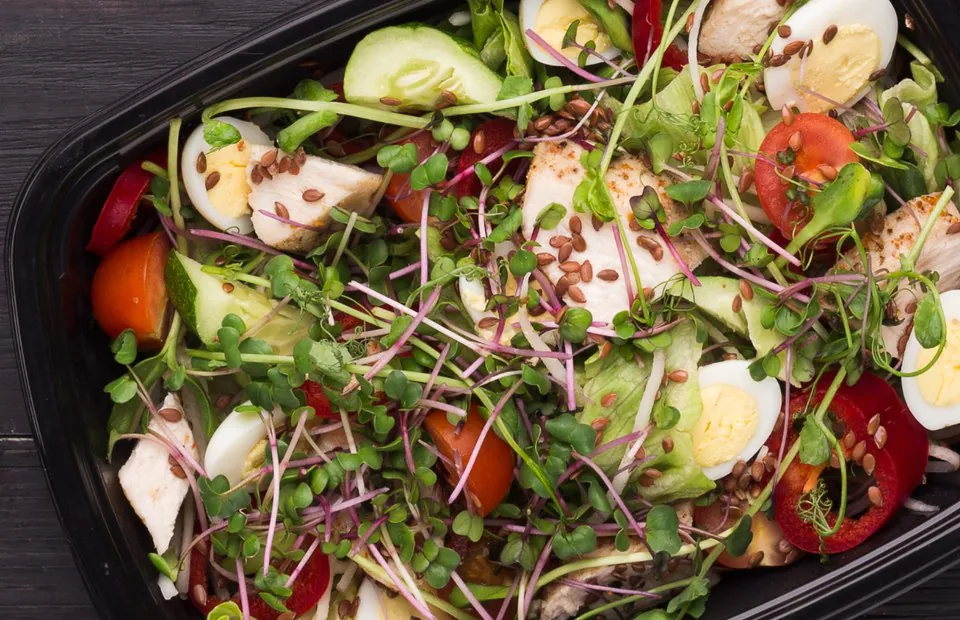
A salad is keto or not depending entirely on how it is built. Anchor it on leafy greens, load it with grilled chicken or steak, bacon, hard-boiled egg, avocado, cheese, and olives, dress it with an oil-based dressing on the side, and leave off the croutons, dried fruit, candied nuts, and corn. Salad and bowl shops like Zo’s Salads & Bowls in Berkeley and Saucy Greens in San Francisco build these to order.
Mediterranean and Greek Grilled Spreads
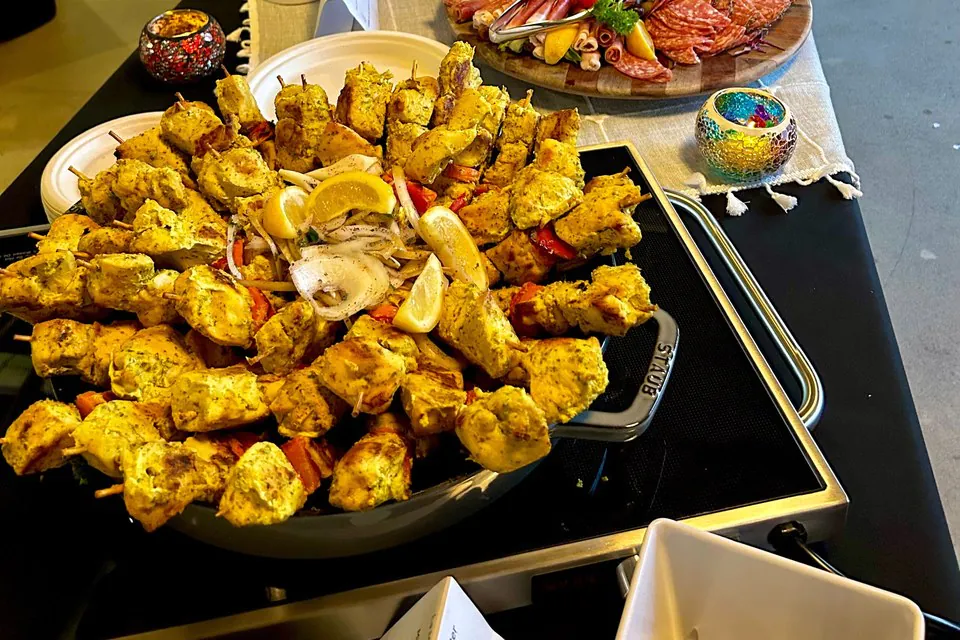
Mediterranean and Greek menus are a natural fit because they center on grilled meats, salads, olives, and yogurt-based sauces. Order chicken and beef skewers, kebabs, grilled fish, Greek salad, olives, and tzatziki, go light on the hummus, and skip the pita and rice. Consider Kali Greek Kitchen in Palo Alto, Kairos Greek Street Food in New York, Sultan’s Kebab in Pleasanton, or vendors on the Mediterranean and Greek catering pages, including SAJJ Mediterranean and Olive Mediterranean Grill.
Charcuterie and Cheese Boards
A meat and cheese board is keto by default, as long as you leave off the crackers, bread, dried fruit, and honey. Cured meats, hard and soft cheeses, olives, nuts, and low-carb vegetables like cucumber and pepper strips make a strong grazing option for a meeting or a happy hour. It also doubles as protein-and-fat snacking that holds people over without a sugar crash.
Breakfast, the Sleeper Option
Breakfast catering is one of the most keto-friendly formats once you drop the obvious carbs. Scrambled eggs, bacon, sausage, cheese, and avocado make a filling low-carb spread. Skip the pancakes, bagels, pastries, and potatoes, and put the fruit and the syrup on the side for everyone else.
What Keto Office Catering Costs Per Person
Keto usually costs a little more than a starch-heavy order, and the reason is simple: it leans on proteins, cheese, avocado, and nuts instead of cheap rice and bread fillers. Format drives the range.
| Format | Per Person | What You Get | Best For |
|---|---|---|---|
| Salad / Bowl Bar & Mediterranean | $18 – $28 | Build-your-own greens, grilled proteins, olives, tzatziki, oil-based dressings | Everyday team lunches |
| Individually Boxed Keto Meals | $20 – $32 | Portioned, labeled protein-and-vegetable meals, no shared serving | Meetings, plated events, strict macros |
| Hot Protein Buffet | $28 – $42 | Steak, barbecue, grilled proteins, roasted vegetables, cheese boards | Team events and celebrations |
Add roughly 20 to 25 percent on top for delivery, tax, and gratuity. For how office catering is priced in general, see our boxed lunch catering cost guide.
Plan keto catering with CaterAi
Feeding Keto and Everyone Else in One Order
You rarely cater for a fully keto room. The real task is feeding one or two keto colleagues alongside a team that wants the rice, the bread, and the dessert. The build-your-own approach solves it without a second order.
- Anchor on a format that unbundles cleanly: a salad or bowl bar, a Mediterranean spread, or a grilled-protein buffet.
- Keep proteins, vegetables, cheeses, and fats as the shared base everyone eats from.
- Put the starches (rice, tortillas, bread, potatoes) and the sweet toppings and sauces in their own containers on the side.
- Label the dressings and sauces so keto eaters can spot the sugar and everyone else can pour freely.
Keto overlaps neatly with other requests, too. A grilled-protein-and-salad spread is often gluten-free and works for a high-protein crowd, and it slots into a broader healthy office catering program. When several needs stack up at once, our mixed dietary needs guide covers how to juggle them, and the vegan, vegetarian, and allergy-safe boxed lunch guides go deeper on the others.
Mistakes to Avoid
The #1 mistake: assuming “healthy” and “salad” mean keto
A light-looking salad with candied nuts, dried fruit, and a sweet dressing can carry a full meal’s worth of carbs. Build from greens, protein, and fat, and treat every sweet or crunchy topping as a carb until proven otherwise.
- Forgetting the fat. Lean protein on plain greens is not a satisfying keto meal. Add avocado, cheese, oil, and nuts so people stay full.
- Trusting the word “grilled.” Grilled but glazed is still sugar. Ask about the marinade and the sauce, and get both on the side.
- Ordering “bowls” without checking the base. Most bowls start on rice or beans. Swap for greens or vegetables.
- Treating paleo and keto as interchangeable. The honey-glazed, sweet-potato paleo tray is not keto. Confirm which one the colleague follows.
- Leaving food unlabeled. If a keto eater cannot tell which dressing is sweet or which protein is breaded, they will skip lunch. Label the sauces and the starches.
How CaterAi Handles Keto Catering
CaterAi is Zerocater’s catering planning tool, and it makes ordering keto for a mixed team straightforward.
Describe the need, get a keto-friendly menu. Give CaterAi the plain-language brief (“25 people, a build-your-own grilled-protein and salad bar, keto-friendly with the starches on the side, real fats included, around $24 a head, delivered by noon”) and it builds a menu from over 1,000 restaurants that keeps the keto plate intact while still feeding everyone else.
Dietary profiles that stick. Store the team’s needs once, including who eats keto, and every future order respects them, so no one is handed a bread-heavy tray they cannot touch.
Variety across a recurring program. CaterAi tracks what the group has had recently and rotates among steakhouse, Mediterranean, salad bars, and grilled spreads, so a standing keto-inclusive program never gets repetitive. For an ongoing meal program, Zerocater’s managed corporate catering handles the standing order, and event catering covers celebrations and larger gatherings. See how it works.
Plan keto catering with CaterAi
For related playbooks, see our guides to board meeting catering, lunch and learn catering, the best boxed lunch catering companies, boxed lunch vs. buffet, the corporate event catering checklist, the office manager’s guide to ordering catering, and the religious-dietary companions on halal and kosher office catering.
Frequently Asked Questions
What makes catering keto-friendly?
Keto food is very low in carbohydrates, high in fat, and moderate in protein, built to keep net carbs low enough that the body runs on fat instead of sugar. For catering that means the plate is anchored by proteins and non-starchy vegetables with real fat added, and it leaves out the starches and sugars that carry most of the carbs: bread, rice, pasta, potatoes, beans, corn, sugary sauces, and fruit. A useful test is to picture the meal with the starch removed and ask whether what is left still satisfies.
Is a salad automatically keto?
No, and this is the mistake offices make most. A salad can carry as many carbs as a sandwich once you count croutons, candied nuts, dried cranberries, corn, beans, mandarin oranges, and a sweet dressing like honey mustard or balsamic glaze. To keep a salad keto, start with leafy greens, add protein, cheese, avocado, olives, and seeds, use a full-fat oil-based dressing, and skip the crunchy and sweet toppings. Order the dressing on the side so people control it.
What is the difference between keto, low-carb, and paleo?
Low-carb just means fewer carbs than usual, with no fixed target, so a low-carb menu is not always low enough for someone in ketosis. Keto sets a strict ceiling, roughly 20 to 50 grams of net carbs a day, and adds fat to make up the energy. Paleo is a different axis: it bans grains, legumes, and dairy but allows natural sugars like honey and maple and starchy foods like sweet potato and fruit. So a paleo spread is not automatically keto, and keto allows cheese and dairy that paleo does not.
What are the biggest hidden carbs in office catering?
The carbs that blow a keto budget are usually the ones nobody counts. Sweet glazes and sauces (barbecue, teriyaki, honey, sweet chili, ketchup) can add more sugar than a dessert. Breading and batter turn a lean protein into a carb dish. Tortillas and wraps hide under the word bowl. Rice, quinoa, beans, and corn are default bases in most bowls. Dried fruit, candied nuts, and croutons load up salads. And sugary marinades soak into otherwise plain grilled meat. Ask for proteins grilled plain, sauces on the side, and a greens or vegetable base instead of a grain.
How much does keto office catering cost per person?
Keto tends to run a little higher than a starch-heavy order because it leans on proteins, cheese, avocado, and nuts rather than cheaper rice and bread fillers. A salad or bowl bar and most Mediterranean grilled spreads land around $18 to $28 per person. Individually boxed keto meals with labeled macros run about $20 to $32. Hot protein buffets built on steak, barbecue, grilled proteins, and roasted vegetables sit higher, roughly $28 to $42. Add about 20 to 25 percent on top for delivery, tax, and gratuity.
What cuisines are easiest to order keto for the office?
The cuisines that are protein-forward by nature make keto easy. Steakhouse and barbecue spreads are mostly meat, so you just hold the bread, the sauce, and the starchy sides. Mediterranean and Greek menus give you grilled meats, salads, olives, and tzatziki (skip the pita and rice, go light on hummus). A well-built Cobb or chopped salad works when you drop the sweet and crunchy toppings. Charcuterie and cheese boards are naturally keto if you leave off the crackers, fruit, and honey. Breakfast is the sleeper option: eggs, bacon, sausage, and cheese with no pancakes or bagels.
Can you feed a keto colleague and everyone else from one order?
Yes, and a build-your-own format is the way to do it. Order proteins, non-starchy vegetables, cheeses, and fats as separate components, and put the starches (rice, tortillas, bread, potatoes) and the sweet toppings and sauces on the side. Keto eaters build a plate without the starch, everyone else adds it back, and no one gets a sad substitute. A salad or bowl bar, a Mediterranean spread, or a grilled-protein buffet all do this naturally.
Do you need a special keto caterer?
Usually not. Most standard caterers can serve a strong keto order if you ask the right way: proteins grilled or roasted plain, sauces and dressings on the side, a greens or vegetable base instead of rice or bread, and real fat included rather than everything served lean. Dedicated keto and low-carb caterers exist and are worth it for a strict, macro-labeled program, but for a normal office lunch the bigger lever is how you order, not who you order from.