A Whole Foods catering order takes about ten minutes to build. Every item on the menu carries a price and a serving count in its own name, so the spread adds itself up while you shop. Nobody asks your headcount. Nobody asks what the meeting is. You fill a cart, you pick a pickup time, and the transaction is finished.
That speed is why people choose it, and why the order sometimes lands wrong. A caterer does a set of jobs that never appear as a line item: sizing the food to the room, balancing what is on the table, handling the person who cannot eat dairy, and getting it all to the office. Whole Foods sells the food. Its own published terms hand every one of those jobs back across the counter, in writing. This guide reads the brand’s catering catalog and catering terms as the primary documents they are.
Plan party platter catering with CaterAi
Whole Foods sells the food, and does not cater the meal
The shape of the purchase decides everything after it. A catering booking begins with a conversation. A Whole Foods catering order begins with a cart, and the verb on the product page reads “Add to Cart”.
The difference matters more than it sounds. In a booking, the caterer carries the risk of getting the quantity wrong, and a good one pushes back on a headcount that does not match the order. In a retail purchase the buyer carries all of it. The catalog will sell a room of thirty a platter built for eight, and nothing in the flow will mention it.
Four jobs move across the counter:
- Sizing. The menu counts in eights. Your headcount does not.
- Composition. A serving count tells you how many people a platter reaches, and never what a person gets when it does.
- Dietary handling. The labels describe the dishes. The terms state that the kitchen will not change them.
- Getting it there. The order ends at a counter in a store, at a time you booked.
The catering menu counts in eights
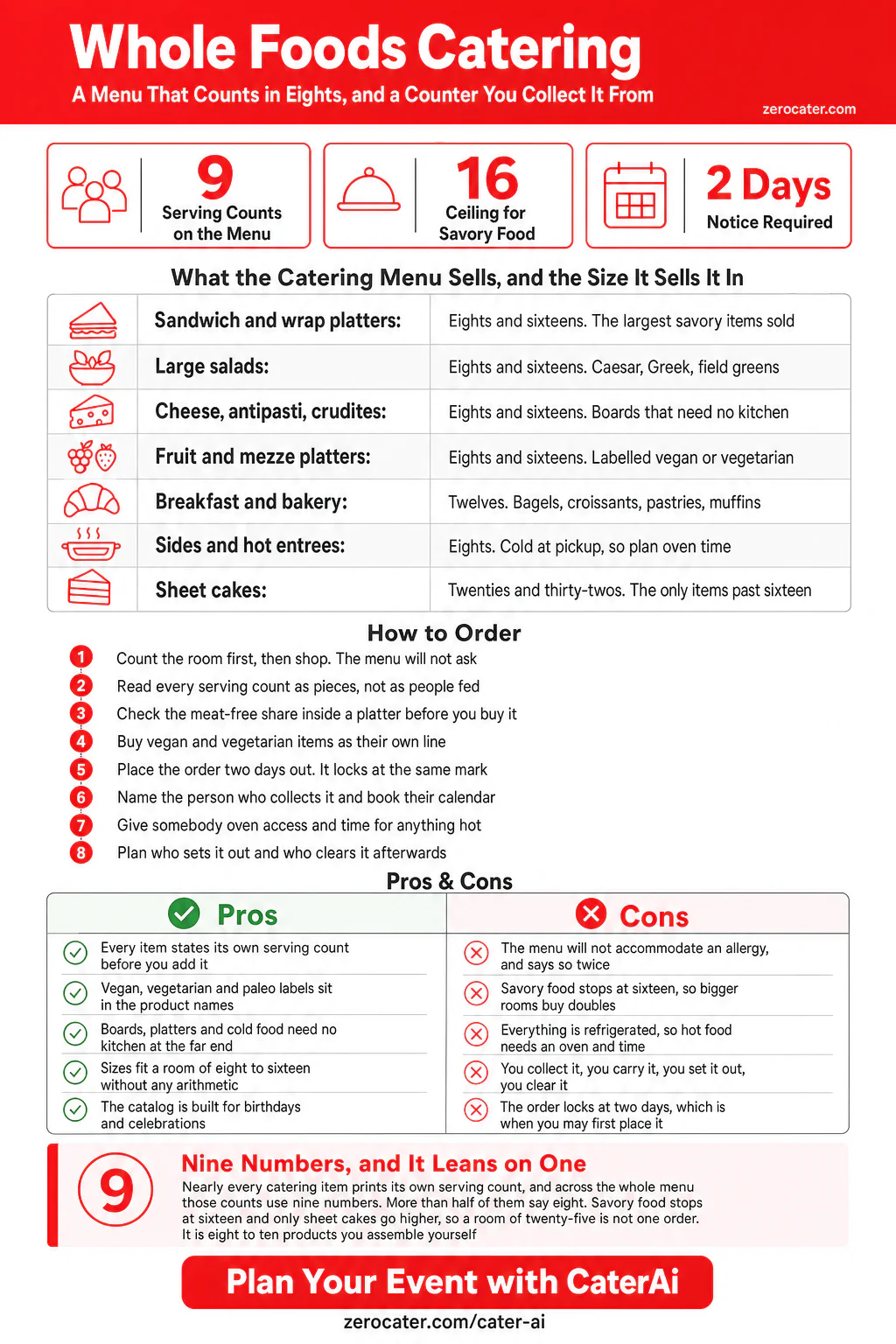
Read the catering catalog end to end and one pattern runs through all of it. Nearly every item states its own serving count inside the product name: Serves 8, Serves 16, for 12. The menu does the arithmetic before you ask, and it does that arithmetic for a particular kind of room. The counts land on a short list of nine numbers, and it leans hard on one of them.
| Serving count | What sits at this size |
|---|---|
| 2, 3, 4, 6 | Soups, single entrees, holiday sides, a pie. Household sizes. |
| 8 | The default. More than half of everything that carries a count. Salads, sides, cheese boards, hot entrees, the smaller sandwich platters. |
| 12 | Breakfast territory, mostly. Bagels, croissants, muffins, mini tarts. |
| 16 | The large platters, and the ceiling for savory food. Sandwiches, wraps, salads, crudites, cheese, fruit. |
| 20, 32 | Sheet cakes. Nothing else on the menu goes this high. |
Read the bottom two rows together. The only items sized past sixteen are cake. Every savory item on the catering menu stops at sixteen servings, so any room bigger than that eats the same platter twice over.
The menu was drawn for a different room. Its own top-level sections are occasions: birthdays, a summer barbecue, two holiday menus. No office lunch section exists.
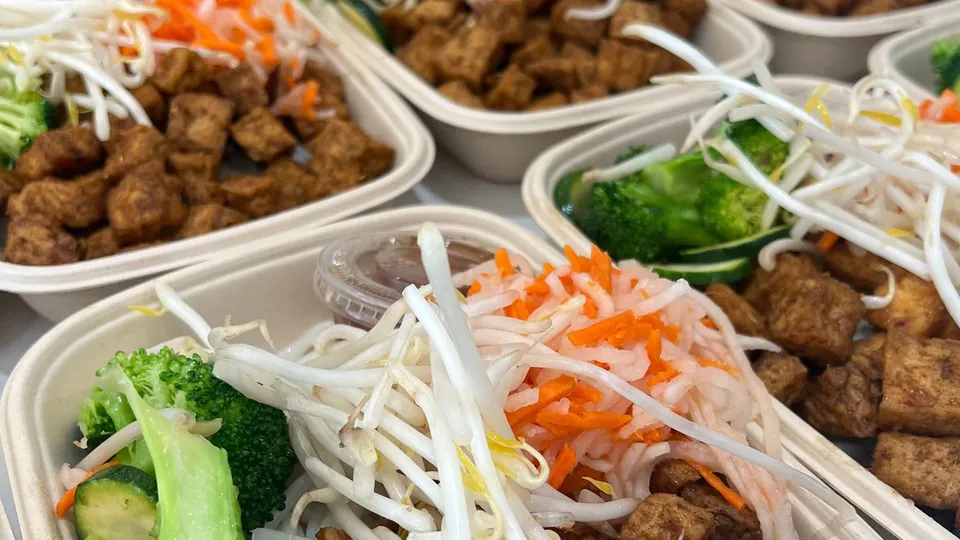
What is on the catering menu
The catalog splits into eight standing categories plus a rotating set of seasonal ones. Sizes below are the counts the menu itself prints. Item availability is set by location, so confirm the specific pieces with your store before you build a plan around any one of them.
Sandwiches and salads
| Item | Sizes offered | Notes |
|---|---|---|
| Sandwich & Wrap Combo Platter | 16 | The largest savory item on the menu |
| Gourmet Sandwich Platter | 8, 16 | |
| Signature Sandwich Platter | 8, 16 | |
| Wrap Platter | 8, 16 | |
| Party Pinwheel Platter | 8, 16 | Cut spirals, easy to portion |
| Build-Your-Own Deli Sandwich Package | 8 | Components rather than finished sandwiches |
| Caesar, Greek, Field Greens salads | 8, 16 | The Greek and Field Greens are labelled vegetarian |
Appetizers and boards
| Item | Sizes offered | Notes |
|---|---|---|
| Cheese platters (Classic, European, American Artisan, Italian, Spanish) | 8, 16 | Several carry multiple flavour builds |
| Classic Antipasti Platter | 8, 16 | |
| Vegetable Crudites Platter | 8, 16 | Labelled vegan |
| Fresh Fruit Platter | 8, 16 | Labelled vegan |
| Mediterranean Mezze Platter | 8, 16 | Labelled vegetarian |
| Brioche Slider Platter, Cocktail Meatballs, Chicken Strips, Wings | 8 | Hot items, so they arrive cold |
| Shrimp platters, smoked salmon platter | 8, 12 |
Breakfast and bakery
| Item | Sizes offered | Notes |
|---|---|---|
| Bagel and Cream Cheese Platter | 12 | Labelled vegetarian |
| Croissant platters (butter, chocolate, mixed) | 12 | Labelled vegetarian |
| Assorted Breakfast Pastry, Muffins, Muffins & Scones | 12 | |
| Lox & Bagel Platter (Classic, Signature) | 8, 16 | The largest breakfast items |
| Coffee and tea service | 8, 16 | Sold in the same eights as the food |
| Cookie, brownie and cupcake platters | By the piece | Counted in fifteens, thirties and dozens |
| Celebration and layer cakes | 8, 12, 20, 32 | The only items past sixteen |
Sides and entrees
| Item | Sizes offered | Notes |
|---|---|---|
| Potato salad, coleslaw, pasta and orzo salads | 8 | Mostly labelled vegetarian |
| Roasted vegetables, brussels sprouts, sweet potato wedges | 8 | Labelled vegan and paleo-friendly |
| Mashed potatoes, truffle fingerlings | 8 | |
| Grilled chicken breast, chicken scallopini, grilled salmon | 8 | Paleo-friendly labels on two of the three |
| Soups | 3, 4 | The smallest counts on the menu |
| Seasonal entrees and holiday meals | 4, 8 | Rotate in and out through the year |
Sort those four tables by what the food needs at the other end. Anything on the sandwich, board, salad or bakery lists can go straight out and be eaten. Anything on the entree list needs kitchen access and a person with time before the meeting starts.
A serving count is a piece count with an appetite already in it
A fast order goes wrong at this line. “Serves 16” reads like a promise about people. It counts pieces, divided by an assumption somebody else made about how much a person eats.
The menu shows its working on the largest savory item it sells. The Sandwich & Wrap Combo Platter is described as a thirty-two piece platter, halved, and it is sold as serving sixteen. Divide it out and every one of those sixteen people is getting two halves. One sandwich each, and nothing else.
For a mid-morning meeting that is generous. For a working lunch with nothing else on the table it is thin, and the room will know by two o’clock. The count is honest. It answers a question about servings, and a lunch is a different question.
The same description settles the next question, and this one has a fixed answer rather than a judgement call. That platter is built from six named varieties, and the description states how many pieces of each go in. Four of the six contain meat. Four pieces are the vegan falafel wrap and four are the vegetarian caprese, so eight of the thirty-two pieces suit a meat-free eater.
Two vegetarians in a room of sixteen are comfortable. Four are fine. Five are not, and ordering the same platter again does not fix it, because the ratio is fixed inside the product. The only lever is a separate meat-free item alongside it, decided at the cart, because nothing later prompts you.
The labels tell you what a dish is, not what it can become
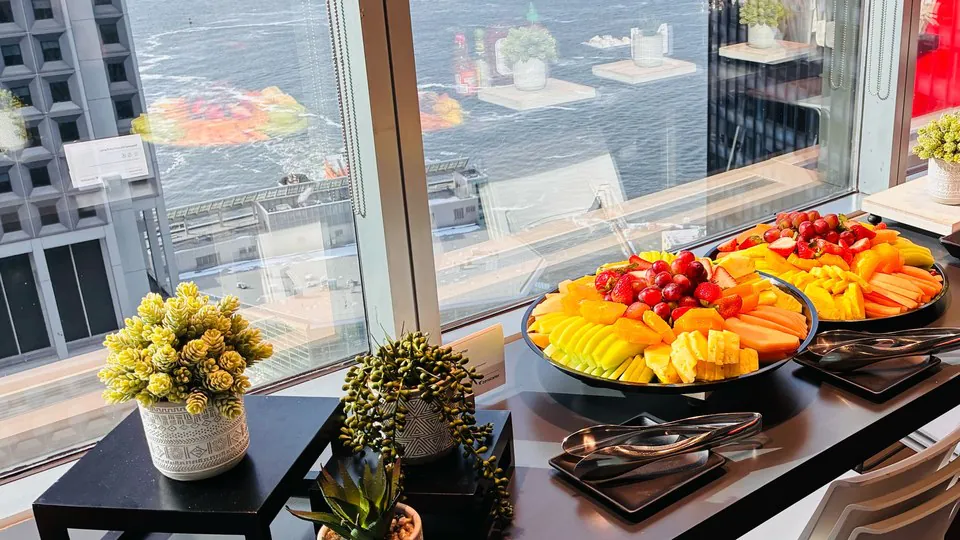
The catalog puts its dietary labels in the product name. Vegan items carry a V, vegetarian items a VG, and paleo-friendly items a PF, so a crudites platter reads as vegan and a mezze platter as vegetarian before you open anything. For filtering a menu this is better than most brands manage.
The terms then draw a hard line under what those labels are for. Whole Foods states that all of its dishes are prepared in kitchens that process allergens including milk, eggs, fish, shellfish, nuts and gluten. It then says this, twice on the same page: the brand is “not able to accommodate guests with food allergies or modify dishes to meet special dietary needs”. The sentence that follows sends the buyer to the grocery aisles for packaged products instead.
Read that as a specification. A caterer takes a dietary requirement as an input and changes the order around it. This menu takes the same requirement as a filter you apply yourself, before you buy. The labels are how you filter, and no step after the cart adjusts anything.
For a team with a nut allergy or a coeliac diagnosis in it, that is the whole answer, and it points somewhere else. Our guides to gluten-free office catering and allergy-safe boxed lunches cover the kinds of orders that do carry that handling, and ordering for mixed dietary needs covers running one order across several requirements.
For a team with vegetarians and vegans in it, the labels work. Buy the meat-free share as its own line: a vegan crudites or fruit platter and a vegetarian mezze or salad, chosen outright rather than hoped for inside a mixed platter. Our vegetarian and vegan office catering guides cover how much of the table that share needs to be.
The order ends at a counter, and somebody has to be there
The catering flow schedules a pickup, which books a person, a car and an hour of somebody’s afternoon. The checkout mentions none of that.
The terms are specific. Cancellations run against the scheduled pickup time. The store holds the order until it closes if you are late. An order nobody collects is charged in full. So the order needs a named person, a car or a cab, and a calendar slot wide enough for the drive both ways plus the wait at the counter.
Then the food reaches the office and nobody comes with it. Somebody unwraps the platters, finds surfaces, sets out serving utensils and clears up afterwards. Those minutes belong to a person who was going to be doing something else, and none of them appear anywhere in the order.
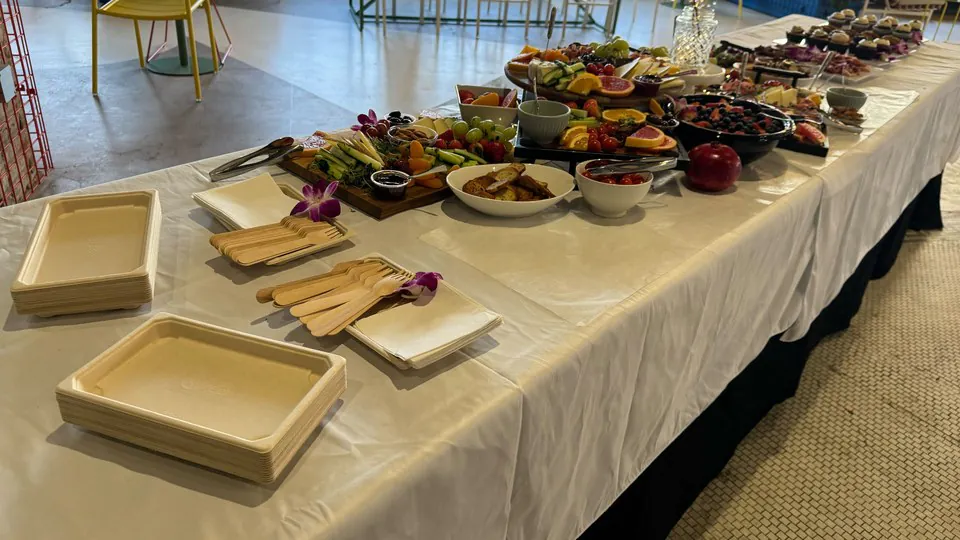
The food is also cold when you collect it. The terms say every item is refrigerated and point buyers at instructions in the confirmation email, so anything hot needs oven access and time on top of everything above. Portillo’s catering guide works through what changes when a brand ships food that still needs finishing, and real estate catering covers how long food can sit once it is out.
The terms that decide the rest
Five lines in the catering terms shape more of the experience than the menu does.
| Term | What it says | What it means for an office order |
|---|---|---|
| Minimum notice | Orders must be placed at least forty-eight hours ahead of the pickup date and time | Not an option for a meeting called on Monday for Tuesday |
| Changes | Orders set for pickup in under forty-eight hours cannot be modified, and items cannot be removed | The change deadline sits on the same mark as the minimum notice, so the editable window is thin |
| Cancellation | Cancel more than forty-eight hours out, or be charged in full | A meeting that moves late is a meeting you have paid for |
| Payment | A card is required and the charge is processed by the platform, with weighed items settling at pickup | The figure at checkout is an estimate until the weighing is done |
| Availability | Catering items vary by location and are subject to supply | Confirm the exact items with your store before you build a plan on them |
Read the first two rows together. The earliest you can place an order and the latest you can change it are the same moment, so an order is final from the instant it can exist. Denny’s catering guide covers what happens at a brand that sets those two deadlines apart from each other, and Pita Chip covers the orders where the payment method decides the timeline. If your headcount is still moving inside two days, our guide to last-minute office catering covers what else is open to you.
Plan party platter catering with CaterAi
Building lunch for twenty-five out of a menu built for eight
Twenty-five is a normal size for an all-hands, a training session or a launch. The menu has no unit that size, so the order gets assembled out of smaller ones. Working it in counts rather than guesses:
- The main food. Two large sandwich or wrap platters reach thirty-two servings, which covers twenty-five with room for seconds for some of the room. One large platter plus a large salad reaches thirty-two on paper and feeds twenty-five thinly, because half of it is leaves.
- The meat-free share. Count the people, not the pieces inside a mixed platter. Add a vegan crudites or fruit platter and a vegetarian salad or mezze as separate items, sized in their own eights and sixteens.
- Sides. These come in eights, so three units of one side reach twenty-four and four reach thirty-two. Two different sides at two units each is the better shape, because variety does more for a room than depth.
- Something sweet. The cookie and brownie platters count in fifteens and thirties rather than in servings, which makes them the easiest item on the whole menu to size. A sheet cake reaches the whole room in one piece and is the only item that does.
Count the units in that list. One lunch for twenty-five is eight to ten separate products, each with its own serving count, assembled by whoever is doing the ordering. That is the real work of a Whole Foods catering order, and all of it happens before anyone eats.
Where a Whole Foods order is the right call
Good fit
- A one-off spread where somebody has already volunteered to run it
- Boards, platters and cold food, which is what the catalog does best
- A team of eight to sixteen, where the menu’s own sizes line up
- Birthdays and celebrations, which the catalog is built for
- Breakfast, where cold food is the point and the twelves fit a small room
- An office within a short drive of a store, with someone free to make it
Where it stops working
Poor fit
- Anyone in the room with a real allergy, which the terms rule out directly
- A headcount that is still moving inside two days of the meeting
- Hot food with no kitchen, oven access or time at the other end
- A recurring program, where every repeat costs somebody the same afternoon
- Rooms well past sixteen, where the platter count climbs faster than the room
- Any order where nobody can be spared to collect and set it out
Whole Foods against the other ways to feed an office
| Whole Foods catering | Restaurant catering | A catering partner | |
|---|---|---|---|
| How you order | Retail cart, no conversation | Menu or platform order | Brief, then a plan |
| Who sizes it | You | Partly the packages | The partner |
| Dietary needs | Labels only, no modification | Varies by restaurant | Handled as a requirement |
| Getting it there | You collect it | Usually delivered | Delivered and often set up |
| Notice needed | Two days, then locked | Often same day | Set with the partner |
| Best for | One-off cold spreads | A specific craving | Anything repeating |
No column there is wrong. The table maps which job you are taking on. For a birthday board for twelve, with a colleague already offering to fetch it, the first column is the sensible one. Our roundups of office lunch ideas and budget-friendly office lunches sit either side of that call.
A better option for regular office catering
Zerocater works the other end of the same problem. A Zerocater order starts from the room rather than from a catalog: how many people, what they eat, when it has to be on the table, and what the space can handle.
CaterAi builds the menu side from more than a thousand restaurant partners, working from the constraints you give it rather than from a fixed platter list. It plans event catering and does not issue quotes, so it is a starting point rather than a checkout. For an ongoing program, corporate catering covers the recurring side, and corporate event catering covers the one-off with a date on it.
The variety sits in the partner list rather than in one store’s menu. Teams that want boards and mezze can order from Mediterranean caterers like Capo Mediterranean Kitchen in Belmont. Antipasti and pasta spreads come from Italian caterers. Platters and grazing boards are the whole business of vendors like The Artisans Platter in Long Island City. Salad-forward orders go to Zo’s Salads & Bowls in Berkeley, sandwich spreads to BonBon Sandwiches in Chicago, and the pastry end to French caterers and bakeries like Ladyfingers Bakery in Oakland.
The teams this suits are the ones already doing the arithmetic by hand. Coworking space catering, onboarding lunches and client appreciation events all cover rooms where somebody had been assembling the order out of parts.
Plan party platter catering with CaterAi
The short version
Whole Foods runs a clear, well-labelled catering catalog with real food in it, and it is honest about what it does. It sells platters with serving counts on them, from a store, for collection. Read the counts as counts, check the meat-free share before you buy rather than after, and give the collection and the setup to a named person with time for both. Do that and it works. Once the order repeats every month, or the room grows past what sixteen servings can reach, or one person in it cannot eat gluten, the jobs it hands back stop being small.
Frequently Asked Questions
Does Whole Foods deliver catering to an office?
The catering order is built around a store pickup. You choose a pickup date and time, and the brand’s own catering terms describe the whole order against that pickup: cancellations run to the scheduled pickup time, the store holds the order until it closes, and an order nobody collects is still charged. Plan for somebody on your side to drive. If the food has to arrive at the office instead, that is a different kind of order, and our how it works page covers what a delivered one includes.
How far in advance do you have to order Whole Foods catering?
Two days. The terms set a minimum of forty-eight hours ahead of the pickup date and time. The same forty-eight hours is also the deadline for changing the order, so the window where an order exists and can still be edited is very short. Order once the headcount is settled rather than once the date is. Denny’s catering guide covers what happens when a brand sets those two deadlines apart from each other.
Can you change or cancel a Whole Foods catering order?
Up to the forty-eight hour mark, yes. After it, no. The terms state that orders can be canceled up to forty-eight hours before the scheduled pickup, that orders set for pickup in less than forty-eight hours cannot be modified, and that an order canceled inside that window is charged in full. Removing a single item runs on the same clock as canceling the whole thing.
Is Whole Foods catering food hot or cold?
Cold. The terms say every item in the order is refrigerated and will be cold at pickup, and they point buyers at the instructions in the confirmation email. Build the plan around that: someone needs oven access, time and pans before the meeting starts. Portillo’s catering guide works through what changes when a brand ships food that still needs finishing.
Does Whole Foods catering handle food allergies?
It says that it does not. The catering terms state that all dishes are prepared in kitchens that process allergens including milk, eggs, fish, shellfish, nuts and gluten, and then state twice that the brand is “not able to accommodate guests with food allergies or modify dishes to meet special dietary needs”, pointing buyers to the grocery aisles instead. Treat that as the answer rather than an opening position. Our guides to allergy-safe boxed lunches and ordering for mixed dietary needs cover the orders that do carry that handling.
How much Whole Foods catering do you need for twenty-five people?
More units than the number suggests, because the menu does not sell a unit that size. Savory items top out at sixteen servings and most of the catalog is written for eight, so a room of twenty-five gets built out of twos and threes: two large sandwich platters, two large salads, and sides bought in eights until the count clears. Sheet cakes are the only items that go past sixteen.
Which Whole Foods catering items work best for an office lunch?
The ones that need no oven and survive being set out. Sandwich and wrap platters, the large salads, crudites, cheese and antipasti boards, fruit, and the breakfast pastry and bagel platters. Entrees are the harder call, because they arrive cold and need real kitchen access before anyone eats. Our office lunch ideas post sorts formats by the kind of day the team is having.
Is Whole Foods a good option for regular office catering?
It suits the one-off and struggles with the routine. A single spread for a birthday, a launch or a team offsite is what the catalog is built for. A recurring program is where the handed-back jobs start to bite, because somebody repeats the drive, the setup and the headcount arithmetic every single time. That is the case for a catering partner rather than a retail order, and CaterAi builds the menu side from the constraints you give it, including the headcount the food actually has to reach.