Pita Chip runs a Middle Eastern counter in Philadelphia and in Yardley, and its catering request page opens with a question about money. Before it asks what you want to eat, it asks whether you are tax exempt and whether you need a special form of payment, and it offers purchase orders as the example. Most caterers bury that in a reply three emails later. This one puts it first, and the reason sits in who orders from them.
Plan Pita Chip catering with CaterAi
A Damascus Kitchen, an Encyclopedia, and a Category Omar Alsaadi Named
Omar Alsaadi co-founded Pita Chip and cooks from a childhood in Damascus. He tells the story on the company’s own site: his mother learned Italian, French and Greek cooking from encyclopedias, and dinner at home moved between them. He started helping in the kitchen in seventh grade. After a career spent mostly in Philadelphia, he describes his cooking as Middle Eastern street food shaped by an immigrant’s exposure to a multicultural city, and he gave the result a name of his own: Modern Middle Eastern.
That label does real work on a catering menu. It sets the expectation that the shawarma, the falafel and the kebabs will taste like Damascus, and that the sumac onions and the tomato salsa sitting next to them will not apologise for each other.
The Question Pita Chip Asks Before It Asks About Food
Open the order-catering page and the first line under the form reads: “Tax exempt? Need a special form of payment? (e.g. purchase orders)”. The second line gives the ordering cutoff. Food comes after both.
Order enough office catering and you learn that the kitchen is rarely what holds up a lunch. A caterer can cook for forty people on a day’s notice. Your employer may not let you put four hundred dollars of it on a personal card, your university may need a purchase order raised against a cost centre, and your nonprofit may need the sales tax taken off before finance will approve anything. None of that is a catering problem, and all of it stops the catering order.
A caterer who asks up front has decided to absorb that work. You still have to produce the paperwork, but you find out on day one instead of on the morning of the meeting.
Who Actually Cannot Pay With a Card
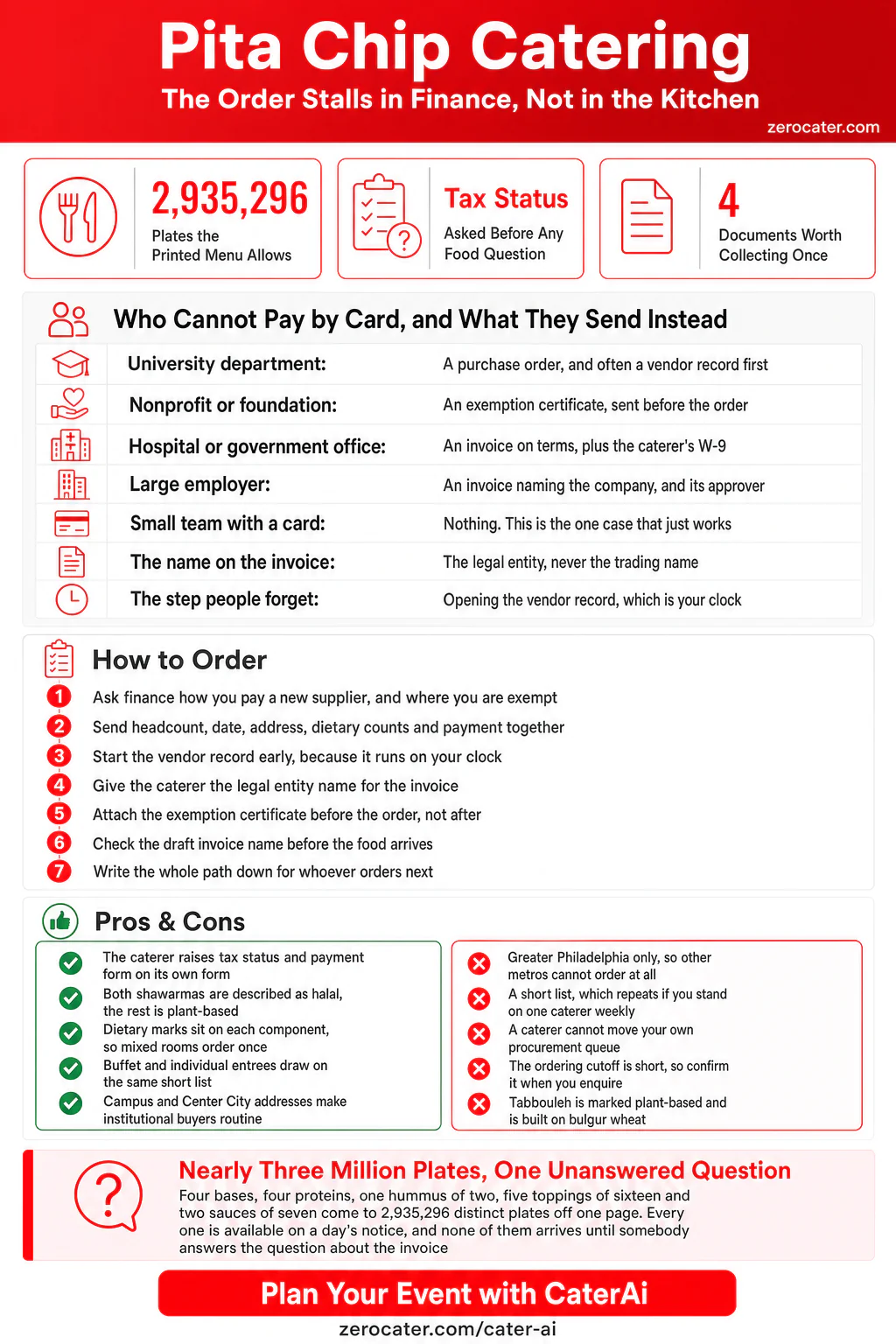
Four kinds of buyer hit this wall, and each needs a different piece of paper. Collect yours once and every order after the first gets faster.
| Buyer | What blocks the card | What the caterer needs from you |
|---|---|---|
| University department | Spending runs through procurement against a cost centre | A purchase order number, and often a vendor record set up first |
| Nonprofit or foundation | Sales tax has to come off before approval | An exemption certificate made out to the legal entity on the invoice |
| Hospital, clinic or government office | Payment terms are fixed by policy, not by the buyer | An invoice on terms, plus a W-9 from the caterer for your files |
| Large employer | Per-transaction limits decline a catering charge at checkout | An invoice addressed to the company, and the name of whoever approves it |
Two details cause most of the rework. The invoice has to name your legal entity rather than your trading name or your own name, because finance matches it against a vendor record. And the exemption certificate has to arrive before the order, not after, because reversing tax that has already been charged takes longer than raising the order did.
Your finance team decides what your organisation qualifies for. Ask them first, then send the caterer the answer.
Where the Stores Sit Explains the Form
Pita Chip’s addresses read like a list of institutional buyers. One store serves Temple, another sits in University City among the Market Street campuses, and a third occupies the concourse of an office tower on John F. Kennedy Boulevard in Center City. The fourth is a suburban shopping centre in Yardley, in Bucks County.
A counter that feeds universities and an office tower gets asked about purchase orders and exemption certificates every week. Putting the question on the form is what a kitchen does after answering it by email a few hundred times. For you, that history is the useful part: the person reading your enquiry has seen your paperwork before.
Settle the Payment Path, Then Pick the Food
Four answers turn a catering order into a routine. Get them once.
- The legal entity. The exact name the invoice must carry, which is often not the name on your door.
- The instrument. A card, a purchase order, or an invoice on terms. If it is a PO, find out who raises one and how long they take.
- The certificate. If your organisation is exempt, know where the current certificate lives and who can send it.
- The approver. The person whose sign-off releases payment, and the ceiling above which a second person has to sign too.
Write those four in the same document as your headcount and your dietary counts. The next person to order lunch will thank you for it. Our office manager’s guide to ordering catering covers the rest of the workflow, and the corporate event catering checklist is the version to use when the meal sits inside a larger event.
A rush order is a different problem. When the meeting starts in three hours, the payment question turns from paperwork into a hard stop, because nobody raises a purchase order in an hour. Our guide to last-minute office catering covers what still ships on short notice and how to pick a caterer in the minutes you have.
What a First Order Looks Like End to End
The first order to any caterer costs more time than the tenth. Most of that cost sits outside the kitchen, and you can front-load nearly all of it.
- Ask your finance team two questions. How do we pay a new supplier, and are we exempt anywhere. Do this before you shortlist a caterer, because the answers rule some options out.
- Send the enquiry with the money in it. Headcount, date, delivery address, dietary counts, and the payment instrument, together. A caterer who reads all five at once can quote you once.
- Get the vendor record open early. If your employer needs one, that step runs on your organisation’s clock rather than the caterer’s, and it is the step people forget. A W-9 from the caterer usually starts it.
- Check the name on the draft invoice. Before the food arrives, not after. A wrong entity name sends the invoice back to the start of the queue and the caterer waits for money they have already spent.
- Write the whole path down. Entity, instrument, certificate location, approver, and the caterer’s contact. Store it with your headcount notes so the next person inherits it.
Offices that do this once stop treating catering as an event and start treating it as a supply. That shift is what makes a weekly team lunch survivable for whoever owns it.
Three Things Pita Chip Does Not Solve
Worth saying before you commit a room to it.
- Geography. This is a greater Philadelphia operator. A team in another metro cannot order from it, whatever the paperwork says.
- Variety over a long run. The list is short by design. A team that eats from one caterer every week will see the same plates come round, so rotate this kitchen with others rather than standing on it.
- Your own approval chain. A caterer can ask the right question and still not move your procurement queue. The paperwork gets easier here; it does not disappear.
The Food Decision Is the Short One
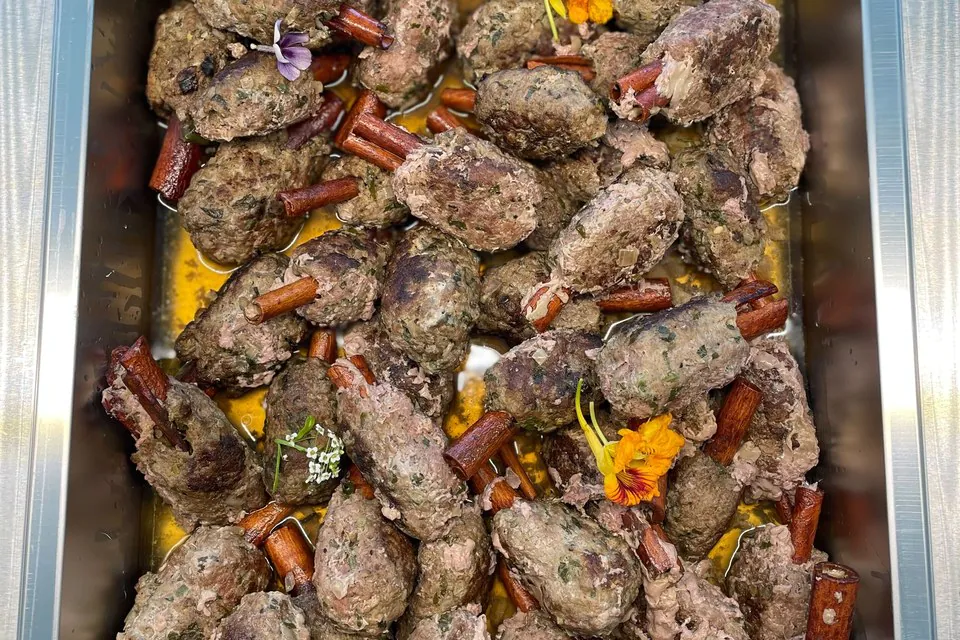
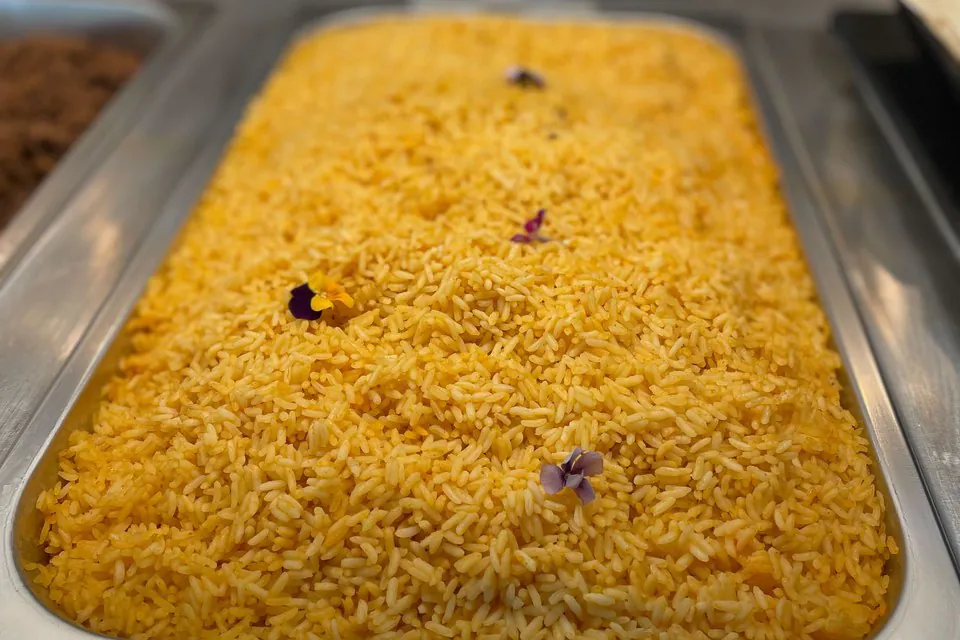
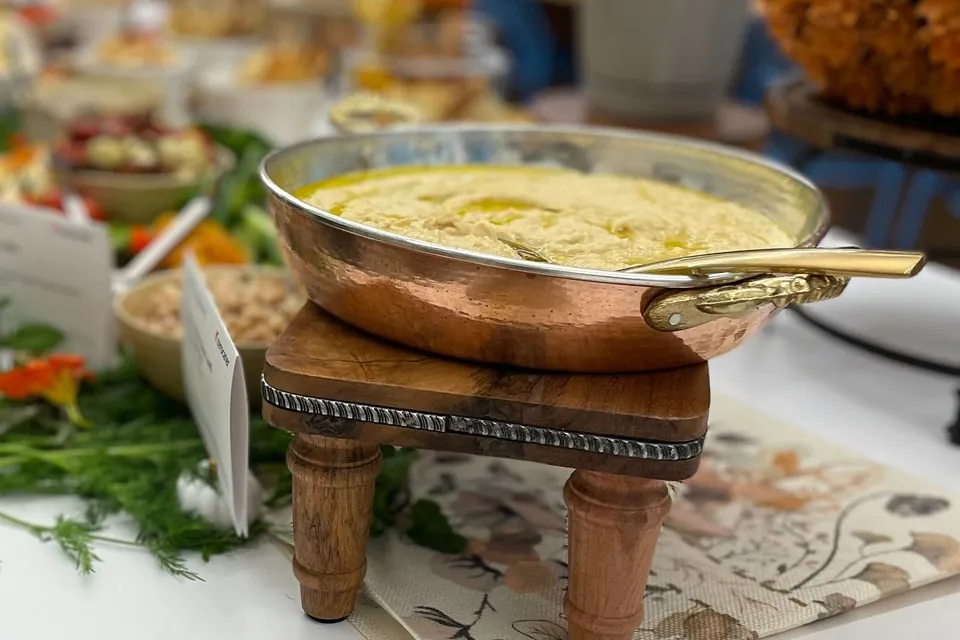
Pita Chip’s printed menu asks for four picks: a base, a protein, a hummus and a set of toppings and sauces. The bases are a wrap, a salad bowl, a rice bowl, or half rice and half salad. The proteins are chicken shawarma, beef and lamb shawarma, falafel, and roasted vegetables. Both shawarmas are described as halal and the other two are plant-based, so a room with mixed requirements orders from one list.
The menu prints its own arithmetic. Two hummus varieties, five toppings chosen from sixteen, two sauces chosen from seven, across four bases and four proteins, come to 2,935,296 distinct plates. Every one of those is available on a day’s notice. None of them arrives until somebody answers the question about the invoice.
The marks on that menu sit on the components rather than on the finished dish, which matters when you order for a mixed room. The bases and both hummus varieties carry vegan and gluten-free marks. The kitchen lists a vegan tahini next to the original, which is made with yogurt. Tabbouleh is marked vegan and is built on bulgur wheat. Send your counts with the order and let the caterer confirm the current list.
Two neighbours cover the wider ground here, so this post will not repeat them. Our guide to halal office catering covers sourcing, preparation and the questions worth asking any caterer, and it explains why Mediterranean and Middle Eastern menus tend to cover several requirements at once. Our Rasa spotlight works through what this shape of menu does for a colleague who says they do not eat the cuisine. For the dietary detail, see our vegan, gluten-free and mixed dietary needs guides.
Plan Pita Chip catering with CaterAi
Buffet or Individual Entrees
Pita Chip offers both, and the choice is a logistics question rather than a menu question. A buffet suits a room with a table to spare, a service window long enough for people to queue, and a group that wants to pick at the counter. Individual entrees suit a meeting that runs through lunch, a room with no free surface, or a team spread across floors.
On Zerocater the listing runs as individual boxed Mediterranean and Middle Eastern, with each base and protein pairing appearing as its own named dish. That is the pre-composed version of the same food, which is the shape most offices want when the meal has to travel to a desk. Our boxed lunch versus buffet comparison walks the full decision, and the party tray guide covers sizing when the food is a spread rather than a meal.
Who Pita Chip Suits
- Campus departments and university teams that order against a cost centre and need a purchase order on the invoice.
- Nonprofits that have to get the sales tax off before finance approves the spend.
- Center City offices looking for a hot lunch that holds, travels and does not need a second vendor for the vegetarians.
- Mixed rooms where halal, vegan and gluten-free requirements all sit at the same table.
- Bucks County offices along the Route 1 corridor, which the Yardley kitchen reaches.
It suits you less well if your team sits outside greater Philadelphia, or if you want a menu that changes every week. The strength here is a short list the kitchen knows cold.
How to Order Pita Chip Catering
Two routes, and they suit different situations.
Direct. Use the catering request form on Pita Chip’s own site. Send your headcount, your date, your delivery address and your dietary counts, and answer the payment question in the same message rather than waiting to be asked. If you need a purchase order, say so in the first email and give the caterer the entity name for the invoice. Pita Chip’s catering page asks for next-day orders by 6 p.m. the evening before; confirm the current cutoff with the caterer when you enquire, because a restaurant can change its ordering policy without changing its menu.
Through Zerocater. Pita Chip appears on the Zerocater vendor page for Pita Chip in Yardley, which carries the current menu and takes an order alongside the rest of the network. This is the route that helps most when the payment path is the obstacle, because the billing relationship sits with one company rather than with every restaurant your team orders from. One invoice, one vendor record, one set of terms, and the caterer changes underneath it.
Pita Chip and Zerocater
Philadelphia offices ordering Middle Eastern and Mediterranean food can browse Mediterranean catering in Philadelphia or the wider Mediterranean catering directory. Other Philadelphia kitchens on the network include Mediterranean Fusion, Fuel Healthy Kitchen, Just Salad, so a team that rotates cuisines week to week can do it without opening a new account each time.
CaterAi builds a menu from your headcount, your budget and your dietary counts, and you edit it by chat until it fits the room. If you are setting up a recurring programme rather than a one-off lunch, corporate catering is the route that centralises the billing, and how it works walks the whole process. For teams building the wider picture, our Philadelphia office catering cost guide and our roundup of the best corporate event catering in Philadelphia are the places to start.
Menus, availability, ordering cutoffs and payment options change. Check the Zerocater vendor page for Pita Chip or contact the caterer for the current menu and a live quote. Nothing here is tax or legal advice; your own finance team decides what your organisation qualifies for.
Plan Pita Chip catering with CaterAi
Frequently Asked Questions
Can I pay for Pita Chip catering with a purchase order?
Ask, because the caterer raises it first. Pita Chip’s own catering request page asks whether you are tax exempt or need a special form of payment, and it names purchase orders as the example. Treat that as an invitation to send your PO number, your billing entity and your accounts payable contact with the order rather than after it. Confirm the current process with the caterer when you enquire, because a restaurant can change how it bills without changing what it cooks.
What does a tax-exempt organisation need to send a caterer?
Your exemption certificate, in advance, made out to the legal entity that will appear on the invoice. Sending it after the order goes through seldom works, because the tax has already been charged and someone has to reverse it. Collect the certificate once, store it where the person placing the order can reach it, and attach it to the first email. Your finance team decides what your organisation qualifies for, so ask them rather than the caterer.
How far ahead should a Philadelphia office order Pita Chip catering?
Pita Chip’s catering request page asks for next-day orders by 6 p.m. the evening before, so the kitchen clock is short. Your own approval clock is the longer one. If your employer needs a purchase order or a new vendor record, start that days ahead of the food. Confirm the current cutoff with the caterer when you enquire.
Is Pita Chip halal?
The chicken shawarma and the beef and lamb shawarma on the printed catering menu are both described as halal, and the falafel and roasted vegetables are plant-based. Ask the caterer directly about sourcing and preparation for your own requirements, and read our guide to halal office catering for the questions worth asking any caterer.
Does Pita Chip cater outside Philadelphia?
Pita Chip runs in Philadelphia and in Yardley, in Bucks County, so the reach covers Center City, University City and the Route 1 corridor north east of the city. Ask about your address when you enquire. If your office sits outside that footprint, CaterAi can match you with Mediterranean and Middle Eastern caterers nearer to you.
What are the vegan and gluten-free options?
The printed menu marks each component rather than each finished dish, so the answer depends on what goes on the plate. The three bases and both hummus varieties carry vegan and gluten-free marks. Among the sauces, the kitchen lists a vegan tahini alongside the original, which is made with yogurt. Send your dietary counts with the order and ask the caterer to confirm, and see our vegan and gluten-free guides for the wider question.
Should I order a buffet or individual boxes from Pita Chip?
Pick on logistics. A buffet suits a room with a table, a service window and people who want to choose at the counter. Individual entrees suit a meeting that runs through lunch, a room with no surface to spare, or a group spread over more than one floor. Our boxed lunch versus buffet comparison walks the decision in full.
Who signs off on a catering order at most companies?
Someone who is not you, usually. At a small company the person with the card is often the person ordering. Past a certain size the order needs a cost centre, a budget holder and sometimes a vendor record before anyone can pay. Find out which of those apply once, write the answer down, and every order after the first takes minutes.