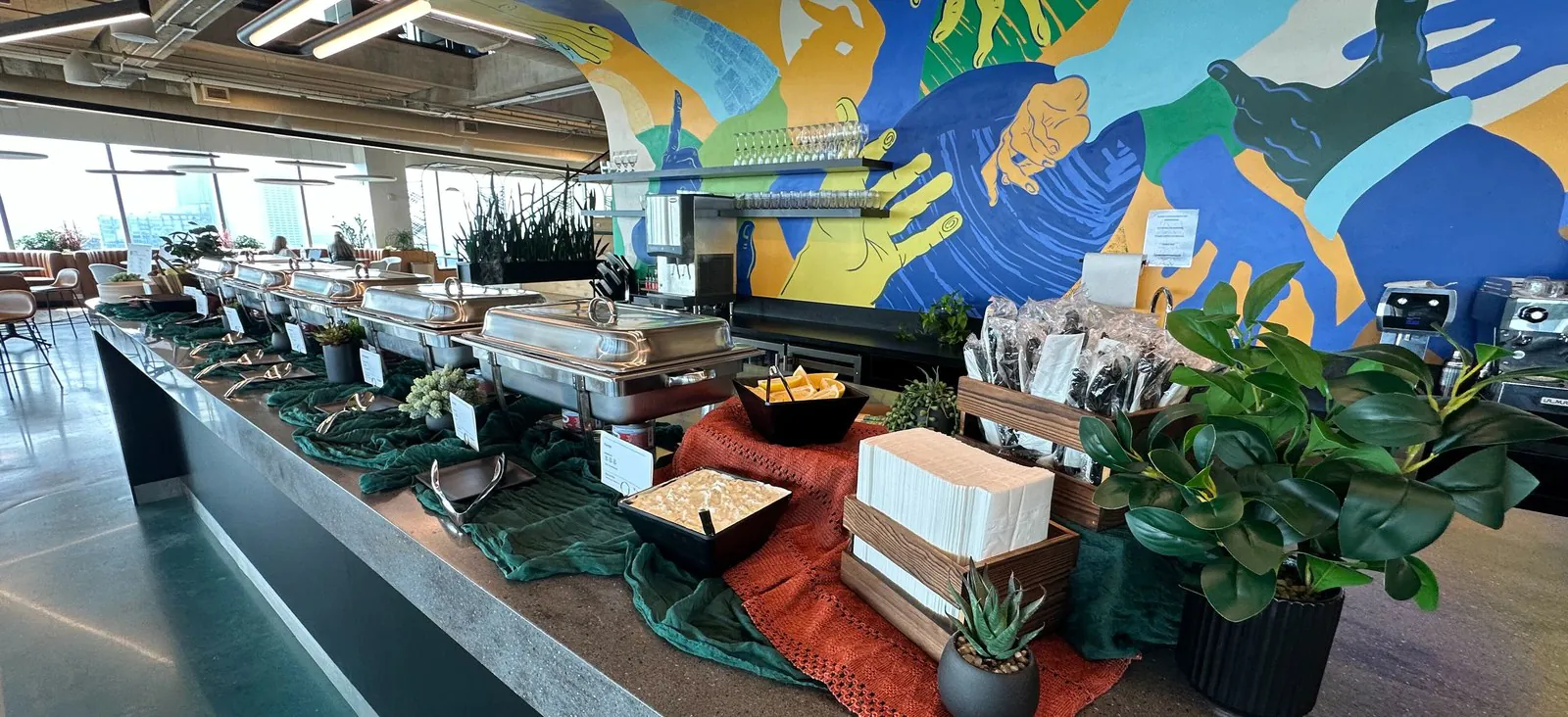
A caterer wheels six chafing dishes into your office at half past eleven, sets them on the counter by the window, lights the burners and leaves. Nobody in the building signed anything. Nobody checked a licence. For the rest of the morning, that counter is doing the job a restaurant’s serving line does, in a room that was a meeting space at breakfast.
There is a document that decides who was allowed to do that, and it is not a document about food. It sorts on the place, on who let go of the food, and on how many days the setup lasts. The menu never comes up.
In this guide
- The definition that decides it, and the words it never uses
- A two-part test joined by “and”
- Eight examples, one condition, and where the condition lands
- Why a free lunch is on the same side of the line as a sold one
- Seven exclusions, sorted by what they key on
- The one exclusion written about your end of the order
- The calendar that turns a backyard into an establishment
- Why the edition you just read is probably not your law
This guide reads a published model code and stops at what it says. It is not legal advice, it cannot see your jurisdiction, and every decision it describes belongs to your regulator or your counsel. Our corporate catering and how it works pages cover how Zerocater runs the order itself.
The definition never mentions an office
The FDA Food Code is the model that state, county and city agencies use to write their own retail food rules. Buried in its first chapter is a definition of “food establishment”. That definition is the hinge. An operation that fits it needs a permit. An operation that does not, does not.
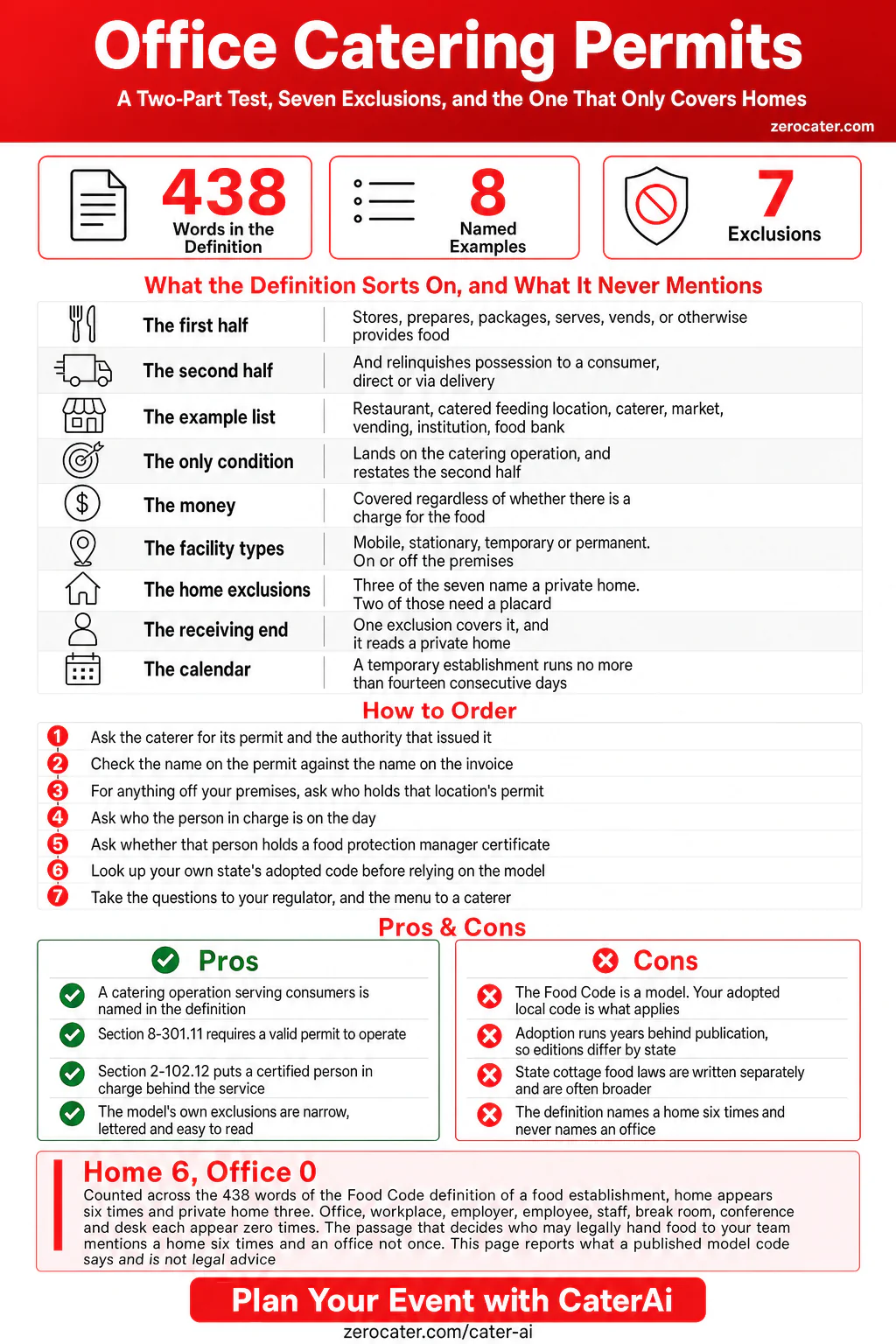
The passage runs 438 words. Read it looking for your workplace and you will not find it. “Office” appears zero times. So do “workplace”, “employer”, “employee”, “staff”, “break room”, “conference” and “desk”. “Home” appears six times, three of those as “private home”.
Hold that count, because it makes the point better than an argument would. The passage that decides who may legally hand food to your team mentions a home six times and an office not once.

A two-part test, joined by “and”
Part (1) of the definition has two halves and a conjunction between them. Both halves have to be true.
The first half is about handling. An operation that stores, prepares, packages, serves, vends food directly to the consumer, or otherwise provides food for human consumption. Six verbs, and they cover almost everything a kitchen does.
The second half is about letting go. The operation also has to relinquish possession of food to a consumer, either directly or indirectly through a delivery service. The Code names home delivery of grocery orders, restaurant takeout and common carriers as the indirect routes.
That second half is the one people skip, and it is doing real work. A central kitchen that cooks all day and ships only to other businesses fails it. The definition of a food processing plant catches that operation instead, and the exclusion list sends it there by name. The moment an operation hands food to the person who eats it, the test flips.
Eight examples, and only one of them carries a condition
After the two-part test, the definition lists what it has in mind. Restaurant. Satellite or catered feeding location. Catering operation. Market. Vending location. Conveyance used to transport people. Institution. Food bank.
Eight entries. Seven of them are stated flat, with no qualifier at all. One carries an “if”, and it is the third: a catering operation counts “if the operation provides food directly to a consumer or to a conveyance used to transport people”. The only conditional example in the list is the caterer, and the condition is the second half of the two-part test, restated for the one operator whose customers are sometimes other businesses.
Entry two deserves a second look as well. A “satellite or catered feeding location” is on the list of things that can be a food establishment. That is a description of a room where catered food is set out and served, which is a description of your counter by the window at half past eleven. The Code puts that room in the same list as a restaurant, and then spends the exclusion list deciding which such rooms it lets go.
The money is not one of the things it sorts on
Offices ask this next, and the answer is short. Part (2)(b) of the definition covers an operation conducted in a mobile, stationary, temporary or permanent facility or location, where consumption is on or off the premises, and “regardless of whether there is a charge for the food”.
Four facility types, both sides of the premises line, and the money struck out in one clause. The example list already proved it by naming a food bank, an operation whose entire model is handing food over for nothing.
So “we did not charge anyone” is not an exit, and neither is “it was a gift from the vendor”. The definition sorts on handling and on handing over. Payment was never on the list.
Plan a working lunch with CaterAi
Seven exclusions, sorted by what they key on
Part (3) lists what a food establishment is not. Seven entries, lettered (a) through (g). Sort them by what each one keys on and the shape of the definition appears.
Two key on the food. Exclusion (a) covers an establishment offering only prepackaged foods that are not time/temperature control for safety food. Exclusion (b) covers a produce stand offering only whole, uncut fresh fruits and vegetables. Both are about what is in the box.
One keys on the customer. Exclusion (c) sends food processing plants elsewhere, including plants sitting on the premises of a food establishment. The sorting question there is who receives the output, not what it is.
Four key on the place. Exclusions (d), (e), (f) and (g) are all about an address. Exclusions (d), (f) and (g) name a private home outright. The remaining one, (e), exists only to cover the table where the food from (d) gets sold, so it inherits its address from a home as well.
A mandatory written disclosure rides on exclusions (d) and (f), and both of those are private-home kitchens. Exclusion (d) requires a clearly visible placard at the point of sale saying the food was prepared in a kitchen not subject to regulation and inspection. Exclusion (f) requires the same message in published advertisements, mailed brochures and placards at the registration area. The model’s price for excusing a home kitchen is that the kitchen says so out loud.
The only exclusion about your end of the order says “home”
Every exclusion but the last describes an operation: someone cooking, packing, growing or selling. The last one describes the other end of the transaction, the place the food arrives at. It reads in full:
A private home that receives catered or home-delivered food.
Eleven words. The model code looked at the receiving end of a catering order, decided one kind of address should be excused from the whole chapter, and named a house.
An office is not a private home. The definition has already put “satellite or catered feeding location” in its list of examples on the other side of the line, and section 2-103.11(A) of the same code requires that food establishment operations are not conducted in a private home or in a room used as living or sleeping quarters. So the house is excused when it stays a house, and shut out when it tries to be an establishment. The office sits in neither sentence.
Do not read a conclusion into that gap, and this page does not offer one. The gap tells you where to point your question. The regulator that licenses your building decides how your jurisdiction’s adopted code treats the room you set the trays down in, and jurisdictions differ. Offices that host food regularly, or that run anything resembling a shared feeding operation for more than one company, are the ones for whom the question stops being academic.
The calendar makes the establishment
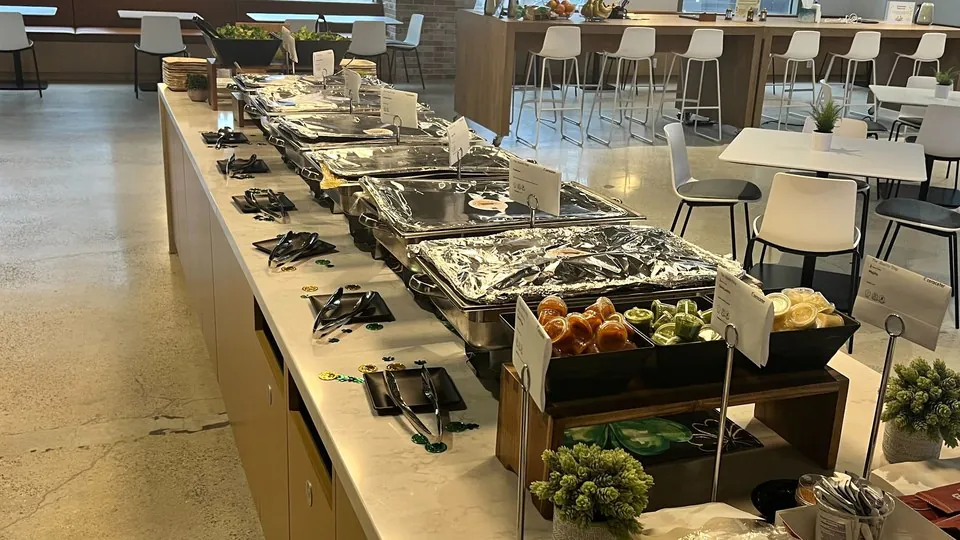
One more definition matters if your event leaves the building. A “temporary food establishment” means a food establishment that operates for a period of no more than 14 consecutive days in conjunction with a single event or celebration.
Read what that keys on. A number of days and an event. Not the menu, not the headcount, not the equipment. An operator who runs a permanent licensed kitchen can still be running a temporary food establishment on a Saturday in a car park, and many jurisdictions issue a separate permit for that setup at that address.
This is the case that catches offices out, because the office did not think of itself as hosting anything. A company picnic, an offsite retreat, a property open house or a launch event in a leased space all put food somewhere the caterer’s usual permit may not reach. The question to ask is not what is on the grill. It is who holds the permit for this location, on this date.
The permit, and the person holding it
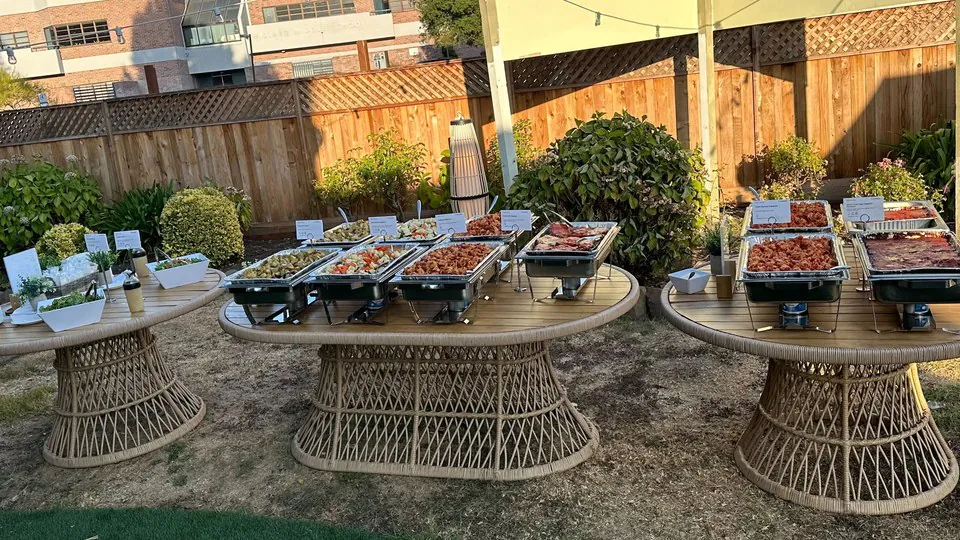
Chapter 8 of the Code is where the model turns into paperwork. Section 8-301.11 states that a person may not operate a food establishment without a valid permit to operate issued by the regulatory authority. Section 8-302.11 has the applicant submit at least 30 calendar days before the planned opening date or the expiry of a current permit.
Section 8-302.13 lists four things an applicant has to do to qualify: be an owner or an officer of the legal ownership, comply with the Code, agree to allow access and provide information, and pay the permit fees with the application. The application itself asks whether the operation is mobile or stationary, temporary or permanent, and how it handles food that needs temperature control.
Certification is a familiar shape in catering already. An office that orders kosher or halal food is used to asking which body certified the kitchen and whether that certificate is current. The permit question has the same grammar, with a public agency in the certifying seat.
Then there is the person standing behind the chafers. Section 2-102.12 states that the person in charge shall be a certified food protection manager who has passed a test that is part of an accredited program, and section 2-102.20 treats a program listed by an accrediting agency recognised by the Conference for Food Protection as meeting it. The section carries exactly one exception, and it belongs to the regulator: certain establishments may be deemed to pose minimal risk “based on the nature of the operation and extent of food preparation”. Look at what that exception is judged on. The operation and the preparation, not the dish.
The edition you just read is probably not your law
Everything above comes from the 2022 Food Code, which is the tenth edition and the most recent complete one. It is a model. It binds nobody until a state, county or city adopts a version of it, and adoption runs years behind publication.
FDA’s own adoption report puts numbers on the gap. Its most recent annual edition counts 11 state agencies across 7 states on the 2022 code, covering 16.06 percent of the population. Widen the question to either of the two newest editions and the count reaches 30 agencies across 24 states, at 51.92 percent. Widen it again to any of the three newest and it reaches 46 agencies across 36 states, at 64.64 percent.
The report tracks 64 state agencies, which is more than one per state, because a jurisdiction’s restaurants and its retail food stores do not always answer to the same agency. That is worth knowing before you call anyone: the office asking the question may need a different phone number than the grocer next door.
So treat every passage quoted on this page as the current model wording and then go find yours. FDA maintains a directory of state retail food codes for that purpose. The same caution applies to the home-kitchen exclusions in particular, because state cottage food laws are written state by state and are often broader than the model’s narrow bake-sale carve-out.
What this changes about booking an office order
The practical payoff is small and specific. You are not going to audit anybody. You are going to ask four questions that are all about the operator and none about the menu.
- Ask for the permit and who issued it. The regulatory authority’s name tells you which adopted code is in play.
- Check the name on the permit against the name on the invoice. Kitchens sublet, brands share addresses, and the entity billing you is not always the entity holding the licence.
- For anything off your premises, ask who holds the permit for that location. This is the 14-day question, and it is the one most likely to have been missed.
- Ask who the person in charge is on the day. The Code puts a named, certified individual behind the service, not a company.
None of this is exotic. A caterer that works with offices answers all four without pausing, and the pause itself is the useful signal. The same instinct applies to the rules that sit around the food in other settings: what a venue’s approved caterer list is really doing, how a regulated job site controls who reaches the crew, what a public agency may spend, how a hospital or a plant floor gates food by department, what a union agreement does to the clock on a production set, and how the deduction rules sort the same tray three ways.
Zerocater works from a vetted partner network, which is the part of this that we carry rather than you. If you would rather start from the food, CaterAi builds a menu from a plain description of the meal, and our catering directory lists partners by city and cuisine.
Plan an offsite event with CaterAi
Frequently Asked Questions
Does a caterer need a permit to deliver food to an office?
In the model code, an operation needs a permit to operate as a food establishment, and a catering operation that provides food directly to a consumer is named in the definition of one. Section 8-301.11 of the FDA Food Code states that a person may not operate a food establishment without a valid permit issued by the regulatory authority. The Food Code is a model, though, not a law in itself. Your state or county adopted some version of it, and that adopted version is what actually applies. Ask the caterer for its current permit and check the name on it against the name on your invoice.
Is my office a food establishment when catering arrives?
The definition does not answer that with a yes or a no, and this page will not either. What the definition does is name a “satellite or catered feeding location” in its own list of examples, and then exclude “a private home that receives catered or home-delivered food” further down. Those two passages sit in the same 438-word definition and describe two different addresses. An office is not a private home. Whether any given room needs its own permit is a question for the regulator that licenses your building, and the answer varies by jurisdiction.
Does it matter that the food is free for employees?
Not to the definition. Part (2)(b) covers an operation conducted in a mobile, stationary, temporary or permanent facility, where consumption is on or off the premises, and “regardless of whether there is a charge for the food”. The example list makes the same point by naming a food bank alongside a restaurant and a market. Free food and sold food sit on the same side of that line. The charge is not one of the things the definition sorts on.
Can an employee bring in food from a home kitchen?
The model code carves out home kitchens in two places, and both carve-outs are narrow and conditional. Exclusion (3)(d) covers a private-home kitchen only where the food is not time/temperature control for safety food, only where it is prepared for a function such as a religious or charitable organisation’s bake sale, only where the law allows it, and only where a clearly visible placard tells people the kitchen is not inspected. Exclusion (3)(f) covers a family day-care or bed-and-breakfast kitchen under its own conditions and its own disclosure. Neither carve-out was written about an office lunch, and state cottage food laws differ from the model. That is worth knowing before you plan an office potluck around home baking. Your regulator and your own policy decide this one.
What is a temporary food establishment?
The Food Code defines it as a food establishment that operates for no more than 14 consecutive days in conjunction with a single event or celebration. The trigger is the calendar and the event, not the menu. A pop-up station at an outdoor company event can land inside that definition even though the same operator runs a permanent kitchen elsewhere, and many jurisdictions issue a separate permit for it. If you are booking something off your own premises, ask the operator who is holding the permit for that location.
Who is the person in charge, and do they need a certificate?
Section 2-102.12 of the model code states that the person in charge shall be a certified food protection manager who has passed a test that is part of an accredited program. Section 2-102.20 treats certification through a program listed by an accrediting agency recognised by the Conference for Food Protection as meeting that bar. The section carries one exception, and it belongs to the regulator: certain establishments may be deemed to pose minimal risk based on the nature of the operation and the extent of food preparation. Note what that exception is judged on. It is the operation, not the food.
Is the FDA Food Code the law?
No. It is a model that state, local, tribal and federal agencies use to write their own rules, and the 2022 edition is the tenth. FDA’s own adoption report counts 11 state agencies in 7 states on that newest edition, representing 16.06 percent of the population; 30 agencies in 24 states on either of the two newest editions, at 51.92 percent; and 46 agencies in 36 states on any of the three newest, at 64.64 percent. So the edition quoted on this page is the current model, and it is very often not the text in force where your office sits. FDA keeps a directory of state codes for exactly that reason.
What should I actually ask a caterer before an office order?
Four questions get you most of the way, and all four are about the operator rather than the menu. Ask for the current permit and the regulatory authority that issued it. Ask whether the name on that permit matches the legal entity that will invoice you. Ask, for anything off your own premises or outdoors, who holds the permit covering that location. Ask who the person in charge will be on the day and whether they hold a food protection manager certificate. A caterer that works with offices answers all four without hesitating.