You order Vietnamese for the office, scan the menu for the one vegetarian on the team, and land on the fried rice. It reads like rice, egg and mushrooms. It is built on fish sauce.
Saigon Sisters prints that on the menu line, along with an offer to leave the fish sauce out if you say so in the order notes. The same goes for the pad thai, the pad see ew and the green curry. Read the parentheses and this becomes one of the easier Chicago kitchens to order from for a room with four diets in it. Skim the dish names and you will get somebody’s lunch wrong.
Plan Saigon Sisters catering with CaterAi
The sauce is the label, not the dish name
Western catering menus sort themselves by protein. You read chicken, beef, vegetarian, and the dietary answer sits in the heading. Vietnamese and Thai menus do not work that way, because the seasoning does the work that a protein label does elsewhere, and fish sauce is the base of most of it.
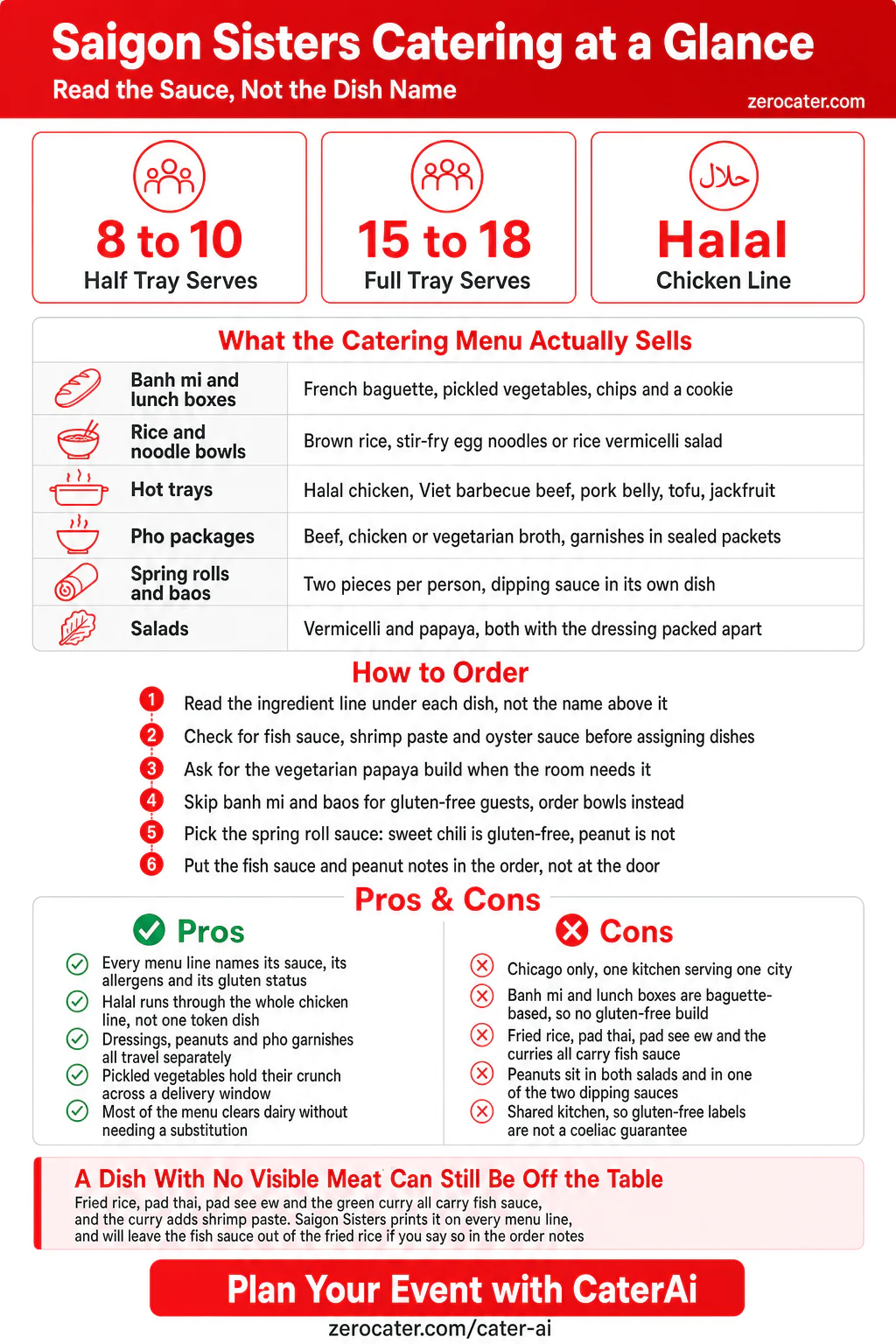
So a dish can carry no visible meat and still be off the table for the vegetarian in the room. The fried rice carries fish sauce. The pad thai is built on tamarind and fish sauce, and the tofu version keeps the same base. Pad see ew and the green and red curries carry it as well, and the curry adds shrimp paste. Holy Thai Basil uses oyster sauce. The vermicelli and papaya salads dress in nuoc cham, which is a fish sauce dressing.
Saigon Sisters writes all of it down. Each menu line names its sauce, its allergens and its gluten status, which is more than most kitchens publish, and it lets you plan a mixed room from the menu alone instead of a phone call. The papaya salad shows the same care from the other direction: it comes in a traditional build with beef jerky, shrimp and pork, and a vegetarian build with no meat and a vegan nuoc cham.
The ordering point: before you assign dishes to people, read the ingredient line under each one rather than the name above it. On this menu the sauce decides who can eat it, and the sauce is always written down.
Everything fragile ships separately
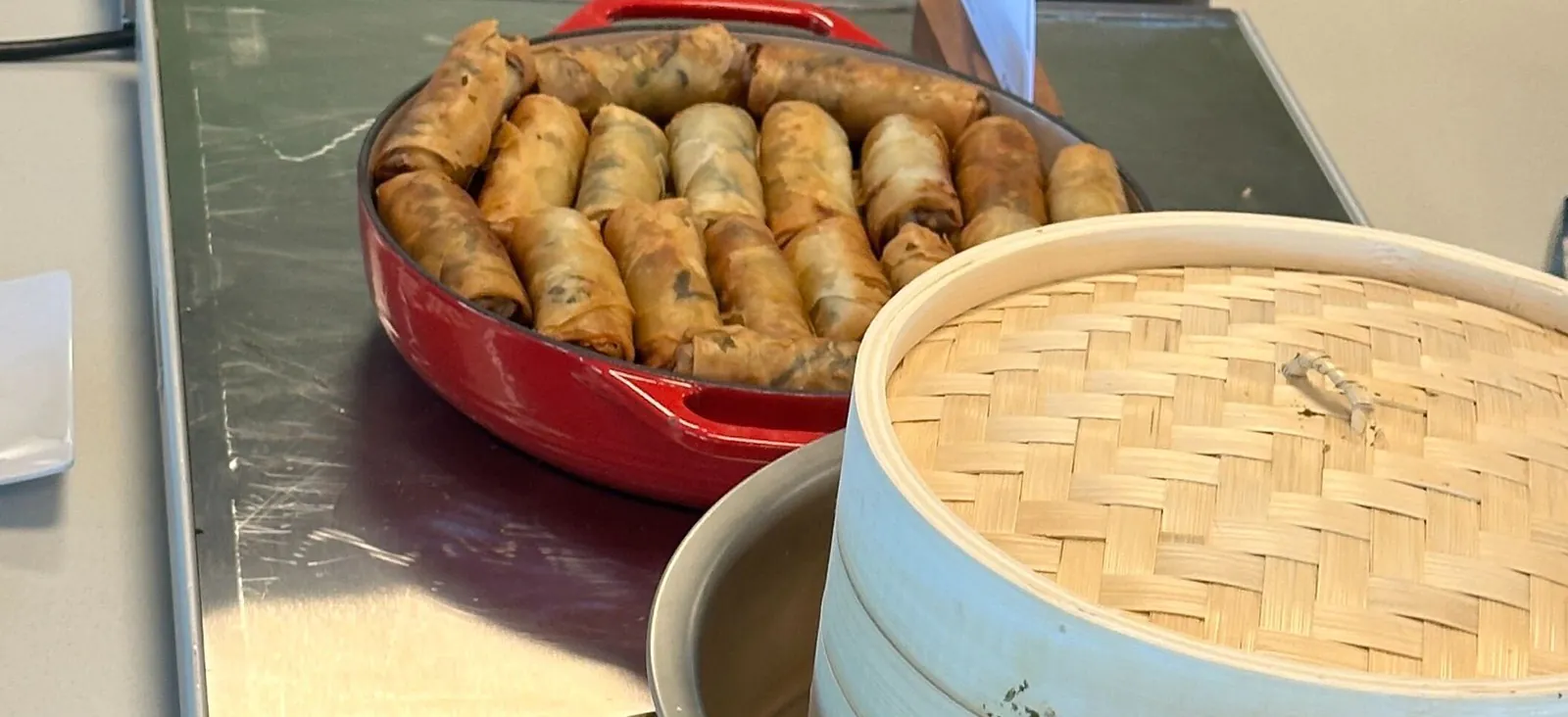
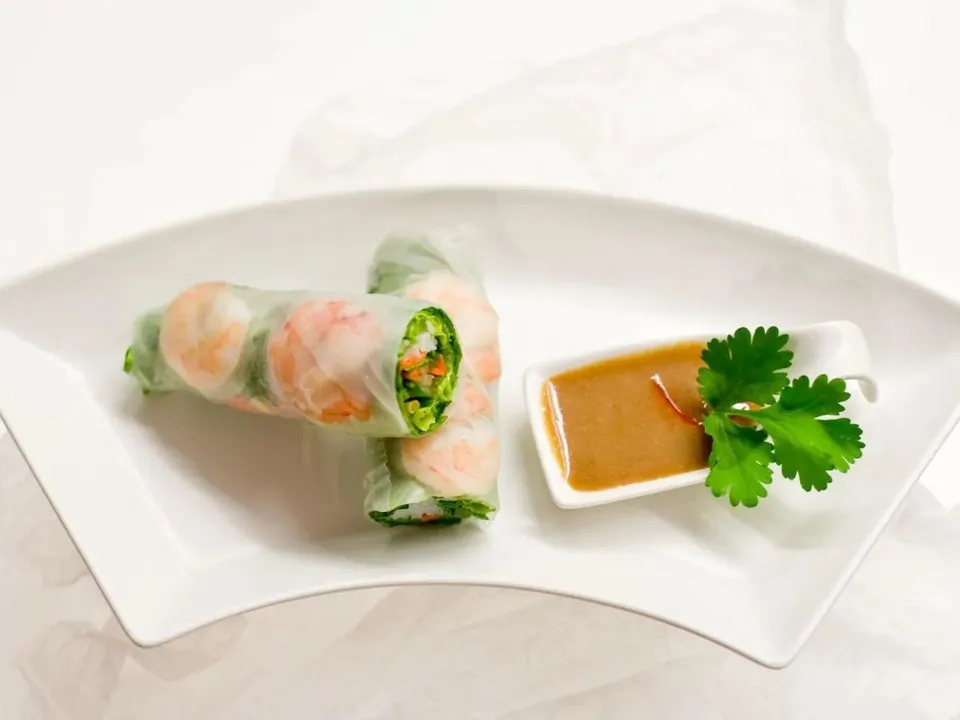
Now look at what the kitchen refuses to mix before an order leaves. Dressings ride in their own container. The vermicelli and papaya salad trays send nuoc cham on the side. Spring rolls arrive with the peanut or sweet chili sauce in a separate dish. Dumplings come with their sauce apart from them. The curries send the rice separately, and the papaya salad keeps the beef jerky off the greens until someone serves it.
Pho makes the point hardest. The broth travels on its own and the garnishes come in sealed packets of bean sprouts, lime, jalapenos and basil, so the herbs stay crisp until the person eating drops them in. A pho order that arrived pre-assembled would reach a Loop office as noodle soup with wilted leaves in it.
This matters more for an office than for a restaurant. A restaurant plates food two minutes from the table. Your catering order sits in a lift, a lobby and a conference room for the better part of an hour, and anything wet that touches anything crisp during that hour loses.
The vegetables are pickled, so they do not wilt
Look at what stays inside the dish and you find the same short list under almost every item: pickled daikon, shredded carrot, pickled red cabbage, pickled red onion and cucumber. That set garnishes every banh mi, every steamed bao, every lunch box and every rice or noodle bowl on the catering menu.
Pickled vegetables hold their texture in a way dressed ones cannot. A dressed salad starts breaking down the moment it is tossed. Pickles have already done the thing that a dressing does slowly, which is why a banh mi that left the kitchen 45 minutes ago still has crunch in it and a tossed green salad from the same delivery window does not.
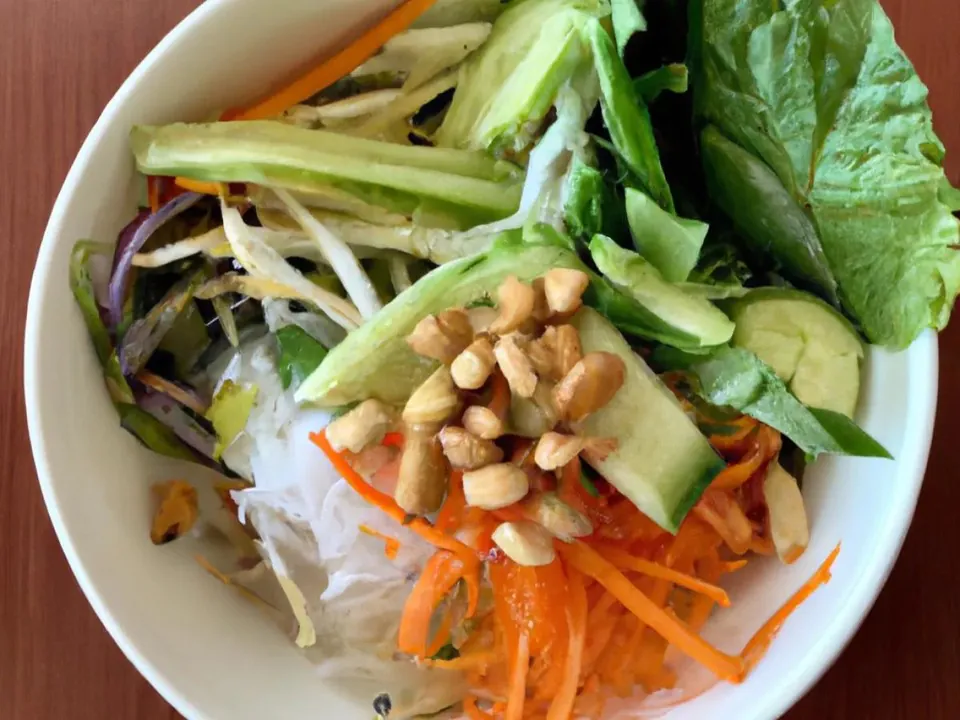
One item bends the rule. The vermicelli salad carries leaf lettuce, mint and basil alongside the pickles, which is why its dressing ships separately and why it is the one order to send out last rather than first.
Four ways to order the same kitchen
The catering menu sells the same food in four builds, and picking the wrong one causes more trouble than picking the wrong dish.
- Packages. Assembled spreads for a stated headcount, where you choose an appetizer, a couple of proteins, a couple of bases and some sides. There is a Vietnamese one, a Thai one, a pho one, a banh mi party tray and a bao bar. Use these when you want one decision instead of twelve.
- Half and full trays. The a la carte route. Rice trays, noodle trays, meat trays, salad and vegetable trays, spring rolls and dumplings, each ordered on its own so you can weight the order toward what your team actually eats.
- Individual lunch boxes. A banh mi on French bread with the standard pickles, plus a bag of chips and a cookie, boxed one per person. The tidiest option for a hybrid day or a room where people eat at their desks.
- By the piece. Single banh mi, single baos, single bowls and single soups, for the small order that does not need a tray.
The menu also hands you the arithmetic, which most catering menus make you guess at. A half tray covers eight to ten people and a full tray fifteen to eighteen, and the salad trays stretch a little further at twenty. Spring rolls and dumplings run at two pieces per person, and since each spring roll cuts into six bite-sized lengths, a tray covers a standing room better than the roll count suggests. The banh mi party tray arrives cut in half and labelled, which saves someone doing it on a side table.
The halal line runs down the middle of the menu
Every chicken preparation on the catering menu is labelled halal: caramelized chicken, curry chicken, sweet spicy fried chicken and the chicken spring rolls. The halal option here covers the whole chicken line, so it appears in the trays, in the bowls, in the banh mi and in the lunch boxes. A colleague who eats halal picks from the same menu as everyone else rather than from a shortlist of one, which is rarer than it should be.
Pork belly, pork meatballs and shrimp sit elsewhere on the same menu, so ask about handling if that matters for your room. Our halal office catering guide covers how to phrase that. Chicago has other halal kitchens on Zerocater if you need a fully halal order, including Al Safa and Salam Restaurant.
Gluten-free works if you skip the bread
The banh mi and the lunch boxes are built on a French baguette, and the steamed baos carry wheat and dairy. Both lines are out for a coeliac guest, and the menu says so rather than leaving you to work it out.
That leaves most of the menu open. The brown and jasmine rice trays carry gluten-free labels, as do the bean thread noodles, the pad thai, the pho and the grilled proteins. The dipping sauce is the trap worth knowing: peanut sauce is not gluten-free and sweet chili is, so a gluten-free spring roll order needs the right sauce chosen with it. Treat the labels as ingredient choices rather than a guarantee, because one kitchen makes the baguettes and the rice trays.
Which Saigon Sisters order fits which room
| Order | Best for | Watch for |
|---|---|---|
| Individual lunch boxes | Hybrid days, desk lunches, working sessions, rooms with dietary needs to label | Baguette-based, so gluten-free guests need a bowl instead |
| Banh mi party tray | Standing lunches, team socials, rooms that graze | Arrives cut and labelled, so leave the labels facing up |
| Rice, noodle and meat trays | Full-team lunches, all-hands, client visits | Needs table space, serving spoons and someone to set it out |
| Pho package | Cold days, smaller teams, a lunch people sit down for | Hot broth and separate garnish packets, so it eats slower than a tray |
| Spring rolls, baos and dumplings | Receptions, launches, an add-on to a tray lunch | Choose the sauce deliberately: peanut is not gluten-free, sweet chili is |
| Vermicelli and papaya salads | Lighter lunches, summer weeks, a counterweight to fried items | Both carry peanuts, and both dress in a fish sauce base unless you order the vegetarian build |
Where the kitchen came from
Mary Nguyen Aregoni founded Saigon Sisters in 2009 at the Chicago French Market, a stall operation serving banh mi, spring rolls, pho and baos to commuters and downtown workers. Her mother and grandmother had run food distribution businesses supplying markets and embassies in Laos before the family relocated to the United States, so the trade came down two generations before it reached a Chicago market hall.
That history explains the shape of the catering menu. A kitchen that spent its first years feeding people who were walking somewhere learned to build food that survives being carried, and the packaging habits in this post are what a commuter counter teaches you. The West Loop dining room came later. The menu still behaves like it expects to travel.
Plan Saigon Sisters catering with CaterAi
Three things to plan around
Chicago only. One kitchen serving one city. A team in another metro reads this as an ordering method to copy rather than a caterer to call.
The baguette rules out two whole lines. Banh mi and lunch boxes are the most convenient formats here and the least flexible for gluten-free guests. If your room includes one, plan the bowls and the rice trays first and treat the sandwiches as the add-on.
Peanuts sit in named places. The vermicelli salad and the papaya salad carry them, and peanut sauce is one of two spring roll options. The pad thai tray leaves them off unless you ask. Flag the allergy in the order rather than trusting the default.
Before you order: list your dietary needs, read the ingredient line under each dish rather than the dish name, and put the fish sauce and peanut notes in the order rather than saving them for the delivery. This kitchen acts on written notes, and the notes are where a mixed room gets solved.
How to order Saigon Sisters catering
Direct. Saigon Sisters takes catering orders through its own site and its own catering team. Go this way when the order needs a conversation, such as a custom package, a large headcount or a room where you want to walk someone through the dietary split rather than typing it into a notes field.
Through Zerocater. Order from the Saigon Sisters vendor page and delivery, invoicing and any recurring schedule run on Zerocater instead. This suits an office where Vietnamese food is one stop in a rotation rather than a one-off, and where you want a single bill across every kitchen you use. See how it works for the mechanics. For a lunch you need sooner than the usual notice, our last-minute office catering guide covers what still ships on a short clock.
Saigon Sisters and Zerocater
Saigon Sisters sits in Zerocater’s Chicago network alongside kitchens covering neighbouring cuisines. For Thai, Pho’s Spicier Thai Cuisine, Thai 55 and Tiparos Thai Cuisine cover the same seasoning vocabulary, so the sauce-reading habit in this post applies to their menus too. Mimi’s Kimbap covers Korean, Umami Express and Lotus and Lime run the wider East Asian end, and Tandoor Char House covers Indian. Browse the full Chicago catering directory, or narrow to Vietnamese catering in Chicago and Thai catering in Chicago.
Vietnamese catering runs across Zerocater’s other metros too. The Vietnamese catering directory covers New York, San Francisco, Seattle and Los Angeles among others, and the wider Southeast Asian directory covers the rest of the region. For a different read on Asian food at the office, our Nom Wah spotlight covers dim sum and piece counts, and our Rasa spotlight covers component trays.
If you are planning a Chicago order for the first time, see the best corporate event catering companies in Chicago and how much office catering costs in Chicago. For rooms with a dietary split to solve, our dairy-free guide is worth a read alongside this one, since most of this menu clears dairy without trying. Teams running an ongoing programme should start at corporate catering, and event planners at corporate event catering.
Menu items, lead times, delivery areas and prices change. Check the Saigon Sisters vendor page for the current catering menu, the delivery area and a live quote before you place an order.
Plan Saigon Sisters catering with CaterAi
Frequently Asked Questions
What is Saigon Sisters?
Saigon Sisters is a Vietnamese kitchen in Chicago’s West Loop, founded in 2009 at the Chicago French Market by Mary Nguyen Aregoni. The catering menu runs banh mi, rice and noodle bowls, hot trays, pho, spring rolls and steamed baos, sold as packages, half and full trays, or individual lunch boxes. Saigon Sisters is a Zerocater partner, and its vendor page carries the current catering menu.
Does Saigon Sisters catering work for a vegetarian in the office?
Yes, but pick by the sauce rather than the dish name. Several dishes that read vegetarian are built on fish sauce, shrimp paste or oyster sauce, including the fried rice, the pad thai, the pad see ew and the green and red curries. The kitchen prints that on the menu line and takes a note to leave fish sauce out of the fried rice. The teriyaki tofu and the barbecue jackfruit are labelled vegan, the papaya salad comes in a vegetarian build on a vegan dressing, and the vegetarian pho runs on a vegetable broth. Our vegetarian and vegan office catering guides cover how to brief a kitchen.
Does Saigon Sisters offer halal catering?
The chicken line is labelled halal, which covers the caramelized chicken, the curry chicken, the sweet spicy fried chicken and the chicken spring rolls, and it runs through the trays, the bowls, the banh mi and the lunch boxes rather than sitting in one corner of the menu. Pork and shrimp appear elsewhere on the same menu, so confirm handling with the team when that matters for your room. Our halal office catering guide covers the questions worth asking.
Is Saigon Sisters catering gluten-free?
Parts of it. The banh mi and the lunch boxes are built on a French baguette and the steamed baos contain wheat and dairy, so both lines are out. The brown and jasmine rice trays, the bean thread noodles, the pho, the pad thai and most of the grilled proteins carry gluten-free labels. Watch the dipping sauce, because the peanut sauce is not gluten-free and the sweet chili is. Read all of that as ingredient choice rather than a celiac guarantee, since one kitchen makes both. Our gluten-free office catering guide covers the brief.
How much Saigon Sisters catering do you order per person?
The menu gives you the arithmetic. A half tray serves eight to ten people and a full tray serves fifteen to eighteen, except the salad trays, where a full tray stretches to twenty. The packages state their own headcounts. For spring rolls and dumplings the kitchen suggests two pieces per person, and each spring roll cuts into six bite-sized pieces, so a tray covers more of a standing room than the roll count suggests.
Does Saigon Sisters cater pho for an office?
Pho ships as its own package built for a group, with beef, chicken and vegetarian broths, and the garnishes travel in separate packets of bean sprouts, lime, jalapenos and basil. That packaging is what makes it work at a desk, because each person finishes their own bowl. Give it more table space and a longer serving window than a tray lunch, and skip it when the room has to eat while a meeting runs.
Are there peanuts in Saigon Sisters catering?
Peanuts appear in two named places: the vermicelli salad and the papaya salad carry them, and the peanut dipping sauce is one of the two sauces offered with spring rolls. The pad thai tray leaves them off by default and adds them on the side when you ask. Sweet chili sauce is the alternative to the peanut sauce. Flag a peanut allergy in the order. Our allergy-safe catering guide lists the rest of the questions.
What if my office is not in Chicago?
Saigon Sisters delivers around Chicago, so a team in another metro cannot order from this kitchen. The ordering habit still travels: read the sauce line before the dish name, and ask what ships separately. Browse Vietnamese catering for your city, or ask CaterAi to build a comparable spread from restaurants that deliver to you.