The FDA rewrote the “healthy” claim at the end of 2024. The word on a package is now a defined term under 21 CFR 101.65(d), and the definition reads an office snack shelf in two halves. One half qualifies with no label at all: the fruit bowl, the plain nuts, the eggs, the water tap. The other half, the packaged shelf, is judged against three limits, and for a snack with a 30 gram serving the judge reads the panel at 50 grams.
This guide takes the rule in pantry order. First the list of foods that need no arithmetic. Then the three limits, which change with the food group but share one sodium line. Then the 50 gram read for chips, nuts, crackers and cheese, and the separate table for bars and trail mix. The guide makes no verdict on any product. The table a product falls under is the manufacturer’s record, and a package either carries the claim or it does not.
In this guide
- What the claim is and what changed
- The dates on the wrapper
- The foods that qualify with no label
- One food group, three limits
- The 50 gram read
- A USDA reference shelf
- Bars and trail mix: the mixed-product table
- Reading the panel in four lines
- How to stock the pantry
What the claim is, and what changed
The FDA’s page on the claim describes it as a nutrient content claim “that manufacturers can voluntarily use on food packages.” Nobody has to print it. A maker who does print it has to meet the definition, and the definition covers the word’s relatives too: the regulation lists “health,” “healthful,” “healthfully,” “healthfulness,” “healthier,” “healthiest,” “healthily,” and “healthiness” as derivative terms under the same rule.
The old definition dates from 1994. The FDA writes that it “had limits for total fat, saturated fat, cholesterol and sodium,” and that a food also had to deliver “at least 10% of the Daily Value (DV) for one or more of the following nutrients: vitamin A, vitamin C, calcium, iron, protein, and fiber.” The updated rule drops total fat and cholesterol, adds a limit on added sugars, and replaces the vitamin test with a food group test. The FDA’s own examples of foods that qualified under the old criteria and do not under the new ones are “fortified white bread, highly sweetened yogurt, and highly sweetened cereal.” Its examples of foods that qualify now and did not before are water, avocados, nuts and seeds, salmon and olive oil.
The dates on the wrapper
The final rule was published in the Federal Register on December 27, 2024, with an effective date of February 25, 2025 and a compliance date of February 25, 2028. A second notice moved the effective date to April 28, 2025 and left the compliance date where it was. A maker may use the updated definition at any point before 2028, and until that date a package may still carry the claim under the 1994 criteria.
For a pantry that means one planning fact. A “healthy” on a wrapper before the compliance date can mean either definition, and the wrapper does not say which. After February 25, 2028, every package that carries the word has to meet the updated one.
The foods that qualify with no label
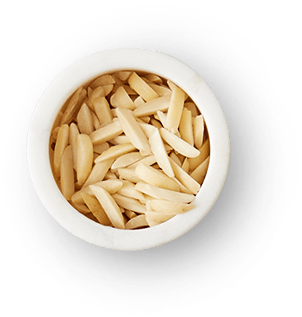
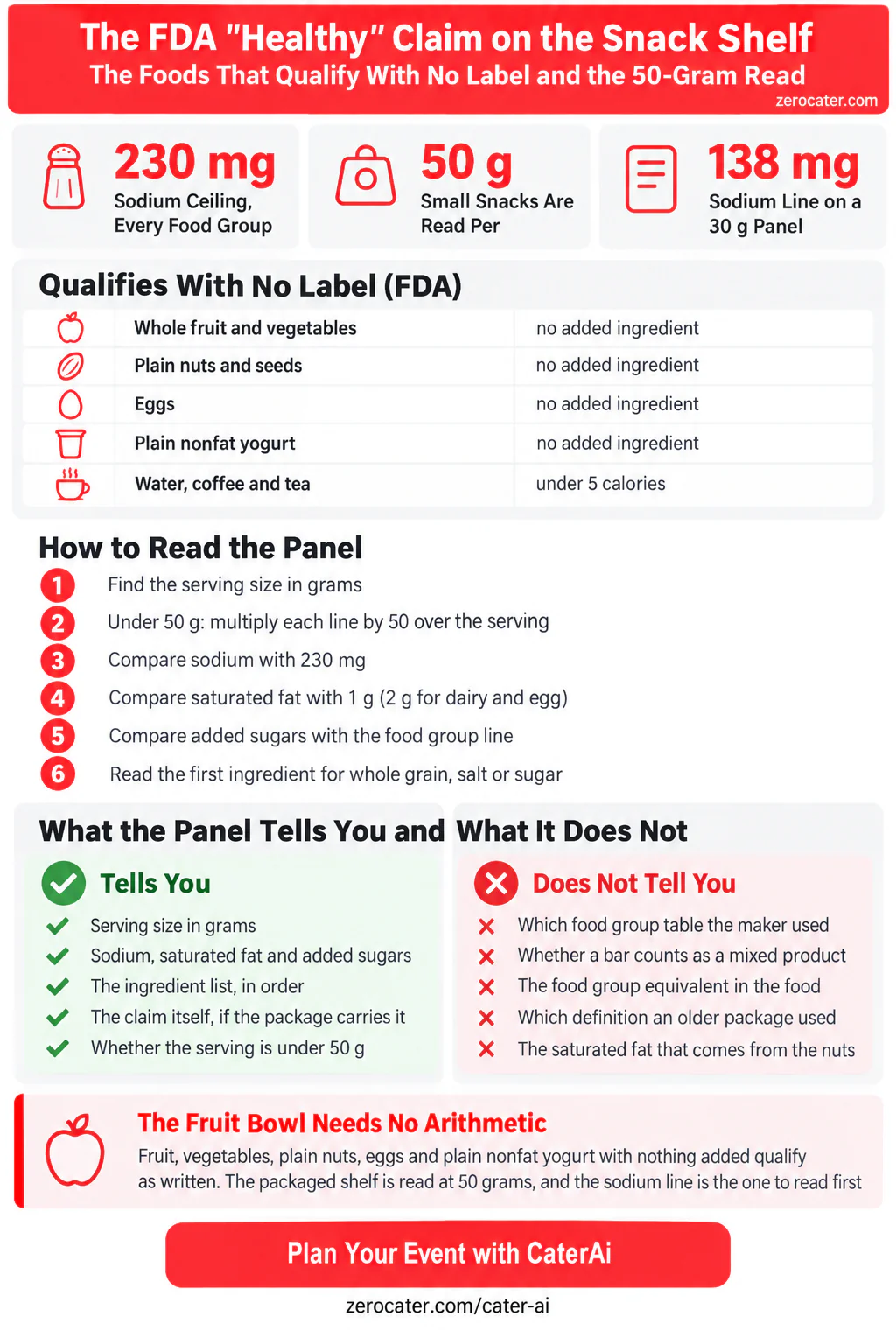
The shortest part of the rule covers the biggest part of a good pantry. An individual food made of vegetables, fruit, whole grains, fat-free or low-fat dairy, lean meat, seafood, eggs, beans, peas, lentils, nuts or seeds, “with no other added ingredients except for water,” qualifies as written. The FDA’s page puts it the same way: those foods “automatically qualify” because of their nutrient profile. A separate line covers “all water, tea, and coffee with less than 5 calories per RACC and per labeled serving.”
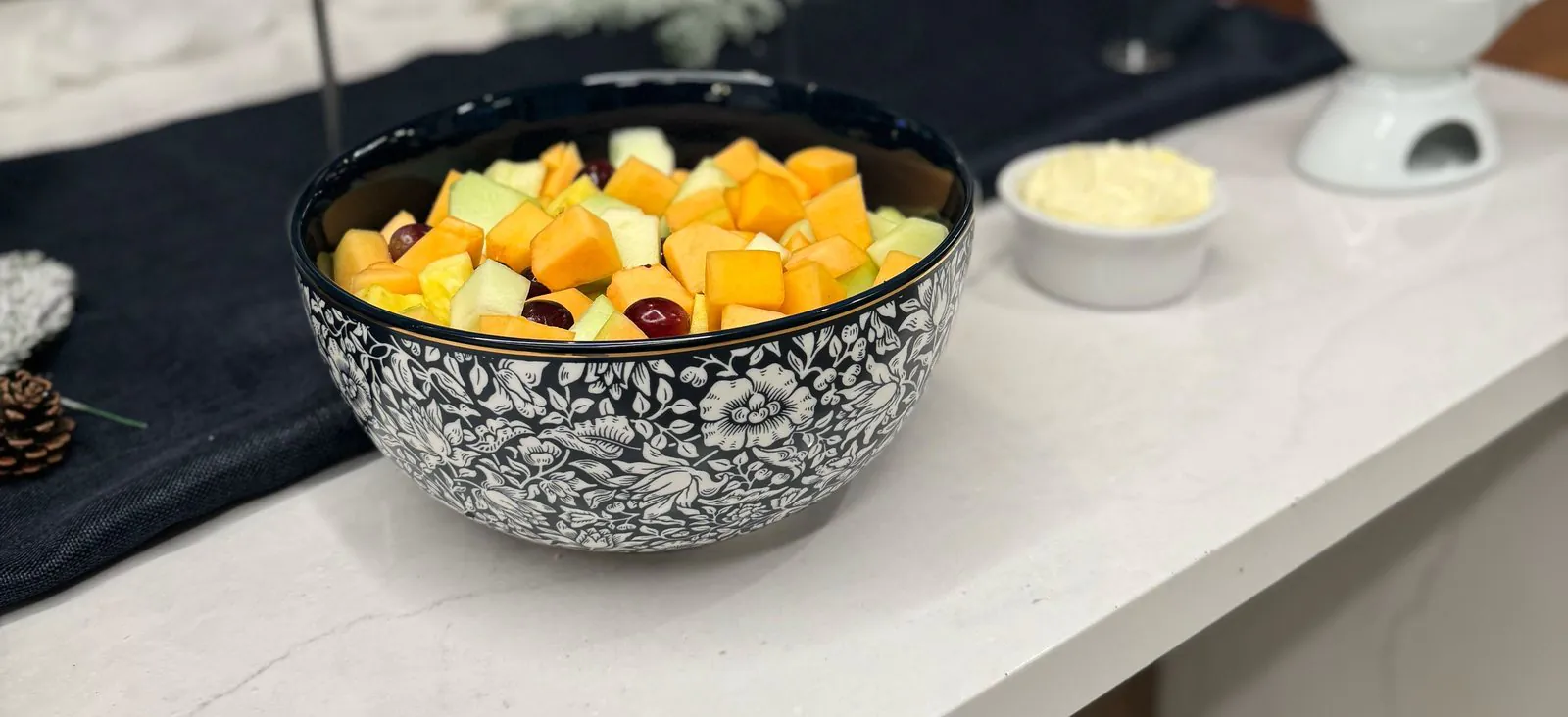
Read that against the shelf. The fruit bowl. Baby carrots. A bag of plain almonds, walnuts or pumpkin seeds. Hard-boiled eggs in the fridge. Plain nonfat yogurt. Popcorn with nothing on it. The water tap, the sparkling water, black coffee and plain tea. None of these needs a panel read, because there is nothing on the panel to add up.
Salt is the item that moves a food off this list. Dry-roasted almonds with salt added have an added ingredient, so they drop into the limits table below. They clear it with room, as the USDA shelf shows, but they have to be measured, where the unsalted bag does not.
One food group, three limits
A packaged food that is not on the automatic list has to pass two tests. It has to contain a set amount of a food group, which the rule calls a food group equivalent, and it has to stay under three limits. The equivalents are small: 3/4 ounce of whole grain, which the rule illustrates as “1 slice of bread; 1/2 cup cooked brown rice”; half a cup of fruit, or “1/4 cup raisins”; 2/3 cup of dairy, or “1 oz nonfat cheese”; one ounce equivalent of nuts, which the table gives as “1/2 oz walnuts”; one ounce equivalent of beans, or “1/4 cup black beans.”
The limits are set as a share of the Daily Value, and they differ by row. This table is the single-food-group criteria in grams and milligrams, using the FDA page’s conversions.
| Single-food-group product | Must contain at least | Added sugars, no more than | Sodium, no more than | Saturated fat, no more than |
|---|---|---|---|---|
| Grain | 3/4 oz equivalent whole grain | 5 g | 230 mg | 1 g |
| Fruit | 1/2 cup equivalent fruit | 1 g | 230 mg | 1 g |
| Vegetable | 1/2 cup equivalent vegetable | 1 g | 230 mg | 1 g |
| Dairy | 2/3 cup equivalent dairy | 2.5 g | 230 mg | 2 g |
| Egg | 1 oz equivalent (one large egg) | 1 g | 230 mg | 2 g |
| Beans, peas, lentils | 1 oz equivalent (1/4 cup black beans) | 1 g | 230 mg | 1 g |
| Nuts, seeds | 1 oz equivalent (1/2 oz walnuts) | 1 g | 230 mg | 1 g, with the fat inherent in the nuts left out |
One line holds across the whole table. Every food-group row sets sodium at 10 percent of the Daily Value, which is 230 milligrams. The added sugars line runs from 1 gram for fruit, vegetables, beans and nuts up to 5 grams for a grain product, and the saturated fat line is 1 gram for most rows and 2 grams for dairy and egg. So when you read a panel, sodium is the line to read first: it is the one ceiling that does not depend on which row the maker chose.
Two footnotes matter on a snack shelf. For nuts, seeds and seafood, the saturated fat that is inherent in the food does not count toward the limit; only added fat does. And the rule’s grain row asks for whole grain, so a cracker or pretzel made from enriched flour is short of the equivalent before anyone reads its sodium.
The 50 gram read
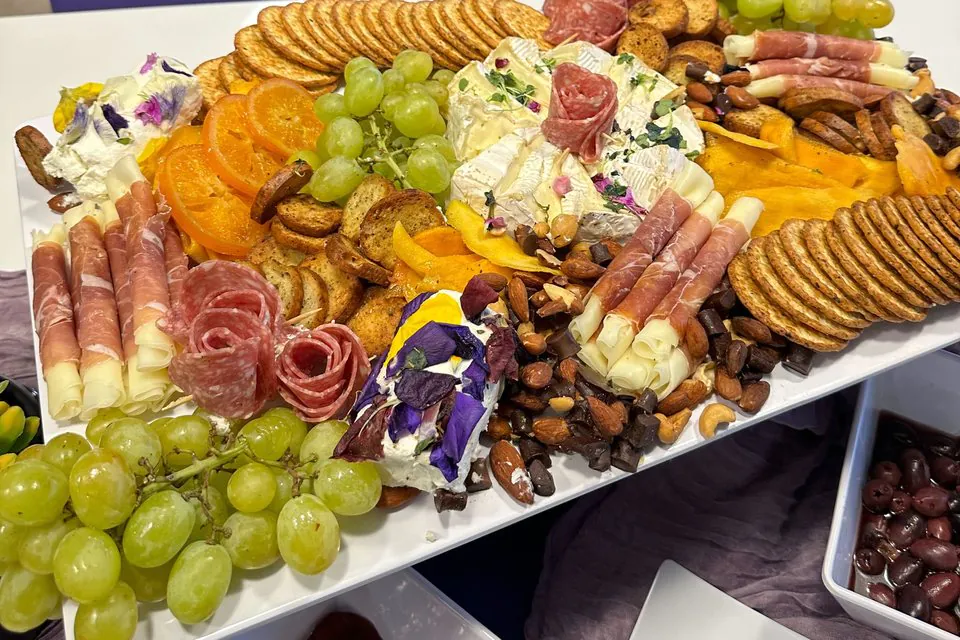
The limits above are written per Reference Amount Customarily Consumed, the FDA’s standard portion for each type of food, “which is the basis for determining a serving size.” The reference amounts for the snack aisle are small. Chips, pretzels, popcorn and extruded snacks share one line at 30 grams. Nuts and seeds are 30 grams. Crackers “that are usually used as snacks” are 30 grams, cookies are 30 grams, cheese is 30 grams, dips are two tablespoons, jerky is 30 grams. Grain-based bars are 40 grams. Yogurt is 170 grams and an egg is 50.
One clause decides the packaged shelf. An individual food with a reference amount of 50 grams or less “meets the conditions per 50 g of food,” not per serving. A 30 gram bag of chips, a 30 gram handful of salted nuts, a 30 gram stack of crackers and a 30 gram stick of cheese are each read at 50 grams, so every figure on their panels scales up by 50 over 30, a factor of 1.67. A 40 gram bar judged as a grain product scales by 1.25.
Turned around, the rule gives you the ceiling in the panel’s own units. A 30 gram serving clears the sodium line when the panel prints 138 milligrams or less, because 138 read at 50 grams is 230. The same serving clears a 1 gram saturated fat line at 0.6 grams, and a grain product’s 5 gram added sugars line at 3 grams. For a 40 gram bar the lines are 184 milligrams, 0.8 grams and 4 grams.
| Serving size on the panel | Read at | Factor | Sodium line that equals 230 mg | Saturated fat line that equals 1 g | Added sugars line that equals 5 g (grain) |
|---|---|---|---|---|---|
| 30 g (chips, pretzels, popcorn, nuts, snack crackers, cookies, cheese) | 50 g | 1.67 | 138 mg | 0.6 g | 3 g |
| 40 g (grain-based bars, judged as a grain product) | 50 g | 1.25 | 184 mg | 0.8 g | 4 g |
| 50 g and over (yogurt at 170 g, an egg at 50 g) | the serving itself | 1.0 | 230 mg | 1 g, or 2 g for dairy and egg | 5 g, or 2.5 g for dairy |
A serving of 50 grams or more is read as itself. A 170 gram cup of yogurt is judged on the numbers the panel prints, against the dairy row: 2.5 grams of added sugars, 230 milligrams of sodium, 2 grams of saturated fat. A plain nonfat cup is on the automatic list and skips the read.
Plan office snack catering with CaterAi
A USDA reference shelf
The U.S. Department of Agriculture publishes composition figures for generic foods in FoodData Central, per 100 grams. Halve each figure and you have the 50 gram read for a typical version of each snack, without naming any package. These are reference values, not labels. Added sugars are a panel line the USDA reference set does not carry, so that column reads “the panel” on every row.
| USDA reference food | Sodium per 50 g | Saturated fat per 50 g | Against the single-food lines |
|---|---|---|---|
| Potato chips, plain, salted | 264 mg | 1.7 g | Over the sodium line and the 1 g fat line |
| Hard pretzels, plain, salted | 620 mg | 0.2 g | Over the sodium line; the enriched-flour version is not whole grain |
| Hard pretzels, enriched flour, unsalted | 125 mg | 0.4 g | Under both lines; still short of the 3/4 oz whole grain |
| Popcorn, air-popped, nothing added | 4 mg | 0.3 g | A whole grain with no added ingredient: qualifies on its own |
| Popcorn, oil-popped, salted | 442 mg | 2.4 g | Over the sodium line and the fat line |
| Almonds, dry roasted, salted | 117 mg | inherent fat left out | Under the sodium line; the salt moves it off the automatic list |
| Mozzarella, part skim | 310 mg | 5.1 g | Over the sodium line and the 2 g dairy fat line |
| Snack crackers, standard | 363 mg | 2.8 g | Over both lines |
| Granola bar, hard, plain | 147 mg | 1.2 g | Under the sodium line; the panel decides added sugars and the table |
| Hummus | 213 mg | read the panel | Under the sodium line by 17 mg; the seed fat question is the maker’s |
The table shows one thing with confidence. The sodium line sorts a plain shelf: salted chips, salted pretzels, oil-popped popcorn, snack crackers and part-skim mozzarella all sit over 230 milligrams at 50 grams, while salted almonds, a plain granola bar and hummus sit under it. It cannot say whether any real package carries the claim, because the maker picks the row, the maker holds the food group records, and a lower-sodium recipe changes the arithmetic. It gives the office a sense of scale: for a 30 gram snack the ceiling on the panel is 138 milligrams, and a reference chip reads 264 at 50 grams.
Bars and trail mix: the mixed-product table
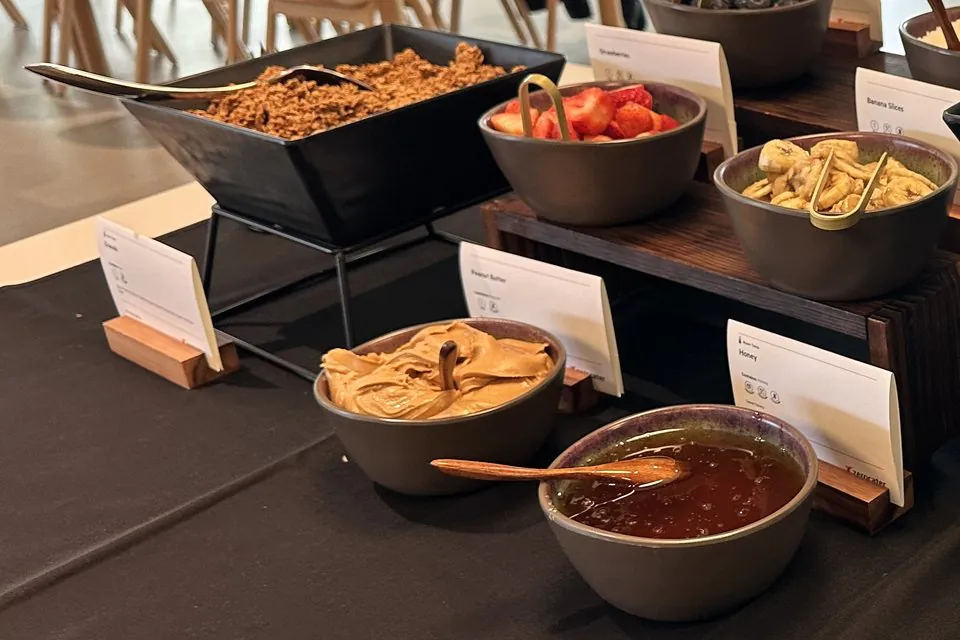
A bar that holds oats and almonds, or a trail mix of nuts and dried fruit, can be judged under a different paragraph. The rule’s mixed product is one that carries a total of one food group equivalent “with no less than 1/4 food group equivalent from at least two food groups,” and it is judged per reference amount, not per 50 grams. Its limits are its own: 10 percent of the Daily Value for added sugars, which is 5 grams; 15 percent for sodium, which is 345 milligrams; 10 percent for saturated fat, which is 2 grams, with the fat inherent in nuts and seeds left out. The FDA’s worked example is “1/8 cup dried fruit and 1/4 oz nuts.”
So a 40 gram bar read as a grain product faces 184 milligrams of sodium and 4 grams of added sugars on its panel, and the same bar read as a mixed product faces 345 milligrams and 5 grams. The panel does not say which table applies. The regulation puts that on the maker, who “must make and keep written records” showing the food meets the food group equivalent requirement, and keeps them for two years. From the shelf side, the way to read a bar is the ingredient list and the added sugars line, then the front of the package, which either carries the claim or it does not.
Reading the panel in four lines
The Nutrition Facts panel gives you everything the rule needs except the food group classification. Read it in this order.
- Serving size, in grams. If it is 50 grams or under, and the food is a single-food-group product, multiply every line below by 50 over the serving size. For 30 grams that is 1.67; for 40 grams, 1.25.
- Sodium. The scaled figure must be 230 milligrams or less for a single-food product. On a 30 gram panel, look for 138 milligrams or less.
- Saturated fat. One gram at 50 grams for grain, fruit, vegetable, bean and nut products, two grams for dairy and egg. For nuts and seeds, the fat that comes from the nut itself is left out.
- Added sugars. Five grams at 50 grams for a grain product, 2.5 for dairy, one for fruit, vegetables, beans and nuts.
Then read the ingredient list for the food group. A grain snack needs a whole grain, named as such, in enough quantity to make 3/4 of an ounce at 50 grams; “enriched wheat flour” is not whole grain. A snack with salt or sugar in the list is off the automatic path and on the limits table. If you keep a card for the pantry, the card copies the serving size, the three scaled numbers and the first ingredient, and leaves the claim word to the package.
How to stock the pantry around the rule
The rule leaves the buying to the office. It still lays out a shelf, because its two halves map onto two zones.
| Zone | What goes there | Why |
|---|---|---|
| Front, no arithmetic | The fruit bowl, baby carrots, plain nuts and seeds, hard-boiled eggs, plain nonfat yogurt, popcorn with nothing on it, water, black coffee and plain tea | The automatic list: no added ingredient except water, or under 5 calories a serving |
| Packaged shelf, by serving size | Chips, pretzels, crackers, cheese sticks, salted nuts, cookies: anything with a 30 gram serving | Read at 50 grams; the 138 milligram sodium line on the panel is the quick sort |
| Bars and mixes | Granola bars, nut bars, trail mix, dried fruit and nut cups | Mixed products are read per serving against 345 milligrams, 5 grams and 2 grams; the ingredient list says what is in them |
| The fridge | Yogurt cups, hummus cups, cheese | Servings of 50 grams and over are read as printed; smaller cups scale |
Two notes on the table. The fruit bowl belongs at the front because it is the one item with no reading to do, and because the FDA’s page names fresh, frozen and canned fruit together, so a tray of cut melon and a tin of fruit packed in water sit on the same list. And the sodium sort is a sort, not a verdict: a 30 gram snack over 138 milligrams on its panel is over the single-food line, and a maker may still clear it as a mixed product or with a different recipe.
For the office that wants this done for it, Zerocater’s snack, beverage and micro-kitchen program stocks and restocks the shelf as part of a managed cafeteria. Our guides to office coffee by the cup and caffeine in the office fridge cover the drinks side of the same pantry.
What this guide is not
It is not a nutrition verdict, and it does not say what anyone should eat. It reads one regulation and one FDA page. Our “Healthy Office Catering” guide covers the catered lunch; our guide to reading the numbers on a catering menu covers the figure a menu prints; the Halloween office catering guide covers the retail candy label; the diabetes-friendly catering guide covers a coworker with a plate to build. Older posts on whole-food snacks and stocking snacks for every diet list what to put on the shelf; this one reads the label on it. The low-sodium guide covers the sodium line at lunch.
Where Zerocater fits
A pantry is one shelf. A snack break for a meeting is a catering order, and the same reading applies to the fruit tray, the nut cups and the pastries that arrive on it. For ongoing office catering, Zerocater manages that rotation across its local catering partners, and how it works covers the ordering side. Our office breakfast guide and the coffee chat page cover the morning version.
For a single break, CaterAi drafts a menu from a plain description of the event. Ask for a fruit tray and a nut cup on the automatic side of the table, and a pastry or two on the other, and add the serving sizes to the order notes.
Plan office snack catering with CaterAi
Frequently Asked Questions
What does the FDA “healthy” claim mean on a snack package?
It is a voluntary nutrient content claim defined in 21 CFR 101.65(d). A food can carry it when it contains a set amount of food from at least one food group (fruit, vegetables, whole grains, fat-free or low-fat dairy, or protein foods) and stays under limits for added sugars, sodium and saturated fat. The limits depend on the food group and on the serving size the FDA assigns to that type of food.
Which office snacks qualify without any label?
The rule lists vegetables, fruit, whole grains, fat-free or low-fat dairy, lean meat, seafood, eggs, beans, peas, lentils, nuts and seeds with no added ingredient except water. On a pantry shelf that is the fruit bowl, plain nuts and seeds, hard-boiled eggs, plain nonfat yogurt and popcorn with nothing on it. Water, coffee and tea under 5 calories a serving qualify on their own line.
Why is a 30 gram bag of chips read at 50 grams?
The rule judges an individual food with a reference amount of 50 grams or less per 50 grams of food, not per serving. Chips, pretzels, popcorn, nuts, snack crackers, cookies and cheese all carry a 30 gram reference amount, so every number on their panels scales by 50 over 30, which is 1.67. A 40 gram bar scales by 1.25 when it is judged as a single-food-group product.
Does the per-50-gram read apply to granola bars and trail mix?
Not when they are judged as mixed products. A product that draws at least a quarter of a food group equivalent from two or more groups is read per reference amount, against its own limits: 5 grams of added sugars, 345 milligrams of sodium and 2 grams of saturated fat, with the fat inherent in nuts and seeds left out. The FDA’s own example is 1/8 cup of dried fruit with 1/4 ounce of nuts. The panel does not say which table the maker used.
What is the one number that holds for every single-food snack?
Sodium. Every food-group row sets the same ceiling, 10 percent of the Daily Value, which is 230 milligrams. On a 30 gram serving that is a label line of 138 milligrams or less. The added sugars and saturated fat limits change with the food group, so sodium is the line to read first.
When do packages have to follow the updated rule?
The compliance date is February 25, 2028. The rule took effect on April 28, 2025, after a delay from February 25, 2025, and the FDA allows early use. Until the compliance date, a package can carry the claim under the 1994 criteria or the updated ones, and the wrapper does not say which.
Is this guide a verdict on what to eat?
No. It reads one regulation and one FDA page in pantry terms. The word “healthy” appears here only as the regulated claim, and the guide makes no statement about any product. The table a product falls under is the manufacturer’s record, and the package either carries the claim or it does not.