The American Diabetes Association teaches one meal-planning tool that needs no math: the Diabetes Plate. Half the plate holds non-starchy vegetables, a quarter holds lean protein, a quarter holds carbohydrate foods, and the drink is water or a zero-calorie choice. The Association writes that it works “without any counting, calculating, weighing, or measuring.” That makes it the right test for a catering order, because nobody at an office lunch is going to weigh anything.
Hold a typical catering order against that plate and three things come up. The plate is nine inches across. The vegetables need far more room on the table than most orders give them. And the drinks need a second shelf. This guide reads the plate in catering terms, sorts the usual trays into its sections, and adds two CDC pages that matter at work: the 15-15 rule for low blood sugar, and the timing that keeps a lunch on track.
In this guide
- The Diabetes Plate
- The nine-inch plate
- Half the plate, half the table
- Where each tray lands
- Sandwiches and pizza
- The drink table and the 15-15 shelf
- Lunch on time
- How to write the order
The Diabetes Plate in one paragraph
The Diabetes Plate comes from the American Diabetes Association’s Diabetes Food Hub. Its four steps are short. Fill half the plate with non-starchy vegetables such as broccoli, cauliflower, carrots, cucumber, peppers, mushrooms and salad greens. Fill a quarter with lean protein such as chicken, fish, eggs, lean beef, tofu or cheese. Fill the last quarter with carbohydrate foods: whole grains, starchy vegetables, beans, fruit, milk and yogurt. Then choose water or a zero-calorie drink.
The plate fits a mixed office well. A coworker who manages diabetes can build it from a normal lunch, and the rest of the room eats the same food without noticing a rule. The office does not need to know who manages what. It needs an order where that plate is easy to build.
The plate is nine inches across
The first instruction is about the plate itself. The Association writes that “you need a plate that is nine inches across,” because “the size of our plate is what controls the size of our portions.” If the plates at hand are larger, it suggests a salad or dessert plate.
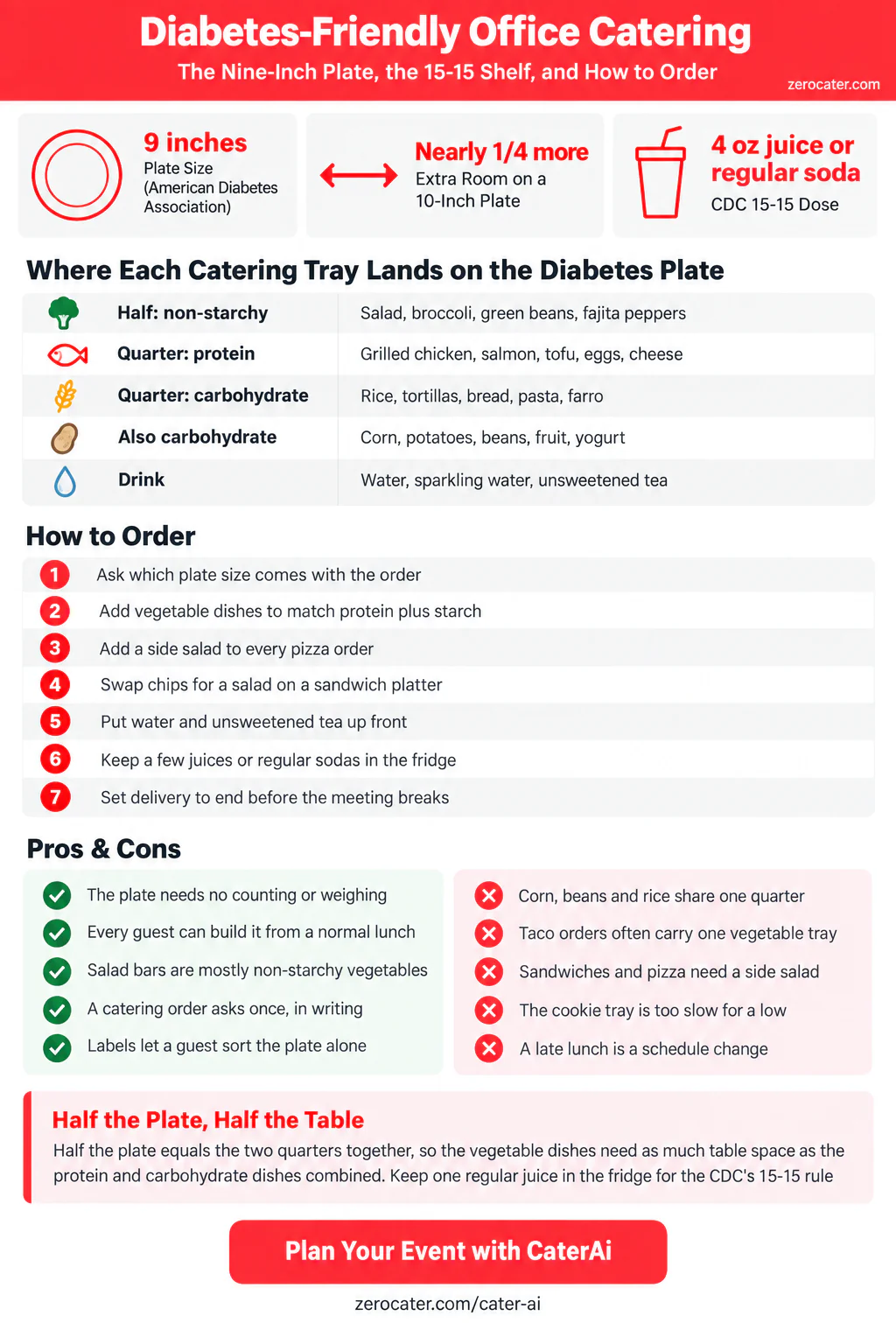
The difference is bigger than one inch sounds. A nine-inch plate holds about 64 square inches of food. A ten-inch plate holds about 79, so the larger plate carries nearly a quarter more room, and the half and the quarters grow with it. The plate is nine inches across for a reason, and the plate stack at a catered lunch decides it before anyone serves.
Many catering orders ship plates, napkins and cutlery on request, and our guide to catering utensils on request covers how to ask. When you ask for plates, ask for the size too. If the office supplies its own, keep a stack of nine-inch plates at the head of the line.
Half the plate is half the table
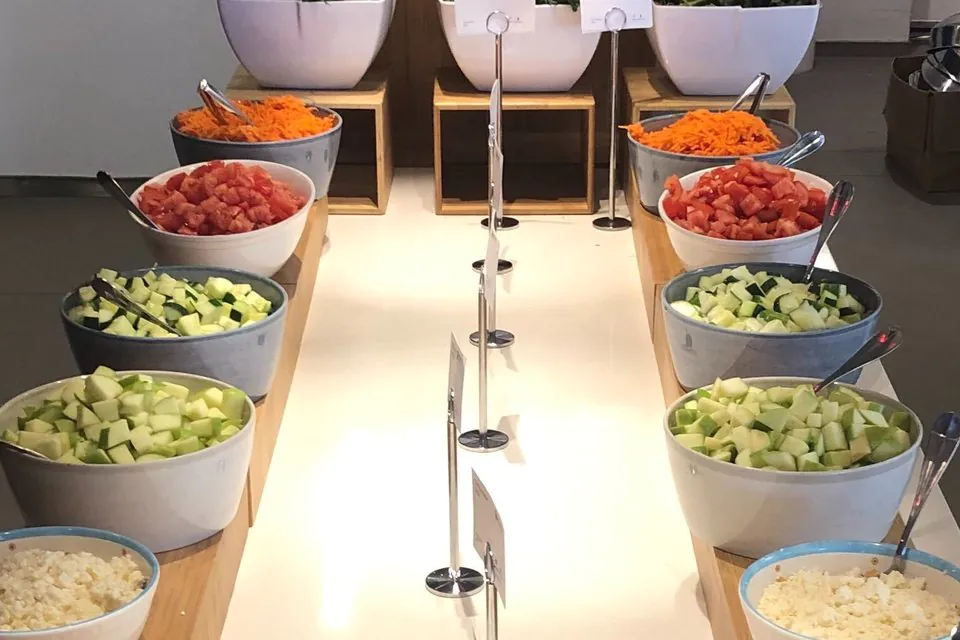
Half the plate equals the two quarters together. Carry that to the buffet table and the vegetable dishes need as much table space as the protein and the carbohydrate dishes put together. A plate cannot be half vegetables when most of the table is something else.
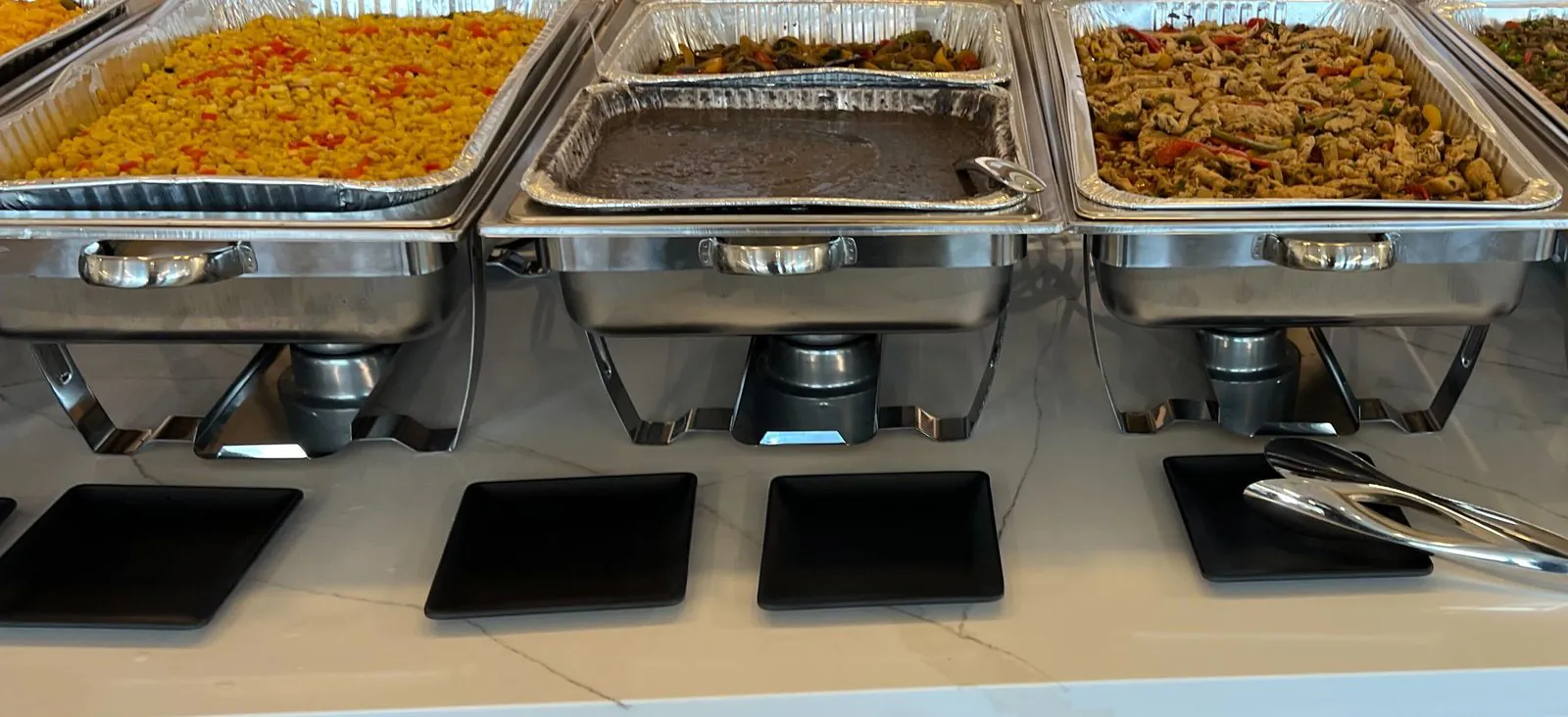
Many catering menus build the other way. A taco or fajita order arrives with a protein or two, rice, beans, tortillas and a corn side, plus one tray of peppers and onions. On the Diabetes Plate, the rice, beans, tortillas and corn all sit in the same carbohydrate quarter. The peppers and onions are the only non-starchy dish on the table. The fix is one line on the order: add a green salad or a tray of grilled vegetables. Our Mexican catering page lists partners who build these orders.
Where each catering tray lands on the plate
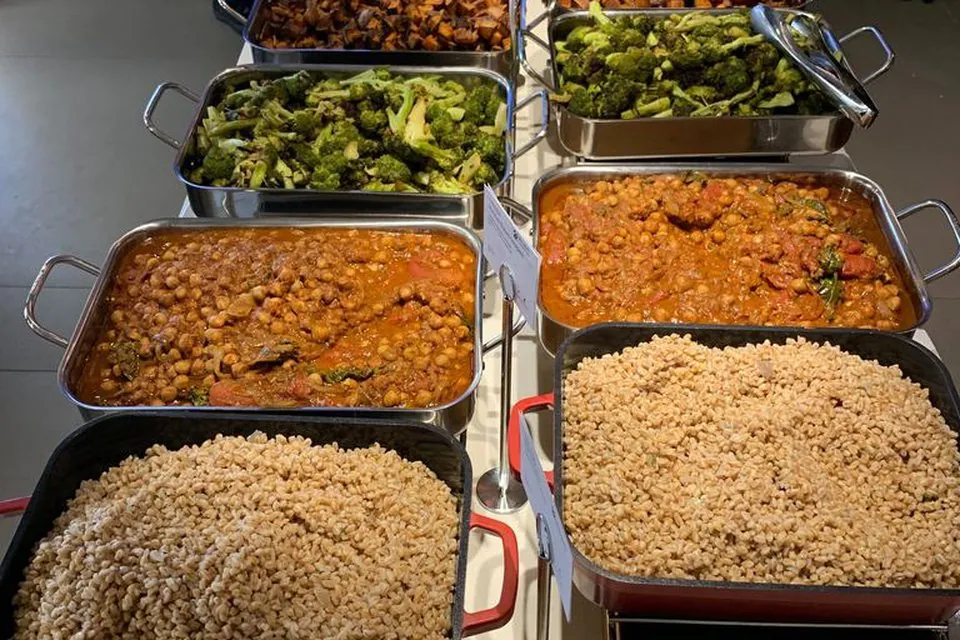
The Association’s food lists sort the usual catering trays with little doubt. Three entries surprise people. Corn, peas and potatoes are starchy vegetables, so they go in the carbohydrate quarter with rice and bread. Fruit, milk and yogurt go there too. And beans and hummus appear on the protein list with a note that “some plant-based protein foods (like beans and legumes) are also high in carbohydrates.”
| On the catering table | Where it lands on the plate |
|---|---|
| Green salad, cucumber and tomato salad, crudités | Non-starchy half |
| Roasted broccoli, cauliflower, green beans, zucchini, eggplant | Non-starchy half |
| Fajita peppers and onions, sautéed mushrooms | Non-starchy half |
| Grilled chicken, salmon, shrimp, steak, tofu, eggs | Protein quarter |
| Sliced turkey and other lean deli meats, cheese | Protein quarter |
| Black, pinto or garbanzo beans, hummus, falafel | Protein quarter, and high in carbohydrates too |
| Rice, quinoa, farro, pasta, tortillas, bread and rolls | Carbohydrate quarter |
| Corn, peas, potatoes, sweet potatoes, plantains | Carbohydrate quarter (starchy vegetables) |
| Fruit tray, yogurt parfaits | Carbohydrate quarter |
| Sandwiches, wraps, pizza, pasta bakes | Combination dishes: split them into their parts |
Read the table against your last order. If most of the trays sit in the bottom half of the table, the plate tilts toward carbohydrates no matter what a guest picks. If the top rows hold as much food as the rest, every guest can build the plate. Our guide to healthy office catering covers the wider menu, and the low-sodium guide covers a coworker with a second rule to follow.
Sandwiches, pizza and the combination dishes
Some catering never splits into sections. A sandwich, a wrap, a slice of pizza or a pasta bake holds bread, protein and vegetables in one piece. The Association’s answer is to “just identify the different foods in the dish and think about where they would fit in the Plate.”
For pizza it gives a direct line: “Stick to just one or two slices and serve with a side salad so half your meal is non-starchy vegetables.” So a pizza order needs a real salad beside it, and the Zerocater pizza and salad page lists partners who send both. A sandwich platter works the same way. Ask for a green salad or a vegetable side in place of the chips, and the half of the plate has somewhere to come from.
The drink table: water first
The plate’s fourth step is the drink. The Association names water as the best choice, then lists unsweetened tea, unsweetened coffee, sparkling water or club soda, infused water without added sugar, and diet soda or other diet drinks. Put those at the front of the drink table, with a pitcher of water and a dispenser of unsweetened iced tea. Sweetened tea, lemonade and regular soda can still sit on the table for the rest of the room. Our guide to caffeine in the office fridge covers labeling the shelf.
The 15-15 shelf: one regular juice in the fridge
The same fridge needs one item that runs the other way. The CDC writes that blood sugar below 70 is low, and that people with diabetes “can have low blood sugar as often as once or twice a week.” Its 15-15 rule reads: “Have 15 grams of carbs, then wait 15 minutes.” Then check again, and repeat if it is still low.
The CDC’s first item on the list of 15-gram choices is “4 ounces (½ cup) of juice or regular (non-diet) soda.” A standard 12-ounce can holds three of those doses. So the shelf that holds water and diet drinks for lunch should also hold a few small juices or regular sodas, labeled as such. The CDC adds that foods high in fat or fiber, “such as chocolate, baked goods,” slow the sugar down. The cookie tray does not do this job.
The CDC also writes that co-workers are among the people who should know how to handle low blood sugar. The office’s part is small: a known spot in the fridge, and a stock that nobody drinks at lunch. What a person does with it is their call and their care team’s.
Lunch on time is part of the menu
The CDC’s list of causes for low blood sugar includes “Timing of when you take your insulin” and “Unexpected changes in your schedule.” A catered lunch that arrives forty minutes late, or a meeting that runs past the hour on the invite, is that kind of change for a coworker who planned around noon.
So treat the clock as part of the order. Pick a delivery window that ends before the meeting breaks. Put the meal time on the invite and keep it. If the agenda slips, serve the food anyway and let people eat while the meeting runs. A diabetes-friendly lunch is a plate that works, and the lunch shows up at the time on the invite.
How to write the order
A catering order lets you ask once, in writing, before anyone cooks. Put these lines in the order notes, or ask them when you confirm.
| On the menu | The line to put on the order |
|---|---|
| Any buffet or family-style order | Add a vegetable dish until the vegetables match the protein and carbohydrate trays together |
| Tacos, fajitas or a rice bowl bar | Add a green salad or a tray of grilled vegetables; corn and beans count with the rice |
| Pizza | A side salad with every pizza order |
| Sandwich or wrap platter | A green salad or a vegetable side in place of chips |
| Plates and utensils | Ask which plate size comes with the order; nine inches fits the Diabetes Plate |
| Drinks | Water and sparkling water first, plus unsweetened iced tea; a few juices or regular sodas in the fridge |
| Delivery time | A delivery window that ends before the meeting breaks for lunch |
Then label the trays on the table with what is in them: “black beans”, “roasted corn”, “grilled vegetables”. Labels let a guest sort the plate without asking anyone. For an order where every guest builds their own bowl, Zerocater’s salad bar page and rice bowl bar page list partners who send each ingredient in its own dish.
Plan an office lunch with CaterAi
What this guide is not
It is not medical advice, and it does not tell anyone what to eat. The Association tells readers to work with their “dietitian or diabetes care and education specialist” on the eating pattern that suits them, and some people with diabetes count carbohydrates or follow a stricter plan than the plate. Our keto office catering guide covers a low-carbohydrate number, and our guide to reading the numbers on a catering menu covers the figures a menu prints. When a coworker asks for an accommodation, the guide to workplace dietary accommodation covers the employer side.
Where Zerocater fits
A recurring lunch rotates through many menus, and the vegetable share changes with each one. For ongoing office catering, Zerocater manages that rotation across its local catering partners, and how it works covers the ordering side. The office lunch catering page lists partners near you.
For a single lunch, CaterAi drafts a menu from a plain description of the event. Describe the lunch, ask for a vegetable dish for every protein and every starch, and add the lines from the table above to the order notes.
Plan an office lunch with CaterAi
Frequently Asked Questions
What makes office catering diabetes-friendly?
The American Diabetes Association’s Diabetes Plate gives a plain test for any catering order. On a plate nine inches across, half is non-starchy vegetables, a quarter is lean protein and a quarter is carbohydrate foods, with water or a zero-calorie drink. An order passes when every guest can build that plate from what arrives, and when the lunch shows up at the time on the invite.
How many vegetable dishes should a catering order include?
Enough that the vegetables take as much table space as the protein and the carbohydrate dishes put together. Half the plate equals the two quarters combined. A taco or fajita order usually needs one more vegetable tray than it comes with, because rice, beans, corn and tortillas all sit in the same carbohydrate quarter.
Are beans, corn and fruit vegetables on the Diabetes Plate?
No. The Association lists corn, peas and potatoes as starchy vegetables, and puts them with beans, fruit, milk and yogurt in the carbohydrate quarter. Beans and hummus also appear on its protein list, with a note that they are high in carbohydrates too.
What should the office keep on hand for low blood sugar?
The CDC’s 15-15 rule starts with 15 grams of fast carbohydrate, such as 4 ounces of juice or regular, non-diet soda. A small stock of juice or regular soda in the office fridge covers that first step. The CDC notes that foods high in fat or fiber, such as chocolate or baked goods, slow the sugar down.
Should the office ask who has diabetes?
No. Order a lunch that lets anyone build the plate, serve it on time and label the trays. If a coworker raises a need, ask them what works for them. Our guide to workplace dietary accommodation covers the employer side.
Is this guide medical advice?
No. It reads the American Diabetes Association’s plate and two CDC pages in catering-order terms. The Association tells readers to work with a dietitian or diabetes care and education specialist on the eating pattern that suits them, and that conversation decides what one person eats.