Somebody in your office reorders the coffee, and that person usually guesses. The guess comes from last month’s empty shelf, or from the number of scoops printed on the bag. You can replace it with arithmetic. The Specialty Coffee Association, the trade body that writes the technical standards for brewing, fixes one ratio: 55 grams of coffee per liter of water. Start from that number and a pound of beans turns into a count of mugs, and a headcount turns into pounds per week.
This guide does that math for an office that brews its own coffee every day. It covers the SCA ratio and where it comes from, the reason a coffee maker’s “cup” misleads you, grams per mug, mugs per pound, a weekly table by headcount, and how to turn the table into a standing order.
In this guide
- One ratio, five SCA recipes
- The cup on the brewer is a small unit
- Grams per mug and mugs per pound
- Pounds per week by headcount
- Sizing the brewer
- Turning the number into an order
One ratio, five SCA recipes
The SCA’s Standard 310 for home coffee brewers sets the test ratio at “55 g of coffee per 1.000 kg of fresh water”. A kilogram of water is a liter, so the working number is 55 grams of coffee per liter of water. The same standard requires a certified brewer’s manual to print that ratio for its owner.
The SCA’s own step-by-step brewing guides use the same number. We divided the coffee by the water in each one, and all five land on 55 grams per liter, from a single cup on a column brewer to a full carafe on a pour-over.
| SCA brewing guide | Coffee | Water | Grams per liter |
|---|---|---|---|
| Six-cup pour-over | 37 g | 672 g | 55 |
| Two-cup pour-over | 22 g | 400 g | 55 |
| Single-cup immersion dripper | 22 g | 400 g | 55 |
| Three-cup French press | 36 g | 660 g | 55 |
| Column brewer | 13.75 g | 250 g | 55 |
Five brewers, five sizes of batch, and one ratio. The SCA’s guide to batch brewing with by-pass water works one example at 100 grams per 2 liters, which is a little weaker. Treat 55 as the number to plan around and adjust after the office tastes it. A stronger pot uses more coffee per mug, so a team that likes it strong runs through the bag faster than the tables below show.
The cup on the brewer is a small unit
The ratio stays put and the cup moves. The SCA’s list of certified home brewers shows a 5-cup brewer that holds 1.0 liter and an 8-cup brewer that holds 1.3 liters. That puts one brewer “cup” at 200 ml on the first machine and about 160 ml (5.5 ounces) on the second. The SCA’s six-cup pour-over recipe uses 672 grams of water, 112 ml per cup.
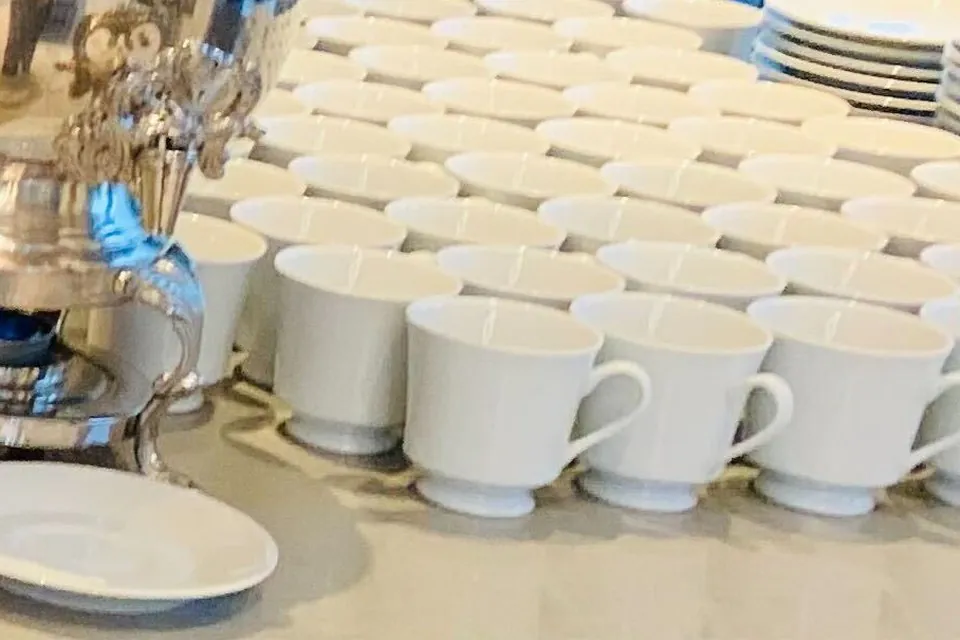
A desk mug holds 12 ounces, about 355 ml. On the 8-cup brewer that is two brewer cups and a bit more. So a pot that the box calls 8 cups fills between three and four mugs. Order by the brewer’s cup count and the shelf empties early. Plan in ounces, because the ounce is the same on every machine and in every mug.
Grams per mug and mugs per pound
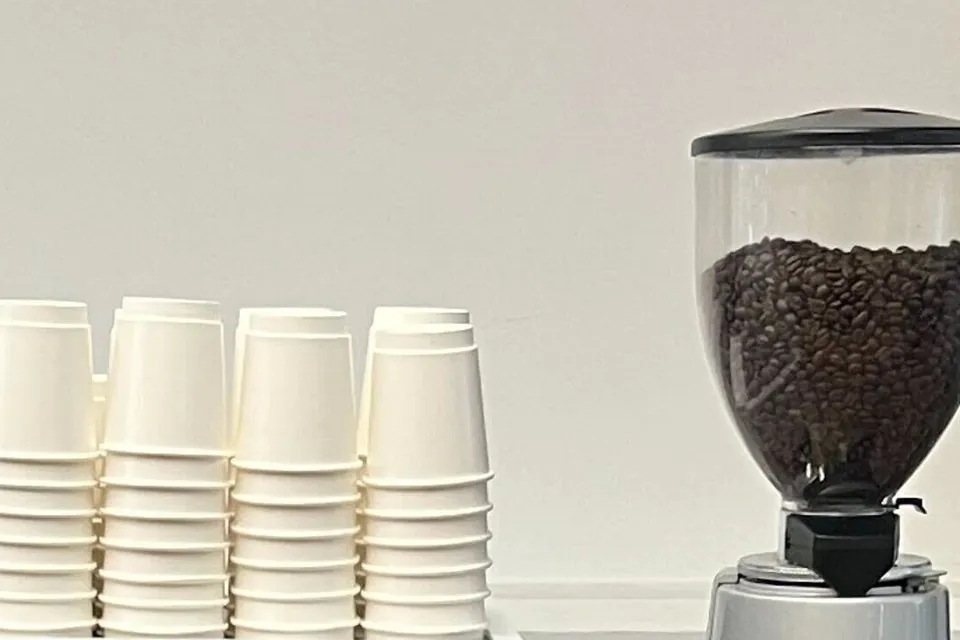
One detail changes the math. Ground coffee keeps some of the water poured over it, so less coffee reaches the carafe than water went into the brewer. Standard 310 builds that loss in. It sizes a batch brewer’s water by multiplying the carafe’s brew capacity by 1.15, which means the water allowance runs 15 percent above the coffee you get back. We used the same factor.
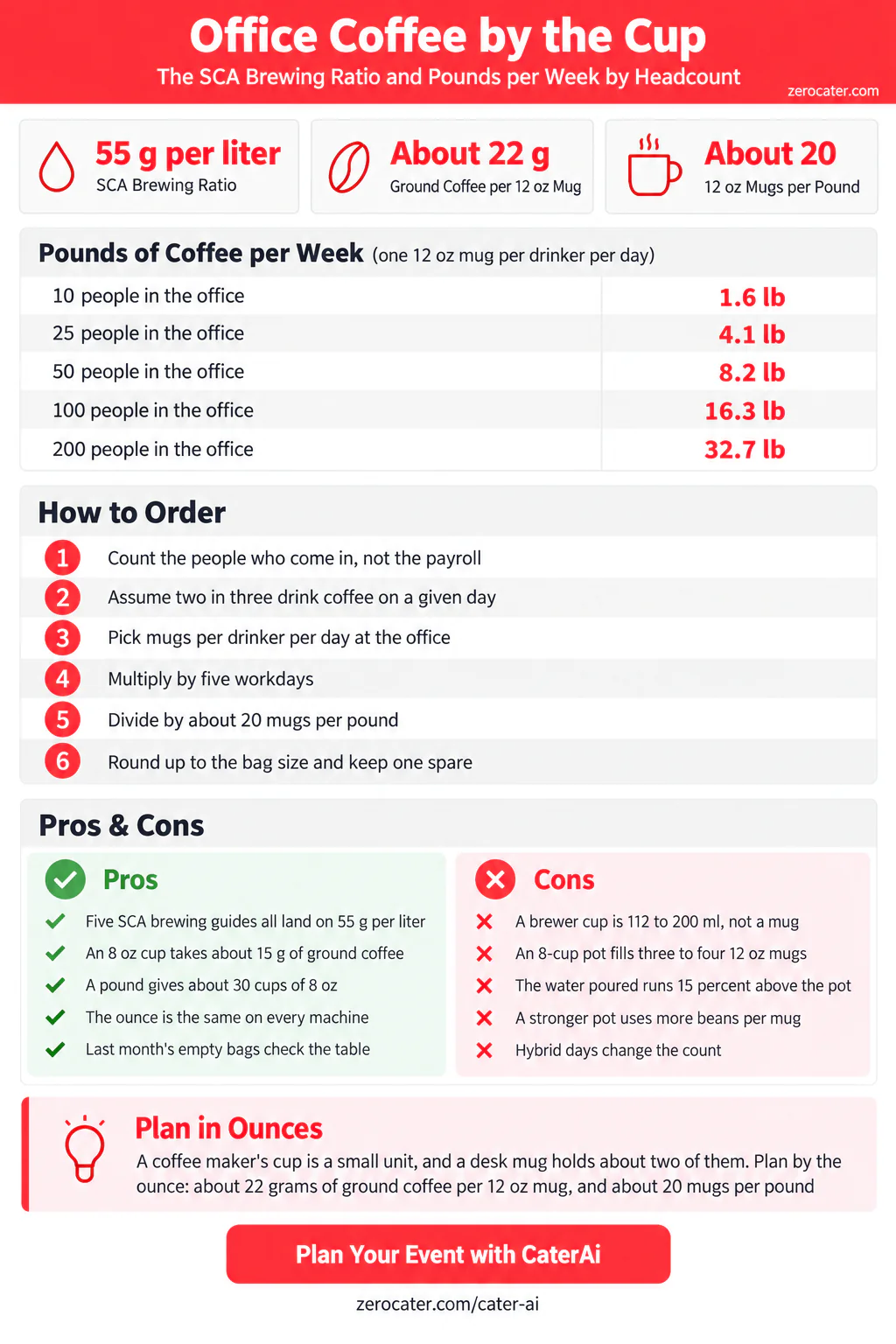
At 55 grams per liter of water and 15 percent more water than brew, one fluid ounce of brewed coffee takes about 1.9 grams of ground coffee. That gives about 15 grams for an 8-ounce cup and about 22 grams for a 12-ounce mug. A pound of beans, 454 grams, needs about 8.2 liters of water and gives back about 7.2 liters of coffee. That is about 20 twelve-ounce mugs, or about 30 eight-ounce cups.
| What you pour | Ground coffee | Servings per pound |
|---|---|---|
| 8-ounce cup | 15 g | about 30 |
| 12-ounce mug | 22 g | about 20 |
| 16-ounce travel mug | 30 g | about 15 |
Pounds per week by headcount
The National Coffee Association’s Spring 2026 survey found that 66 percent of American adults drank coffee in the past day, so about two in three of the people at your desks. Its Fall 2025 release put the average coffee drinker at nearly 3 cups per day. The survey does not say how many of those cups people drink at the office. In the Spring 2026 data, 38 percent of daily drinkers had coffee at another time in the morning and 22 percent in the afternoon, the hours when an office is open.
So the share of cups that lands at the office is your number to set. The table below runs it two ways: one 12-ounce mug per coffee drinker per workday, and two. It multiplies the people in the office by two in three, then by mugs, then by five workdays, then divides by 20 mugs per pound. That gives pounds per week.
| Who comes in | One 12-oz mug per drinker per day | Two 12-oz mugs per drinker per day |
|---|---|---|
| 10 people in the office | 1.6 lb | 3.3 lb |
| 25 people in the office | 4.1 lb | 8.2 lb |
| 50 people in the office | 8.2 lb | 16.3 lb |
| 100 people in the office | 16.3 lb | 32.7 lb |
| 200 people in the office | 32.7 lb | 65.3 lb |
If your mugs hold 8 ounces, multiply the table by two thirds. If your team drinks three mugs a day at the office, add the two columns. And if you know the true number from last month’s empty bags, use it to check the table: divide pounds used by the weeks they lasted and compare.
Count the people who come in, not the people on payroll. A hybrid team with 50 people on payroll and 30 at desks on a Tuesday drinks Tuesday’s coffee for 30. Use the busiest day of the week to size the brewer, and use the weekly total to size the shelf.
Plan office coffee with CaterAi
Sizing the brewer
The same math sizes the machine. A 1.3-liter carafe takes about 82 grams of ground coffee at the SCA ratio, with the 15 percent allowance, and pours between three and four 12-ounce mugs. A 50-person office with 33 coffee drinkers at one mug each needs about nine of those carafes a day. Nine full pots a day keeps someone at the home brewer all morning, and that is the point where a larger office moves to a batch brewer, an urn or a plumbed-in machine.
Drip brewing is the most common method in the country. The NCA’s Fall 2025 data has 38 percent of daily coffee drinkers using a drip brewer, more than any other method. Our older posts on office coffee equipment and on cold brew and pour-over cover the machines and the methods. The ratio above works on all of them.
Turning the number into an order
Pick the number from the table that fits your office, then round it to the bag size your roaster sells. Order for the week you expect, and keep one extra bag on the shelf for the week that runs over.
Write the weekly number down where the next person who reorders will find it. A note on the pantry shelf that says “about 8 pounds a week for 50 people” gives the next person a starting number. Recount once a quarter, or after the office changes its in-office days.
For coffee at a meeting, the math is different. Our coffee catering page covers the containers, the amount to order for a room and the timing for a delivered order. A morning meeting with food fits a breakfast catering order, and our office breakfast catering guide covers the rest of that menu. Part of any room drinks tea, and the tea catering page lists partners who send it.
Where Zerocater fits
Zerocater runs office coffee and pantry programs as part of its corporate cafeteria service, from stocked micro-kitchens to a managed barista bar. Our guide to designing a company cafeteria plan covers where coffee fits in the larger pantry. For recurring meals, Zerocater manages office catering across local catering partners, and how it works covers the ordering side.
For a single meeting, CaterAi drafts a menu from a plain description of the event, with coffee on the same order as the food.
Plan office coffee with CaterAi
Frequently Asked Questions
How many grams of coffee go into one mug?
About 22 grams for a 12-ounce mug and about 15 grams for an 8-ounce cup. Those figures use the Specialty Coffee Association’s brew ratio of 55 grams of coffee per liter of water, plus the SCA brewer standard’s rule that the water poured runs 15 percent above the coffee you get back.
How many cups does a pound of coffee make?
About 20 twelve-ounce mugs, or about 30 eight-ounce cups, at the SCA ratio. A pound of coffee takes about 8.2 liters of water and gives back about 7.2 liters of brewed coffee.
How much coffee does a 25-person office use in a week?
About 4 pounds a week if each coffee drinker has one 12-ounce mug at the office each workday, and about 8 pounds at two mugs. The math assumes that two in three people drink coffee on a given day, which is the share the National Coffee Association reports for American adults.
Why does my coffee maker say 12 cups when it fills four mugs?
A brewer’s cup is a small unit. On the SCA’s certified list, an 8-cup brewer holds 1.3 liters, about 5.5 ounces per cup. A 12-ounce mug holds about two of those cups. Plan in ounces and the label stops mattering.
Should I count headcount or people in the office?
Count the people who come in. A hybrid team with 50 people on payroll and 30 at desks on a Tuesday drinks Tuesday’s coffee for 30. Use the busiest day of the week to size the order, and the weekly total to size the shelf.
Is this the same as ordering coffee for a meeting?
No. This guide covers the coffee an office brews for itself every day. For coffee delivered to a meeting, the Zerocater coffee catering page covers the containers, how much to order for a room and the timing.