Most catering questions for a mixed office room get asked about the filling. Chicken or no chicken. Cheese or no cheese. At Atlanta Bread Company that is the wrong half of the sandwich to ask about.
The operator publishes an allergen book for its whole menu, laid out as a grid: eleven columns, a Y or an N in each, one line per item. Read it against the menu and a pattern falls out of it. The bread you choose moves the row almost every time. The side you add moves it almost never.
That is a useful thing to know before you order for twenty people, because it tells you which decision is worth spending your attention on. It also tells you where the book stops, and the places it stops are the places an office order tends to land.
In this guide
- Where Atlanta Bread came from, and what it bakes on site
- The side adds nothing, and the bread adds something every time
- The bagel and the croissant flag in opposite directions
- The salad heading is not the wheat-free heading
- Eleven columns, and how they differ from the federal list
- Three things the book does not cover
- The one line the catering menu changes
- How to order, and what to send with the request
A Smyrna Bakery-Cafe That Bakes Its Bread on Site
Atlanta Bread Company was founded in 1993 in Atlanta and grew into a bakery-cafe brand built around a bread programme. Its own catering page makes the claim in one sentence: the breads on its sandwiches are baked the same day, on site, from recipes the company treats as proprietary. The Zerocater vendor page for the brand runs out of Smyrna, just outside Atlanta.
Two things follow for an office ordering lunch. The first is that bread is not an accessory here. It is the thing the kitchen makes, and the menu treats it that way: most sandwiches name their bread as an ingredient rather than offering it as a choice. Chicken salad comes on sourdough. Pastrami comes on rye. Roast beef comes on a French baguette.
The second follows from the first. If bread is the product, then bread is also what the allergen book has the most to say about. The book says so in numbers.
The Side Adds Nothing. The Bread Adds Something Every Time.
The allergen book does something unusual with its layout. For any item that comes with a choice, it publishes the base line and then publishes a separate line for each add-on. You can read the two lines against each other and see exactly what the add-on did. Nobody has to guess.
Do that across the whole book and the result is lopsided.
| What you add | Lines it appears on | What it adds to the row |
|---|---|---|
| A side of kettle chips | 18 | Nothing. Not one flag, on any of the eighteen. |
| A bagel | 5 | Wheat and the other-gluten flag, on all five. |
| A croissant | 5 | Wheat and soy, on all five. |
| A slice of toast | 1 | Wheat and the other-gluten flag, either bread you pick. |
| Bacon or ham | 2 | Nothing, on either. |
| A pork sausage patty | 1 | One flag, and it is the MSG column. |
The kettle chips are the clearest case. They appear as their own line under eighteen different sandwiches, and on every one of those eighteen the flags are identical to the line above. The side that comes with almost every sandwich on the menu is the one component that never changes the answer.
Every bread line does change it. That is the whole finding, and it inverts the way most people plan an order. The protein gets the attention and the bread gets waved through, when the book says the bread is carrying the decision.
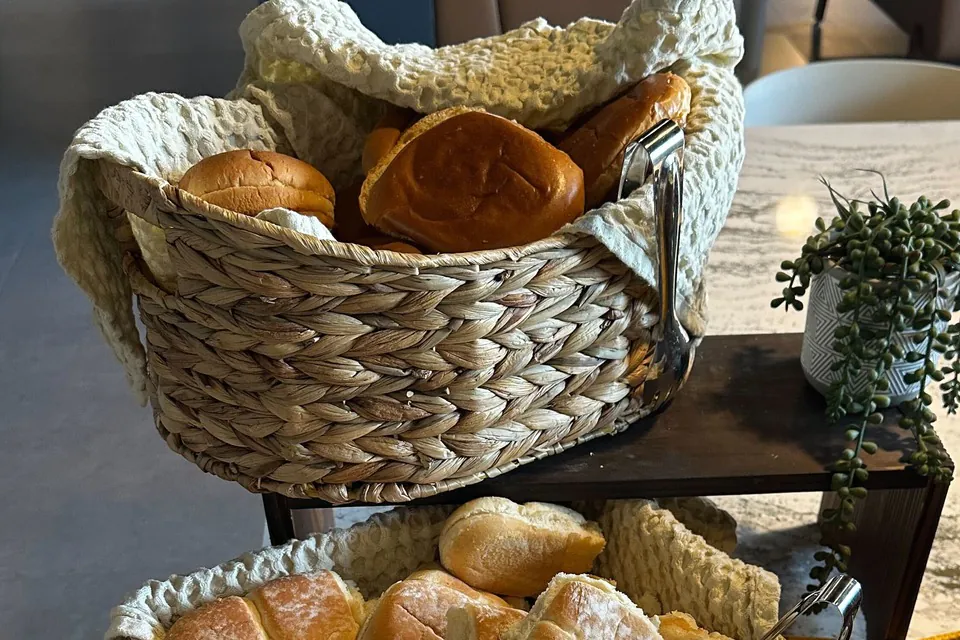
The Bagel and the Croissant Flag in Opposite Directions
The breakfast sandwiches make the point sharpest, because the book publishes each one three ways: the sandwich on its own, the sandwich with a bagel, and the sandwich with a croissant.
On its own, every one of the five is a short row. Egg and milk, and nothing else. No wheat at all, which is not what most people expect from a breakfast sandwich at a bakery.
Add the bagel and the row picks up wheat and the other-gluten flag. Add the croissant and it picks up wheat and soy. That holds on all five sandwiches, both ways, without a single exception.
So the two breads are not ranked. They fail differently. A guest who avoids soy has a reason to take the bagel. A guest who avoids barley or rye has a reason to take the croissant. Anyone who tells you one of them is the safer pick has not read the column they are not thinking about.
The Salad Heading Is Not the Wheat-Free Heading
Here is the finding that costs people the most when they get it wrong. Of the nine salads in the allergen book, six of the nine carry wheat.
Two of those six are easy to explain, because the menu puts croutons in them. The other four are not, and their own ingredient lists have no bread in them anywhere. A Greek salad of romaine, feta, pepperoncini, olives, red onion and dressing should not flag wheat.
The menu explains it in one line, sitting above the salad list: every salad arrives with a fresh-baked baguette. The flag is not describing the salad. It is describing what the kitchen puts next to it, and the row has no way to show you which of the two it came from.
The three salads that do not carry wheat are the fruit salad and the two grain bowls, and the menu files those bowls under their own heading rather than under salads. So the reliable read is the opposite of the intuitive one: on this menu the bowl section is the one to look at first, and the salad section needs the baguette question asked about it.
Ask CaterAi for a mixed-diet menu
Eleven Columns, and How They Differ From the Federal List
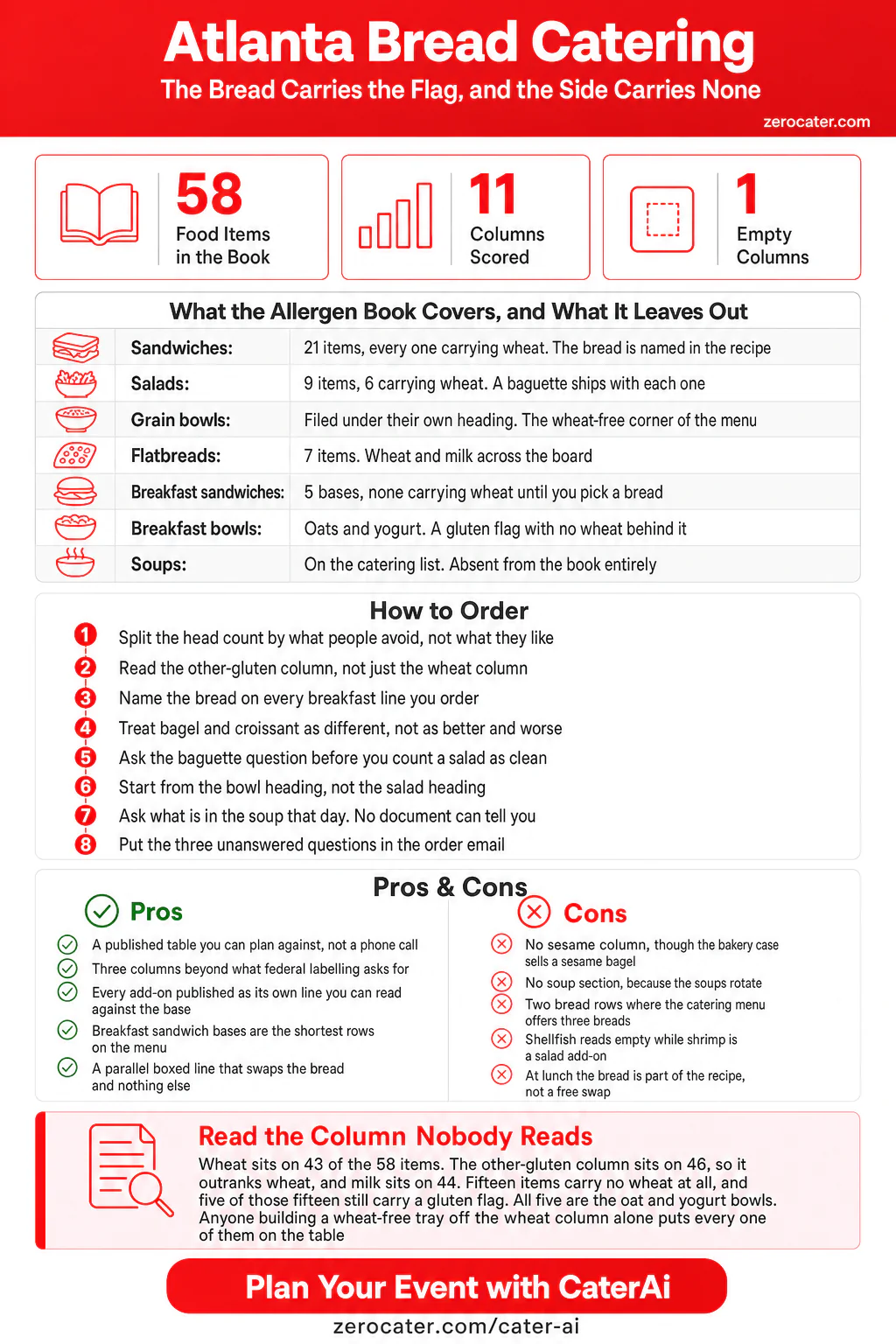
The book covers fifty-eight food items once you set the drinks aside, and it scores each against eleven columns. Counted over those items, the columns do not rank the way the menu’s own category names suggest.
- Wheat sits on forty-three of the fifty-eight items.
- The other-gluten column sits on forty-six, so it outranks wheat.
- Milk sits on forty-four, so at a bakery, dairy fences more of the menu than wheat does.
- The shellfish column is empty. Every row on it reads N.
The other-gluten result is the one worth stopping on, because it means scanning the wheat column alone will miss things. Fifteen items in the book carry no wheat. Five of those fifteen still carry a gluten flag, and all five are the oat and yogurt bowls. Somebody building a wheat-free tray off the wheat column would put every one of them on the table.
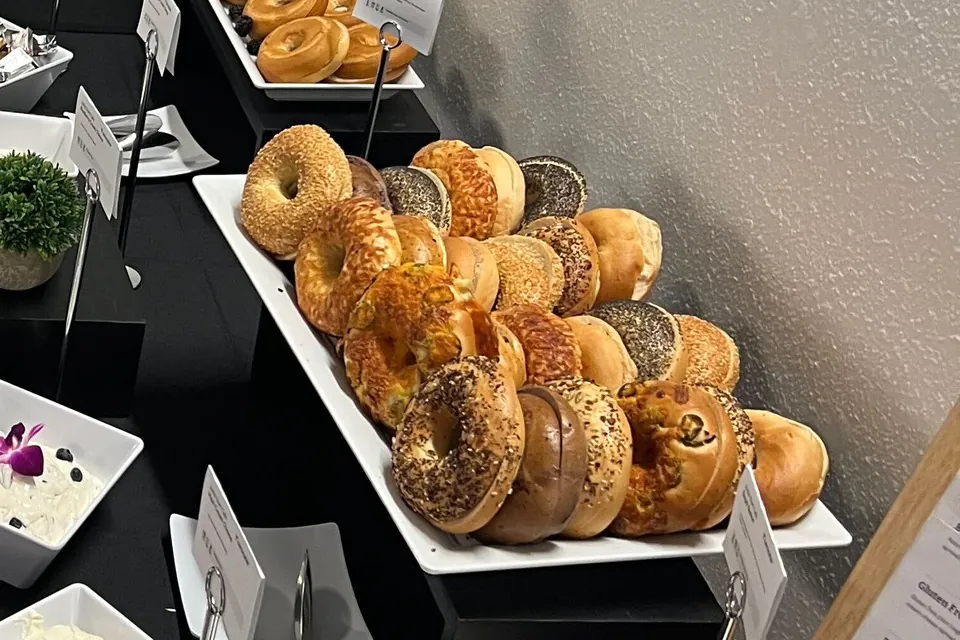
The columns themselves are also worth a look, because they are not the federal list. Three of the eleven are not federal major allergens at all, including MSG and sulfites, which is more disclosure than the law asks for. Going the other way, there is no sesame column, and sesame was added to the federal list in 2023. The bakery case sells a sesame bagel and a poppy seed bagel. The book’s bread line does not separate bagel varieties, so it cannot answer that question, and the reader has to ask it.
Our allergy-safe boxed lunches guide covers the federal list itself and the questions worth putting to any caterer. Nothing here is dietary or medical advice. If a guest needs food prepared to a specific standard, raise it with the operator in writing before you order and check with your own advisers, because only the kitchen can answer for its own kitchen.
Three Things the Book Does Not Cover
A published table is only as useful as its scope, and this one has three gaps that an office order walks straight into.
The soups. There is no soup section in the book at all. The menu says why: the soups change with the season and vary from one location to another, so no fixed table can track them. The catering listing does carry soups. That makes soup the one category you cannot pre-clear from a document.
The third bread. The book publishes the breakfast sandwiches two ways, bagel and croissant. The catering listing offers a biscuit as well. The biscuit has no row, so the book cannot tell you what it does, and the pattern from the other two breads says it does something.
The add-ons. The empty shellfish column reads as good news until you notice that shrimp is a salad add-on and a chowder is on the soup list. Neither is in the book. The column is empty because of what the book covers, not because of what the kitchen carries.
None of that is a criticism of the document. It is a longer and more useful document than most chains publish. It just means the book is where the order starts and the operator is where it finishes.

The One Line the Catering Menu Changes
The operator’s own catering listing already acts on everything above. It runs a parallel line of boxed lunches where the filling, the cheese and the sauce match the standard box exactly, and one component is different: the bread. The dessert in the box changes with it.
That is the cleanest possible demonstration of the wedge. When the kitchen wants to open a box up to more of the room, the lever it reaches for is the bread, because the bread is what carries the flags. Our gluten-free office catering guide covers how to brief a caterer on this, and the short version is to order the named line rather than asking for a modification to a standard one.
The lunch sandwiches work differently from the breakfast ones and it matters here. At breakfast the bread is a choice you make. At lunch most sandwiches name their bread as part of the recipe, so the swap is a different line item rather than a substitution. The menu does note that a gluten-free bread is available on request across the sandwich lists.
What to Send With the Order
Three things, and they follow directly from the gaps above.
Send the headcount split by what people avoid, not by what they prefer. The book is organised by flag, so a brief organised the same way is faster for the store to work against than a list of preferences.
Name the bread on every line. This is the one place where being specific costs you nothing and saves the most. If the order is going out as breakfast sandwiches, say bagel or croissant for each one rather than leaving it to the store, because the two are not interchangeable on the flags.
Ask the three questions the book cannot answer: what is in the soup that day, what the biscuit carries, and anything about a bakery item sold by variety. Put them in the same message as the order. Confirm the current guide and the current menu with the operator when you do, because a menu can change without the document changing at the same time.
Who Atlanta Bread Suits, and Who Should Order Elsewhere
It suits a breakfast. That is the clearest fit in the whole menu, and the allergen book is part of why: the breakfast sandwich base is the shortest row on the menu, and the bread is a decision you get to make rather than one the recipe makes for you. A bagel and pastry spread for a morning meeting is what this operator is built to do.
It suits a working lunch that wants sandwiches, salads and a lunch format people can walk past and pick from. It suits an office that has a standing breakfast order and wants the same kitchen every week.
It suits a room with mixed diets better than most bakery-cafes do, for the simple reason that the operator published the table at all. You can plan against a document instead of against a phone call. Check the gluten-free, dairy-free and vegetarian directory pages for the wider Zerocater network on each axis.
It suits a hot midday meal least. This is a bakery-cafe, and the menu leans cold and handheld. A room expecting hot entrees in chafers is asking this kitchen for something it does not set out to do.
How to Order Atlanta Bread Catering
There are two routes. Direct through the operator’s own site, which runs its catering ordering through an online platform and offers platters and boxed lunches, is the straightforward one if you already know the store you want and your order is a repeat.
The other route is Zerocater. The Atlanta Bread Company vendor page carries the current catering menu and returns a live quote for your headcount and date, which is the right place to check anything this post describes. If your order spans more than one kitchen, or you want it to sit alongside other vendors on one invoice, that is the route that handles it. How it works covers the process end to end, and CaterAi will build the menu from a plain description of the event.
Either way, send the bread decision with the order rather than after it.
Where Atlanta Bread Fits on an Atlanta Catering List
It is the bakery-cafe slot, and it is a strong one for breakfast and for cold lunch. Around it, the Zerocater Georgia network covers the formats a bakery-cafe does not: A Breakfast, Grant Park Coffeehouse, Lotus and Lime, Olive Mint, Figo Pasta, Curry Up Now. Our Atlanta corporate catering roundup runs through the wider list, and our office lunch ideas guide covers matching a format to the kind of day a team is having.
Atlanta Bread and Zerocater
Zerocater works with operators like this one across ten metros, and a bakery-cafe with a published allergen table is a useful thing to have on a network. Most of the work of feeding a mixed room is information work, and an operator that has already done that work in public makes the rest of it shorter.
For an office ordering through Zerocater, the practical benefit is that the questions this post says to ask go to one place. The vendor page holds the current menu and the live quote. CaterAi builds the menu from a description of the event and the room. Neither replaces the conversation with the kitchen about a specific requirement, and neither should.
Build an Atlanta breakfast or lunch menu
Menus, breads and allergen documents change, and this post describes patterns in a published table rather than the contents of any dish. For the current catering menu and a live quote, see the Atlanta Bread Company page on Zerocater, and take any question about a specific requirement to the operator in writing.
Atlanta Bread Catering: Frequently Asked Questions
What does Atlanta Bread’s allergen book actually tell me?
It is a table, not a paragraph. The operator publishes a Y or an N for each of eleven columns against every item on its menu, and it runs to fifty-eight food items once you set the drinks aside. That format is more useful than a prose allergy page, because you can sort it. It is also where the surprises are: the column that flags the most items is not the one most people read. Menus and their documents change, so confirm the current guide with the operator before you rely on any count here. Nothing here is dietary or medical advice.
Is a salad the wheat-free choice on this menu?
Six of the nine salads in the book carry wheat, and the menu explains it in a single line: every salad arrives with a fresh-baked baguette. So a salad whose own ingredient list has no bread in it still shows a wheat flag, because of what is sitting next to it on the plate. The three that do not carry wheat are the two grain bowls and the fruit salad, and the menu files the bowls under their own heading rather than under salads. Read the heading before you assume the category.
Does the bagel or the croissant flag more?
Neither. They flag differently, which is the more useful answer. Across all five breakfast sandwiches, choosing the bagel adds wheat and the other-gluten flag. Choosing the croissant adds wheat and soy. So a guest avoiding soy has a reason to take the bagel, and a guest avoiding barley or rye has a reason to take the croissant, and nobody is served by being told one of them is the better option. The base sandwich, before either bread, carries only egg and milk.
The catering menu offers a biscuit. Where is it in the book?
It is not there. The breakfast sandwiches in the allergen book are published three ways: the base item, the same item with a bagel, and the same item with a croissant. The catering listing offers a biscuit as a third bread. That gap is worth a question to the operator rather than an assumption, and it is a good example of why the book is a starting point for an office order and not the finish.
Why is there no soup section in the allergen book?
Because the soups are not a fixed menu. The operator says its soups change with the season and vary from one location to another, so a published table cannot track them. The catering listing does offer soups. The practical effect is that the one category you cannot pre-clear from a document is the one you have to raise directly with the store filling your order.
Are the eleven columns the same as the federal allergen list?
No, and the differences run both ways. The book adds three columns that are not federal major allergens at all, including MSG and sulfites. It does not carry a sesame column, and sesame joined the federal list in 2023, so a reader who needs to avoid it cannot resolve the question from the table. Our allergy-safe boxed lunches guide covers the federal list and the questions worth asking a caterer. Raise anything the table does not answer with the operator in writing, and check with your own advisers.
What is the simplest way to widen who can eat at an Atlanta Bread order?
Change the bread and leave the rest alone. That is the lever the operator’s own catering listing pulls: it runs a parallel line of boxed lunches where the filling, the cheese and the sauce match the standard box and only the bread is different. Our gluten-free office catering guide covers how to brief a caterer on that. Order it as a named line rather than as a modification, and put the count in writing with the order.
Who should order something else?
A room that wants a hot meal at midday, and a room whose menu has to be built around one guest’s specific requirement rather than around a spread. This is a bakery-cafe: the strength is breakfast, sandwiches and a bread programme, and the weakness is everything that wants to arrive hot in a chafer. If that is your event, CaterAi can search the wider Atlanta network instead.