Hummus Kitchen cooks kosher Israeli Mediterranean food in New York, and its catering menu runs from tubs of hummus to hot trays of beef, lamb and chicken. Read the ingredient lines one by one and a pattern shows up. Another kitchen would reach for cheese, butter or yogurt. This one reaches for tahini or coconut.
That pattern makes the menu easy to plan around once you see it. A guest who skips dairy has almost the whole menu to choose from. A guest who skips sesame needs the list of dishes built on tahini, and this guide gives you that list.
In this guide
- Why tahini carries the creamy dishes
- Where coconut stands in, and the one line to ask about
- Planning for guests who skip dairy or sesame
- Packages, trays and the pita bar
- How to order for a New York office
A kosher Israeli kitchen in Manhattan
Hummus Kitchen says hummus is its passion, cooked fresh every day and served warm with hot pita. The menu around it draws on Israeli, Moroccan and wider Mediterranean cooking: grilled meats, slow-cooked tagines, stuffed grape leaves, burekas and a long list of salads. The kitchen’s site lists restaurants in Hell’s Kitchen and on the Upper East Side, plus a catering-only kitchen downtown.
The catering storefront calls the menu fully kosher. In kosher cooking, a meal is either a meat meal or a dairy meal, and this menu carries meat trays. Our kosher office catering guide explains the rule in full. For your order, the useful part is how this kitchen cooks inside that rule.
If your group follows a specific kosher standard, ask the kitchen which certification it holds before you order. The kitchen’s own site does not name one.
Tahini does the creamy work
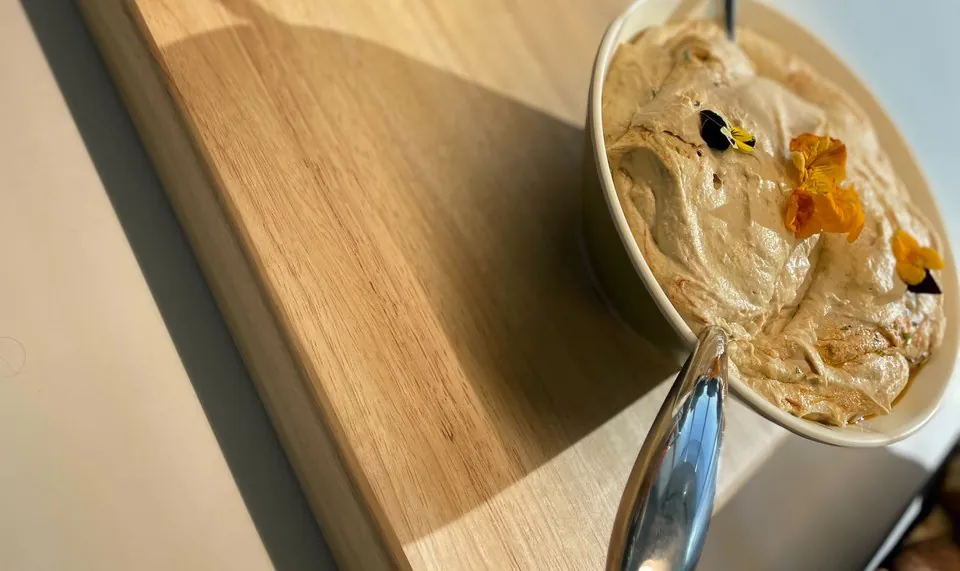
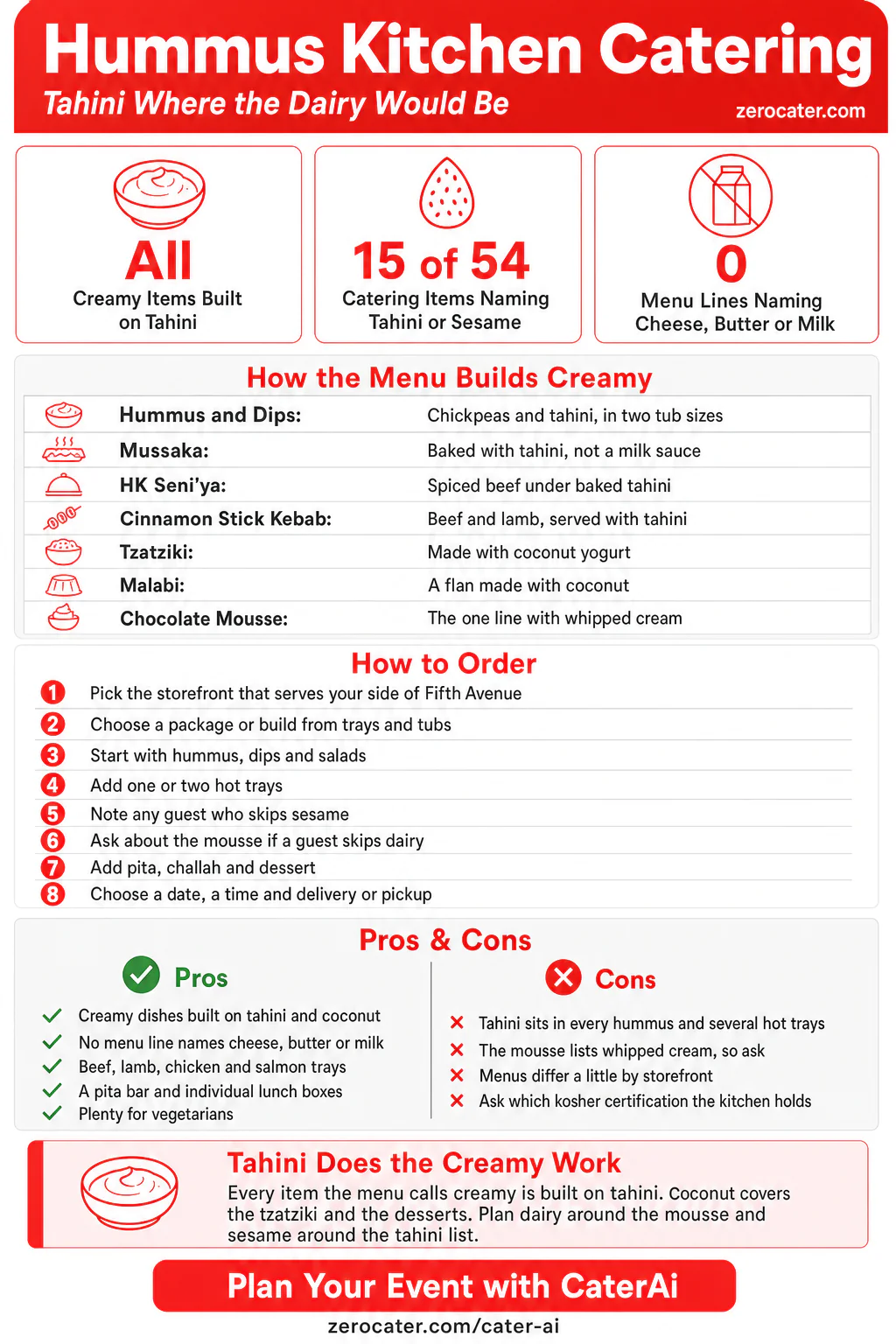
Start with one word. The catering menu calls five items creamy on the Hell’s Kitchen storefront and eight on the Upper East Side storefront. Every item the menu calls creamy is built on tahini or chickpeas: the hummus in all its versions, the zucchini ganoush and the creamy tahini served with the mashwiya.
Tahini runs well past the dips. On the Hell’s Kitchen storefront, fifteen of the 54 catering items name tahini or sesame. On the Upper East Side storefront the count is eighteen of 62, because that kitchen lists more topped hummus and sells tahini by the tub. That is more than a quarter of the menu on either side of town.
| Dish | What the menu lists |
|---|---|
| Mussaka | Eggplant, spiced ground beef and tomato, baked with tahini |
| HK Seni’ya | Spiced ground beef baked under tahini |
| Cinnamon Stick Lamb Kebab | Beef and lamb on cinnamon sticks, served with tahini |
| Cauliflower | Roasted, with tahini and black sesame |
| Whole Charred Eggplant | Charred over an open flame, with tahini and pomegranate |
| Zucchini Ganoush | A creamy zucchini and tahini spread |
| Pita bar | Each plate comes with hummus, babaganoush and tahini |
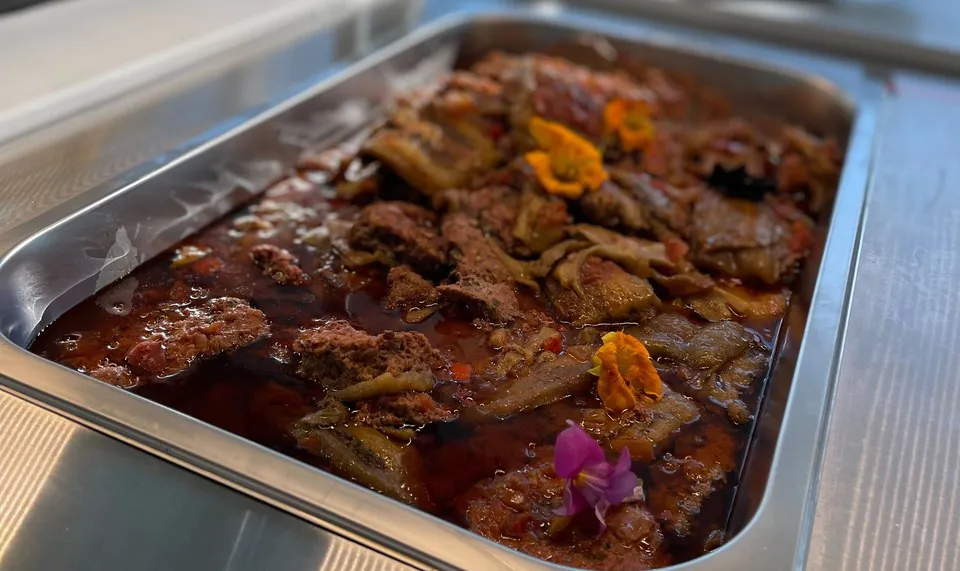
The moussaka is the clearest case. The Greek version most people know is topped with a white sauce made with milk. Hummus Kitchen bakes its moussaka with tahini instead, so a beef dish can still come to the table rich and creamy. The siniyah works the same way: spiced beef under a layer of baked tahini, a traditional dish in Israeli and Arab home cooking.
Coconut covers the tzatziki and the desserts
Where tahini does not fit, coconut steps in. The Hell’s Kitchen storefront lists a tzatziki made with coconut yogurt, cucumber and mint. The malabi, a Mediterranean flan that classic recipes set with milk, comes with coconut and a raspberry sauce on both storefronts.
Count the dairy words across both storefronts and the list is short. On the catering menu, no item names cheese, butter or milk. Yogurt shows up once, as the coconut yogurt in the tzatziki. The shakshuka is poached eggs in a tomato and pepper stew, with nothing on top.
The one dairy word on the menu is the whipped cream on the chocolate mousse. The same line also names coconut, and the menu does not say what the cream is made from. If a guest skips dairy, ask the kitchen about that dessert, or choose the malabi or the baklava instead.
Planning for a room that skips dairy or sesame
For a guest who skips dairy, this menu reads well. Build a spread of dips, salads, protein trays and pita, and no line in it names a dairy ingredient. Our dairy-free office catering guide covers the questions to ask any kitchen.
For a guest who skips sesame, plan with the other list. Because tahini does so much of the work here, it sits in every hummus, the babaganoush and several hot trays. On the Hell’s Kitchen storefront, twelve hot trays and sides name no tahini or sesame, including the chicken tagine, the grilled chicken, both salmon dishes, the schnitzel, the majadra rice and the couscous. Tell the kitchen about the guest when you order, and ask how it keeps those trays apart. Treat the menu lines as a starting point and let the kitchen confirm the detail.
The menu also gives vegetarians plenty to work with: the salads, the dips, the falafel, the mushroom and potato burekas, the shakshuka and the roasted vegetable sides. Our vegetarian office catering guide covers how to size that share of an order.
Packages, trays and the pita bar
The catering menu opens with three packages sized by group. The Family package is sized for about ten guests, the Team package for about twenty and the Group package for forty to forty-five. Each one brings dips or salads, protein trays, side trays and pita, and you choose what goes in each slot.
Two other formats suit an office. The pita bar gives each guest a protein of their choice with chopped salad, hummus, babaganoush, lemony cabbage, tahini and pita. The lunch box line packs an individual meal of protein, rice and lentils, chopped salad, hummus and pita or vegetable sticks, which works for a meeting where people eat at their seats.
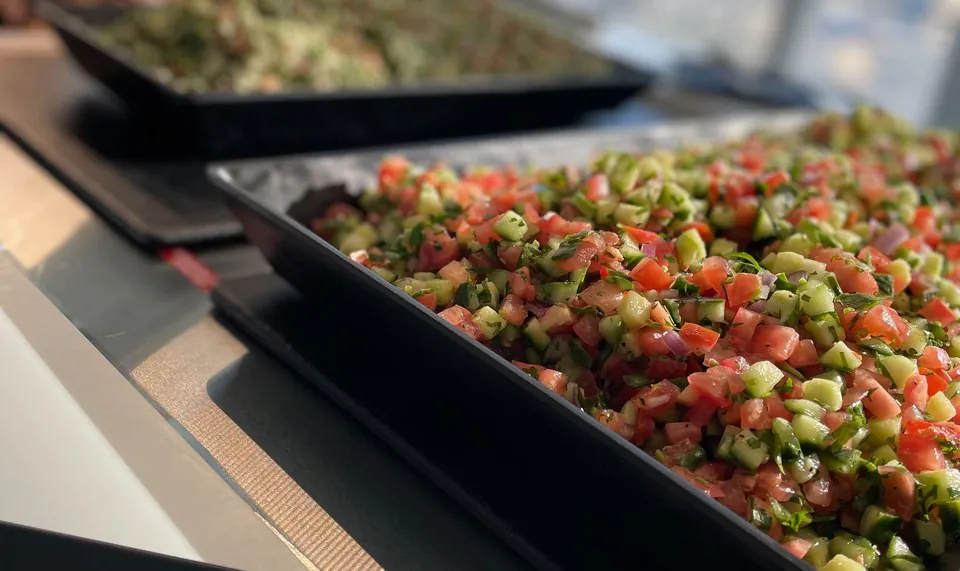
Outside the packages, everything comes by the tray or the tub. Dips and salads come in two tub sizes, sides and hot dishes in half and full trays, and finger food such as falafel, kebabs, stuffed grape leaves and burekas by the piece. Pita, whole wheat pita and mini challah round out the bread list. Our New York City office catering cost guide covers budgets across the city.
How to order Hummus Kitchen catering for a New York office
Direct, the kitchen runs an online catering storefront for each restaurant. The kitchen’s site splits delivery at Fifth Avenue: the Hell’s Kitchen storefront covers the West Side and downtown, and the Upper East Side storefront covers the East Side and Midtown East. Pick the one that serves your address, then a date, a time and delivery or pickup. The kitchen also takes requests through a form on its catering page.
The two storefronts carry much the same menu. The Upper East Side storefront lists more topped hummus and a few extras, and the Hell’s Kitchen storefront carries the coconut tzatziki. Check the dish you want on the storefront that serves your office.
Through Zerocater, the Hummus Kitchen page carries the current menu and a live quote, and the order sits alongside every other kitchen your office already uses, on one invoice. How it works covers the mechanics, and the New York City catering directory shows every partner in the city.
Whichever route you take, the ordering advice is short. Build the spread around the dips and a hot tray or two, and add the pita. Note any guest who skips sesame, so the kitchen can plan the trays. If a guest skips dairy, ask about the mousse or pick another dessert.
Plan a Mediterranean catering menu
Hummus Kitchen and Zerocater
A kosher kitchen with a long list of meat trays and a menu that names almost no dairy covers a lot of ground in one order. It feeds the meat eaters and gives the vegetarians real choice. For teams that keep kosher, it is a kitchen worth asking about. That makes it a useful kitchen to keep in an office lunch rotation.
CaterAi builds the rotation, keeps track of what the office has already eaten, and brings a kitchen like this one in when the week needs a Mediterranean day. The Mediterranean catering directory for New York City shows the rest of the lane, and Bite is another Israeli kitchen in New York on the blog.
Menus, packages and prices change. This guide describes how the Hummus Kitchen catering menu is built rather than what it costs this week. For the current menu and a live quote, use the Hummus Kitchen page on Zerocater, and confirm the current detail with the kitchen before you order for anyone with a dietary requirement.
Frequently Asked Questions
What kind of food does Hummus Kitchen cater?
Kosher Israeli Mediterranean food from a New York kitchen. The catering menu carries hummus and dips in tubs, salads, roasted vegetable sides, hot trays of beef, lamb, chicken and salmon, finger food such as falafel and kebabs, pita and challah, and a short dessert list.
Is Hummus Kitchen kosher?
The kitchen describes its food as kosher, and its catering storefront calls the menu fully kosher. The menu carries meat trays, and the creamy dishes are built on tahini or coconut. If your group follows a specific kosher standard, ask the kitchen which certification it holds before you order. Our kosher office catering guide explains what to ask.
Does the Hummus Kitchen menu use dairy?
Across both catering storefronts, no item names cheese, butter or milk. Yogurt shows up once, as the coconut yogurt in the tzatziki. The one dairy word on the menu is the whipped cream on the chocolate mousse, so ask the kitchen about that dessert if a guest skips dairy. Confirm the current detail with the kitchen before you order for anyone with a dietary requirement. Nothing here is dietary or medical advice.
Which Hummus Kitchen dishes have tahini?
More than a quarter of the menu. On the Hell’s Kitchen storefront, fifteen of 54 catering items name tahini or sesame, including every hummus, the babaganoush, the moussaka, the siniyah, the roasted cauliflower and the cinnamon stick kebab. If a guest does not eat sesame, use the tahini list in this guide and tell the kitchen when you order.
What catering packages does Hummus Kitchen offer?
Three spreads sized by group: the Family, Team and Group packages, each with dips or salads, protein trays, side trays and pita. There is also a pita bar, where each guest gets a protein with chopped salad, hummus, babaganoush, cabbage, tahini and pita, and a lunch box line for individual meals. Everything else comes by the tray or the tub.
How do you order Hummus Kitchen catering?
Two routes. Direct, through the kitchen’s online catering storefront: pick the location that serves your address, then a date, a time and delivery or pickup. The kitchen also takes requests through a form on its site. Or through Zerocater, where the Hummus Kitchen page carries the current menu and a live quote, and the order sits alongside every other kitchen your office uses.